
Affiliate Disclosure: Buyiox is reader-supported. When you buy through links on this page, we may earn a small commission at no extra cost to you. We only recommend products we would use at our own desks.
Your back starts aching by hour three. Your shoulders creep up toward your ears. You shift, you stretch, you stand up for a minute, and then you sit back down on the same flat dining chair and do it all again. If you game or work at a desk for hours every day, your chair is not furniture. It is the difference between ending the day fine and ending the day sore.
A good gaming chair does three things a normal chair does not. It supports the inward curve of your lower back so your spine keeps its natural shape. It lets you adjust the height, the armrests and the recline until the chair fits your body, not the other way around. And it stays comfortable for hour four, five and six. The wrong chair does the opposite: it squeezes wide hips, it leaves tall users with no head support, and it turns a fun evening into a stiff morning.
Before you buy, you need to know one honest truth that most roundups hide. The weight limit on the box is not the weight the chair is built for. Almost every maker publishes two numbers: a recommended body weight and a maximum load. The recommended weight is lower, and it is the number that decides whether the chair actually fits you. The Secretlab Titan Evo Regular, for example, is recommended for people under 220 lb, even though its maximum load is 285 lb. Buy by the recommended weight, measure your height against the size chart, and check the seat width before you order. Here are the six best gaming chairs we found, with both numbers stated plainly for every chair.
Our Top 6 Gaming Chairs at a Glance
- Secretlab Titan Evo – Best overall, the default answer for most people
- Herman Miller Vantum – Best premium ergonomics, office-grade support with a 12-year warranty
- AndaSeat Kaiser 4 – Best for big and tall, the widest fit here
- noblechairs HERO – Best premium fabric and office-ready look, the quiet professional
- Corsair TC100 Relaxed – Best budget, the cheapest chair that gets the basics right
- GTRacing GT099 Pro Series – Best under $150, the proven value pick
1. Secretlab Titan Evo – Best Overall
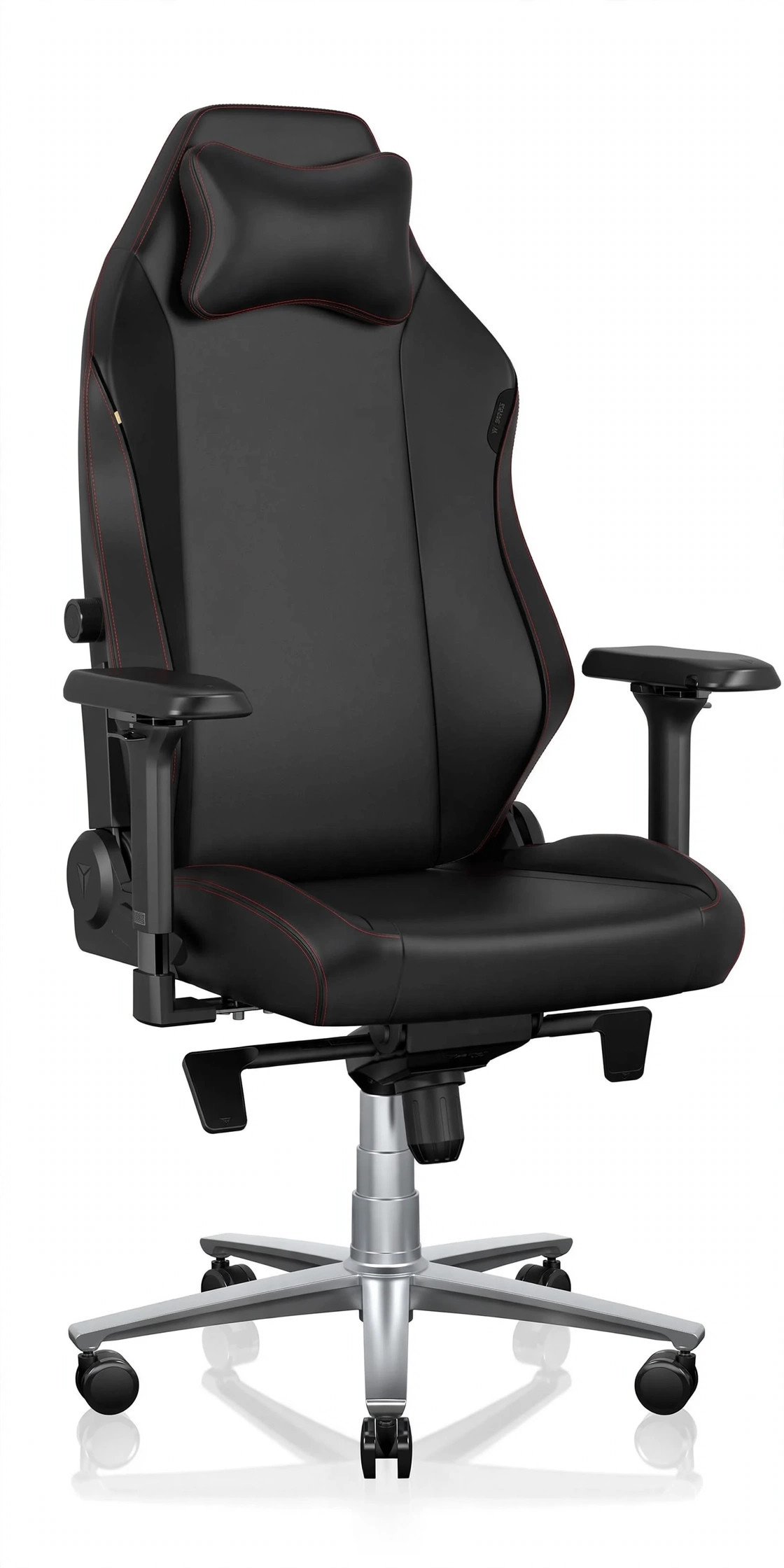
Secretlab Titan Evo Gaming Chair (product-style image)
The Secretlab Titan Evo tops almost every gaming chair list for a reason, and it is not because reviewers are lazy. It is the most complete package in the category: three sizes, a built-in 4-way lumbar system, 4D armrests, a 165 degree recline, and a build quality that holds up for years. PC Gamer, Wirecutter and IGN all place it at or near the top of their current guides, and it is the chair we would buy first if we could only recommend one.
The standout feature is the L-ADAPT lumbar system, built directly into the backrest. Instead of a strap-on pillow that slides around, two dials adjust the lumbar support for height and depth, so it lands in the small of your back. The cold-cure foam seat is medium-firm, which feels hard for the first few days if you are coming from a soft office chair, but reviewers report that the firmness stops being noticeable after about a week. The magnetic memory foam head pillow snaps on and off without straps, and the 4D CloudSwap armrests move in every direction with magnetic tops you can swap.
Sizing is where you need to pay attention, because the Titan Evo comes in Small, Regular and XL, and there is no seat-depth adjustment to save you if you pick wrong. The Regular fits people from 5 feet 7 inches to 6 feet 2 inches and under 220 lb of body weight, with a 285 lb maximum load. The XL fits 5 feet 11 inches to 6 feet 9 inches and up to 395 lb. At around $550 to $670 depending on size and upholstery, it costs two to three times more than a budget chair, and it weighs about 77 lb assembled, so get help with the build. For most buyers, it is the safest first recommendation in gaming chairs.
Why we like it
- Three sizes so the chair fits your height and weight, not the other way around
- Built-in 4-way L-ADAPT lumbar, adjustable for height and depth, no slipping pillow
- 4D CloudSwap armrests with magnetic, replaceable tops
- 85 to 165 degree recline with multi-tilt lock, plus a magnetic memory foam head pillow
- Cold-cure foam that holds its shape for years, backed by a 3-year warranty extendable to 5 with registration
Pros
- The best all-round gaming chair for most people, confirmed by PC Gamer, Wirecutter and IGN
- Best integrated lumbar system in a racing-style chair at this price
- Three sizes and two upholstery choices, leatherette or SoftWeave fabric
Cons
- Around $550 to $670, two to three times the price of a budget chair
- Firm cold-cure foam seat takes up to three weeks to soften, and feels hard to lighter users at first
- No seat-depth adjustment, so picking the wrong size is a real mistake
- Heavy at about 77 lb assembled, a two-person build
Price: around $550 to $670 on Amazon and Secretlab, depending on size and upholstery
Best for: most gamers and home workers who want one chair that does everything well, especially anyone who sits 4 or more hours a day.
Who should skip it: buyers who want a soft, plush seat from day one, and anyone over 220 lb who does not want to step up to the XL size.
2. Herman Miller Vantum – Best Premium Ergonomics
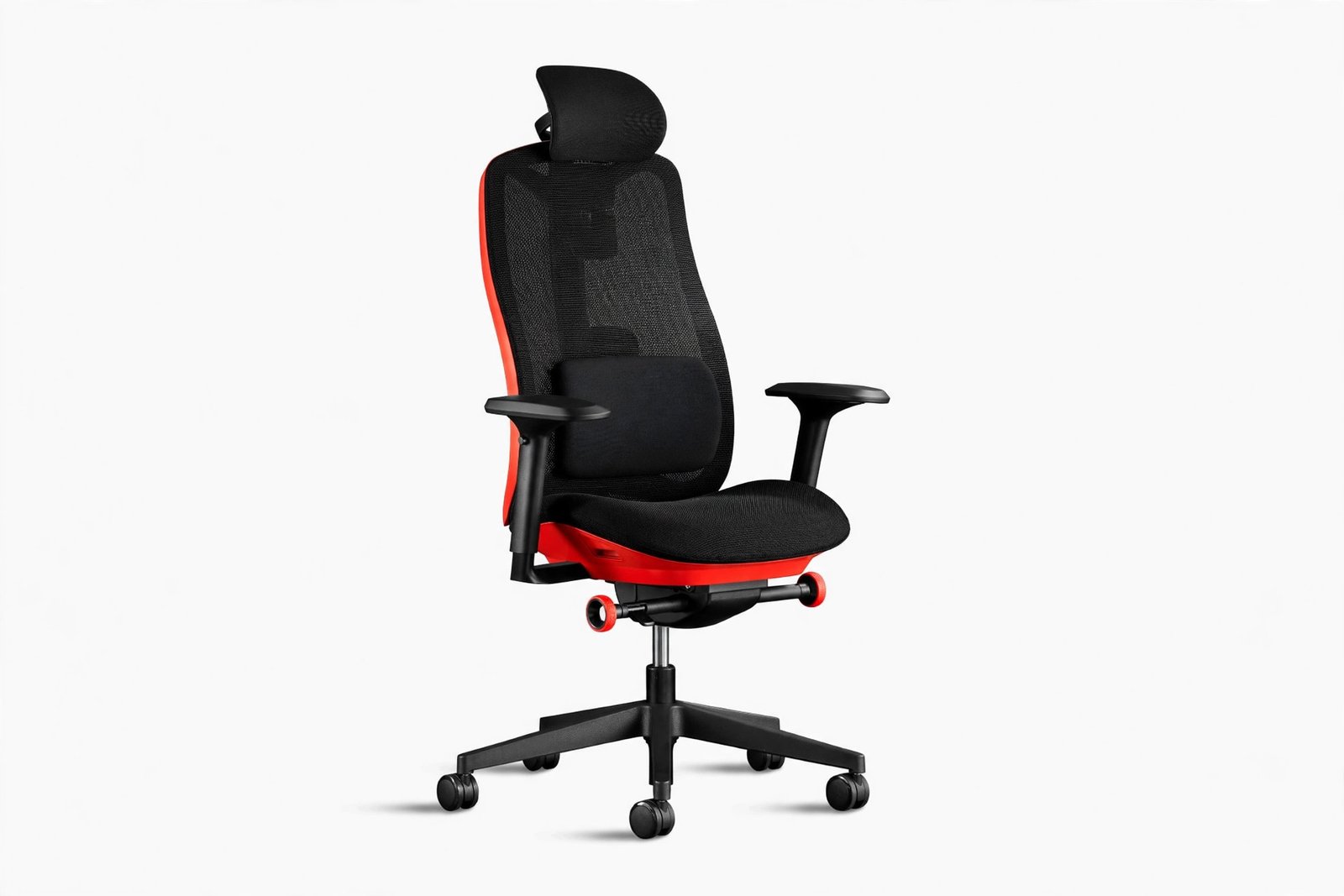
Herman Miller Vantum Gaming Chair (product-style image)
The Herman Miller Vantum is the chair on this list that comes from the office side, and it shows in every decision. It was designed with Logitech G as a performance chair for gamers, not as a racing seat with a logo on it. There is no foam and leatherette shell. The backrest is a suspension membrane of elastomer and polyester that breathes like a trampoline, the lumbar support is Herman Miller’s PostureFit system borrowed from the Aeron, and the warranty is 12 years, covering every moving part. No other chair here comes close to that warranty, and that is the Vantum’s hardest argument to answer.
What the Vantum does differently is posture. The seat tilts permanently forward and the backrest reclines only a little, around 90 to 109 degrees, which keeps you upright and engaged at the keyboard instead of sinking into a lounge position. The adjustable headrest and thoracic support pad work together to support your head, neck and upper back when you lean back between matches. The seat depth adjusts from about 14.5 to 17.5 inches, the armrests adjust in three directions, and the whole chair weighs only 37 lb, so it is easy to move around the room. It is rated for up to 350 lb, with a seat height range of 18 to 22 inches.
The honest trade-offs decide whether this chair is for you. First, the price: around $900 to $990, which is nearly double the Titan Evo and five times the budget picks. Second, the forward-lean design rules out napping, so if you want a chair that reclines flat, this is the wrong chair. Third, reviewers over six feet tall found the seat shallow, and heavier users over 250 lb reported slight frame flex. But if you play competitive games and want a chair that keeps your posture honest, the Vantum is the most ergonomic chair here, and the 12-year warranty means you buy it once.
Why we like it
- Breathable suspension backrest that stays cool through marathon sessions, no sweaty leatherette
- PostureFit lumbar support and an adjustable thoracic pad, office-grade ergonomics
- 12-year warranty covering casters, cylinders, tilts and all moving parts
- Seat depth adjustment from about 14.5 to 17.5 inches, rare in gaming chairs
- Light at 37 lb, easy to move, and it looks at home in an office as well as a gaming room
Pros
- Best premium ergonomics here, designed with Logitech G for focused play
- Longest warranty in the category by a factor of four
- Best chair here for staying cool, thanks to the suspension backrest
Cons
- Around $900 to $990, the most expensive chair on this list
- Limited recline, around 90 to 109 degrees, so no napping and no deep lounge
- Seat can feel shallow for users over six feet tall
- Heavier users over 250 lb reported slight frame flex
Price: around $900 to $990
Best for: competitive gamers and home workers who sit upright for long hours, value ergonomics over recline, and want to buy one chair for a decade.
Who should skip it: anyone who wants to recline flat and nap, taller users who need a deep seat, and buyers who cannot justify close to $1,000 for a chair.
3. AndaSeat Kaiser 4 – Best for Big and Tall
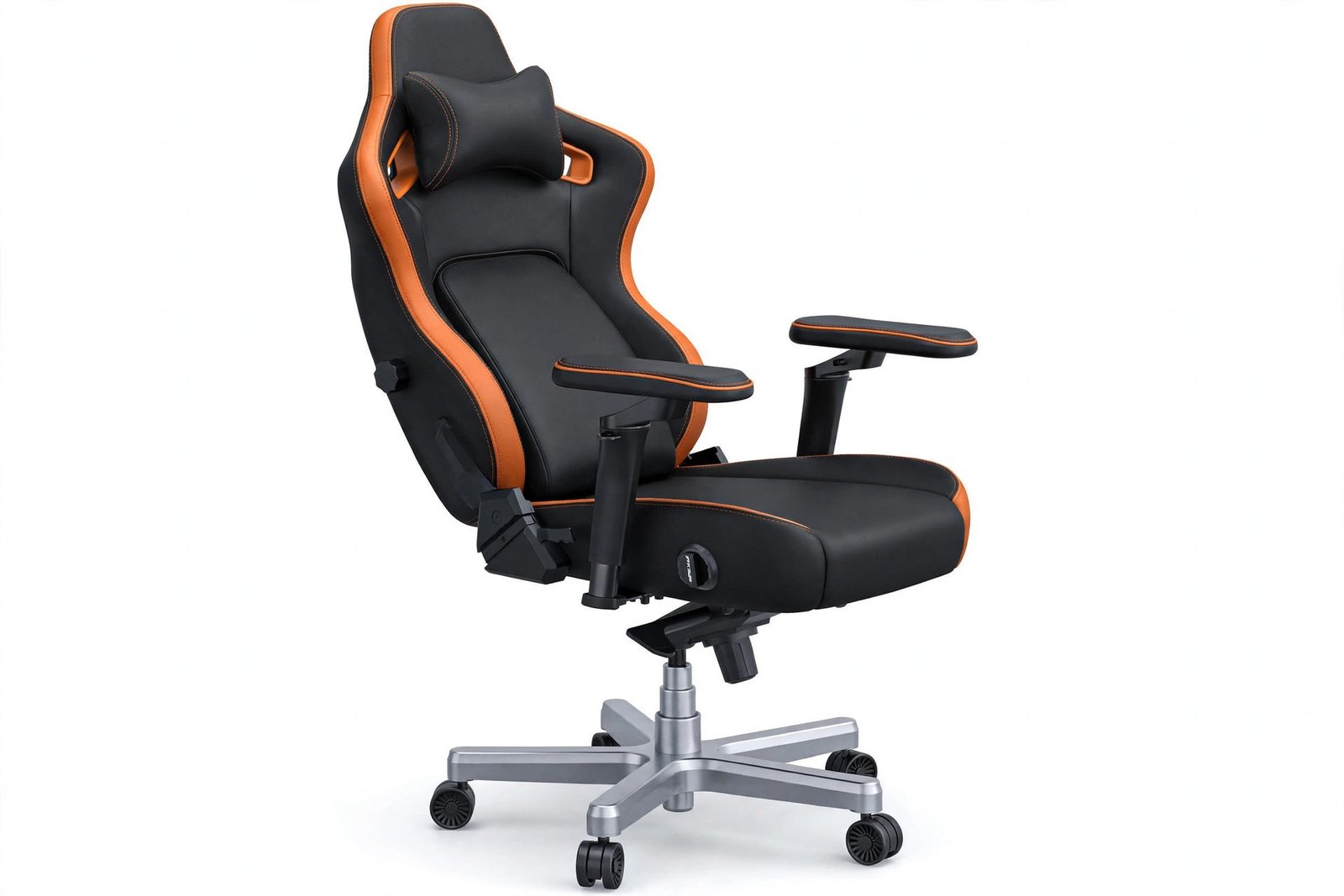
AndaSeat Kaiser 4 Gaming Chair (product-style image)
Most gaming chairs are built for average bodies, and tall or broad users find that out the hard way: the backrest ends at their shoulders, the seat squeezes their hips, and the weight limit is closer than the listing suggests. The AndaSeat Kaiser 4 is built for the people other chairs forget. The XL size fits users from 5 feet 11 inches to 6 feet 11 inches and from 175 to 395 lb, which is the widest weight and height range on this list. PC Gamer called it large, supportive and very comfortable, with excellent lumbar support and plenty of adjustability, and it is the chair we recommend first to anyone over six feet tall or over 250 lb.
The lumbar system is the star. A pop-out lumbar module with four levels of adjustment pushes out from inside the backrest, so it supports your lower back without a pillow that slides down during a long session. The 5D armrests move in every direction and fold upward, with the front half tilting up to 40 degrees, and the magnetic head pillow stays cool to the touch. The seat base slopes at 5 degrees, which takes pressure off the backs of your thighs, and the backrest reclines from 90 to 135 degrees. It comes in premium PVC leather or breathable linen fabric, and the XL is a big, heavy chair at around 75 lb, which is part of why it feels so solid under a large user.
Two honest points before you buy. First, the armrests: both PC Gamer and TechRadar flag them as the weak point, too far apart, too far forward, with too much wobble. Second, the price and the size: at around $519 to $579 it sits in premium territory, and at 75 lb it is not a chair you move between rooms casually. The warranty is 2 years, shorter than Secretlab. But if you are big or tall and tired of chairs that were clearly not designed for you, the Kaiser 4 is the honest pick, and the XL is the only chair here that genuinely fits a 6 foot 8 inch, 300 lb user.
Why we like it
- Widest fit range here: XL fits up to 6 feet 11 inches and up to 395 lb
- Pop-out lumbar with 4-level adjustment, built into the backrest
- 5-degree sloping seat base that takes pressure off the thighs
- Magnetic cooling head pillow included, plus 5D armrests that fold upward
- Available in PVC leather or breathable linen fabric for hot rooms
Pros
- Best gaming chair for big and tall users, by a clear margin
- Best lumbar support for larger frames, praised by PC Gamer and TechRadar
- Solid, heavy build that feels stable under a large user
Cons
- 5D armrests are awkward, too far apart and too far forward, with noticeable wobble
- Around $519 to $579, premium pricing, with only a 2-year warranty
- Heavy at around 75 lb, and the XL is a very large chair for a small room
Price: around $519 to $579, depending on size and finish
Best for: big and tall gamers, anyone over 6 feet or over 250 lb, and buyers who want the strongest lumbar support in a large chair.
Who should skip it: smaller users under 5 feet 6 inches, who will find the XL too big, and anyone who needs armrests that slide neatly under a desk.
4. noblechairs HERO – Best Premium Fabric and Office-Ready Look
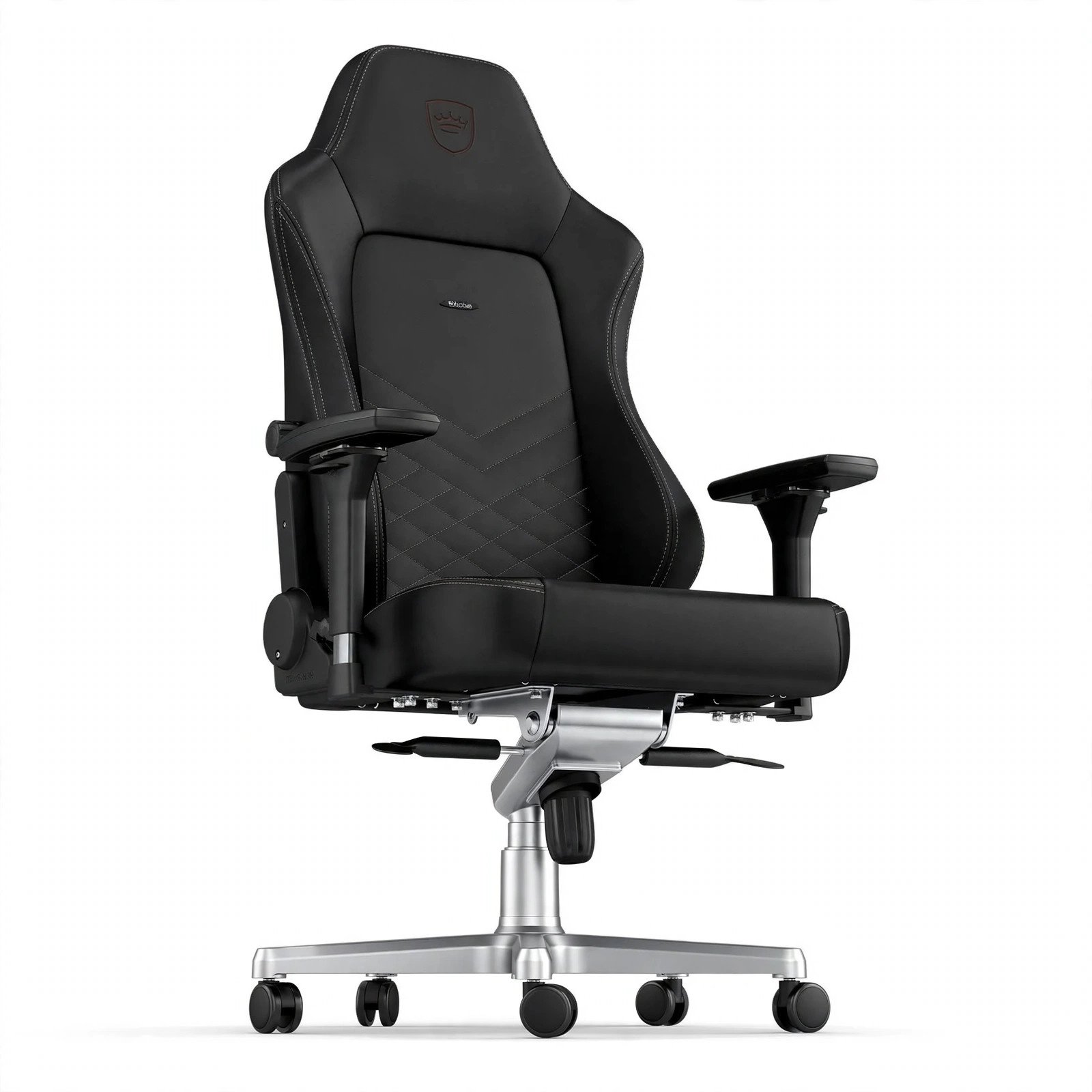
noblechairs HERO Gaming Chair (product-style image)
The noblechairs HERO is the chair for people who want a gaming chair that does not look like a gaming chair. There are no bright color panels, no racing stripes, no logos shouting from across the room. It is a black, understated, German-designed chair with a quilted backrest that works just as well in a home office on a video call as it does at a gaming desk. If your desk is also your workplace, and you do not want your chair to scream gamer on every meeting, this is the chair for you.
Under the quiet styling, the engineering is serious. The lumbar support is built into the backrest and adjusted with a rotary dial on the side, borrowed from premium car seats, so it pushes the lumbar curve out to meet your spine with no pillow to reposition. The seat and backrest use cold foam, which is denser than the soft polyurethane foam most rivals use, so it keeps its shape through years of daily use instead of going flat. The backrest reclines from 90 to 125 degrees with an 11 degree rocking mechanism, the armrests are 4D with soft tops, and the frame is steel with a Class-4 gas lift and a powder-coated aluminum base. It carries a 330 lb weight limit, the largest shell noblechairs makes, with an 89 cm backrest and a 48 cm seat depth, so broad and taller frames fit comfortably.
The HERO also holds a credential no other chair here can claim: DIN EN 1335 office-chair certification, the European standard for office chair dimensions, stability and durability. That is the difference between a chair designed to look ergonomic and a chair tested to an office standard. The honest trade-offs are the firmness, the warranty, and the leather. The seat is flat and firm, and riders who like a plush seat may not love it. The warranty is 2 years in most regions and only 1 year in the US, short next to Secretlab and Herman Miller. And the PU leather can peel after 2 to 3 years in high-humidity rooms, so the fabric TX version is the better buy if your room runs warm or damp. At around $460 to $550, it is a premium chair at a fair price.
Why we like it
- Integrated dial-adjustable lumbar inside the backrest, no pillow, no straps
- Cold foam padding that resists compression and keeps its shape for years
- DIN EN 1335 office-chair certification, unique on this list
- 330 lb weight limit on a steel frame with a Class-4 gas lift and aluminum base
- Understated design that suits a home office as well as a gaming setup
Pros
- Best premium fabric and office-ready gaming chair, the quiet professional
- Best chair here for buyers who want gaming comfort without the racing look
- Largest shell noblechairs makes, generous for broad and taller frames
Cons
- Firm, flat seat, too hard for buyers who prefer a plush, contoured feel
- Short warranty, 2 years in most regions and only 1 year in the US
- PU leather can peel after 2 to 3 years in high-humidity rooms
- Heavy at around 77 lb, not easy to move between rooms once assembled
Price: around $460 to $550 depending on finish
Best for: home workers and gamers who want a premium chair that looks professional on video calls, and broad or taller users who need a large shell.
Who should skip it: buyers who want a soft, plush seat, anyone who needs a long warranty, and shorter users under about 5 feet 9 inches, who may find the large shell too deep.
5. Corsair TC100 Relaxed – Best Budget
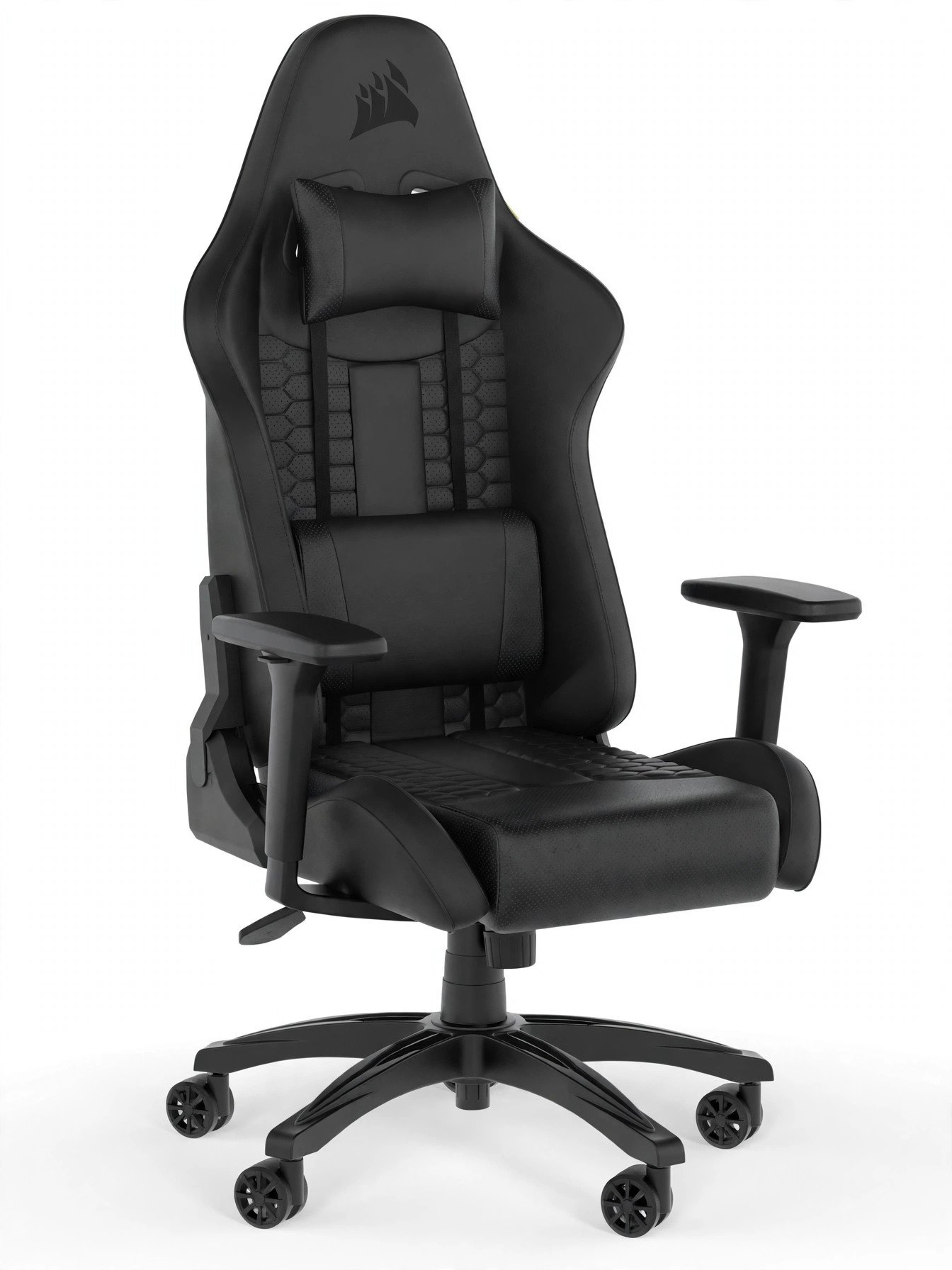
Corsair TC100 Relaxed Gaming Chair (product-style image)
Most budget gaming chairs cut corners in the places that matter: a weak gas lift, thin foam that goes flat in months, and a base that wobbles. The Corsair TC100 Relaxed is the cheapest chair on this list that gets the boring parts right, and that is why PC Gamer has recommended it for years as its budget pick. It is built around a simple idea: a wider seat, flatter bolsters, and proper components, instead of racing stripes and gimmicks.
The seat is the story. It is wider than a classic racing bucket, with soft bolsters that do not squeeze your hips, so it suits a wider range of body types than the slim racing chairs at this price. The leatherette is perforated to help airflow, the foam is quoted by Corsair at 30 kg per cubic metre, and the frame is steel with a Class-4 gas lift offering 100 mm of height travel. The backrest reclines from 90 to 160 degrees, the seat base tilts back 10 degrees for a relaxed pose, and both a lumbar pillow and a memory foam neck pillow come in the box. It supports up to 264 lb and users up to 6 feet 2 inches, and Corsair backs it with a 2-year warranty, which is generous at this price.
The honest compromise is the lumbar support. There is no built-in adjustable lumbar system, only a strap-on pillow, so you do not get the fine control of the Titan Evo or the Kaiser 4. The armrests adjust in only two directions, which reviewers have criticized, and they cannot match a 4D armrest for exact elbow positioning. But at around $180 to $230, roughly a third of the Titan Evo, the TC100 Relaxed is the sensible choice when your ceiling is about $200, and it is the best budget gaming chair for long sessions at a desk.
Why we like it
- Wide, flat seat with soft bolsters that suits most body types better than a racing bucket
- Steel frame and Class-4 gas lift with 100 mm of travel, the parts that predict lifespan
- 90 to 160 degree recline, the furthest recline of any budget chair here
- Lumbar and memory foam neck pillows included, plus a 2-year warranty
- Perforated leatherette helps airflow in warm rooms
Pros
- Best budget gaming chair, the cheapest chair here that gets the basics right
- Best value under $250, recommended by PC Gamer as its budget pick for years
- Wide seat fits a broader range of bodies than slim racing chairs
Cons
- No built-in adjustable lumbar, only a strap-on pillow
- 2D armrests only, no forward, backward or angle adjustment
- 264 lb capacity is lower than the premium chairs, so heavier users should check carefully
Price: around $180 to $230, with sale prices as low as around $135
Best for: budget buyers, first-time gaming chair owners, and anyone who wants a wide, relaxed seat for long desk sessions without spending $500.
Who should skip it: buyers who need precise built-in lumbar adjustment, anyone over 264 lb, and users who need 4D armrests for exact elbow positioning.
6. GTRacing GT099 Pro Series – Best Under $150
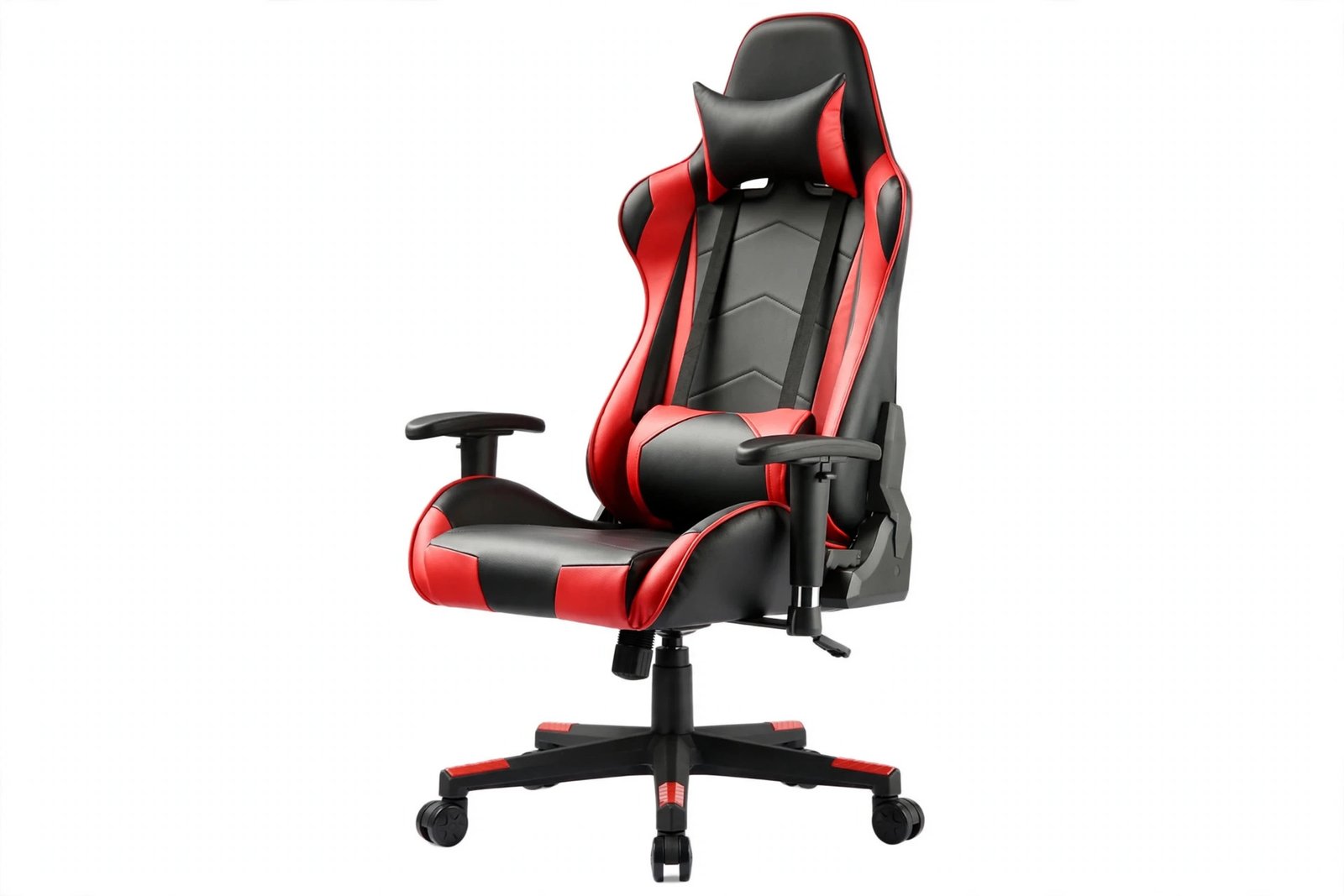
GTRacing GT099 Pro Series Gaming Chair (product-style image)
The GTRacing GT099 Pro Series has been selling since 2013, and it is still here for a reason: it is the cheapest proper racing-style gaming chair that is actually worth buying. It gives you the full look, a high backrest, lumbar and headrest pillows, adjustable armrests and a deep recline, for around $129 to $160 depending on color and retailer. If your budget is under $150 and you want a real gaming chair rather than a dining chair with a logo, this is the one.
The spec sheet is honest for the price. PU leather over high-density foam on a steel frame, a 300 lb weight capacity, and a recline the manual lists as 90 to 155 degrees, although several reviews claim 170 degrees, so treat the manual figure as the safe one. The armrests are listed as 3D in the manual, the seat height runs from about 16.9 to 20.9 inches, and both a lumbar pillow and a headrest pillow come in the box. GTRacing is a high-volume brand sold through Amazon, Walmart and Newegg, and its Amazon seller rating sits around 4.4 out of 5 stars across roughly 4,000 reviews, which is one of the most-reviewed gaming chair sellers at this price tier.
Be honest about the fit before you buy, because this is where the GT099 catches people out. The inner seat width is only 16 inches, so wider hips will feel squeezed by the bolsters. Independent sizing coverage puts the comfortable range at about 5 feet 6 inches to 5 feet 9 inches, and buyers over about 6 feet 1 inch run out of backrest. The seat is also deep at 22.8 inches, so shorter buyers can find it pressing behind the knees. The warranty term varies by listing, so check it before you order, and check whether your version includes a footrest, because it is sold both with and without one under near-identical names. For a slim to average user on a tight budget, it is a proven chair with the longest sales record here. For a wide or tall user, the Corsair TC100 Relaxed is worth the extra money.
Why we like it
- Around $129 to $160, the cheapest proper gaming chair on this list
- 300 lb capacity, strong for the price, with a steel frame
- Lumbar and headrest pillows included in the box
- Longest sales record here, selling since 2013 with thousands of owner reviews
- 3D armrests, unusual at this price
Pros
- Best gaming chair under $150, the lowest-risk way to try a racing chair
- Full racing look and deep recline for a fraction of premium prices
- High-volume brand with a strong review record at this price tier
Cons
- Narrow 16-inch inner seat squeezes wider hips
- Comfortable fit range is narrow, about 5 feet 6 inches to 5 feet 9 inches
- Recline figure is disputed between the manual and reviewers, and the warranty term varies by listing
- Sold with and without a footrest under near-identical names, so check before you order
Price: around $129 to $160 depending on color and retailer
Best for: budget buyers, first-time gaming chair owners of slim to average build, and anyone who wants the racing look for the least money.
Who should skip it: wide or tall users, who will run out of seat width and backrest, and buyers who want a guaranteed warranty term and a built-in lumbar system.
Gaming Chair Comparison Table
| Chair | Best For | Recommended Fit | Max Load | Recline | Lumbar | Warranty | Around Price |
|---|---|---|---|---|---|---|---|
| Secretlab Titan Evo | Most people, best overall | Under 220 lb (Regular) | 285 lb (395 lb XL) | 85-165 deg | 4-way built-in | 3 yr (5 with reg.) | ~$550-670 |
| Herman Miller Vantum | Premium ergonomics | Up to 350 lb | 350 lb | 90-109 deg | PostureFit | 12 yr | ~$900-990 |
| AndaSeat Kaiser 4 | Big and tall | Up to 395 lb (XL) | 395 lb (XL) | 90-135 deg | Pop-out, 4-level | 2 yr | ~$519-579 |
| noblechairs HERO | Office-ready premium | Up to 330 lb | 330 lb | 90-125 deg | Dial, built-in | 2 yr (1 yr US) | ~$460-550 |
| Corsair TC100 Relaxed | Best budget | Up to 264 lb | 264 lb | 90-160 deg | Pillow only | 2 yr | ~$180-230 |
| GTRacing GT099 | Best under $150 | 5 ft 6 in – 5 ft 9 in | 300 lb | 90-155 deg | Pillow only | Varies, 1-2 yr | ~$129-160 |
Buying Guide: How to Choose the Right Gaming Chair
A gaming chair looks simple, but the wrong one is too narrow for your hips, too short for your back, or built around a lumbar pillow that slides down by lunchtime. Match the chair to your body first, then to how you sit, and be honest with yourself about how many hours a day you will spend in it, because those three answers decide everything else.
1. Size the chair for your body, not for the photo
Start with height and weight, and use the maker’s recommended fit, not the maximum load. The recommended weight is the number the chair is actually designed around, and it is almost always lower than the maximum load on the box. Check the seat width too: a racing bucket with a 16-inch inner seat will squeeze anyone with wide hips, no matter what the weight limit says. Check the backrest height against your shoulders, because a backrest that ends below your shoulder blades leaves your upper back and neck unsupported. If you are between two sizes, the larger size is usually safer, as long as your feet still reach the floor at the lowest seat setting. Our guide to the best office chairs covers the same sizing logic, and the rules are the same: fit first, features second.
2. Lumbar support: built-in beats a pillow every time
Lumbar support fills the inward curve of your lower back, and it only works if it lands in the small of your back and stays there. A built-in system, like the Titan Evo’s 4-way dials, the Kaiser 4’s pop-out module, or the HERO’s rotary dial, adjusts for height and depth and never slides. A strap-on pillow, like the ones on the TC100 Relaxed and the GT099, works, but it drifts during a long session. The Mayo Clinic office ergonomics guide advises choosing a chair with good lower back support, and the OSHA workstation guidance says a backrest should follow the natural curve of the spine and provide adequate lumbar support. If your back already aches, pay for built-in lumbar. It is the single most important feature on a gaming chair.
3. Armrests: 4D is worth it if you type or aim all day
Armrests are not a luxury, they are what keeps your shoulders down and relaxed instead of hitched up toward your ears. A 2D armrest moves up and down and sideways, which is enough for casual use. A 4D armrest also moves forward, backward and pivots, so you can line it up exactly with your keyboard and mouse. The Mayo Clinic good posture guide suggests letting your arms rest gently on the armrests, with your elbows close to your body and your shoulders relaxed. If you play competitive shooters or type for hours, 4D armrests are worth paying for. If you mostly lean back and watch videos, 2D is fine. And if the armrests stop your chair sliding under the desk, check their lowest height before you buy.

4. Recline: deep recline is for breaks, not for work
Recline range tells you what the chair is for. A chair that reclines to 160 or 165 degrees, like the Titan Evo and the TC100 Relaxed, lets you lean right back for a proper break between matches or a nap. A chair with a limited recline, like the Vantum at around 90 to 109 degrees, is built to keep you upright and focused, and it will not let you nap. Neither is wrong, they are different chairs for different habits. Think about how you actually use your chair: if you work at the same desk all day and game at night, a deep recline is genuinely useful. If you only sit upright and play, a limited recline with a good forward tilt is better. And whatever the recline, use the tilt lock: a backrest that drifts backward while you type is a posture problem, not a feature.
5. Material: leatherette looks premium, fabric breathes
Most gaming chairs use PU leatherette, which looks sharp, wipes clean, and feels premium out of the box. The trade-off is heat: leatherette does not breathe, so your back and legs get warm in a hot room, and in high-humidity rooms it can start to peel after 2 to 3 years. Fabric, like the Titan Evo’s SoftWeave or the Kaiser 4’s linen, breathes better and stays cool, but it stains more easily. Mesh, like the Vantum’s suspension backrest, breathes best of all, but it feels different from a padded chair. If your room runs hot, choose fabric or mesh. If you eat at your desk, choose leatherette, because it wipes clean.
6. The parts that decide how long a chair lasts
A gaming chair fails in a predictable order: the gas lift sinks, the foam goes flat, the base wobbles, and the armrests loosen. Check the gas lift class before you buy: a Class-4 gas lift is the standard for a chair that holds its height for years. Check the foam: cold-cure foam, used by Secretlab and noblechairs, holds its shape far longer than soft foam, and Corsair publishes its foam density at 30 kg per cubic metre. Check the base: aluminum lasts longer than nylon, and a steel frame beats a plastic one. And check the warranty, because it tells you what the maker believes about its own chair. A 12-year warranty, like the Vantum’s, is a statement. A 1-year warranty is a warning.
7. Set the chair up properly, or the chair cannot help you
Even the best chair here will hurt your back if it is set up wrong. Set the seat height so your feet rest flat on the floor and your thighs are roughly parallel to the floor, using a footrest if your feet dangle. Set the lumbar support in the small of your back, not your ribs or hips. Set the armrests so your elbows are close to your body and your shoulders are relaxed. Put your monitor about an arm’s length away, with the top at or slightly below eye level, which is also why our guide to the best monitor light bars and the best laptop stands matter: screen height and chair height work together. And change position at least every half hour, because the Mayo Clinic is clear that sitting in one position for hours is not good for your body, even with a well-set-up workspace. A chair supports good posture, it does not replace movement. Pair it with a good ergonomic mouse and a mechanical keyboard that suit your hands, and your whole desk setup starts working for you instead of against you.
Gaming Chair vs Office Chair: Which Is Better?
This is the question every buyer asks, and the honest answer is that it depends on how you sit. A gaming chair is built for long, relaxed sessions with a high backrest, a deep recline, and a racing look. An office chair is built for upright work with a focus on adjustability, breathability and a professional look. Neither is better in general. They are better for different people.
Choose a gaming chair if you want a high backrest with a headrest, a deep recline for breaks, and a chair that looks the part in a gaming setup. The Titan Evo and the Kaiser 4 are the best examples here, and they are genuinely good chairs, not just gaming branding on office furniture. Choose an office chair if you spend most of your time upright at a keyboard, you want a mesh back that breathes, you need seat-depth adjustment, or your chair appears on video calls all day. Our guide to the best office chairs for back pain covers the office side in detail, and it is worth reading before you decide.
The line between the two has blurred, and the Vantum and the HERO prove it. The Vantum is a gaming chair designed by an office chair company, with office-grade ergonomics and a 12-year warranty. The HERO is a gaming chair with an office-chair certification. If you want one chair for work and gaming, those two are the crossover picks. And one warning applies to both categories: the Mayo Clinic notes there is no good evidence that specially designed furniture helps back pain on its own. A good chair supports good posture, but regular movement and breaks matter just as much. Do not expect any chair, at any price, to fix a back that never gets up and moves.
Frequently Asked Questions
What is the best gaming chair?
For most people, the Secretlab Titan Evo is the best gaming chair, because it combines three sizes, a built-in 4-way lumbar system, 4D armrests, a 165 degree recline and the strongest review record in the category, with PC Gamer, Wirecutter and IGN all placing it at or near the top. If you are big or tall, the AndaSeat Kaiser 4 is the better pick, because its XL size fits up to 6 feet 11 inches and 395 lb. If your budget is under $250, the Corsair TC100 Relaxed is the best budget gaming chair. The right answer depends on your height, your weight and your budget, in that order.
Are gaming chairs good for your back?
A good gaming chair can help your back, because it supports the natural inward curve of your lower back and lets you adjust the seat height, lumbar position and armrests until the chair fits your body. The Mayo Clinic advises choosing a chair with good lower back support, feet flat on the floor, and elbows close to the body with relaxed shoulders. But no chair fixes back pain on its own: the Mayo Clinic also notes there is no good evidence that specially designed furniture helps back pain, and it advises changing position at least every half hour.
Are gaming chairs worth it?
Yes, if you sit for 4 or more hours a day and your current chair hurts. A good gaming chair gives you adjustable lumbar support, a high backrest with a headrest, and a recline for breaks, which a dining chair or a cheap office chair does not. They are not worth it if you sit for less than an hour a day, or if you buy a $100 chair with no lumbar support and a weak gas lift, because that chair will hurt your back and need replacing within a year. Spend at least $150 to $200 for a chair worth owning, or save for the Titan Evo if you sit all day.
What size gaming chair do I need?
Use the maker’s recommended fit, not the maximum load on the box. The recommended weight is the number the chair is designed around, and it is almost always lower than the maximum load. For example, the Secretlab Titan Evo Regular is recommended for people under 220 lb, even though its maximum load is 285 lb. Check your height against the size chart, check the seat width against your hips, and check the backrest height against your shoulders. If you are between two sizes, choose the larger one, as long as your feet still reach the floor at the lowest seat setting.
Gaming chair vs office chair: which is better?
It depends on how you sit. A gaming chair is better if you want a high backrest with a headrest, a deep recline for breaks, and a racing look. An office chair is better if you spend most of your time upright at a keyboard, you want a breathable mesh back, or your chair appears on video calls all day. The crossover chairs, the Herman Miller Vantum and the noblechairs HERO, do both jobs well. Read our guide to the best office chairs before you decide, because the right answer is the chair that fits your body and your day.
How long do gaming chairs last?
A well-built gaming chair lasts 5 to 10 years with daily use, while a cheap one lasts 1 to 3 years before the foam goes flat or the gas lift sinks. What decides lifespan is the gas lift class, the foam type, the frame and the base: cold-cure foam holds its shape far longer than soft foam, a Class-4 gas lift holds its height, and a steel frame with an aluminum base outlasts plastic. The warranty is a useful clue: the Vantum’s 12-year warranty is a statement of confidence, while a 1-year warranty is a warning.
Are gaming chairs good for big and tall people?
Yes, but only if you buy a chair actually built for big and tall users, not just one with a high weight limit on the box. The AndaSeat Kaiser 4 XL is the best pick here, fitting up to 6 feet 11 inches and 395 lb, with a wide seat and a pop-out lumbar that works for larger frames. The Secretlab Titan Evo XL fits up to 6 feet 9 inches and 395 lb, and the noblechairs HERO fits up to 330 lb with the largest shell noblechairs makes. Avoid slim racing chairs like the GTRacing GT099, whose 16-inch inner seat squeezes wider hips. Always check the recommended weight and the seat width, not just the maximum load.
Our Verdict: Which Gaming Chair Should You Buy?
If you want one chair that does the most for the most people, get the Secretlab Titan Evo in the size that fits your height and weight. It is the best all-round gaming chair here, with the best integrated lumbar system in a racing chair, three sizes, and a review record no rival matches. At around $550 to $670 it is a serious purchase, but it is the chair you buy once and sit in for years.
If you want the most ergonomic chair and you can afford it, get the Herman Miller Vantum. Its suspension backrest, PostureFit lumbar and 12-year warranty make it the best premium pick, as long as you are happy sitting upright and never napping in it. If you are big or tall, get the AndaSeat Kaiser 4 XL, because it is the only chair here genuinely built for a 6 foot 8 inch, 300 lb user. If you want a premium chair that looks professional on video calls, get the noblechairs HERO, and choose the fabric version if your room runs warm or damp.
On a budget, get the Corsair TC100 Relaxed at around $180 to $230, because it is the cheapest chair here that gets the frame, the gas lift and the foam right. And if your budget is under $150, get the GTRacing GT099 Pro Series, as long as you are slim to average build and you check the listing for the warranty and the footrest before you order. Whatever you choose, remember the simple rule: buy by the recommended weight, not the maximum load, buy a chair with built-in lumbar if your back already aches, and get up and move every half hour, because no chair, at any price, replaces movement.
Was this guide helpful? Share it with a fellow gamer before they buy their next chair. And if you try one of these chairs, come back and tell us how your back liked it – your experience helps other gamers choose with confidence.