As an Amazon Associate I earn from qualifying purchases. This costs you nothing extra and helps us keep Buyiox free.
Your Tiny TV Is Not Cutting It Anymore
Picture the scene: it is Friday night, the popcorn is ready, the lights are low, and everyone is squinting at a 43-inch TV from across the living room. The movie feels small. The big moment lands flat. You have thought about it before – what if that whole blank wall was the screen?
A mini projector turns that wall into a 100-inch cinema. It lives on a bookshelf, travels to backyard movie nights, and sets up in minutes. But the category is a minefield of inflated specs, especially the brightness numbers. Budget models advertise thousands of “lumens” that are not ANSI lumens at all, and resolution figures that describe what the projector can accept, not what it actually displays.
We researched six real, currently available mini projectors – from a $100 starter to a $900 laser flagship – with specs verified against brand and retailer pages, honest pros and cons including the complaints, and plain-English explanations of what the numbers actually mean. Pick the one that matches your room, and the tiny TV problem is solved for good.
A note on how we present our picks: these are research-based recommendations, not lab-tested claims. Every spec below comes from official brand pages or retailer listings, and where a fact could not be verified we say so. Prices change often, so treat every price as a rough guide and check the live listing.
Quick Comparison: The 6 Best Mini Projectors for Home Movie Nights
| Product | Best For | Approx. Price |
| — | — | — |
|---|---|---|
| XGIMI MoGo 2 Pro | Best overall smart pick | Around $300 |
| Anker Nebula Capsule 3 Laser | Best ultra-portable | Around $600 |
| Epson EpiqVision Mini EF12 | Best picture quality | Around $900 |
| Aurzen BOOM 3 | Best value smart projector | Around $200 |
| BenQ GV30 | Best bedroom and ceiling pick | Around $500 |
| Vankyo Leisure 3 | Best budget starter | Around $100 |
Prices change often on Amazon, so treat these as rough guides. The links below take you to live Amazon search results where you can check the current price.
1. XGIMI MoGo 2 Pro – Best Overall Smart Pick
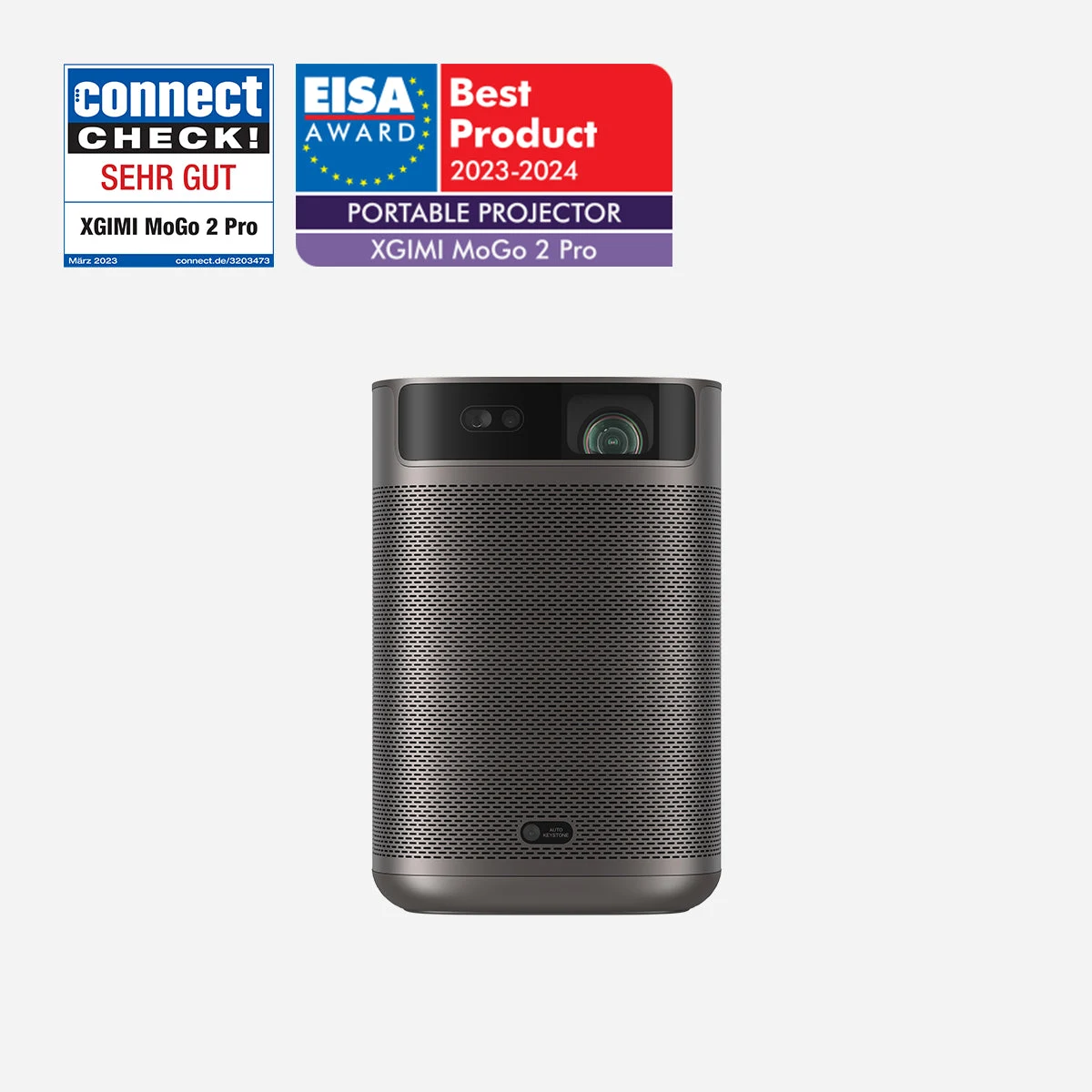
The XGIMI MoGo 2 Pro: native 1080p, 430 ISO lumens, Google TV, and a 120-degree rotating stand.
The XGIMI MoGo 2 Pro is our best overall pick because it nails the thing most buyers actually want: a no-fuss projector that behaves like a smart TV. Open the box, aim it at a wall, and it focuses and straightens the image by itself. The current version runs Google TV with licensed Netflix, so streaming starts with one click and no dongle.
The headline specs are genuinely good for the price: native 1920 x 1080 resolution, 430 ISO lumens of measured brightness, and XGIMI’s ISA 2.0 environment adaptation – auto focus, auto keystone, obstacle avoidance and intelligent screen alignment working together. Two 8W speakers with Dolby Audio mean the sound is genuinely watchable out of the box, which is not something you can say about most projectors in this price class. The 120-degree adjustable stand is a small feature that matters a lot: tilt it up and you are watching movies on the bedroom ceiling in seconds.
One important honesty note: the MoGo 2 Pro has no internal battery. It runs on wall power (or a compatible USB-C power bank), so it is portable in the sense that it is small and easy to move, not in the “watch in a field with no power” sense. And 430 ISO lumens is honest brightness, but it is still dark-room brightness – this is not a projector you use with the lights on.
Pros:
- Best balance of price, brightness and smarts on this list
- Native 1080p with honest, measured 430 ISO lumens
- Google TV with licensed Netflix – no stick required
- ISA 2.0 auto focus and keystone set up the picture for you
- 120-degree tilting stand makes ceiling viewing effortless
- Strong dual 8W Dolby Audio speakers
Cons:
- No internal battery – needs wall power or a power bank
- Still a dark-room projector; image washes out with lights on
- 2GB RAM means the smart interface can feel slow at times
- Not the brightest option here for the money
Best for: Most people buying their first serious mini projector. The best mini projector overall for home movie nights at a fair price.
Skip if: You need true battery-powered viewing away from any outlet – the Nebula Capsule 3 Laser is the pick for that.
2. Anker Nebula Capsule 3 Laser – Best Ultra-Portable
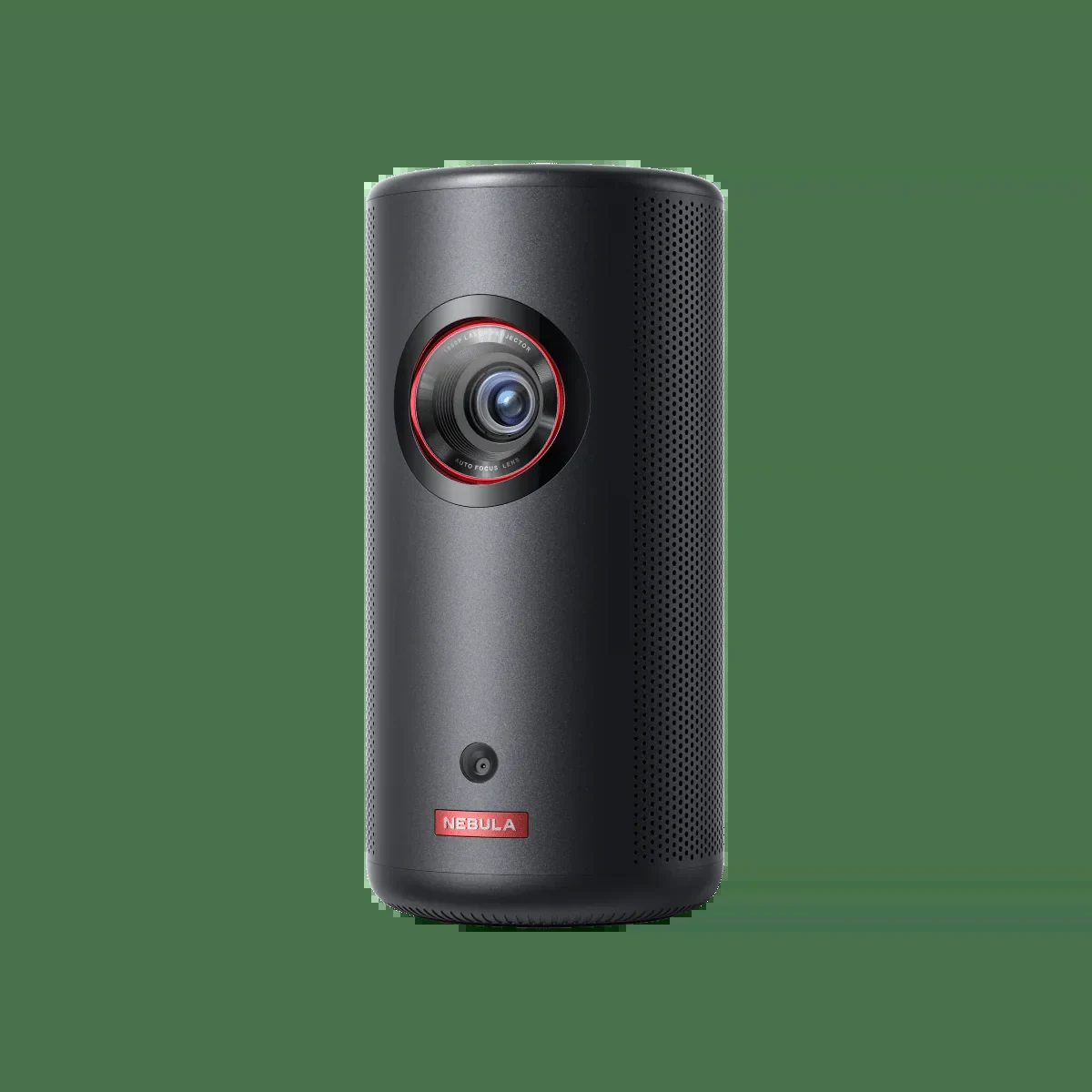
The Anker Nebula Capsule 3 Laser: soda-can sized, 300 ANSI lumens, 2.5-hour battery, Google TV.
The Anker Nebula Capsule 3 Laser is roughly the size of a soda can and weighs just over 2 pounds. It is the projector you throw in a backpack for backyard movie nights, camping trips and weekend trips – and unlike most tiny projectors, it does not ask you to suffer terrible picture quality for the privilege.
The specs are legitimately impressive for the form factor. A laser light source (not LED) produces a sharper 1080p image at 300 ANSI lumens, with a 30,000-hour light source life. The 52Wh battery plays movies for about 2.5 hours, which covers almost any feature film. Google TV is built in, so Netflix, Disney and the rest stream natively, and the 8W Dolby Digital speaker is punchy enough for a small room. Intelligent Environment Adaptation handles autofocus, keystone and obstacle avoidance automatically (https://www.projectorcentral.com/anker-capsule_3.htm).
The trade-offs are the price and the brightness ceiling. At around $600, this is the priciest pick per square inch of screen, and 300 ANSI lumens means it really wants a dark room or a late evening. It is also the smallest speaker of the premium picks, so for big living-room nights you will want an external speaker paired over Bluetooth.
Pros:
- Truly pocketable – soda-can size, 2.1 lb, goes anywhere
- Laser light source = sharper image than LED rivals at this size
- Real 1080p at 300 ANSI lumens with honest specs
- About 2.5 hours of movie playback on the built-in battery
- Google TV built in – native streaming, no dongle needed
- 30,000-hour light source life
Cons:
- Premium price for the size class
- 300 ANSI lumens needs a genuinely dark room
- Single 8W speaker is small-room audio only
- Street prices vary widely between retailers
Best for: Travelers, campers and backyard-movie-night hosts who want a projector that fits in a bag and just works anywhere.
Skip if: Your projector will live in one room plugged into power – the MoGo 2 Pro or Aurzen BOOM 3 give you more screen per dollar.
3. Epson EpiqVision Mini EF12 – Best Picture Quality
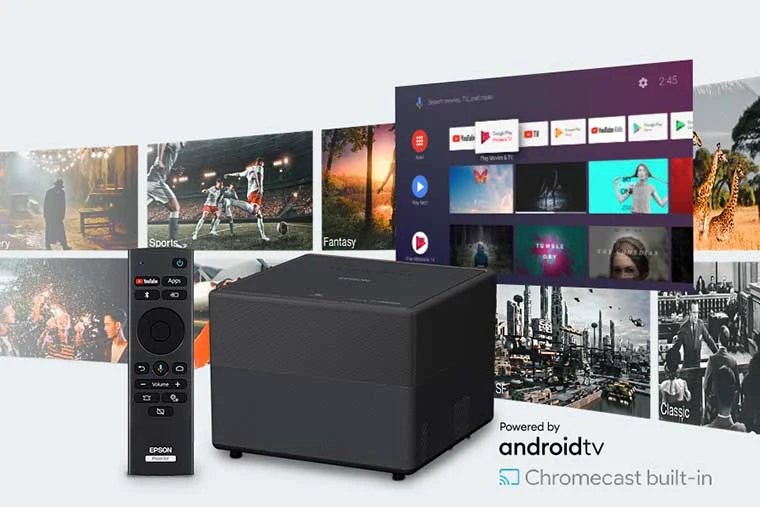
The Epson EpiqVision Mini EF12: 1000 ANSI lumens, 3LCD laser, Yamaha-tuned audio, Android TV.
If picture quality is the top priority and the budget stretches, the Epson EpiqVision Mini EF12 is the flagship of this list. This is a real home-theater projector in a portable shell: 1000 ANSI lumens (measured, not marketing), native 1080p, and Epson’s 3LCD laser technology, which produces brighter and more accurate color than the single-chip DLP designs most mini projectors use.
The brightness difference is the whole story. At 1000 ANSI lumens – roughly double the next-brightest pick here – the EF12 is the only projector on this list that stays watchable with some ambient light in the room. It throws up to 150 inches, supports HDR10, and the Yamaha-designed speaker system with dual 5W drivers and DSP tuning is the best built-in audio here. Android TV is built in with Chromecast, and the MicroLaser array lasts up to 20,000 hours. Reviewers consistently rate it as the image-quality leader in the portable class (https://www.projectorreviews.com/epson/epson-ef12-smart-laser-projector-review/).
The catch is cost and portability. At around $900 it costs as much as a very good TV, it has no internal battery, and at nearly 5 pounds it is portable in the “move it between rooms” sense, not the backpack sense. It is also the least kid-proof option: it is a premium device that wants a stable shelf, not a garden party.
Pros:
- 1000 ANSI lumens – usable with some ambient light, unlike every other pick here
- 3LCD laser delivers brighter, more accurate color than single-chip DLP
- Native 1080p with HDR10 and up to 150-inch image
- Yamaha-designed audio – the best built-in sound on this list
- Android TV with Chromecast built in
- 20,000-hour laser light source
Cons:
- Premium price – close to $900
- No battery – wall power only
- 4.7 lb, more “movable” than truly portable
- Overkill if you mostly watch in a pitch-black bedroom
Best for: The dedicated home-cinema corner or living room where picture quality matters most and the projector rarely moves.
Skip if: You want backyard portability or a battery – look at the Nebula Capsule 3 Laser instead.
4. Aurzen BOOM 3 – Best Value Smart Projector
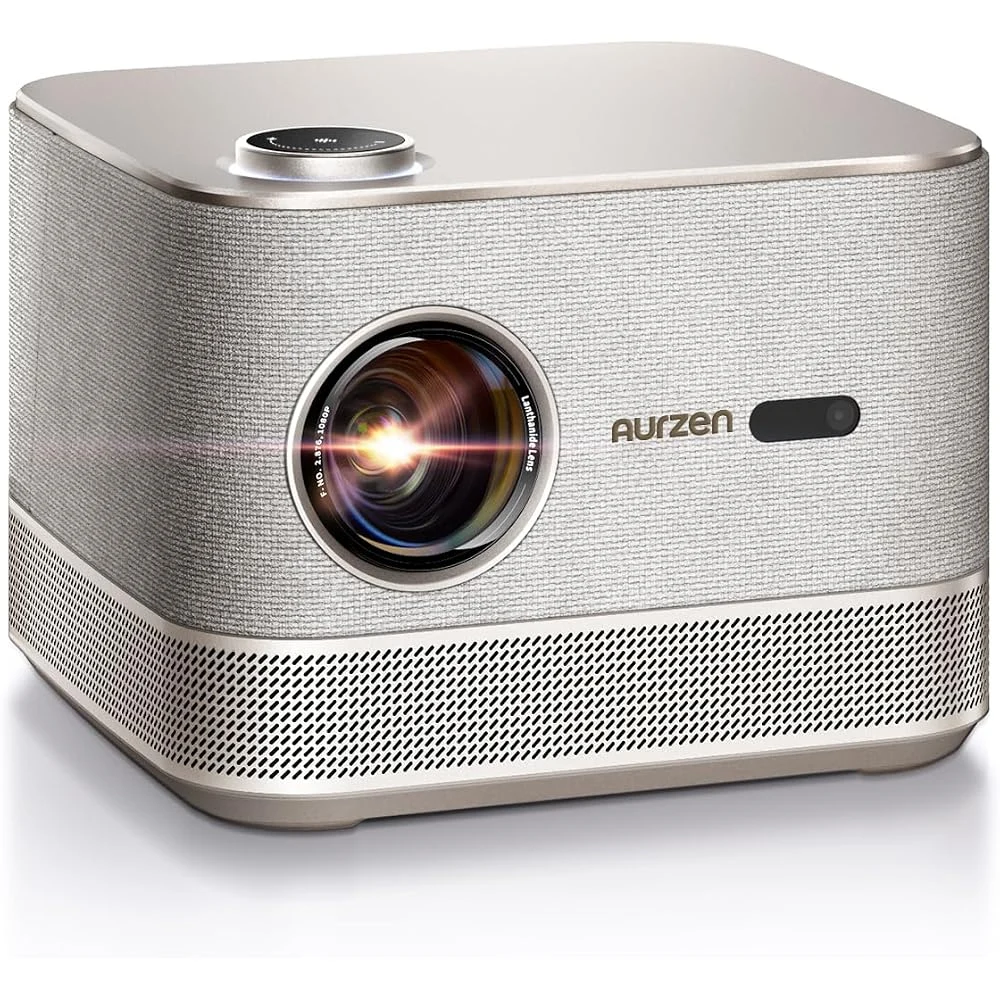
The Aurzen BOOM 3: 500 ANSI lumens, native 1080p with 4K support, webOS, and 36W Dolby speakers.
The Aurzen BOOM 3 is the value surprise of this list: around $200 buys you native 1080p, 500 ANSI lumens, 4K input support, and one of the most complete feature sets here. It is an LCD projector running webOS with officially licensed Netflix, Prime Video and YouTube pre-installed – no streaming stick, no casting workarounds.
The standout feature is the audio. A 36W, 4-speaker 2.2-channel system with Dolby Audio is far beyond what projectors at this price normally offer, and reviewers single it out as the BOOM 3’s best trait. AI autofocus, 6D keystone correction, intelligent obstacle avoidance and a sealed optical engine (which keeps dust from spotting the image over time) round out a spec sheet that reads like a projector costing twice as much. It even ships with a rugged carrying case.
Be clear-eyed about the trade-offs. It is bigger and heavier (nearly 6 lb) than the portable picks, and it is plug-in only – no battery. The brand is newer and less proven than Anker, XGIMI or Epson, and the webOS app store is more limited than Google TV or Android TV, so some niche streaming apps may need a stick. But for a fixed living-room setup on a budget, the screen-per-dollar math is unbeatable.
Pros:
- Outstanding value: native 1080p + 500 ANSI lumens for around $200
- 36W 4-speaker Dolby Audio – the best sound-per-dollar here by far
- Officially licensed Netflix, Prime Video and YouTube on webOS
- AI autofocus + 6D keystone + obstacle avoidance + sealed optical engine
- 4K input support and HDR10
- Rugged carrying case included
Cons:
- Bulky at nearly 6 lb – not a travel projector
- Plug-in only, no battery
- webOS app store is narrower than Google/Android TV
- Newer brand with a shorter track record than the big names
Best for: A permanent living-room or bedroom setup where you want the biggest, brightest smart-projector experience for the least money.
Skip if: You need portability or battery power – this one stays near an outlet.
Buying Guide: How to Choose the Right Mini Projector
The wrong mini projector gives you the same bad night twice: a dim, blurry image that sends you back to the TV. Five decisions separate a projector you love from a box you regret.
ANSI lumens vs. “lumens”: the number that actually matters
This is the single most important spec, and the most lied-about. ANSI lumens (or ISO lumens, the same idea measured to the ISO standard) is an independent, repeatable measurement of real brightness. A bare “lumens” or “lux” figure from a budget brand is often a fantasy number – a projector claiming 2400 lumens on the box may measure under 100 ANSI lumens in a lab. Projector Reviews has documented this pattern extensively on budget models (https://www.projectorreviews.com/vankyo/vankyo-leisure-3-mini-projector-our-first-look-review-of-key-features-and-capabilities/).
The practical translation: 200-300 ANSI lumens works in a dark room. 400-500 ANSI lumens gives you a brighter dark-room image with a bit more headroom. Around 1000 ANSI lumens (the Epson EF12) stays watchable with a lamp on across the room. No mini projector on this list – or any list – competes with daylight. Plan your movie nights for darkness, and brightness disappointment disappears.
Native resolution vs. “supported” resolution
Native resolution is the actual number of pixels the projector displays. Supported resolution is just what it can accept as input before downscaling it. This distinction is how a native 480p projector gets sold as “1080p supported” – technically true, practically misleading. For a 100-inch image, native 1080p (1920 x 1080) is the sweet spot and every pick on this list except two is there. The BenQ GV30 is native 720p, which is fine for casual viewing, and the Vankyo Leisure 3 is native 480p, which is visibly soft on a big screen. Match your expectations to the native number, not the supported one.
Throw distance: will it fit your room?
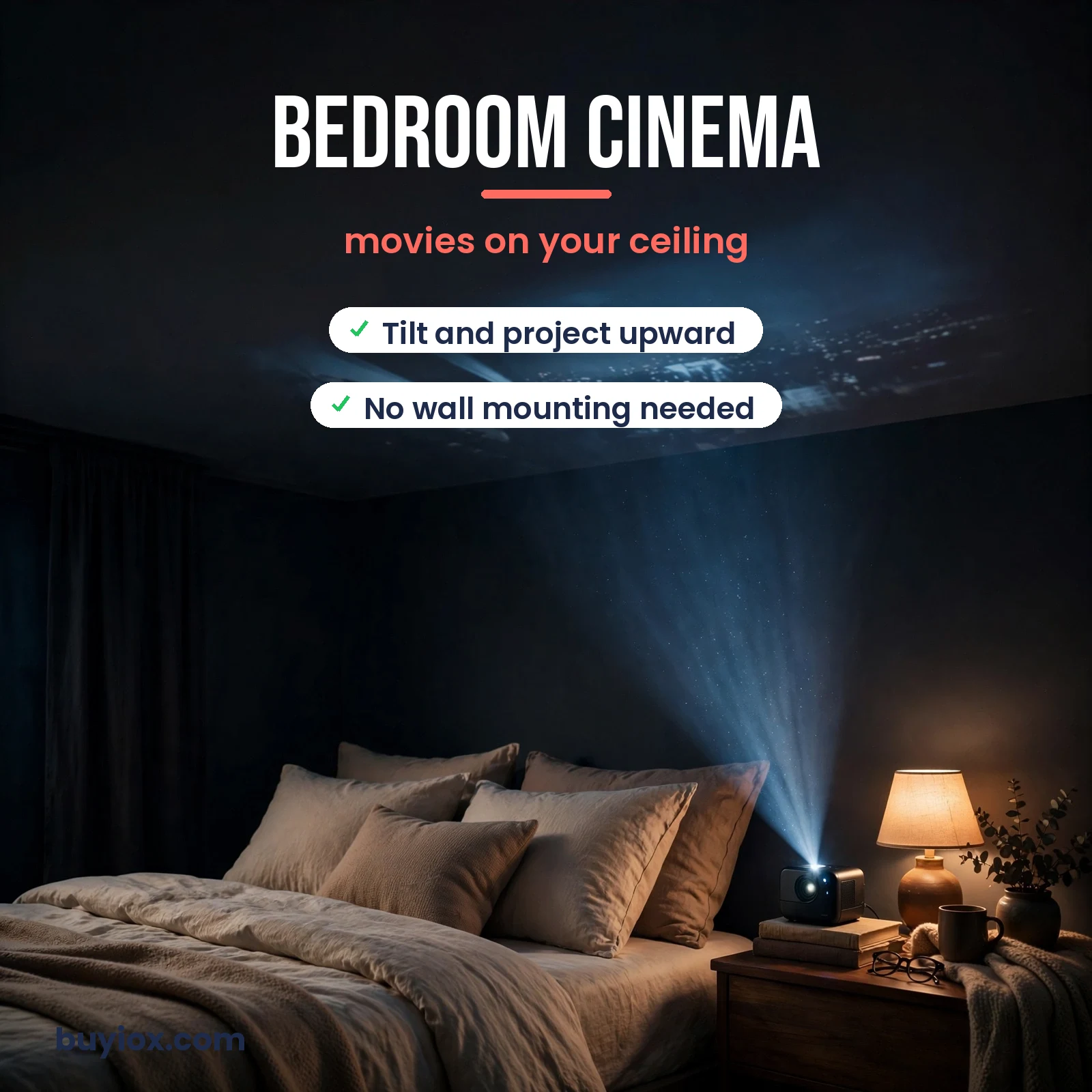
Throw ratio tells you how far back the projector sits for a given screen size. A 1.2:1 throw ratio (common on this list) needs about 10 feet of distance for a 100-inch image. Measure your room before you buy: the distance from your shelf or tripod to the wall must be enough for the screen size you want. Short-throw projectors cost more; the picks here are standard throw, which suits most living rooms and bedrooms. For ceiling projection in bed, the MoGo 2 Pro’s tilting stand and the BenQ GV30’s 135-degree rotation do the work for you.
Battery vs. plug-in: how portable is “portable”?
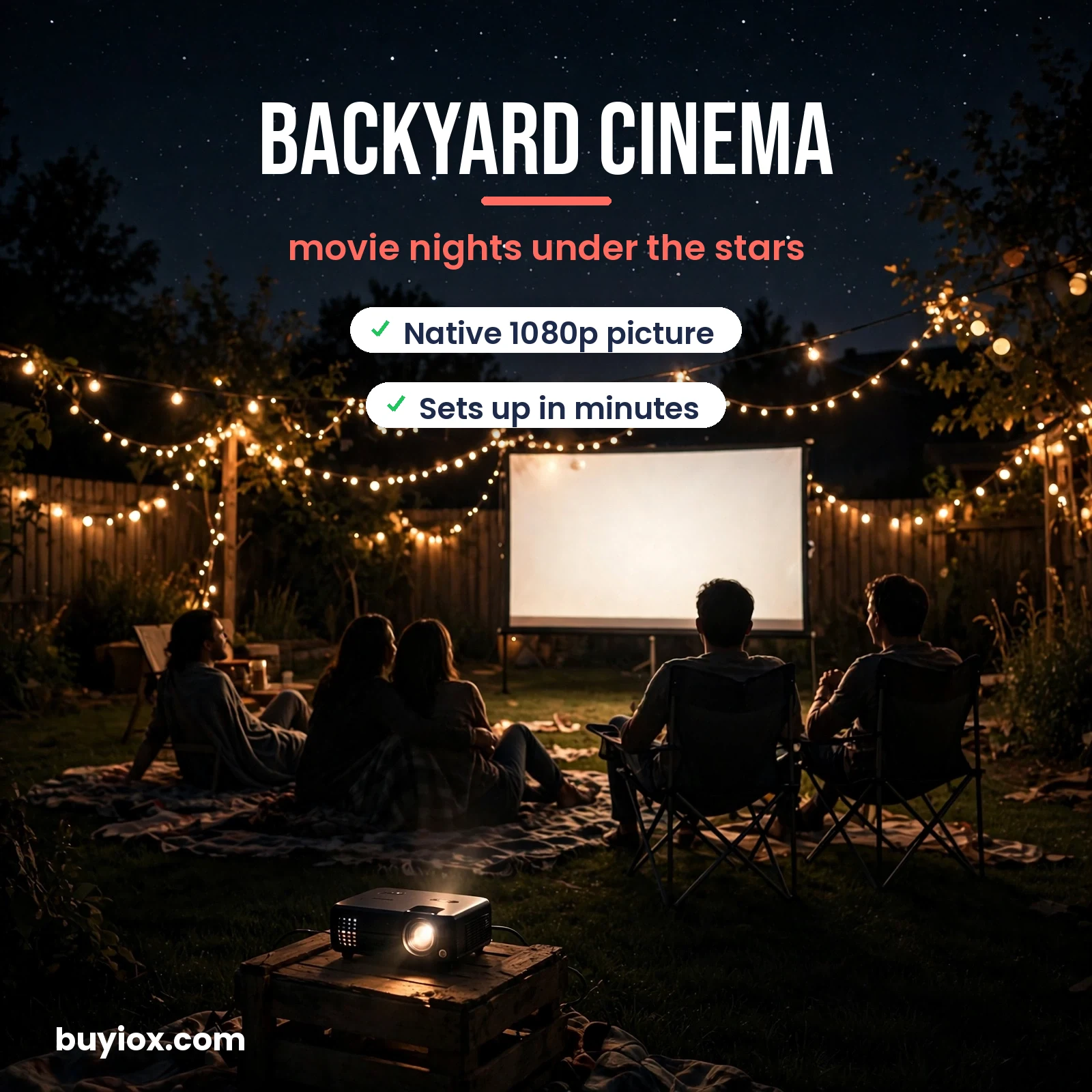
Only two picks here run on battery power in any meaningful sense: the Nebula Capsule 3 Laser (about 2.5 hours of movie playback) and, by extension, projectors you power from a USB-C power bank like the MoGo 2 Pro. Everything else needs a wall outlet. Be honest about where you will watch: if backyard movie nights mean dragging an extension cord across the lawn, a battery projector changes the experience completely. If the projector lives in the living room, do not pay a portability premium for a battery you will never use.
Autofocus and keystone: the setup tax
Manual focus knobs and manual keystone sliders are the hidden tax of cheap projectors – every time the projector moves, you fiddle for five minutes. Autofocus and auto keystone (standard on the MoGo 2 Pro, Capsule 3 Laser, EF12 and BOOM 3) eliminate that tax entirely: place it, and it squares up the image itself. If you will move the projector between rooms or take it outside, this feature is worth paying for. For a projector that never moves, it matters less.
Sound: plan for it, or get it built in
Tiny speakers are the universal weak point of small projectors. The Epson EF12 (Yamaha-tuned) and Aurzen BOOM 3 (36W) are genuinely fine without extras; the MoGo 2 Pro’s dual 8W Dolby speakers are decent for small rooms; the rest benefit from a Bluetooth speaker. Every projector here has Bluetooth audio-out, so pairing a speaker you already own is a free upgrade.
5. BenQ GV30 – Best Bedroom and Ceiling Pick
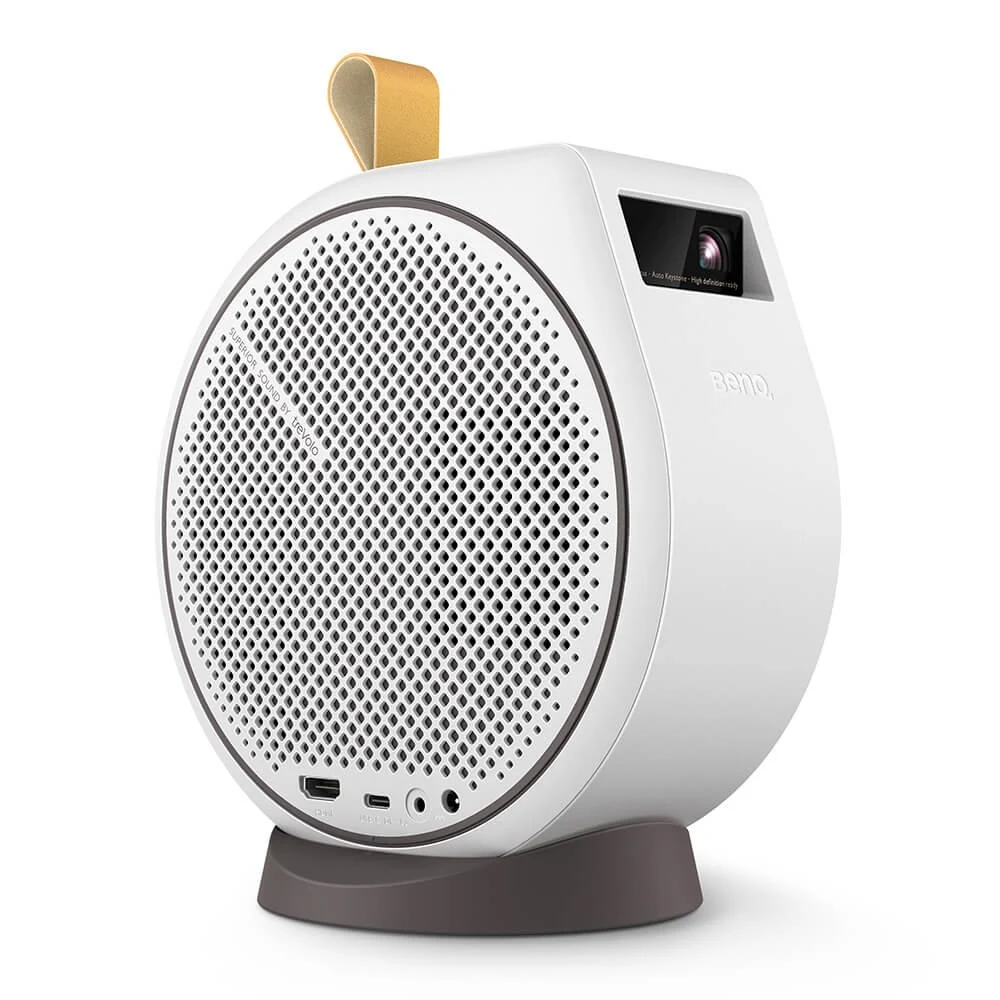
The BenQ GV30: 135-degree tilt for ceiling viewing, 300 ANSI lumens, 2.1-channel speakers, Android TV.
The BenQ GV30 has one trick no other projector here can match: its projection head rotates 135 degrees, so you can aim it straight at the ceiling. For bedroom movie nights – lying in bed watching a film overhead – it is the most comfortable viewing experience on this list, and it also happens to be the projector with the best built-in sound design.
The specs are solid mid-range: 720p native resolution (1280 x 720), 300 ANSI lumens from an Osram LED, autofocus with auto vertical keystone, and a 2.1-channel chamber speaker system (two 4W drivers plus an 8W woofer) that reviewers rate as unusually full for the size. An Android TV dongle is included for streaming, it runs about 2.5 to 3 hours on battery, and BenQ built it tough – drop-proof from 70 cm with a carry bag included. It doubles as a Bluetooth speaker, which is a genuinely useful second life.
The honest compromise is resolution: 720p native is visibly less sharp than 1080p on a 100-inch image, and at around $500 you are paying a premium for the tilt mechanism and the BenQ brand. But if ceiling viewing is your use case, nothing else here does it this elegantly, and the sound quality means you may never need an external speaker.
Pros:
- 135-degree rotating head – the best ceiling-viewing projector here
- Excellent 2.1-channel sound with dedicated woofer
- Android TV dongle included for streaming
- 2.5-3 hours of battery life, Bluetooth speaker mode
- Drop-proof build with carry bag included
- Honest 300 ANSI lumen rating from a trusted brand
Cons:
- Native 720p, not 1080p – softer image on large screens
- Premium price for the resolution
- Auto keystone is vertical-only, not horizontal
- 1.6 kg, heavier than the soda-can portables
Best for: Bedroom cinema – lying in bed watching the ceiling – and anyone who wants great built-in sound without extras.
Skip if: You want the sharpest possible image per dollar – the Aurzen BOOM 3 gives you 1080p and more brightness for less.
6. Vankyo Leisure 3 – Best Budget Starter
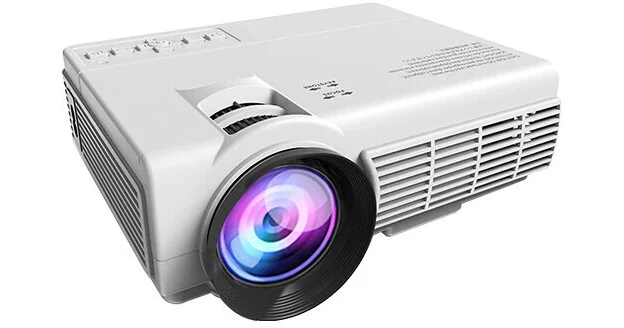
The Vankyo Leisure 3: the honest $100 starter pick – native 480p, needs a streaming stick, great for trying the concept.
The Vankyo Leisure 3 is the “is a projector even for me?” pick. At around $100, it is the cheapest way to find out whether you actually enjoy watching movies on a wall – and if the answer is yes, you will know exactly what to upgrade to. But this pick comes with the most important honesty warning in this guide.
Here is what you are actually buying: a single-chip LCD projector with native 800 x 480 (480p) resolution that accepts 1080p input, and a manufacturer brightness claim (2400 lumens) that independent reviewers note does not survive contact with a light meter – expect roughly 80 ANSI lumens in reality. There is no smart OS, no WiFi and no Bluetooth, keystone correction is manual (±15°), and you will need a Fire TV stick or similar for streaming plus an external speaker for decent sound.
So why include it? Because for a pitch-black room, a kids’ movie night, or a dorm wall, it genuinely works – owners consistently say the image is watchable in darkness, and the 3-year manufacturer warranty is unusual at this price. Just go in with clear eyes: this is a trial-size projector, not a cinema. Pair it with a streaming stick and a Bluetooth speaker, keep the room dark, and it delivers the core experience for a tenth of the EF12’s price.
Pros:
- Around $100 – the cheapest entry into big-screen viewing
- Simple and reliable: HDMI in, picture out
- Watchable in a truly dark room for casual movie nights
- 3-year manufacturer warranty – rare at this price
- Carry bag and HDMI cable included
Cons:
- Native 480p – visibly soft on a big screen
- Inflated brightness claims – needs a very dark room
- No smart OS, no WiFi, no Bluetooth – needs a streaming stick
- Manual focus and manual keystone only
- Weak built-in speaker – plan on external audio
Best for: First-timers testing whether they like projector life, kids’ rooms, and dorms – where $100 of curiosity is the right budget.
Skip if: You want a projector you will still love in a year – the MoGo 2 Pro is the real starting point for that.
Frequently Asked Questions
Are mini projectors actually good for movie nights?
Yes, with the right expectations. In a dark room, a native 1080p mini projector at 300+ ANSI lumens produces a genuinely enjoyable 80 to 120-inch image that feels like a small cinema. The two things that disappoint first-time buyers are brightness (buying a cheap projector and using it with the lights on) and sound (relying on a tiny built-in speaker). Solve those two – dark room, decent audio – and movie nights work beautifully.
How many ANSI lumens do I need for a home projector?
For a dark room, 200 to 300 ANSI lumens is the minimum for an enjoyable image. At 400 to 500 ANSI lumens (the MoGo 2 Pro and Aurzen BOOM 3) the picture has more punch and tolerates a little stray light. Around 1000 ANSI lumens (the Epson EF12) stays watchable with normal room lighting. Ignore any “lumens” figure that is not labeled ANSI or ISO – budget brands inflate these numbers enormously, and the real measured brightness can be a tenth of the claimed figure.
Do mini projectors work in daylight or with the lights on?
Not well. Even the brightest portable projectors are built for controlled lighting – projectors compete with ambient light, and daylight wins every time. For outdoor movie nights, start after sunset. Indoors, dim the lights or close the blinds. If your room can never go dark, the Epson EF12’s 1000 ANSI lumens handles ambient light better than anything else here – but a TV is still the better choice for a bright living room.
Do mini projectors have Netflix and streaming apps built in?
It depends on the model. The XGIMI MoGo 2 Pro (Google TV), Anker Nebula Capsule 3 Laser (Google TV), Epson EF12 (Android TV) and Aurzen BOOM 3 (webOS with licensed apps) all stream Netflix natively with no extra hardware. The BenQ GV30 needs its included Android TV dongle. The Vankyo Leisure 3 has no smart features at all and needs a Fire TV stick or similar. Always check which smart platform a projector runs before assuming your apps will work.
Can I use a mini projector for gaming?
Yes, casually. Most mini projectors accept HDMI from a console or PC without issue, and a 100-inch game on the wall is great fun. The caveats are input lag and brightness: input lag on portable projectors is typically 30 to 50+ ms, which is fine for story games and party games but not for competitive shooters, and dark game scenes need a dark room. The Epson EF12 and the laser-based Capsule 3 handle motion and dark scenes better than the budget LCD picks.
What is the difference between ANSI lumens and “LED lumens”?
ANSI lumens are measured with a standardized test (nine points across the projected image, averaged), so they are comparable between brands. “LED lumens”, “light source lumens” and bare “lumens” on budget listings have no standard behind them and are typically inflated – sometimes by 10x or more. When comparing projectors, only compare ANSI or ISO lumen figures. If a listing hides the ANSI number, treat its brightness claims as marketing.
How long do mini projector bulbs last?
Modern mini projectors use LED or laser light sources, not replaceable bulbs, and the rated lifespans are long: typically 20,000 to 30,000 hours. At 2 hours of viewing a night, that is 25 to 40 years of movie nights – the light source will outlast the smart software and your desire to keep the projector. This is one spec you can stop worrying about.
Final Verdict: Which Mini Projector Should You Buy?
If you want our single top recommendation, it is the XGIMI MoGo 2 Pro. Native 1080p, honest 430 ISO lumens, Google TV with licensed Netflix, self-focusing setup and genuinely good speakers for around $300 – it is the best mini projector for home movie nights for most people, and the one we would buy first.
For maximum portability, the Anker Nebula Capsule 3 Laser is the soda-can projector that goes anywhere with a real battery and a laser-sharp image. For the best picture quality money can buy in this class, the Epson EpiqVision Mini EF12 and its 1000 ANSI lumens of 3LCD laser brightness stand alone. The Aurzen BOOM 3 is the value king – 1080p, 500 ANSI lumens and huge 36W sound for around $200. Bedroom viewers should look at the BenQ GV30 for its ceiling-tilt design and excellent speakers. And the Vankyo Leisure 3 is the honest $100 way to test whether projector life is for you.
One last piece of setup advice that matters more than any spec: make the room dark, pair a Bluetooth speaker you already own, and aim for a plain white or light-grey wall. Do those three things and even the budget picks on this list will impress you.
A projector also earns its keep beyond movie nights. Pair it with one of the best standing desk converters for big-screen presentations from your home office, or turn film night into a workout by walking on one of the best under-desk treadmills while you watch.

[…] in a way no store credit can match. For family movie nights, you can extend the theme with the best mini projector for home movie nights and turn the slideshow into a big-screen […]