As an Amazon Associate I earn from qualifying purchases. This costs you nothing extra and helps us keep Buyiox free.
The Split Second That Terrifies Every Dog Owner
The front door swings open for half a second. A squirrel darts across the yard. The gate latch you swore you fixed gives way in the wind. And your dog is gone – four legs, full sprint, chasing something you cannot see. The next sixty seconds feel like an hour, and every dog owner who has lived them knows the hollow panic that follows: which way did he go?
This is not a rare event. PetMD reports that over 10 million pets are lost or stolen in the United States every year, and their guide on finding a lost dog stresses acting fast and using every tool available (https://www.petmd.com/dog/general-health/how-to-find-a-lost-dog). The AKC’s lost-dog guide adds that the first 48 hours are critical and most dogs stay within a small radius at first – which means knowing the direction early changes everything (https://www.akc.org/expert-advice/health/dog-lost-48-hours/).
A microchip is permanent ID, and you should absolutely get one – PetMD notes that dogs with microchips are more than twice as likely to be returned home (https://www.petmd.com/dog/care/responsible-pet-owners-checklist-taking-care-pet). But a microchip is not a locator: it only works when someone finds your dog and scans it. A GPS tracker is the tool that tells you where to look right now.
We researched six real, currently available GPS trackers – verified specs, verified prices, real owner complaints included – with one rule guiding every pick: would this actually help you find a dog that bolts?
One more thing before the list. These are research-based recommendations, not lab-tested claims. Every spec comes from official brand or retailer listings, and prices are marked approximate because they shift constantly on Amazon.
The Honest Truth About GPS Tracker Prices (Read This First)
Here is what most roundups bury in the fine print: the device price is the down payment, and the subscription is the mortgage. Every true GPS tracker carries its own cellular SIM, which means it needs a data plan to send your dog’s location to your phone. The one-time price on the box is not the price of ownership.
So before you fall for a cheap device, look at the true two-year cost – device plus subscription, calculated from current published plans:
| Tracker | Device (approx.) | Subscription (approx.) | 2-Year True Cost |
| — | — | — | — |
|---|---|---|---|
| Fi Series 3+ | Free with plan + $20 activation | $189/year | Around $400 |
| Petcube GPS Tracker | Around $53 | $7/month on annual plan | Around $221 |
| Tractive DOG 6 | Around $50 | $9/month on annual plan | Around $266 |
| Apple AirTag + holder | Around $41 | None | Around $41 |
| Halo Collar 4 | Around $424 | $9.99/month basic | Around $664 |
| Jiobit Smart Tag | Around $130 | $8.33/month on annual plan | Around $330 |
Notice what this reveals. The ‘budget’ Tractive costs more over two years than its device price suggests, the Fi’s free device still lands near $400 in real cost, and the Halo is a serious investment. None of this makes them bad products – it just makes the sticker price a bad way to choose. Now, with eyes open, here are the six worth your money.
Quick Comparison: The 6 Best Dog GPS Trackers
| Product | Best For | Approx. Price |
| — | — | — |
|---|---|---|
| Fi Series 3+ Smart Dog Collar | Best overall | Free device + around $189/year plan |
| Petcube GPS Tracker | Best health + GPS combo | Around $53 + $7/month |
| Tractive DOG 6 | Best budget pick | Around $50 + $9/month |
| Apple AirTag with Dog Collar Holder | Best for iPhone owners (no subscription) | Around $41 total, no subscription |
| Halo Collar 4 | Best virtual fences | Around $424 + $9.99/month |
| Jiobit Smart Tag | Best tiny and lightweight | Around $130 + $8.33/month |
Prices change often on Amazon, so treat these as rough guides. The links below take you to live Amazon search results where you can check the current price.
1. Fi Series 3+ Smart Dog Collar – Best Overall
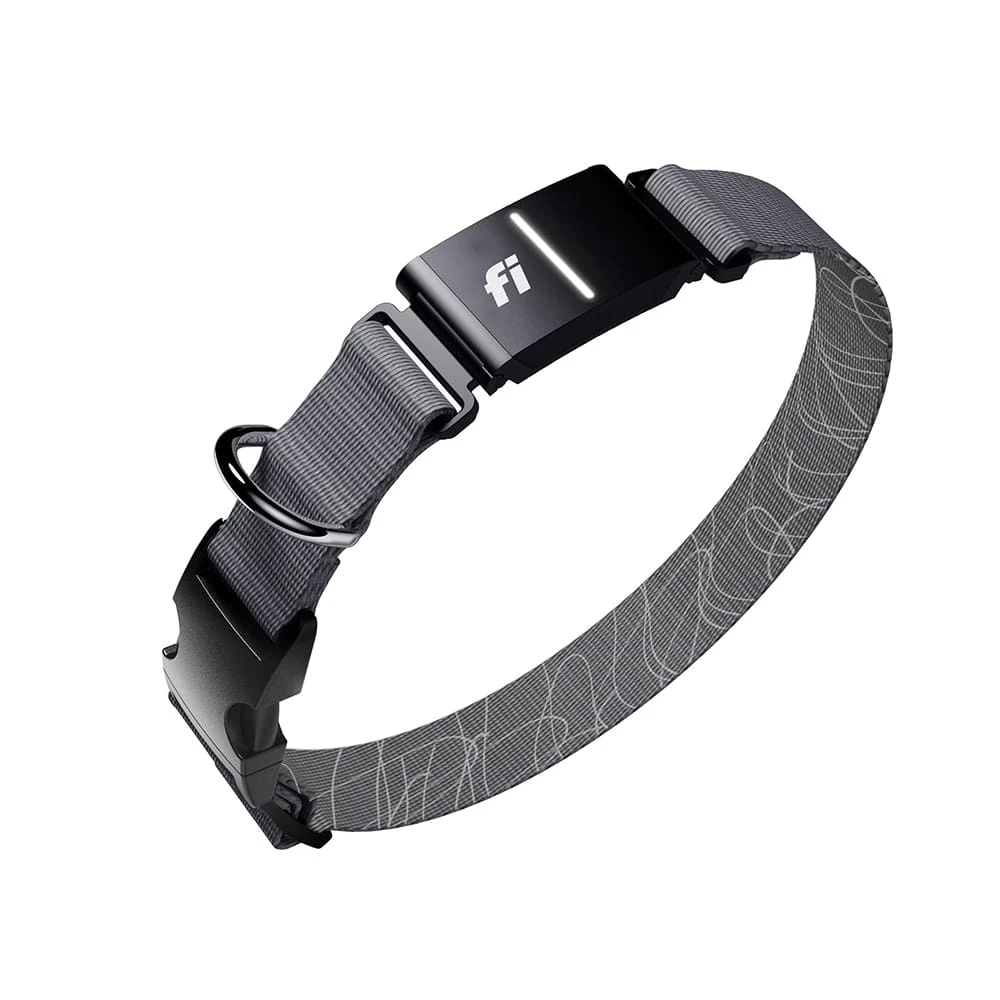
The Fi Series 3+: an integrated smart collar with up to 3 months of rated battery life, Safe Zones, and Lost Dog Mode.
The Fi Series 3+ is the only tracker on this list that is built into a real collar instead of clipped onto one. That design choice matters for escape artists: there is no module to snag off on a fence, no clip to work loose on a sprint through the woods. The dog wears a collar; the collar happens to know where the dog is.
The headline spec is the battery. Fi rates it at up to 3 months in standard low-activity mode – dramatically longer than any clip-on here. Real-world mileage varies with activity, and owners report a few weeks between charges with an active dog, but even that is multiples of what competitors manage. When a dog actually bolts, Lost Dog Mode switches the collar to live tracking every few seconds, with a rated runtime of about two days – long enough to sustain a real search.
The app goes beyond location: Safe Zones trigger escape alerts the moment your dog leaves a marked area, and activity tracking covers steps, sleep, and behavior patterns like scratching and barking. Apple Watch integration is included on the Series 3+. The honest cost math: the device is free for new customers, but you pay a one-time $20 activation fee and a membership – $99 for six months, $189 for one year, or $339 for two years, with a six-month minimum commitment. Without an active membership the collar does nothing, and it runs on AT&T’s LTE-M network, so coverage is US-focused and it needs a cell signal to track live.
Pros:
- Longest rated battery life here: up to 3 months in standard mode
- Integrated collar design – nothing to snag off or lose on a bolt
- Lost Dog Mode with live tracking for real searches
- Safe Zones with instant escape alerts
- Activity, sleep, and behavior tracking included
- No upfront device cost for new customers
Cons:
- Subscription is mandatory – the collar is a brick without it
- Six-month minimum commitment on all plans
- US-focused LTE-M coverage; needs cell signal for live tracking
- Replacing a chewed or outgrown collar means a new unit
- Two-year true cost lands near $400 despite the free device
Best for: Owners of proven escape artists who want the most complete tracking package and the least charging. The best dog GPS tracker overall.
Skip if: You want zero ongoing cost, or you travel internationally – the coverage and the subscription will frustrate you.
2. Petcube GPS Tracker – Best Health + GPS Combo
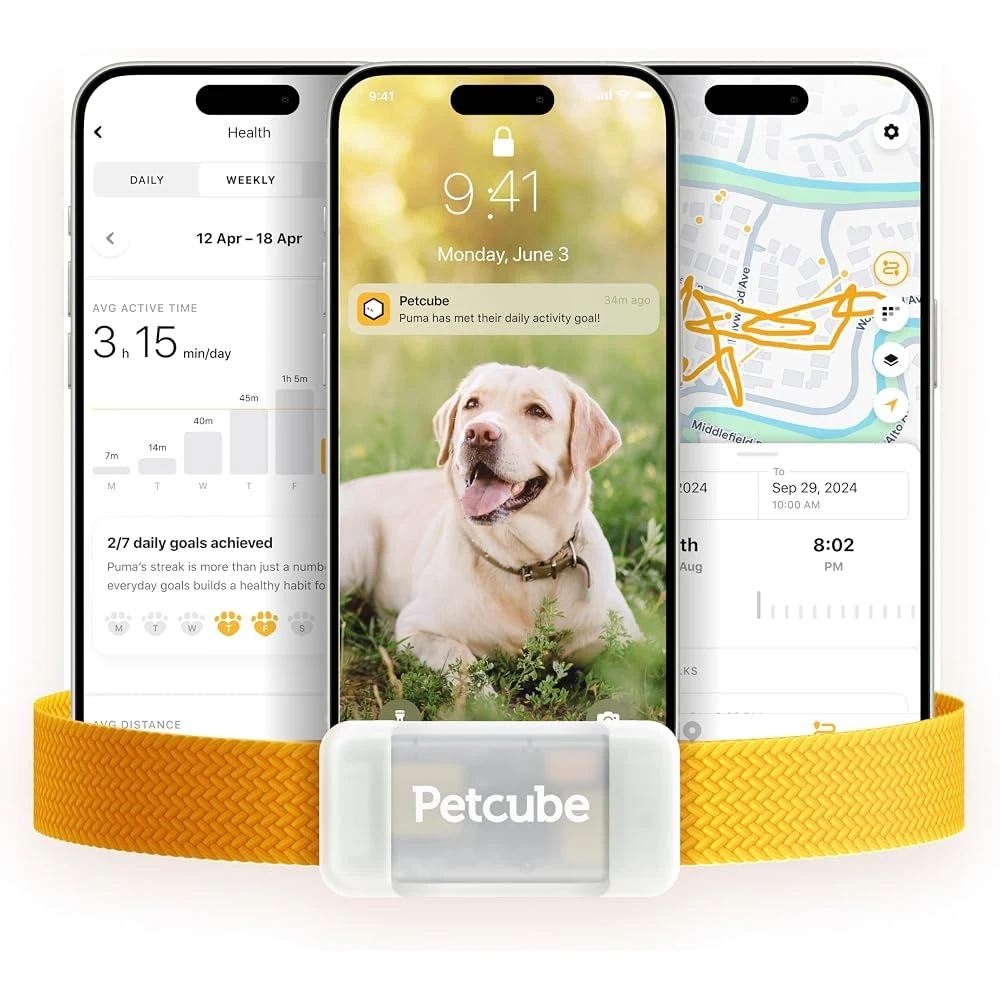
The Petcube GPS Tracker: a 29g device with escape alerts, activity tracking, and 24/7 vet chat.
The Petcube GPS Tracker is the pick for owners who want the tracker to do double duty: find the dog now, and watch the dog’s health every day. At 29 grams it mounts to any collar or harness with stretchy silicone loops, and the app combines live GPS location, escape alerts, virtual safe zones, and daily activity and wellness tracking in one dashboard.
The differentiator is the 24/7 certified vet chat bundled with the plans – ask a real vet a question at midnight without an emergency-room bill. For night searches, Petcube thought about visibility: the tracker has a built-in LED light, a buzzer, and a glow-in-the-dark fluorescent case, so you can spot and hear your dog in the dark. The device is waterproof to IP68 and rated for up to 30 days of battery with the Power Save Zone enabled at home on WiFi.
The honest math: the device runs around $53, and plans start at $12 per month billed monthly, dropping to $7 per month on the annual plan ($84) or $5 per month on the two-year plan ($120). You need WiFi for the power-saving features and LTE coverage for tracking, and like every cellular tracker here, there is no free tier – tracking stops without a plan. It is a strong value, but check coverage if you roam rural areas.
Pros:
- Activity and wellness monitoring alongside real GPS tracking
- 24/7 certified vet chat included with plans
- LED light, buzzer, and glow-in-the-dark case for night searches
- Up to 30 days of battery with Power Save Zone at home
- Plans from around $5/month on the two-year plan – the cheapest subscription here
- Light 29g device that mounts to any collar or harness
Cons:
- Needs WiFi at home for power saving and LTE for live tracking
- No tracking without an active subscription
- Smaller brand ecosystem than Fi or Tractive
- Live update speed is not published as precisely as Tractive’s
Best for: Owners who want health insight and location in one device, and anyone who values on-demand vet advice. The best GPS plus health combo.
Skip if: You need the fastest live updates or the longest battery – Tractive and Fi beat it there.
3. Tractive DOG 6 – Best Budget Pick
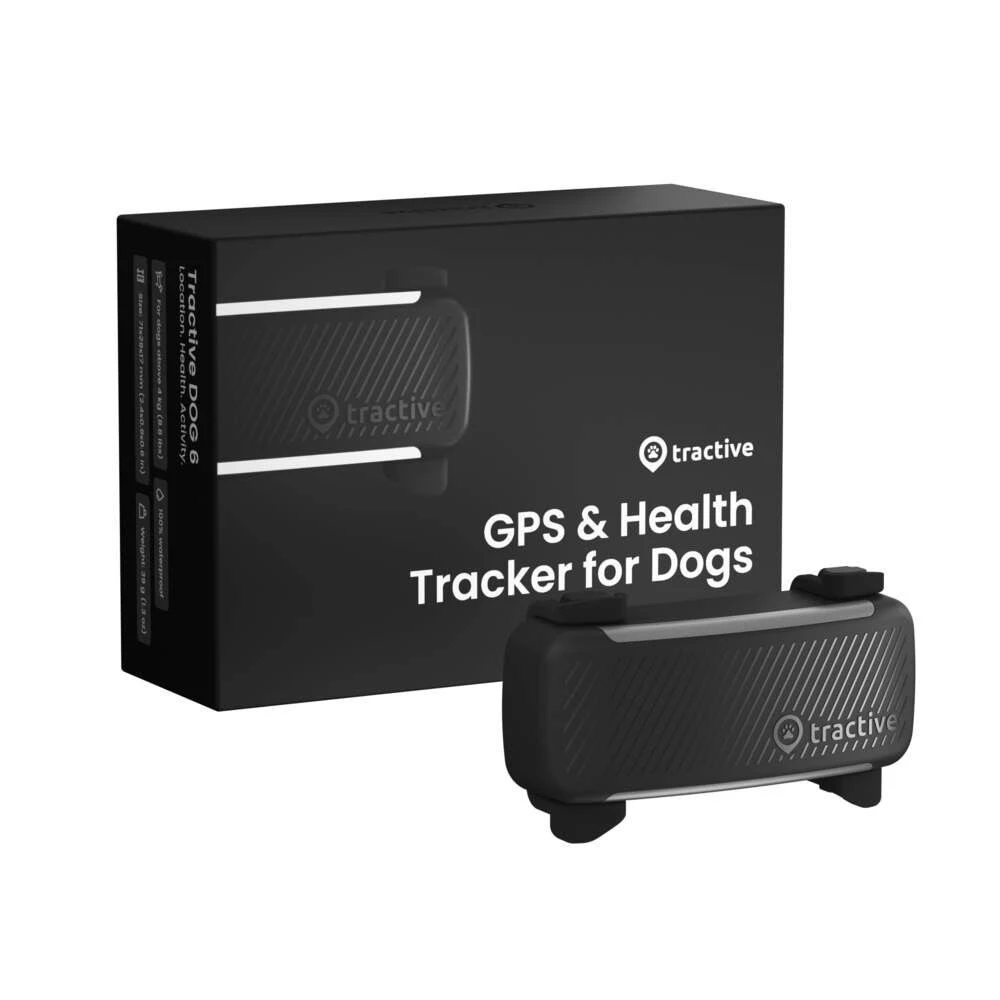
The Tractive DOG 6: live tracking every 2-3 seconds with coverage in over 175 countries.
The Tractive DOG 6 is the cheapest way to get true, real-time GPS tracking on your dog – a device around $50 with the lowest-cost subscription options of the cellular picks. In live mode it updates your dog’s position every 2 to 3 seconds, which is the fastest refresh rate on this list and exactly what you want when a bolter is moving. It clips onto any collar at least an inch wide, so you keep the collar your dog already likes.
Coverage is the standout: the device works in over 175 countries on multiple cellular carriers, making it the only pick here that travels internationally without a second thought. Virtual fences with escape alerts are included, the device is waterproof to IP68, and Tractive adds vitals and bark monitoring for health insight. Battery is rated up to 14 days, though independent testers have seen it stretch toward 25 days with typical daily use.
The honest trade-offs: the subscription is mandatory for everything, with the basic plan around $9 per month on annual billing and the premium plan $120 per year – so the true two-year cost lands near $266, not $50. The clip-on attachment can work loose on very active dogs, it is a bit bulky for extra-small breeds, and live mode drains the battery fast. Still, for the price, nothing else here gives you true GPS this cheap.
Pros:
- Cheapest true GPS tracker: around $50 device, lowest-cost plans
- Fastest live updates here: every 2 to 3 seconds
- Coverage in over 175 countries – the travel pick
- Virtual fences with escape alerts included
- IP68 waterproof, vitals and bark monitoring
- Clips onto any collar you already own
Cons:
- Subscription required for all features – true cost is near $266 over two years
- Clip attachment can slip on very active dogs
- A little bulky for extra-small breeds
- Live tracking mode drains the battery quickly
Best for: Budget-conscious owners who want real GPS tracking, and anyone who travels with their dog. The best budget dog GPS tracker.
Skip if: You refuse any subscription – the AirTag below is your only zero-fee option.
4. Apple AirTag with AirTag Dog Collar Holder – Best for iPhone Owners
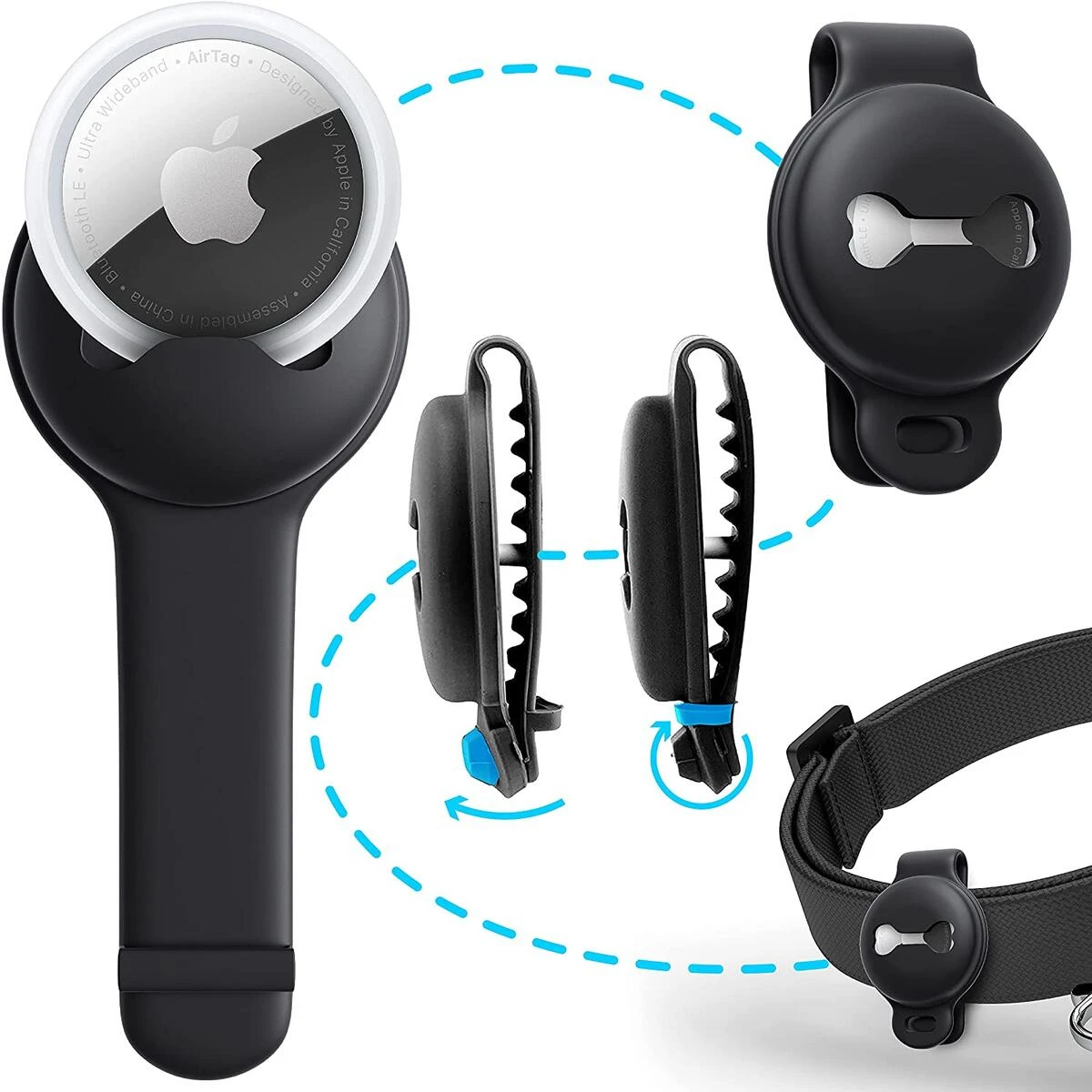
An AirTag in a collar holder: no subscription ever, and the best pick for iPhone owners as an urban backup.
This is the only pick with zero subscription, and for iPhone owners it is the cheapest tracking setup by a mile: an AirTag runs around $29, a collar holder around $12, and that is the entire lifetime cost. It piggybacks on Apple’s Find My network – hundreds of millions of iPhones, iPads, and Macs that silently relay the tag’s Bluetooth signal – so in cities and suburbs, coverage is surprisingly good.
Now the honest part, because this matters: an AirTag is NOT a GPS tracker. It cannot show you a live, moving dot on a map. It has no geofence or escape alerts – it will not ping you when your dog leaves the yard. It reports its last known location when an Apple device happens to pass nearby, which in a city can be minutes old and in the countryside can be never. Apple’s anti-stalking alerts can also trigger if the tag travels with someone else’s phone. And Android owners get no Find My app at all.
So what is it good for? As a backup layer on a city or suburban dog, it is excellent: cheap, tiny at 11 grams, a replaceable CR2032 battery that lasts about a year, and Precision Finding with Ultra Wideband that walks you straight to the tag when you are close. Pair it with a real GPS tracker for the best of both worlds – and if your dog is a rural roamer, skip straight to the Tractive or Fi instead.
Pros:
- No subscription, ever – around $41 total lifetime cost
- Huge Find My network coverage in cities and suburbs
- About one year of battery on a replaceable CR2032
- Ultra Wideband Precision Finding guides you in close
- Tiny and light at 11 grams
Cons:
- Not GPS: no live tracking, no escape alerts, no geofences
- Useless in rural areas with few Apple devices nearby
- iPhone required – no full experience on Android
- Apple’s anti-stalking alerts can trigger during a search
Best for: iPhone owners who want a cheap, zero-fee backup tracker for urban and suburban dogs. The best no-subscription option.
Skip if: You need live tracking or escape alerts – this cannot do that job. Get a true GPS tracker instead.
Buying Guide: How to Choose a Dog GPS Tracker
The wrong tracker is worse than no tracker: a dead battery, a dead zone, or a false sense of security when your dog is already three streets away. Five decisions keep you out of that trap.
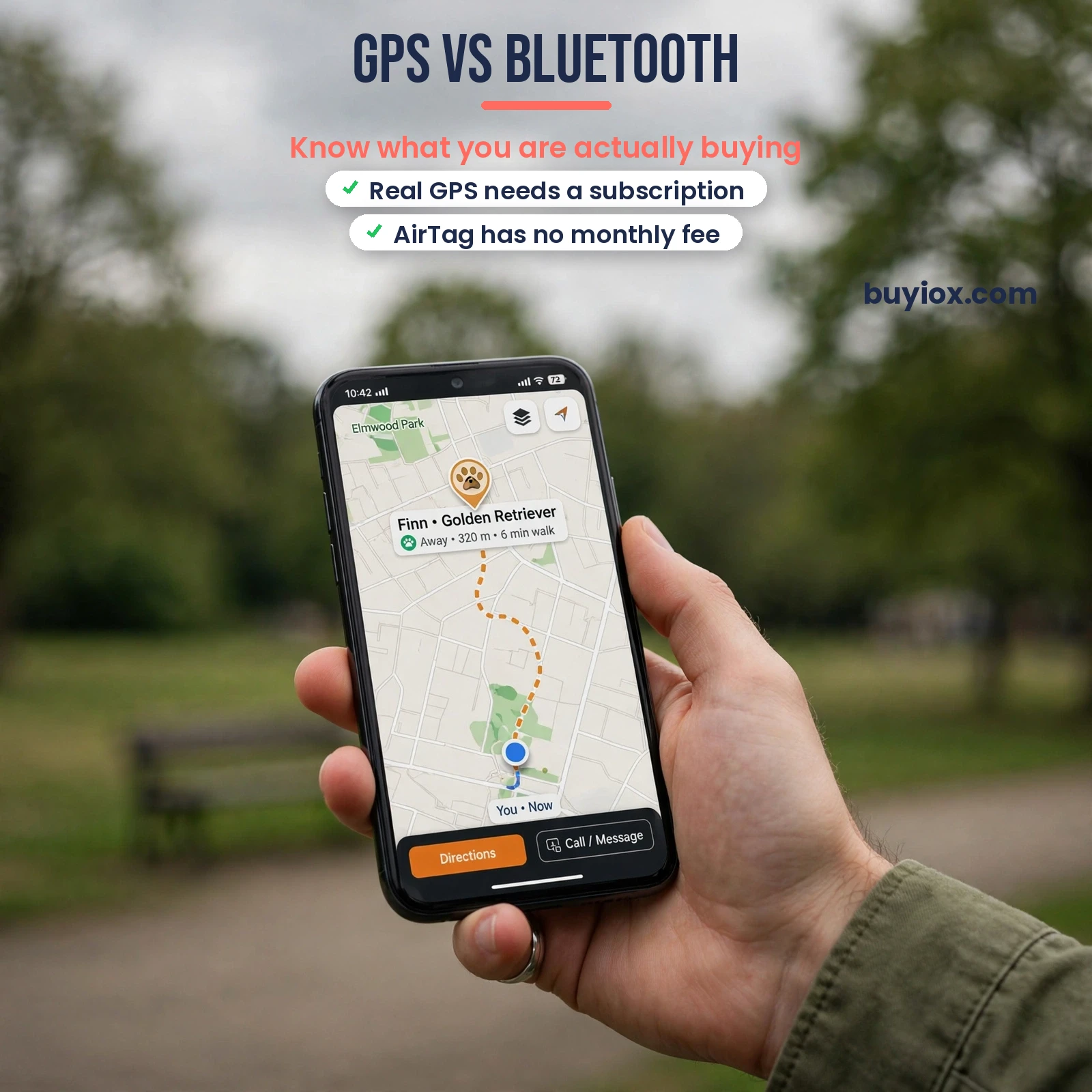
GPS or Bluetooth? Know what you are actually buying
This is the single most misunderstood thing in the category. A true GPS tracker (Fi, Tractive, Petcube, Halo, Jiobit) has a GPS chip plus a cellular radio: it finds its own position from satellites and sends it to your phone over the mobile network. That is why every one of them charges a subscription – you are paying for the SIM data. A Bluetooth tag (AirTag) has no GPS and no cellular: it shouts over Bluetooth and hopes a stranger’s phone hears it. One is a live tracker, the other is a lost-and-found tag. Buy the technology that matches the job.
Battery life: read the fine print, not the headline
Every battery claim assumes the slowest reporting mode. Fi’s ‘up to 3 months’ is standard mode; flip on Lost Dog Mode with updates every few seconds and you are measuring in days. Tractive’s rated 14 days assumes normal use, and live mode eats it faster. Decide how you will actually use the tracker – daily walks with occasional panic, or constant live monitoring – and judge the battery on that, not the box. If charging is a chore you will skip, the Fi’s long standard-mode battery is the honest answer.
Coverage matters more than specs
A tracker only works where its network works. The Fi runs on AT&T’s LTE-M network, the Jiobit is US-only with no international roaming, and the Tractive roams 175+ countries. Check the coverage map for the places your dog actually goes – your neighborhood, your hiking trails, your family’s house – before you buy. No cellular signal means no live tracking, full stop, no matter what the spec sheet says.
Size and weight: the 5 percent rule
A tracker your dog hates wearing is a tracker you will stop using. The working rule, cited across veterinary guidance, is that a collar-mounted device should weigh under 5 percent of the dog’s body weight. The Jiobit at 18 grams and the AirTag at 11 grams disappear on small dogs; the Fi module suits medium and large dogs; the Halo is a full collar system built for dogs 10 lb and up. If your dog is tiny, weight is the first filter, not the last.
Escape alerts and virtual fences: demand speed
For a bolter, the alert is the product. You want an escape notification in seconds, not minutes – a dog at full sprint covers a block fast. Every cellular pick here offers geofences or Safe Zones, but the Halo takes it further with full virtual fences you can draw anywhere (count limits depend on your plan tier: 5 fences on Bronze, 20 on Silver, unlimited on Gold). Whatever you buy, test the alert the day it arrives: walk the tracker past your fence line and time the notification. If it is slow, you want to know now, not during a real escape.
5. Halo Collar 4 – Best Virtual Fences
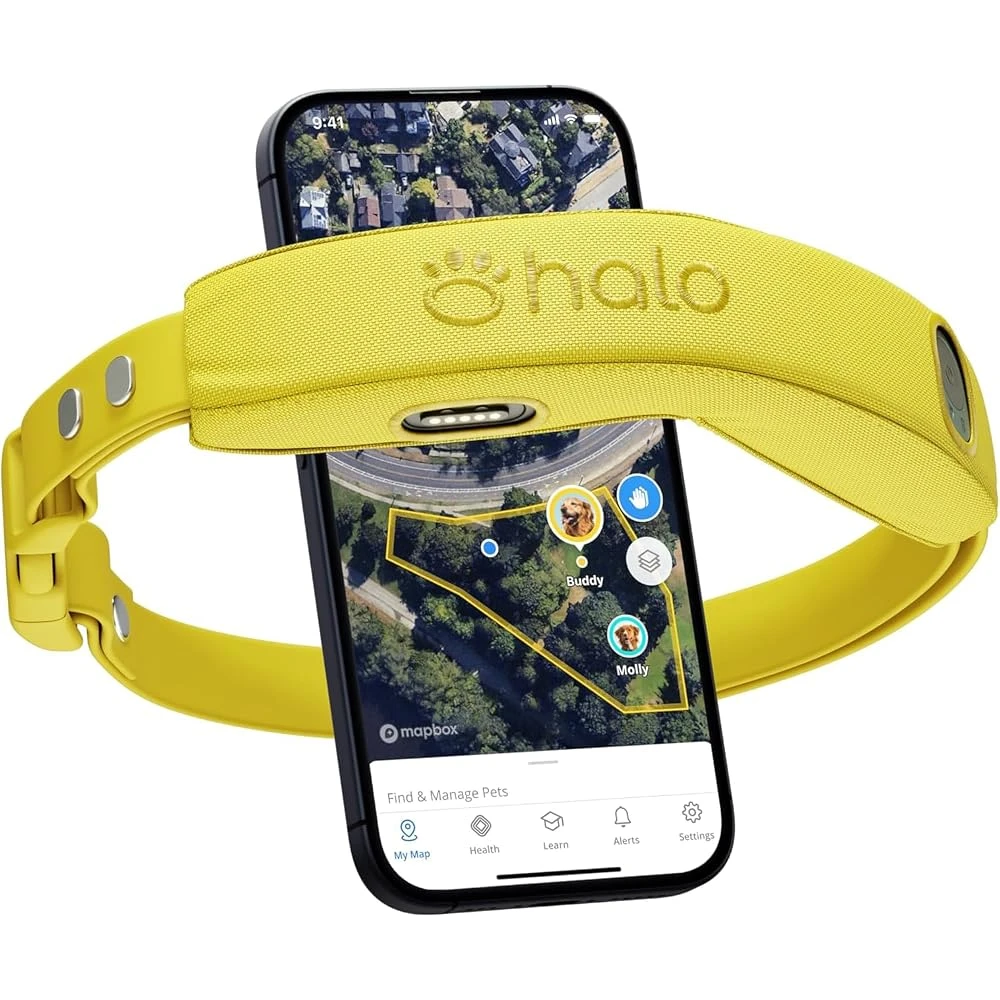
The Halo Collar 4: a GPS wireless fence with dual-frequency GPS and real-time tracking in one collar.
The Halo Collar 4 is a different animal from everything else on this list: it is a GPS wireless fence first and a tracker second. Draw virtual boundaries anywhere in the app – your yard, a campsite, a relative’s property – and the collar warns the dog with sound and vibration (and static correction if you enable it) when he approaches the line. For a fence jumper with no physical fence, this is containment, not just tracking. Halo’s own comparison guide puts it well: a GPS fence operates whether you are in the yard, in the kitchen, or asleep at 2 a.m. (https://www.halocollar.com/blog/dog-safety/gps-fences-vs-e-collars-which-is-right-for-your-dog/).
The tech is serious: dual-frequency GPS combining L1 and L5 bands for tighter positioning near houses and tree cover, real-time location tracking in the app, activity monitoring, and a structured training program built with Cesar Millan. The redesigned collar fits dogs 10 lb and up with necks from 8 to 30.5 inches, and the 90-day money-back guarantee lets you test it in your actual yard.
The honest cost, because this is the premium pick: the Collar 4 runs around $424 while supplies last, and the subscription starts at $9.99 per month for the Bronze plan (5 fences), rising to $14.99 for Silver (20 fences) and $19.99 for Gold (unlimited fences). True two-year cost on the basic plan: around $664. Battery is the weak spot – roughly two days of typical use with GPS active, and owner reviews consistently complain about charging frequency. It is also bulkier on small dogs, and the fence count is capped by your tier. Buy this for containment; buy the Fi or Tractive if you only need tracking.
Pros:
- Real GPS wireless fences you can draw anywhere – true containment
- Dual-frequency GPS for better accuracy near buildings and trees
- Portable fences for travel, campsites, and rentals
- Structured training program included
- 90-day money-back guarantee
- Real-time tracking and activity monitoring built in
Cons:
- Around $664 true cost over two years on the basic plan
- Battery lasts roughly two days – charging is a constant chore
- Fence count capped by subscription tier
- Bulky on smaller dogs despite the redesign
- Overkill if you only want tracking, not containment
Best for: Owners with no physical fence, fence jumpers, and travelers who need containment anywhere. The best virtual fence system.
Skip if: You just want to track your dog’s location – the Fi or Tractive does that for a fraction of the price.
6. Jiobit Smart Tag – Best Tiny and Lightweight
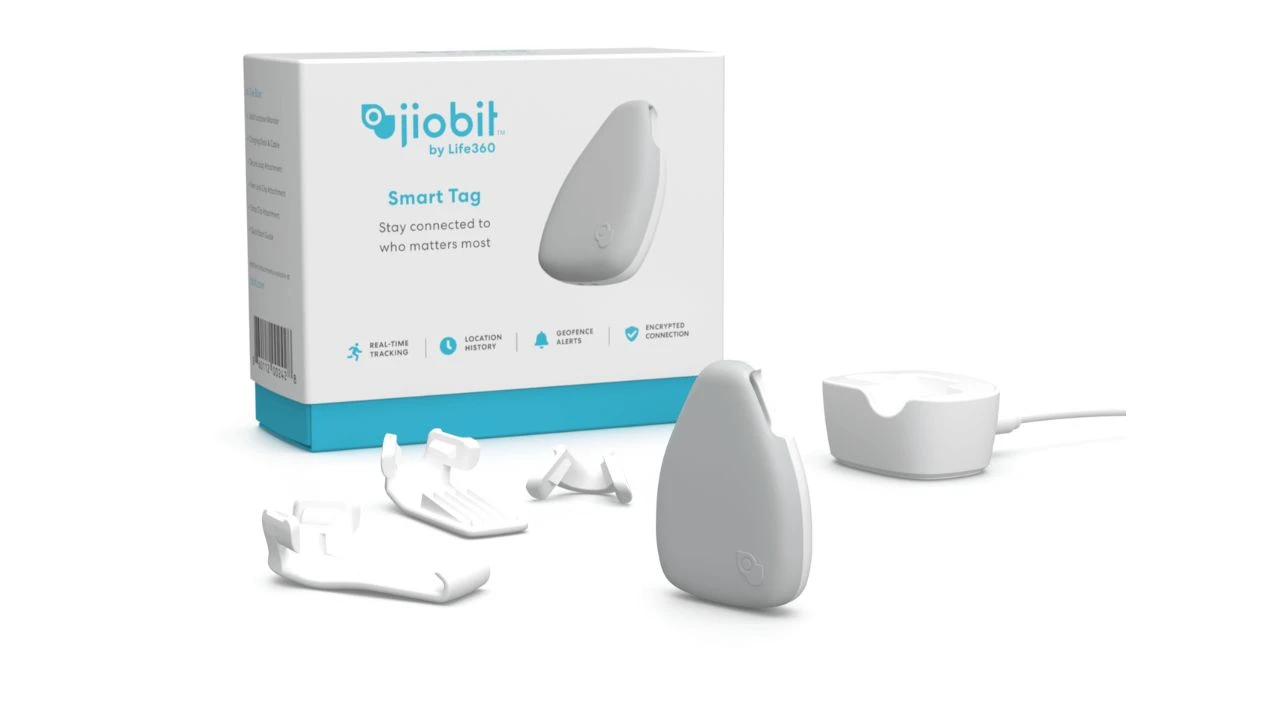
The Jiobit Smart Tag: just 18 grams – the lightest cellular GPS tracker on this list.
At 18 grams, the Jiobit Smart Tag is the lightest true GPS tracker you can put on a dog – lighter than the Tractive, lighter than the Petcube, and small enough for toy breeds and even cats. It clips onto any collar with purpose-built attachments, and it uses what Jiobit calls Progressive Beaconing: GPS plus cellular plus WiFi plus Bluetooth, handed off intelligently so the tag is always on the best available connection. In live mode it updates every 8 to 10 seconds, fast enough to follow a bolting dog in real time.
The app covers the essentials: geofence alerts, location history, and trusted contacts so family members can all watch the same dog. Battery runs 2 to 30 days depending on activity and connection behavior – the tag learns your patterns and stretches battery when the dog is in trusted places. The hardware feels well thought out, with encrypted connections and a clip system designed for small collars.
The honest limits: coverage is US-only with no international roaming, so travelers should look at the Tractive. The subscription is $99.99 per year ($8.33/month) or $16.99 month-to-month, and the device itself is $129.99 – the priciest hardware here after the Halo. Some owners report the clip can work loose on very thin collars, and the small size means a small battery. But for a small dog that bolts, this is the only tracker that disappears on the collar while still giving you real GPS.
Pros:
- Just 18g – the lightest cellular GPS tracker here, fine for small dogs and cats
- Fast live updates every 8 to 10 seconds
- Smart GPS/cellular/WiFi/Bluetooth handoff for reliable connection
- Geofence alerts, location history, and trusted contacts
- Clips onto any collar
Cons:
- US-only coverage – no international roaming
- $129.99 device is pricey for the size
- Subscription $8.33 to $16.99/month depending on plan
- Clip can loosen on very thin collars
- Small size means a smaller battery (2 to 30 days)
Best for: Small dogs, toy breeds, and anyone whose dog notices every gram on their collar. The best tiny and lightweight GPS tracker.
Skip if: You travel internationally, or you want the longest battery – the Fi wins there.
Frequently Asked Questions
Do dog GPS trackers need a subscription?
Every true GPS tracker does. The device carries its own cellular SIM to send your dog’s location to your phone, and that data plan costs $5 to $20 per month depending on the brand and plan – the Fi runs about $189 per year, the Tractive from about $9 per month, the Jiobit $8.33 per month on the annual plan. Without an active subscription, these devices stop tracking entirely. The only subscription-free options are Bluetooth tags like the Apple AirTag, which are not GPS trackers and cannot do live tracking or escape alerts.
Is an AirTag good enough as a dog tracker?
As a backup in a city or suburb, yes. As your only tracker for an escape artist, no. An AirTag has no GPS, no live tracking, no geofence alerts, and no escape notifications – it only reports its last known location when an Apple device happens to pass nearby. It is a lost-and-found tag, not a search tool. If your dog bolts in a rural area, an AirTag will likely tell you nothing. Use it as a cheap second layer alongside a real GPS tracker, not instead of one.
What happened to Whistle GPS trackers?
Do not buy one. Tractive acquired Whistle and shut down the Whistle platform, so existing Whistle devices stopped tracking and cannot be reactivated. You will still see Whistle recommended in old articles because it was popular for years, but any unit you buy today – new or secondhand – will not function. If you are a former Whistle owner, the Tractive DOG 6 is the natural replacement since Tractive absorbed the company.
How accurate are dog GPS trackers?
In open sky, consumer GPS is accurate to within about 16 feet, per the U.S. government’s published GPS accuracy figures – good enough to pinpoint your dog in a field or a park. Accuracy degrades near tall buildings, under heavy tree cover, and indoors, which is why the Halo Collar 4 uses dual-frequency GPS to tighten up positioning in obstructed areas. No consumer tracker will tell you which bush the dog is behind; all of them will tell you which block he is on.
Do GPS dog trackers work without cell service?
Not for live tracking. The GPS chip can still calculate a position, but with no cellular signal there is no way to send it to your phone – some collars store the location and upload it once the signal returns. If you hike or hunt in true dead zones, that is a hard limit of every tracker on this list. Off-grid satellite trackers exist for that job, but they are a different category with different prices.
How long does the battery really last on a dog GPS tracker?
Shorter than the box claims, because every published number assumes the slowest reporting mode. Fi’s ‘up to 3 months’ is standard low-activity mode; Lost Dog Mode with updates every few seconds lasts about two days. Tractive is rated up to 14 days but drains fast in live mode. The pattern is universal: the faster the updates, the shorter the battery. If you know you will use live tracking often, pick the longest-rated battery you can – the Fi – and build charging into your routine.
Can a GPS tracker replace my dog’s microchip?
No – get both. A microchip is permanent identification under the skin that any shelter or vet can scan, and PetMD notes that microchipped dogs are more than twice as likely to be returned home (https://www.petmd.com/dog/care/responsible-pet-owners-checklist-taking-care-pet). A tracker can be lost, chewed off, or run out of battery; a microchip cannot fall off. The tracker finds your dog tonight. The microchip brings your dog home when the tracker is gone.
Final Verdict: Which Dog GPS Tracker Should You Buy?
If you want our single top recommendation, it is the Fi Series 3+. The integrated collar design means there is nothing to snag off during a bolt, the battery outlasts everything else here by a wide margin, and Lost Dog Mode is purpose-built for the worst sixty seconds of your year. At around $400 in true two-year cost it is not cheap, but it is the most complete answer to the escape-artist problem.
For the best value in true GPS, the Tractive DOG 6 gives you the fastest live updates and international coverage for around $50 plus the cheapest plans here. iPhone owners who refuse subscriptions should get the Apple AirTag with a collar holder as a backup layer – just never as the only tracker. The Halo Collar 4 is the pick when the problem is containment rather than tracking, and the Jiobit Smart Tag is the only honest choice for tiny dogs that bolt.
A tracker is one layer of escape-proofing. Pair it with gear that keeps your dog attached to you in the first place: the best no-pull dog harnesses for dogs that slip collars, and the best dog calming chews if anxiety is what sends your dog bolting. And when you travel with your tracker-wearing adventurer, the best dog car seat covers keep the car surviving the trip home.