As an Amazon Associate I earn from qualifying purchases. This costs you nothing extra and helps us keep Buyiox free.
Someone rear-ends you at a red light, then tells their insurance you reversed into them. A shopping cart carves a gash down your door in a parking lot and nobody saw a thing. A stranger stages a low-speed crash and demands cash on the spot. These are not rare horror stories anymore. Insurance fraud rings, hit-and-runs, and false accident claims are everyday problems, and the drivers who win those fights are the ones with video evidence.
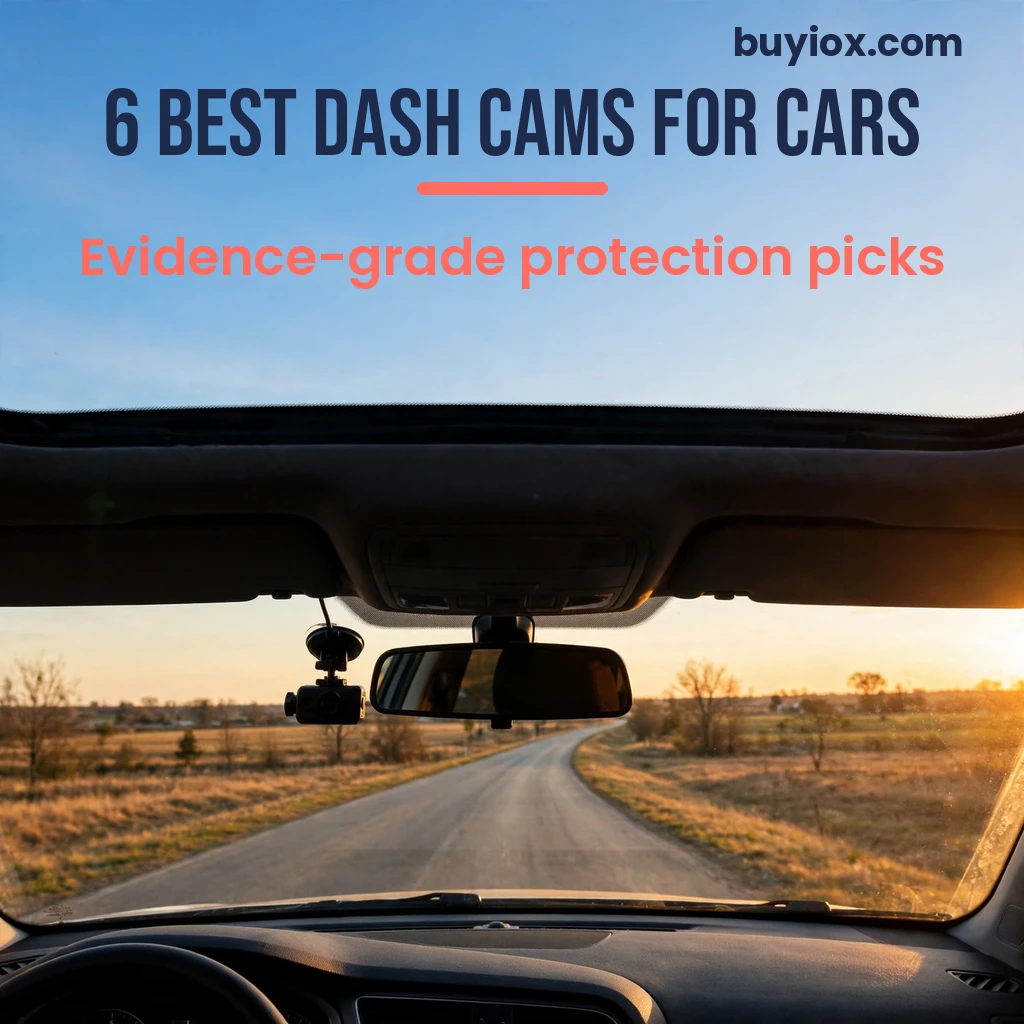
A good dash cam is the cheapest legal protection you can buy for your car. It records every mile you drive, stamps it with time and GPS location, and turns “he said, she said” into a file you can hand to your insurer. Below we break down six real dash cams we researched in depth, what each one actually records, and which driver each one suits best.
One quick note before we start: recording laws differ by state and country, especially around audio recording and where you mount the camera on the windshield. Check your local rules before you install, and disable the microphone if your state requires two-party consent for audio.
Our Top Picks at a Glance
| Pick | Product | Best For | Approx. Price |
| — | — | — | — |
|---|---|---|---|
| 1 | Viofo A229 Pro | Best overall, 4K front + 2K rear evidence | around $250 |
| 2 | Rove R2-4K Dual | Best value 4K front and rear | around $110 |
| 3 | Garmin Dash Cam 57 | Compact single camera, easy setup | around $230 |
| 4 | Nextbase 622GW | Premium 4K with image stabilization | around $300 |
| 5 | Viofo A119 Mini 2 | Budget 2K pick, discreet size | around $130 |
| 6 | Vantrue N2S | Rideshare drivers, front + cabin | around $220 |
Prices change constantly, so treat these as rough guides and always check the live price before you buy.
1. Viofo A229 Pro – Best Overall

Viofo A229 Pro (front and rear units shown) – dual Sony STARVIS 2 sensors for 4K front and 2K rear recording.
When the job is producing courtroom-grade footage, the Viofo A229 Pro is the camera we would mount on our own cars first. It pairs two flagship Sony STARVIS 2 sensors: an 8-megapixel IMX678 up front recording true 4K (3840 x 2160 at 30fps) and a 5-megapixel IMX675 at the rear recording 2K (2560 x 1440 at 30fps). Both channels run HDR, which is what lets the camera read a license plate at night even when headlights are blasting straight at the lens.
The front camera covers a 140-degree field of view at F1.8, while the rear takes a 160-degree sweep at F1.9. That wide rear coverage matters more than most buyers expect: rear-end collisions and tailgaters are where fraud claims cluster, and the 2K rear sensor is one of the sharpest you can get at this price. A CPL filter for the front camera comes in the box, which cuts windshield glare in daylight.
For evidence handling, the details stack up well. Built-in quad-mode GPS stamps location, speed, and route data onto every clip, and dual-band Wi-Fi 5 (2.4 and 5GHz) moves files to your phone fast through the Viofo app. Voice control lets you save a clip hands-free, and the camera runs on a supercapacitor rather than a lithium battery, which survives summer heat far better. Parking protection is genuinely flexible: auto event detection with buffered recording saves footage from before an impact, plus time-lapse and low-bitrate modes. All three need the HK4 or HK6 hardwire kit, sold separately.
The 2.4-inch LCD makes setup easy, and loop recording with G-sensor event lock means important files never get overwritten. If you want the maximum detail both directions without spending flagship money, this is the pick.
Pros:
- Dual Sony STARVIS 2 sensors: 4K front plus 2K rear, HDR on both
- Wide rear coverage (160 degrees) ideal for rear-end and tailgating evidence
- Built-in quad-mode GPS with speed and route stamping
- Supercapacitor power source, safe in extreme heat
- Front CPL filter included in the box
Cons:
- Parking mode needs a hardwire kit sold separately
- Rear CPL filter is an extra purchase
- Two-camera install takes longer than a single camera
Best for: Drivers who want the sharpest evidence-grade footage in both directions and a proven brand.
Skip if: You want a single-camera setup you can plug in and forget in five minutes.
Read the full spec list on the official Viofo A229 Pro page.
2. Rove R2-4K Dual – Best Value 4K Pick

ROVE R2-4K Dual (front unit shown) – 4K front recording with a free 128GB card in the box.
The Rove R2-4K Dual is the answer for drivers who want 4K front coverage without paying a premium. The front camera records 4K at 30fps through a Sony IMX675 STARVIS 2 sensor with a bright F1.5 aperture, which pulls in extra light for night driving, while the rear camera records 1080p. You get a 150-degree front view and a 140-degree rear view, which covers the lanes that matter for fraud and hit-and-run evidence.
Value shows up in the box contents. Rove includes a free 128GB ROVE PRO microSD card, so the camera is ready to record out of the box with no extra purchase. The 3-inch IPS screen is one of the bigger displays in this price range, and dual-band 5GHz plus 2.4GHz Wi-Fi pushes downloads up to 20MB per second through the ROVE app. Built-in GPS stamps speed and route data onto footage, which strengthens any insurance claim.
Parking protection is solid for the price: a 24-hour parking mode with motion and collision detection, though it needs a hardwire kit like most cameras. The supercapacitor handles hot and cold weather, firmware updates arrive over the air, and the card slot supports up to 1TB if you want weeks of loop recording.
The trade-offs are honest ones. The rear camera is 1080p rather than 2K, so rear plate reading at night is good but not A229 Pro level. And the camera body is chunkier than the minimalist options here. But for the money, no other dual-channel 4K dash cam gives you this much.
Pros:
- 4K front with Sony STARVIS 2 sensor and fast F1.5 aperture at a value price
- Free 128GB card included, supports up to 1TB
- Big 3-inch IPS screen, dual-band Wi-Fi with fast downloads
- Built-in GPS and over-the-air firmware updates
Cons:
- Rear camera is 1080p, not 2K
- Bulkier body than compact single cameras
- Parking mode needs a hardwire kit sold separately
Best for: Commuters and daily drivers who want dual-channel 4K evidence on a sensible budget.
Skip if: You need the sharpest possible rear-camera detail or a near-invisible mount.
3. Garmin Dash Cam 57 – Best Compact Single Camera

Garmin Dash Cam 57 – pocket-size 1440p dash cam with voice control and GPS.
The Garmin Dash Cam 57 is for the driver who wants a dash cam that disappears. It is pocket-size, mounts on a low-profile magnetic mount, and records 1440p HD video through a 140-degree lens with Garmin Clarity HDR optics. Footage stays crisp in harsh midday light and at night, and the camera is small enough to hide behind the rearview mirror from the driver’s seat.
What sets Garmin apart is the software layer around the video. Incident detection with the built-in GPS automatically saves footage when a crash is detected, stamping it with time and location. The Parking Guard feature monitors your parked car and sends video clip alerts to your phone when an incident is detected while you are away, which directly answers the parking lot damage worry. Live View monitoring lets you check on the car remotely through the Garmin Drive app, and saved clips upload to Garmin’s secure online Vault, stored for 24 hours free with paid plans for longer retention.
Voice control is genuinely useful: you can tell the camera to save a clip, start or stop audio recording, or snap a still photo without touching it. Driver alerts add forward collision warnings, lane departure warnings, go alerts, and red light and speed camera notifications. The camera includes a 16GB card, supports up to 512GB, and ships with a dual USB charger so you still have a free port for your phone.
The honest limitations: it is front-only, with no rear camera option, and parking mode needs a separate cable with professional installation recommended. The 1440p resolution reads plates well but is a step below 4K detail.
Pros:
- Tiny, discreet body with a magnetic mount
- Parking Guard alerts and Live View monitoring via the Garmin Drive app
- Vault cloud storage for important clips
- Hands-free voice control and useful driver alerts
- Built-in GPS, 16GB card included, supports up to 512GB
Cons:
- Front-only, no rear camera option
- Parking mode cable sold separately, professional install recommended
- Pricier than many single-channel rivals
Best for: Drivers who want a near-invisible camera with cloud backup and parking alerts.
Skip if: Rear coverage is non-negotiable for your commute or parking situation.
See the feature breakdown on the official Garmin Dash Cam 57 page.
4. Nextbase 622GW – Best Premium Pick

Nextbase 622GW – flagship 4K dash cam with image stabilization and a built-in polarising filter.
The Nextbase 622GW is the flagship for drivers who want every trick in the book. The 8-megapixel sensor records true 4K at 30fps, drops to 1440p at 60fps for smoother motion, and hits 1080p at 120fps for super slow-motion playback. That slow-mo mode is a genuine evidence tool: pause a 120fps clip and you can freeze the exact frame a plate becomes readable.
Image stabilization is the standout feature. It smooths out vibrations and potholes so footage stays steady and blur-free, which keeps plates legible on rough roads. The 6-layer f1.3 glass lens with a 140-degree view pulls in light, enhanced night mode handles dark roads, and a built-in rotating polarising filter kills windshield glare without an accessory purchase.
Emergency Response is a safety feature few rivals match: after a serious crash, the camera can automatically alert emergency services with your location. what3words pinpoints your exact 3-meter square, 10Hz GPS logs precise speed and route, and the Intelligent Parking Mode wakes the camera to film bumps while the engine is off. The 3-inch HD IPS touchscreen makes settings easy, and QuickLink Wi-Fi plus Bluetooth 5.0 move 4K files to the MyNextbase app quickly. Voice control and built-in Alexa round out the hands-free side.
The camera also accepts add-on modules: a rear window camera, a car rear view camera, and a cabin view camera, all sold separately. That modularity is great for drivers who may want to expand later, but it means the 622GW starts as a single-channel camera and full coverage costs more. A microSD card (U3, up to 256GB) is required and sold separately too.
Pros:
- 4K with image stabilization and 1080p 120fps slow-motion for evidence
- Emergency Response crash alerts plus what3words location
- Built-in polarising filter, enhanced night mode, f1.3 glass lens
- Expandable with rear and cabin modules
Cons:
- Premium price, and the memory card is not included
- Single channel out of the box; rear coverage is an extra module
- Parking mode needs a hardwire kit sold separately
Best for: Drivers who want the most advanced single camera with stabilization and crash safety features.
Skip if: You need front and rear coverage in one box at a mid-range price.
Check the specs on the official Nextbase 622GW page.
5. Viofo A119 Mini 2 – Best Budget Pick
Viofo A119 Mini 2 – compact 2K dash cam with Sony STARVIS 2 sensor, GPS and voice control.
The Viofo A119 Mini 2 proves you do not need 4K to get honest, usable evidence. This compact front camera records 2K QHD at a smooth 60fps, or drops to 30fps with HDR for balanced night exposure. The Sony STARVIS 2 IMX675 5-megapixel sensor, F1.6 7-element glass lens, and 140-degree view deliver sharp daytime footage and genuinely strong night performance for the price.
It is small enough to tuck behind the mirror, and the 1.5-inch LCD covers setup and playback. Built-in GPS comes on the GPS mount with no separate module to buy, dual-band 5GHz plus 2.4GHz Wi-Fi transfers files quickly, and voice control plus voice notifications keep your hands on the wheel. Buffered parking mode captures seconds before a detected impact, though like the others it needs the HK4 hardwire kit for constant power. A supercapacitor handles temperature extremes, and the card slot takes up to 512GB.
The limits are the price of the budget: there is no rear camera port, so this camera can never become a two-channel system. If you think you will want rear footage later, start with a dual-channel model instead. The microSD card is not included, and the CPL filter is an optional extra.
For drivers who mainly need front evidence against false claims and staged crashes, the A119 Mini 2 is the smartest low-cost entry into the Viofo ecosystem, and independent reviewers have called it one of the best value dash cams available.
Pros:
- 2K at 60fps or HDR 30fps with a Sony STARVIS 2 sensor, strong night vision
- Compact body, built-in GPS on the mount, dual-band Wi-Fi
- Buffered parking mode, supercapacitor, voice control
- Excellent price for the image quality
Cons:
- Front-only with no way to add a rear camera later
- Memory card and CPL filter sold separately
- Smaller 1.5-inch screen than the bigger models
Best for: Budget buyers who want sharp front evidence in a discreet package.
Skip if: You will ever want rear coverage; pick a dual-channel model from the start.
6. Vantrue N2S – Best for Rideshare Drivers

Vantrue N2S – tube-style front and cabin dash cam built for Uber, Lyft and taxi drivers.
Rideshare drivers face a unique threat: false claims from passengers. The Vantrue N2S is built for exactly that. Its tube-style body houses two cameras: a front camera and an inward-facing cabin camera, recording both at 1440p and 30fps simultaneously. In single-camera mode the front sensor shoots true 4K (3840 x 2160 at 25fps) for maximum plate detail.
The cabin camera is the star of this pick. It uses a Sony STARVIS sensor with a wide F1.8 aperture and four infrared LEDs, so passengers are recorded clearly even on night trips. The interior lens covers a 165-degree sweep, while the front lens covers 155 degrees, so almost nothing inside or ahead escapes the frame. HDR and WDR balance harsh headlights against dark streets for readable footage.
Built-in GPS logs speed and route on a map through Vantrue’s GPS player, which protects you if a passenger disputes the route or a crash. Parking mode runs 24 hours with motion and collision detection, plus time-lapse, and the supercapacitor survives 14 to 158 degrees Fahrenheit. The G-sensor locks event files so they cannot be overwritten. Audio recording is included with an on-off option, which matters for cabin evidence; check your state and local rideshare rules on audio and passenger recording before you enable it.
The honest downsides: there is no Wi-Fi or phone app, so you pull clips from the microSD card (supports up to 512GB). And the 2-inch screen is small. For Uber, Lyft, taxi, and family road trips, though, the front-plus-cabin combo at this price is hard to beat.
Pros:
- Front plus cabin recording with 4 IR LEDs for night passenger footage
- True 4K single-front mode for maximum plate detail
- Built-in GPS with route playback for dispute protection
- Supercapacitor, 24/7 parking mode, event file locking
Cons:
- No Wi-Fi or phone app; clips come off the memory card
- Small 2-inch screen
- Cabin audio recording needs care with local consent laws
Best for: Uber, Lyft, taxi drivers, and anyone who needs the cabin on record.
Skip if: You want phone app transfers or a rear exterior camera instead.
Full details are on the official Vantrue N2S page.
Buying Guide: How to Choose the Right Dash Cam
Match resolution to your evidence needs
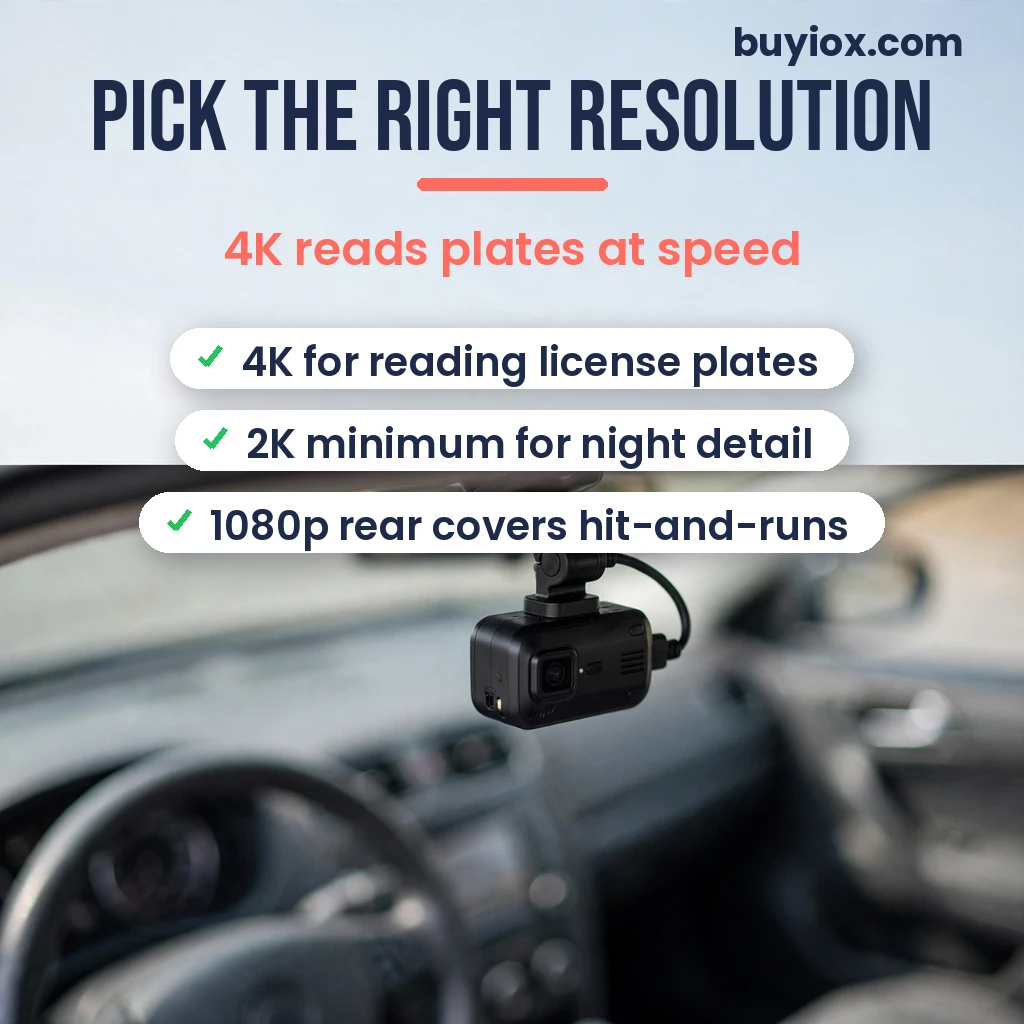
Resolution is the single biggest factor in whether your footage actually helps. 4K captures enough detail to read license plates at speed and in poor light. 2K is the sensible minimum for night detail. For a rear camera, 1080p is acceptable for showing what happened, while 2K rear is meaningfully better at identifying plates. Decide what you need to prove before you shop: a blurry plate in a fraud dispute is almost as useless as no footage.
Front only or front and rear
Single-camera models are cheaper, easier to install, and nearly invisible. Dual-channel models cover rear-end collisions, tailgaters, and parking bumps from behind. If you commute in heavy traffic or park in exposed lots, front and rear coverage is worth the extra install effort. Rideshare drivers should consider front plus cabin instead, since passenger disputes are their main risk.
Parking mode is not optional
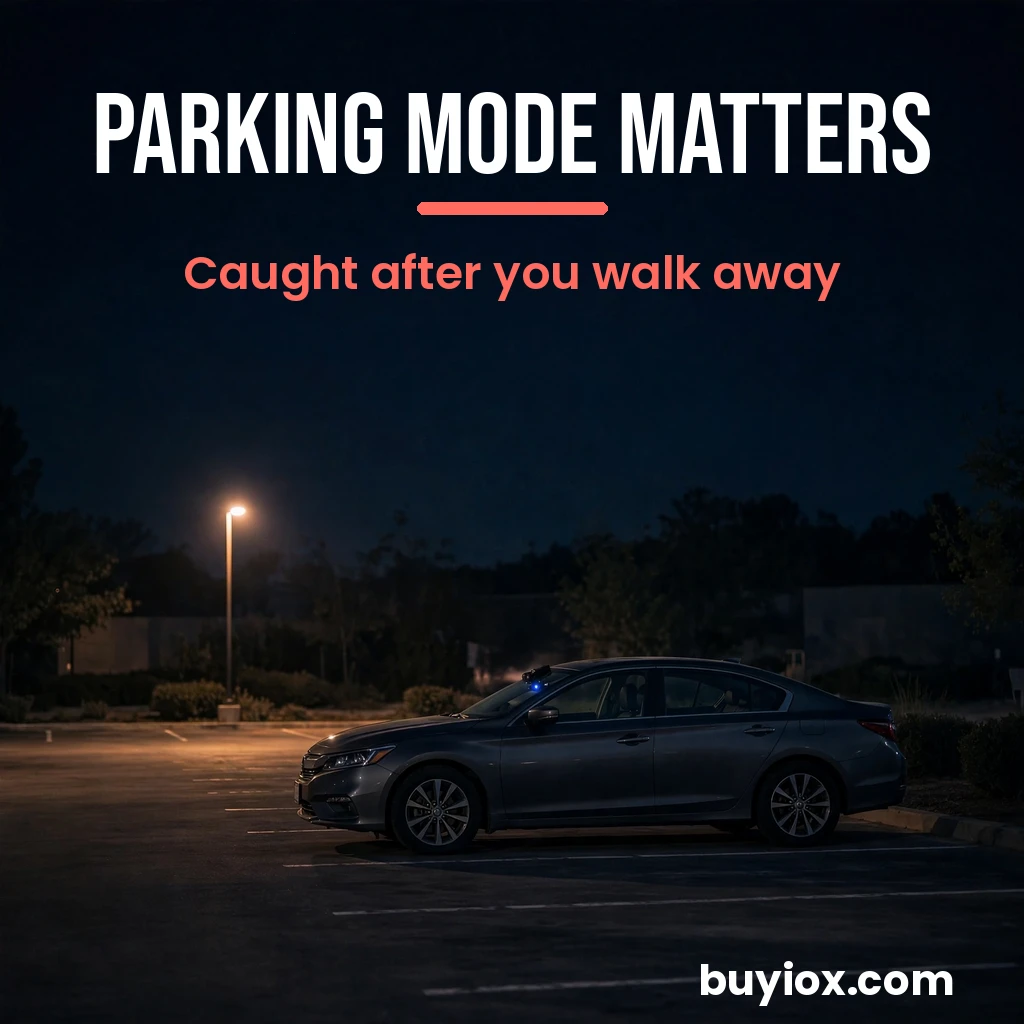
Half of dash cam value happens after you walk away: parking lot dings, shopping cart hits, and door slams. Look for buffered parking mode, which saves seconds before an impact, plus motion detection so you are not sifting through hours of nothing. Nearly every camera here needs a hardwire kit or a constant 12V feed for parking mode, so budget for that accessory.
Night vision and HDR matter more than marketing claims
Most incidents you need footage for happen in low light. Sony STARVIS and STARVIS 2 sensors genuinely outperform generic sensors after dark, and HDR keeps headlights from washing out plates. A fast aperture (F1.8 or wider) and a CPL filter for daytime glare complete the picture. Do not judge night quality from box specs alone; sample footage tells the truth.
GPS, Wi-Fi, and storage
GPS stamping adds time, location, and speed to your evidence, which insurers and police take more seriously. Wi-Fi with a phone app makes pulling a clip at the roadside fast instead of a card-reader errand. Buy a high-endurance microSD card rated for dash cam use, because cheap cards are the number one cause of lost footage. Loop recording plus G-sensor event lock should be standard on anything you buy.
Size, heat, and install
A camera that blocks your view is a camera you will take down. Compact bodies and magnetic mounts win for daily drivers. Supercapacitors beat lithium batteries in hot climates because batteries swell and die in summer heat. And route the cables properly: a dangling power cable is both ugly and a legal problem in states with strict windshield obstruction rules.
Frequently Asked Questions
Do I really need a dash cam?
If you drive daily, yes. Dash cam footage resolves insurance disputes fast, deters staged-accident fraud, and documents hit-and-runs and parking damage that you would otherwise pay for yourself. It is the cheapest form of legal protection for your car.
Will dash cam footage help with an insurance claim?
Yes. Insurers accept dash cam video as evidence, and adjusters resolve claims faster when they can see what happened. Footage with GPS-stamped time, location, and speed is the strongest form, since it is hard to dispute.
Is a front and rear dash cam better than front only?
For most drivers, yes. The front camera covers the road ahead, while the rear camera documents rear-end collisions, tailgating, and parking bumps from behind. Rear-end fraud is common enough that the extra camera usually pays for itself in one disputed claim.
Do dash cams record while the car is parked?
Only in parking mode, and most cameras need a hardwire kit or constant power feed to enable it. Buffered parking mode records a few seconds before a detected impact, so you capture the moment a door slams into your fender. Without the kit, the camera shuts off with the ignition.
Are dash cams legal?
In most places, video recording from your own car is legal. The gray areas are audio recording, which some states restrict under two-party consent laws, and windshield mounting, which some states limit to specific zones. Check your state or country rules before installing, and mount the camera where it does not obstruct your view.
How much storage does a dash cam need?
A 128GB card holds roughly 8 to 10 hours of 4K footage or much more at lower resolutions before loop recording overwrites the oldest files. Use a high-endurance card rated for constant rewriting, and go bigger if you want longer parking-mode history. The card is the one accessory you should never cheap out on.
Can a dash cam lower my insurance premium?
Some insurers offer small discounts for dash cam owners, and many more resolve claims faster and more favorably when you provide video. Ask your insurer directly; even without a formal discount, footage that wins one disputed claim can save you far more than the camera cost.
Our Verdict
If we had to pick one, the Viofo A229 Pro takes best overall for its dual Sony STARVIS 2 sensors, 4K front plus 2K rear recording, and honest parking protection. On a budget, the Viofo A119 Mini 2 gives you genuinely good 2K evidence for the price of a tank of gas. And for rideshare drivers, the Vantrue N2S with its infrared cabin camera solves a problem no other camera on this list touches.
Whichever you choose, remember the two rules that matter most: mount it where it sees the road, not the dashboard, and buy the hardwire kit if you want parking protection. A dash cam only protects you when it is recording, so install it the day it arrives.