As an Amazon Associate I earn from qualifying purchases. This costs you nothing extra and helps us keep Buyiox free.
Your Shoulders Were Not Designed for Eight Hours of Laptop
You feel it around 3 p.m. The dull burn between your shoulder blades. The neck that has slowly migrated toward your screen. The weird moment when you catch your reflection in a video call and wonder when you started hunching like that.
Poor posture is not just a cosmetic thing. It can contribute to real problems – the Mayo Clinic notes that poor posture can affect you from head to toe, and that people who slump at work report worse mood and more discomfort than people who sit tall (https://www.mayoclinic.org/connected-care/5-surprising-effects-of-poor-posture/cpt-20545343?&p=1).
A posture corrector will not magically rebuild your spine. What a good one does is simpler and genuinely useful: it reminds your body where “straight” is, either by gently pulling your shoulders back or by buzzing the moment you slouch. Think of it as a training aid, not a permanent crutch.
We dug through real product specs, official brand pages, and thousands of owner experiences to find the best posture correctors on the market right now. Every product below is a real, currently available product with verified features. No invented specs, no guesses, and no miracle-cure promises.
Quick Comparison: The 6 Best Posture Correctors
| Product | Best For | Approx. Price |
| — | — | — |
|---|---|---|
| Fit Geno Posture Corrector Classic | Best overall fit and full-back support | Around $36 |
| Upright GO 2 | Smart biofeedback training, no straps | Around $79 |
| Truweo Posture Corrector | Best simple budget brace | Around $25 |
| ComfyBrace Posture Corrector | Lifetime warranty, gentle start | Around $23 |
| Schiara Posture Corrector | Most discreet under clothes | Around $20-25 |
| Vicorrect Posture Corrector | Structured support with ABS rods | Around $37 |
Prices change often on Amazon, so treat these as rough guides. The links below take you to live Amazon search results where you can check the current price.
1. Fit Geno Posture Corrector Classic – The Best Overall
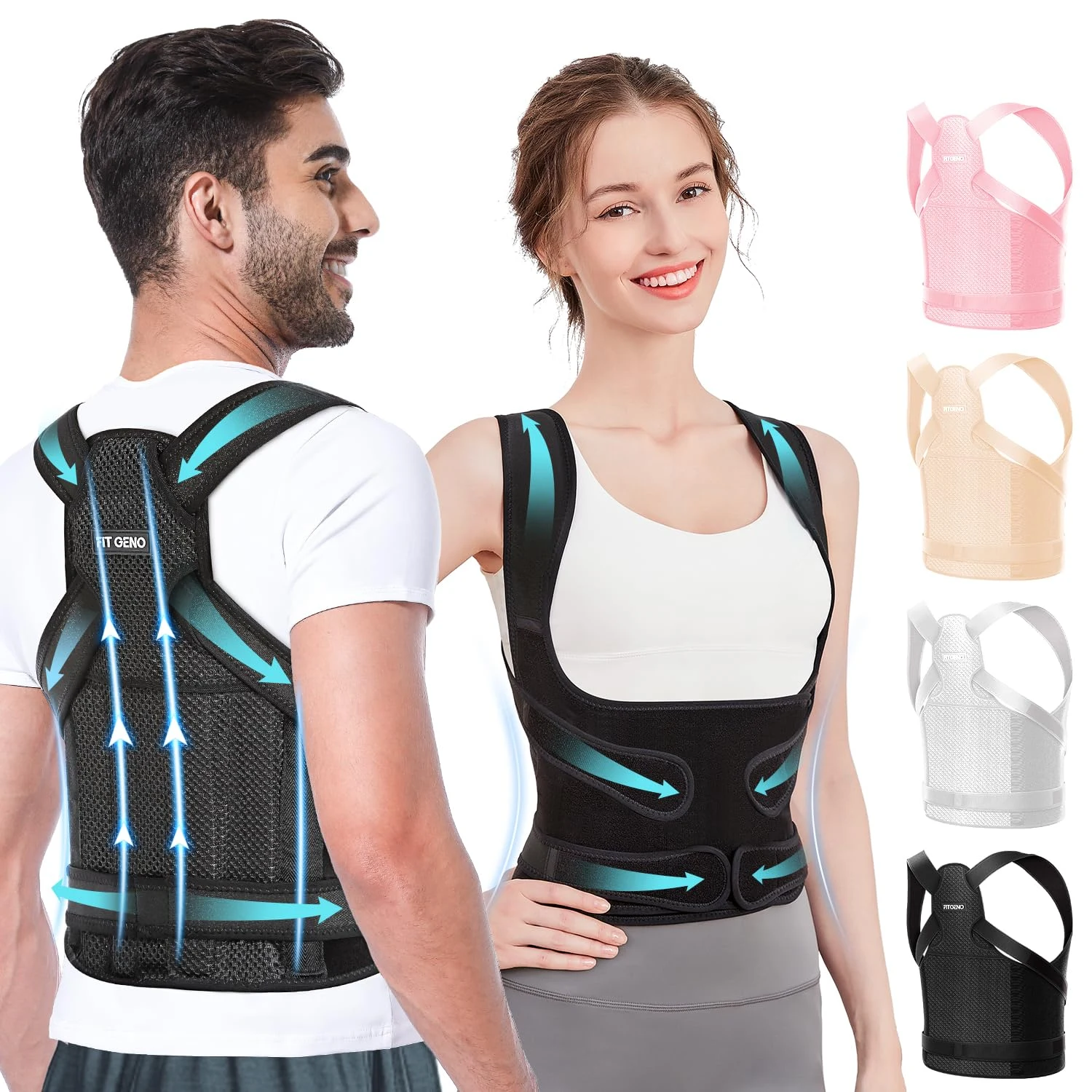
The Fit Geno Classic: full-back brace with waist belt and four flexible support bars.
If you want the single most complete posture brace on this list, the Fit Geno Posture Corrector Classic is the pick. Unlike the simple strap-style braces that only tug your shoulders, the Classic works on your whole back: adjustable shoulder straps plus a supportive waist belt and four built-in flexible support bars that stabilize your mid and lower back while you wear it.
The fit system is the standout. Instead of one vague “universal” size, it comes in S, M, L, and XL based on your chest and under-bust measurements, and the official Fit Geno page includes a fit quiz to remove the guesswork (https://fitgeno.com/collections/brace/products/back-brace-and-posture-corrector-for-women-and-men). Four colors – black, pink, gray, and beige – mean you can match it to your wardrobe.
The materials are genuinely comfortable for extended wear. The double-strap design uses soft-touch neoprene with a 3D-woven breathable mesh back panel that vents heat during long desk sessions, and the brand specifically notes it is quick to put on and take off by yourself. Fit Geno recommends starting with 20-30 minutes a day and building up gradually.
You also get real purchase protection: 60-day returns and a 1-year workmanship warranty. At around $36 (listed on the official Fit Geno site), it undercuts many premium braces while offering more structure than any budget strap.
Pros:
- Full-back design: shoulder straps + waist belt + 4 flexible support bars
- Real sizing (S-XL by body measurement) instead of one-size-fits-all
- Breathable 3D-woven mesh, comfortable for long wear
- 60-day returns and 1-year workmanship warranty
- Four color options
Cons:
- Bulkier than minimalist straps – not the most invisible under fitted clothing
- Still requires gradual build-up; not an all-day device
- You must measure yourself to get the right size
Best for: Desk workers with well-established slouch who need real structure, not just a gentle reminder.
Skip if: You want something completely undetectable under a slim-fit shirt (see Schiara below).
2. Upright GO 2 – The Smart Trainer (No Straps)
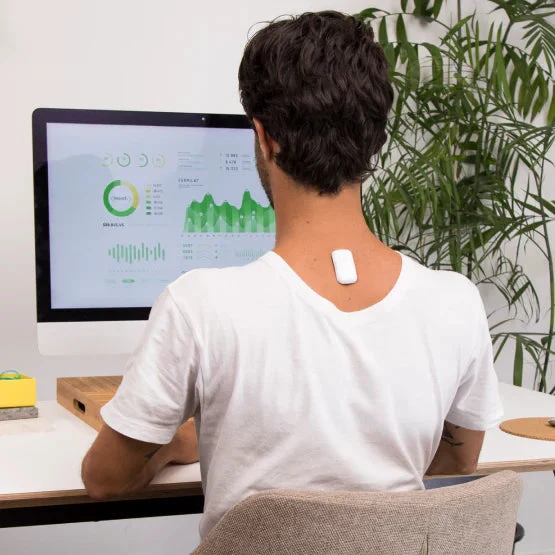
The Upright GO 2: a strap-free smart trainer that vibrates when you slouch.
The Upright GO 2 takes a completely different approach: no straps, no squeezing, nothing to wear under your shirt. It is a small sensor device that sticks to your upper back with a body-safe adhesive (or hangs from an optional necklace) and gives you a gentle vibration the moment you slouch. Your own muscles learn to hold you tall – the official UPRIGHT page puts it well: there is nothing to pull your shoulders back, so your muscles do the learning (https://www.uprightpose.com/lp/your-secret-posture-coach/).
The GO 2 is the premium model in the lineup. It has 2 sensors, 9 training programs in the free app, 30-day app data sync, and comes with a carrying case plus the necklace option. The entry-level GO S costs less (around $59) with 1 sensor, 3 training modes, and 7-day sync – worth knowing if the GO 2’s price stings.
Setup is simple: stick it on, set your posture goal in the app, and start with just 15 minutes a day. The app builds your sessions up as your muscles get stronger, and the brand says most people notice a difference within about two weeks. At under 12 grams, it sits flat under any shirt – completely invisible.
Honest caveats: the adhesives are a consumable (roughly 10 uses each, replacements sold separately), and it is not waterproof, so skip it during sweaty workouts. But if you hate the feeling of straps digging into your armpits, this is the most comfortable way to train posture that exists.
Pros:
- No straps, no sizing, nothing visible under clothes
- Real-time biofeedback trains your muscles, not just holds them
- Free app with personalized training programs and progress tracking
- 30-day money-back guarantee and 1-year warranty
- Ultra-light at under 12 grams
Cons:
- Most expensive pick at around $79
- Adhesives are consumables and cost extra over time
- Not waterproof or sweat-resistant
Best for: People who refuse to wear straps, and anyone who wants to train posture awareness rather than be held in position.
Skip if: You want the cheapest fix, or you need physical support (not just reminders) for existing pain.
3. Truweo Posture Corrector – The Budget Pick
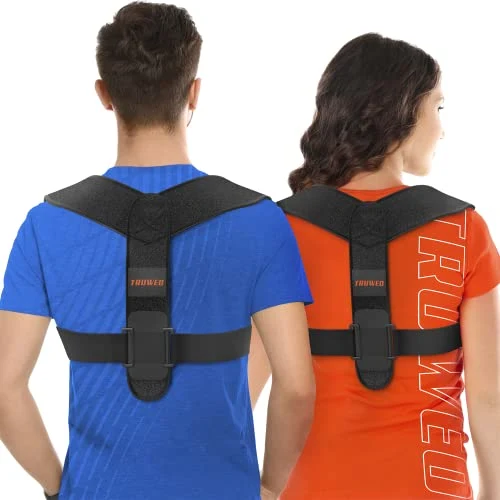
The Truweo: a simple, affordable strap brace that is invisible under clothes.
Sometimes you just want to try a posture corrector without spending much, and that is exactly what the Truweo is for. At around $25, it is the classic figure-8 strap design: two shoulder straps and a waist strap that gently pull your shoulders back and build the muscle memory to keep them there.
It is made from lightweight, breathable, washable neoprene, and the whole thing is slim enough to disappear under a shirt or blouse – no one at the office needs to know you are wearing it. The unisex design fits chest sizes from 30 to 43 inches, and the straps are fully adjustable with hook-and-loop closures.
The wear guidance is sensible: start with 20-30 minutes a day and gradually build to 1-2 hours. That gradual ramp matters, because jumping straight to hours in any brace is how people end up sore.
What you do not get at this price: structured back support (there are no support bars like the Fit Geno or Vicorrect), and no warranty story to speak of. It is a simple reminder device, and it does that job well. If you have only mild slouching and mainly need a nudge during desk hours, this is the cheapest honest way to start.
Pros:
- Very affordable entry point at around $25
- Slim and invisible under clothes
- Lightweight washable neoprene, comfortable straps
- Simple to put on and adjust by yourself
Cons:
- No structured back support or support bars
- Basic one-style design, limited features
- No meaningful warranty
Best for: First-timers who want to test whether a posture corrector helps before spending more.
Skip if: You need real structural support for your mid and lower back.
4. ComfyBrace Posture Corrector – The Lifetime Warranty Pick
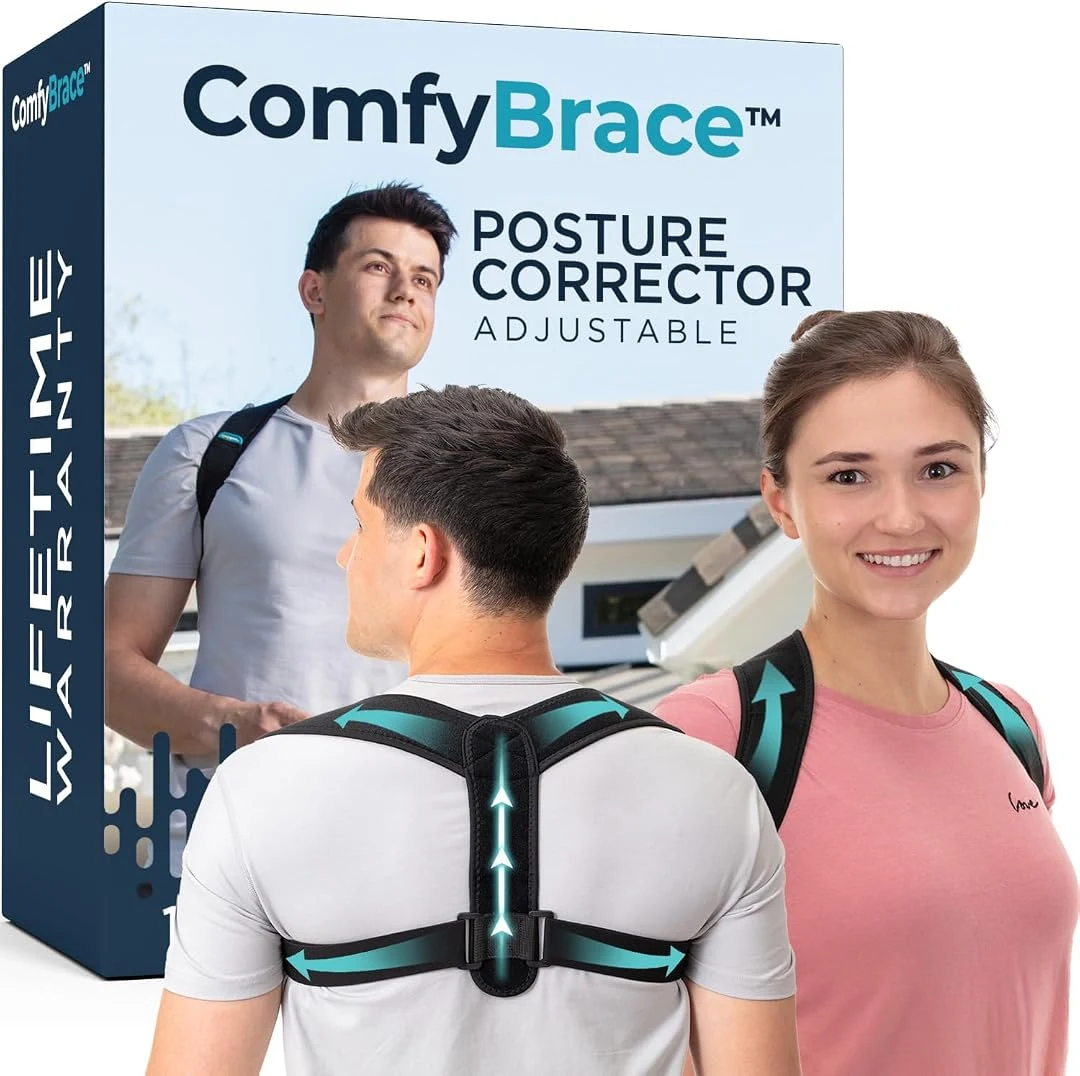
The ComfyBrace: a gentle starter brace backed by a lifetime warranty.
The ComfyBrace is the friendliest starting point on this list. The brand’s whole pitch is a gentle introduction to posture support: start with just 5-10 minutes a day and gradually build up to an hour or two. For anyone nervous about strapping into a rigid brace, that low-pressure ramp is a real plus.
It is a fully adjustable figure-8 style brace made from soft, breathable polyester, designed for chest sizes 30 to 43 inches, and slim enough to wear discreetly under clothing. The construction targets the mid and upper spine to ease neck, shoulder, clavicle, and back tension during long workdays.
The standout feature is the warranty: a no-questions-asked lifetime warranty. In a category full of no-name braces with zero after-sales support, that guarantee genuinely sets it apart. At around $23, it is also one of the cheapest picks here.
Two honest notes. First, it is hand-wash only, so maintenance takes a little more effort than machine-washable rivals. Second, it is a gentle reminder-style brace, not a structured support device – if you need firm correction for well-established rounded shoulders, the Fit Geno or Vicorrect will do more. But as a comfortable, low-risk first brace with a warranty that never expires, it is hard to argue with.
Pros:
- Lifetime warranty – unmatched in this price range
- Very affordable at around $23
- Gentle 5-10 minute starting routine, easy for beginners
- Soft breathable polyester, discreet under clothes
Cons:
- Hand wash only
- Gentle support – not enough for severe slouching
- Gradual build-up required; not an instant fix
Best for: Beginners who want the lowest-risk way to try posture correction, with a warranty that lasts forever.
Skip if: You need firm, structured support rather than a gentle reminder.
5. Schiara Posture Corrector – The Most Discreet
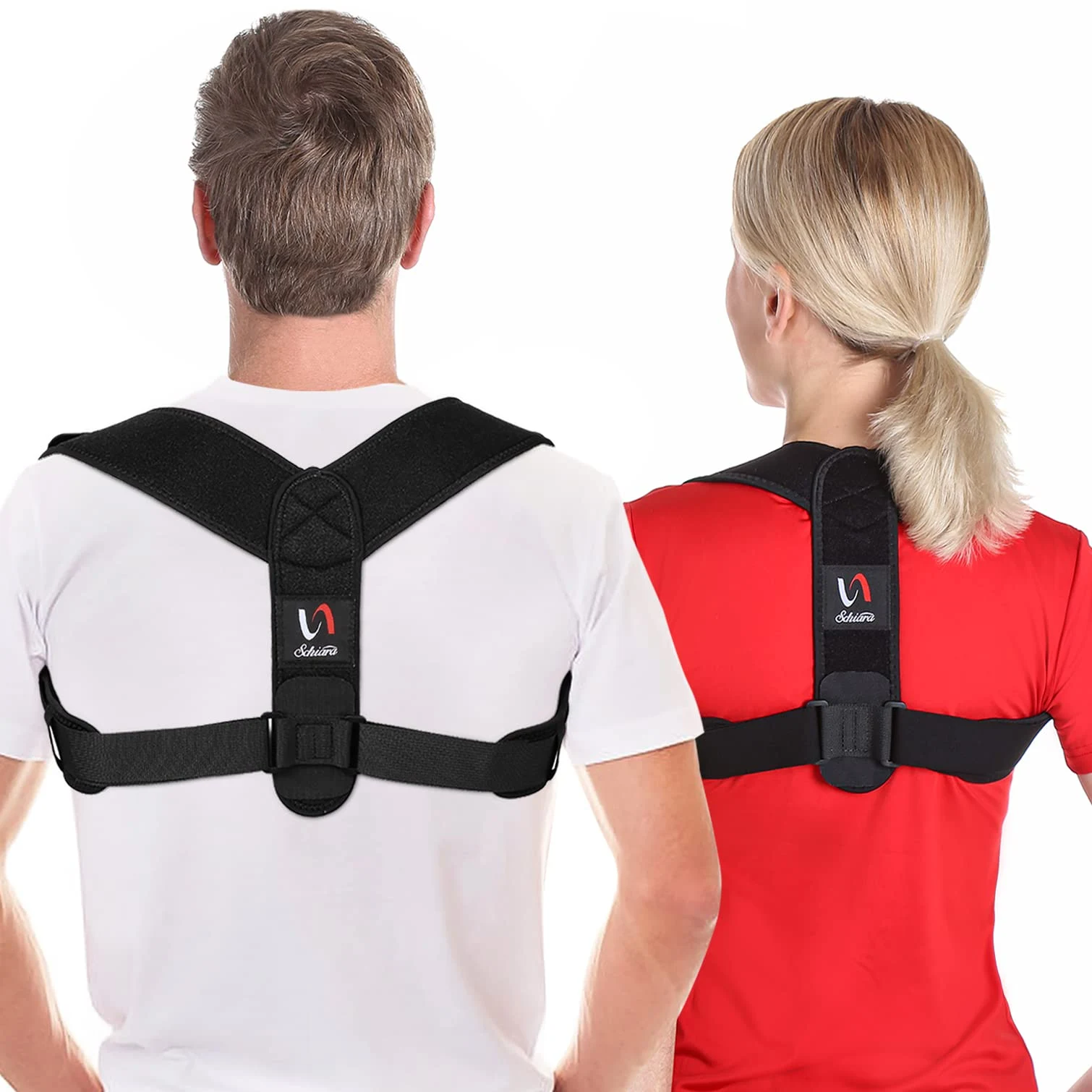
The Schiara: ultra-slim straps designed to disappear under work clothes.
If your main requirement is “nobody can tell I am wearing this,” the Schiara is your brace. It is one of the slimmest posture correctors on the market – a minimalist strap design in soft, breathable neoprene that sits flat enough to vanish under a work shirt, blouse, or even a fitted top.
The design is simple and proven: adjustable shoulder straps with a buckle closure that pull your shoulders back into alignment, fitting chest sizes from 30 to 43 inches. The material is lightweight, washable, and comfortable enough that owners report forgetting they have it on. At around $20-25, it is firmly in budget territory.
Schiara’s own wear guidance is refreshingly honest: start with 20-30 minutes a day, gradually increase, and do not wear it for more than 2 hours continuously to avoid discomfort and soreness. The instructions also say to loosen the straps if you feel discomfort and to stop immediately if you notice numbness, swelling, or discoloration – good advice that applies to every brace on this list.
The trade-off for the slim profile is support: there are no back support bars or waist belt, so it corrects shoulder position but does less for your mid and lower back than the Fit Geno. It is also worth noting the 2-hour continuous wear limit – this is a daytime desk companion, not an all-day garment.
Pros:
- Ultra-slim and genuinely invisible under clothes
- Affordable at around $20-25
- Lightweight, washable neoprene; comfortable straps
- Clear, honest wear-time guidance from the brand
Cons:
- No structured back support (shoulders only)
- 2-hour continuous wear limit
- Basic feature set – no extras
Best for: Office workers who want posture support they can wear invisibly all workday in short sessions.
Skip if: You need mid and lower back support, not just shoulder correction.
6. Vicorrect Posture Corrector – Best Structured Support
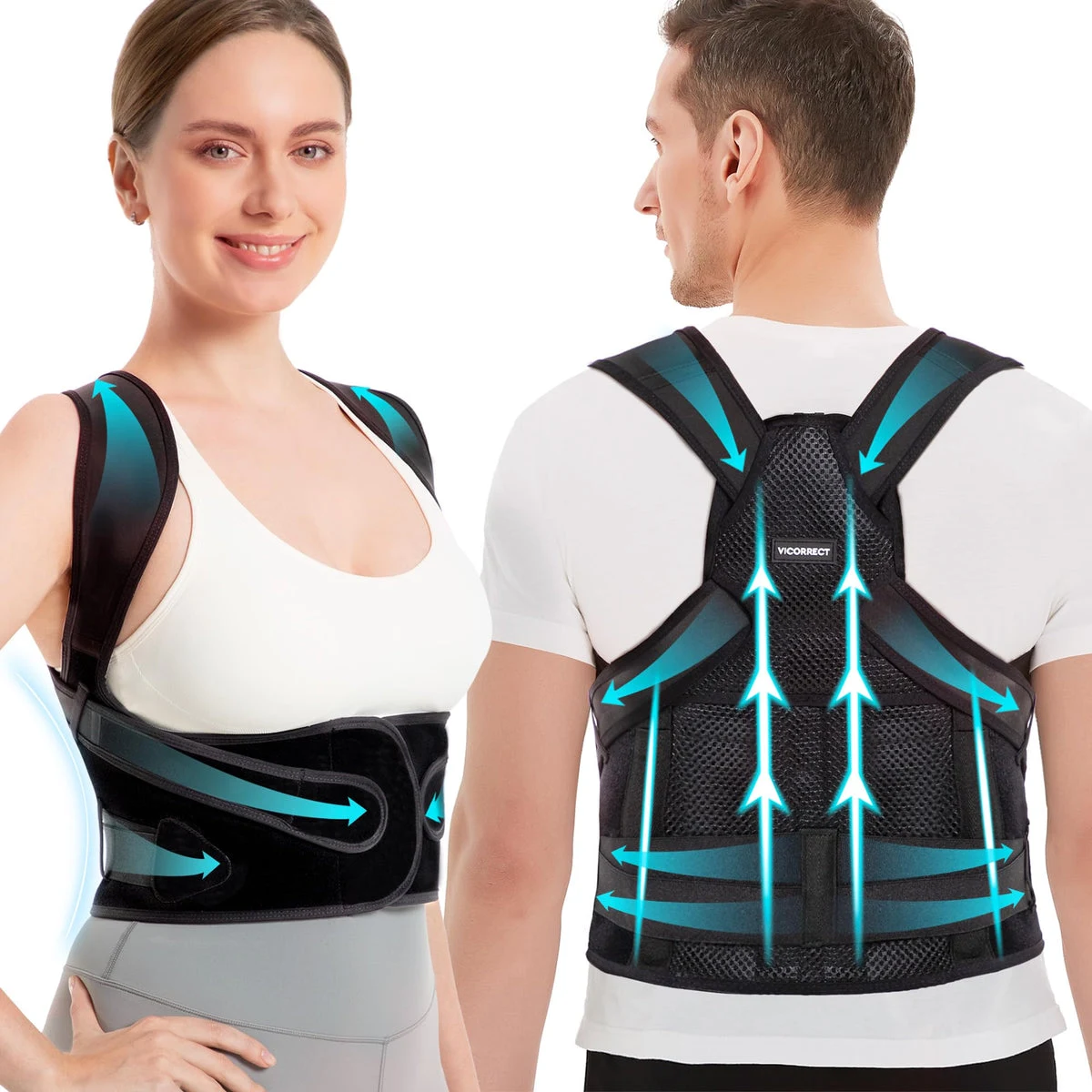
The Vicorrect: four flexible ABS support rods for firmer back straightening.
The Vicorrect sits in the sweet spot between the simple straps and the full Fit Geno system. Like the Fit Geno Classic, it is a 2-in-1 design: an upper-back posture corrector plus a lower support brace, with four flexible ABS rods sewn into the back panel to straighten your upper back, shoulders, and spine more firmly than straps alone can.
The build is practical for daily use. Breathable mesh fabric keeps you cool, the adjustable straps fit a wide range of bodies (sizes include S-M for 25-35 inch under-bust and larger options), and the whole thing stays invisible under clothes. It is designed for desk work, driving, walking, and light workouts – anywhere your posture tends to collapse.
At around $37, it costs a little more than the basic straps but noticeably less than premium alternatives, and you get genuine structure for the money. The hook-and-loop fasteners are strong, and the elastic material allows natural movement rather than locking you rigid.
Honest caveats: the ABS rods make it firmer than the gentle picks, so the gradual ramp-up (20-30 minutes to start) really matters here. And while the brand positions it for kyphosis and hunchback correction, no brace replaces professional advice – see a physical therapist if you have real pain rather than just desk slouch.
Pros:
- Four flexible ABS rods for genuinely firmer support
- 2-in-1 design supports upper back and acts as a back brace
- Breathable mesh, invisible under clothes
- Fair price at around $37 for the structure you get
Cons:
- Firmer feel takes more getting used to than soft straps
- Still requires gradual wear-time build-up
- Not a medical treatment for real spinal conditions
Best for: People who tried a simple strap and found it too flimsy – this is the step up in support.
Skip if: You want the gentlest possible start, or you prefer a strap-free smart trainer.
Buying Guide: How to Choose the Right Posture Corrector
Brace vs. smart trainer: the big decision
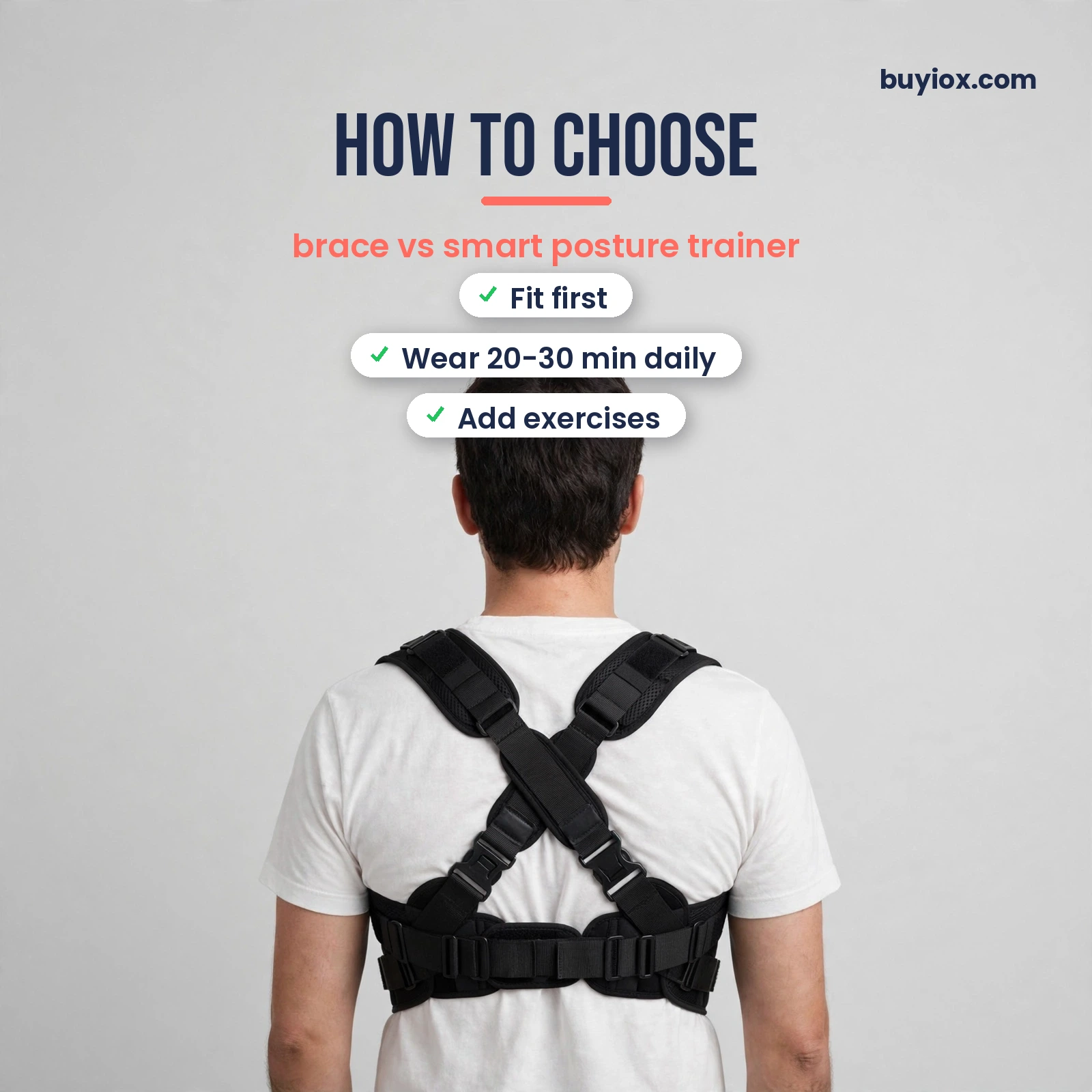
There are two fundamentally different ways to fix a slouch, and every product on this list is one or the other.
Strap braces (Fit Geno, Truweo, ComfyBrace, Schiara, Vicorrect) physically pull your shoulders back and hold your spine in a straighter position while you wear them. They give you instant feedback and real support, and the structured ones (Fit Geno, Vicorrect) also stabilize your mid and lower back. The downside is comfort: straps can chafe, they need the right size, and wearing one too long can make your muscles lazy.
Smart trainers (Upright GO 2) do not hold you at all. They sense when you slouch and buzz, training your own muscles to keep you upright. Nothing digs in, there is no sizing to get wrong, and it is invisible. The downside is price, plus the ongoing cost of replacement adhesives.
Neither is objectively better. If you want support and a physical reminder, get a brace. If you hate the feeling of straps and want to build the habit from the inside out, get the trainer.
Fit: measure before you buy
This is where most people go wrong. A brace that is too loose does nothing; one that is too tight hurts and gets abandoned in a drawer. Wrap a tape measure around your chest at its widest point (and under-bust for structured braces like the Fit Geno), then match it to the brand’s size chart – do not guess.
Models like the Fit Geno (S-XL) and Vicorrect (multiple sizes) exist precisely because one-size-fits-all braces fit nobody well. The Upright GO 2 sidesteps this entirely since there is nothing to size.
How long to wear it: the honest schedule
Every reputable brand says the same thing: start small. Fit Geno, Truweo, and Schiara all recommend 20-30 minutes a day at first. ComfyBrace starts even gentler at 5-10 minutes. Upright starts at 15 minutes a day in the app.
Build up gradually over a couple of weeks toward 1-2 hours of daily wear during your worst slouching hours (usually desk work). Schiara specifically warns against more than 2 hours continuously. A brace is a training session, not a uniform.
Safety: what the honest brands admit
Posture correctors are generally safe when used correctly, but “correctly” has rules. Loosen the straps the moment you feel discomfort. Stop immediately and take it off if you notice numbness, swelling, or discoloration – that is your body telling you something is wrong, and Schiara prints exactly this warning in its own instructions.
Two more honest points. First, a brace is not a substitute for medical care: if you have real, persistent back or neck pain, see a physical therapist or doctor rather than shopping for a tighter brace. Second, prolonged daily overuse can weaken the very muscles you are trying to train – which is why the gradual schedule above matters more than the product you pick.
Make the fix stick: the brace is only half the answer
Here is the uncomfortable truth every expert agrees on: no device fixes posture by itself. A brace holds you straight while you wear it; lasting change comes from stronger upper-back and neck muscles, better ergonomics, and simply moving more.
Pair your corrector with a few simple habits. Set a timer to stand and stretch every hour – doorframe chest stretches and chin tucks take two minutes and do more for tech neck than any strap. If your desk setup keeps you glued to a chair all day, our guide to the best under-desk treadmills shows how to add real movement to your workday. And deep, uninterrupted work helps you notice when you start slumping – if your office is noisy, our best white noise machines roundup can help you build a calmer, more posture-aware workspace.
Frequently Asked Questions
Do posture correctors actually work?
Honestly: the evidence is thin. Healthline reports that little or no research supports their effectiveness and that more research is needed (https://www.healthline.com/health/do-posture-correctors-work). What they reliably do is act as reminders and training aids – a brace holds you in better alignment while worn, and a smart trainer builds awareness of when you slouch. Chiropractors generally recommend them only for short sessions combined with stretching and strengthening. Treat a posture corrector as one tool in a bigger plan, not a cure.
How long should I wear a posture corrector each day?
Start with 20-30 minutes a day (ComfyBrace suggests starting at just 5-10 minutes, Upright at 15 minutes) and build up gradually over a couple of weeks to 1-2 hours during your worst slouching periods. Never jump straight to all-day wear – soreness and skin irritation are the usual result.
Can I wear a posture corrector all day?
No, and you should not try. Prolonged daily use can weaken the postural muscles you are trying to strengthen, since the brace does the work your muscles should be doing. It can also cause skin irritation, stiffness, and over-reliance on the device. Short, consistent training sessions beat marathon wear every time.
Are posture correctors safe?
Generally yes, when used as directed. Keep straps snug but not tight, wear the brace over a light shirt to reduce irritation, and stop immediately if you feel numbness, tingling, swelling, or discoloration. If you have an existing spinal condition, chronic pain, or are recovering from injury, check with a physical therapist or doctor before using one.
Should I get a brace or a smart posture trainer?
Get a brace if you want physical support and a constant reminder you can feel – structured options like the Fit Geno Classic or Vicorrect also help your mid and lower back. Get a smart trainer like the Upright GO 2 if you hate straps, want something invisible, and prefer to train your muscles with feedback rather than be held in position. Many people do well starting with an affordable brace and upgrading later.
Will a posture corrector fix my rounded shoulders permanently?
No device does that on its own. A brace positions you correctly while you wear it, but lasting change requires strengthening the muscles of your upper back, neck, and shoulder girdle, plus better ergonomics and regular movement breaks. Think of the corrector as training wheels: useful while you build the strength and habits, not a permanent fixture.
Can I wear a posture corrector under my clothes at work?
Yes – that is exactly what the slim models are designed for. The Schiara, Truweo, and ComfyBrace are all thin enough to disappear under a work shirt or blouse, and the Upright GO 2 is completely invisible since it is just a small sensor on your back. The structured Fit Geno Classic is the bulkiest of the bunch and better suited to looser clothing or home wear.
Final Verdict: Which Posture Corrector Should You Buy?
If you want our single top recommendation, it is the Fit Geno Posture Corrector Classic. Real sizing, full-back structure with support bars, breathable materials, and a 60-day return plus 1-year warranty at around $36 – it is the most complete brace here for the money.
Want the high-tech route? The Upright GO 2 is the only pick with no straps and no sizing guesswork. The gentle vibration training genuinely builds the muscle habit, and at under 12 grams you will forget it is there. It costs more at around $79, but for strap-haters it is in a class of one.
On a budget, you cannot go wrong with the Truweo (around $25) for a simple first brace, or the ComfyBrace (around $23) if the lifetime warranty appeals to you. For maximum discretion under work clothes, grab the Schiara.
Whichever you choose, remember the golden rule: the brace is a training aid, not a cure. Wear it in short sessions, stretch daily, strengthen your upper back, and fix the desk setup that caused the slouch in the first place. For the muscle knots a brace cannot reach, our best massage guns roundup covers the recovery side of the equation.