
As an Amazon Associate, Buyiox earns from qualifying purchases made through links on this page, at no extra cost to you. This helps us keep testing fitness gear and publishing honest guides.
6 Best Yoga Mats for Comfort, Grip and Home Practice
Your mat is the one piece of yoga gear that touches every single pose. When it slips, you lose focus. When it is too thin, your knees complain for days. And when it is the wrong mat for your practice, even a good session feels like a fight.
Here is the mistake most buyers make: they shop by price or by color, then wonder why their hands slide in down dog or their wrists ache in plank. The right mat is not the most expensive one. It is the one matched to your body, your practice style, and where you actually practice.
So instead of crowning one winner, we matched six proven mats to the six situations home practitioners actually face: sore knees, sweaty hands, beginner uncertainty, eco priorities, tight budgets, and travel. Pick your situation below. Prices are approximate and change often, so check the live price on Amazon before you buy.
One thing the serious testing outlets agree on: thickness alone does not decide comfort. A dense 4.7mm mat can cushion better than a soft, spongy 6mm one, because density matters as much as depth. Keep that in mind as you read the reviews below, and compare the full specs in the Treeline Review yoga mat comparison if you want a second opinion from independent testers.

The 6 best yoga mats, matched to comfort, grip and home practice
The 6 Best Yoga Mats at a Glance
- Manduka PRO 6mm – best overall for daily home practice
- Liforme Original – best for alignment and sweaty hands
- lululemon The Mat 5mm – best all-rounder for mixed practice
- JadeYoga Harmony – best eco-friendly natural rubber mat
- Gaiam Premium 6mm – best budget pick for beginners
- Manduka eKO Superlite 1.5mm – best travel mat
Our Top Picks, Reviewed
1. Manduka PRO Yoga Mat 6mm – Best Overall
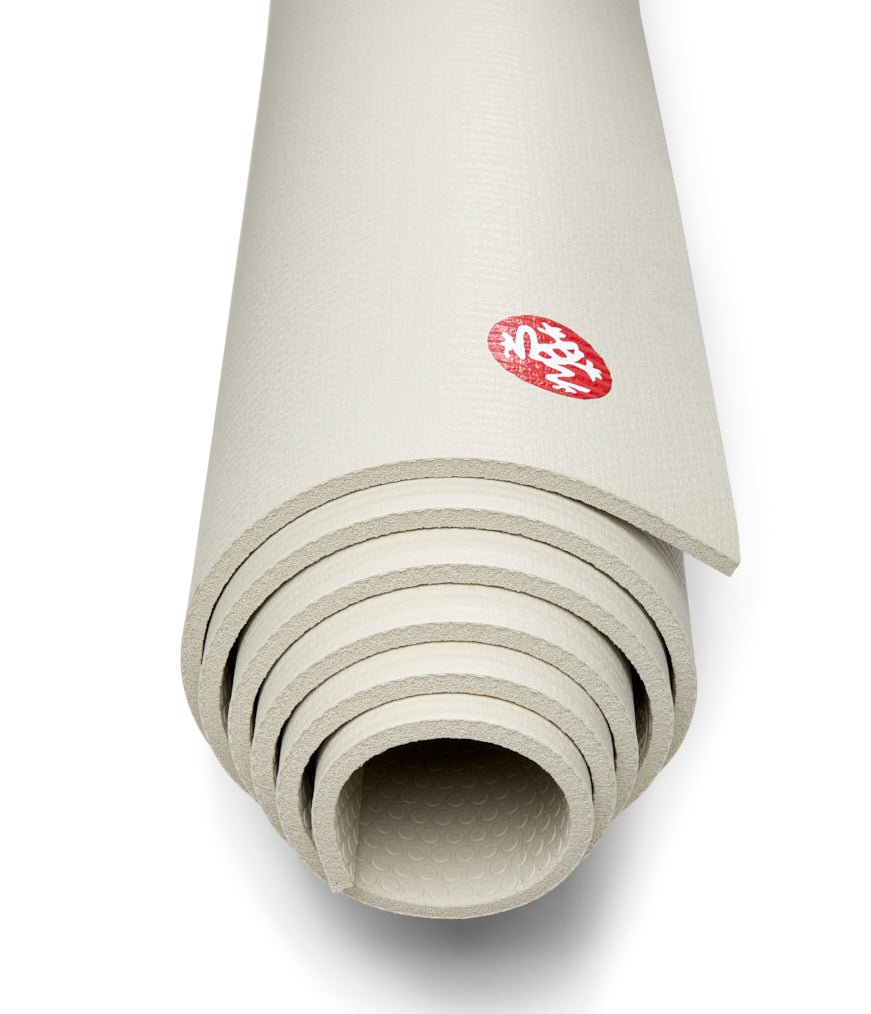
Manduka PRO Yoga Mat 6mm
If you buy just one yoga mat for home practice, make it this one. The Manduka PRO is the mat you will see in countless studios, and it has earned that place the hard way: a dense, 6mm closed-cell cushion that supports knees and wrists without feeling wobbly in standing poses, and a build quality backed by a lifetime durability promise.
The closed-cell surface seals out moisture and sweat, which makes it more hygienic and easier to wipe clean than open-cell rubber mats. It also stays flat and stable on the floor, partly because it is heavy: around 7 lb at 71 x 26 inches. That weight is a feature at home and a drawback on the walk to class, so be honest about where you will use it.
The honest caveat is the break-in. Fresh out of the box, the PRO can feel slick, and many owners report it takes around 10 sessions before the grip peaks. A salt-water scrub before first use is the classic trick to speed that up. Once broken in, it is the most dependable daily mat on this list, and at around $140 it costs less per year than replacing a cheap mat every 12 months.
Pros:
- Dense 6mm cushion protects knees and wrists without wobble
- Closed-cell surface resists sweat and wipes clean easily
- Lifetime durability promise – built to last for years
- Stays flat and stable, never bunches underfoot
- OEKO-TEX certified PVC, latex-free
Cons:
- Around 7 lb – heavy to carry to class
- Feels slick until broken in over the first sessions
- Premium price for casual or unsure beginners
Best for: Daily home practice and anyone who wants one mat for years.
Who should avoid it: Travelers and anyone who walks far to class – get the eKO Superlite instead.
2. Liforme Original Yoga Mat – Best for Alignment and Sweaty Hands
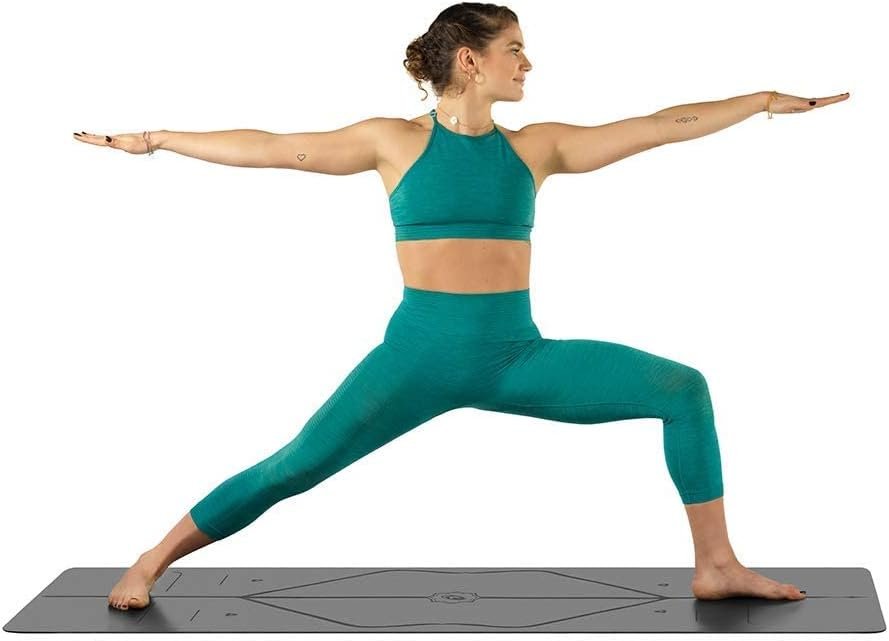
Liforme Original Yoga Mat
The Liforme Original is the mat for practitioners who sweat and practitioners who want feedback on their form. Its eco-polyurethane top layer grips harder as moisture builds, which is exactly the opposite of most budget mats, and its AlignForMe markers are etched into the surface rather than printed on, so they never flake off.
At 73 x 27 inches it is longer and wider than a standard mat, which taller practitioners will appreciate, and at 4.2mm thick with a natural rubber base it balances cushion and ground feel well. Independent testers rate its grip among the best available for dynamic and heated practice, and it comes with a carry bag included.
The tradeoffs are real. At around 5.5 lb it is not light, the open-cell surface absorbs moisture and needs regular cleaning with a diluted, oil-free soap, and the price – around $160 – is the highest on this list. Some owners also report a rubber smell for the first weeks. But if slipping hands are your number one frustration, this is the mat that solves it.
Pros:
- Outstanding wet grip – grips better as you sweat
- Etched AlignForMe markers guide hand and foot placement
- Longer and wider than standard mats (73 x 27 in)
- Natural rubber base, PVC-free and biodegradable materials
- Carry bag included
Cons:
- Around $160 – the most expensive mat here
- Open-cell surface needs regular, careful cleaning
- Rubber smell takes weeks to fade for some owners
Best for: Sweaty practices, hot yoga, and anyone working on alignment.
Who should avoid it: Budget buyers and anyone with a latex sensitivity – check the rubber base first.
3. lululemon The Mat 5mm – Best All-Rounder for Mixed Practice
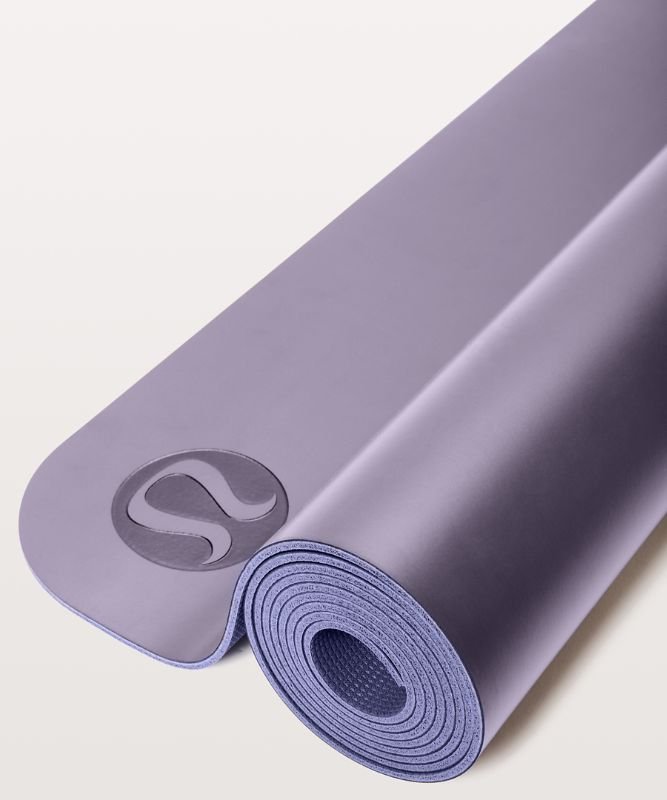
lululemon The Mat 5mm
Some people do gentle yoga on Monday, a sweaty flow on Wednesday, and a stretch session on Sunday. If that sounds like you, lululemon The Mat 5mm is built for that mix. It is reversible, with a sticky, smooth polyurethane top side and a textured natural rubber underbelly, so you get two grip feels in one mat.
At 71 x 26 inches and 5mm thick, it sits right in the sweet spot: enough cushion for knees, enough stability for balance poses, and around 5.2 lb, which is manageable for the occasional trip to a studio. Independent testers gave it top marks for comfort and support across mixed routines, which matches how most home practitioners actually use a mat.
Being honest: it does not beat the Liforme on wet grip in a heated room, and it does not beat the Manduka PRO on long-term durability. It wins by being very good at everything rather than the best at one thing. At around $118, that versatility is fairly priced for a daily-use mat.
Pros:
- Reversible – two grip surfaces in one mat
- Excellent comfort and support balance for mixed practice
- Good size for most bodies (71 x 26 in)
- Manageable weight for home and occasional studio use
Cons:
- Not the best wet grip for very hot yoga
- Not as bombproof long-term as the Manduka PRO
- Premium price for a first mat
Best for: Mixed practice – gentle, flow, and stretch sessions on one mat.
Who should avoid it: Dedicated hot yoga practitioners – the Liforme grips better when soaked.
4. JadeYoga Harmony Mat – Best Eco-Friendly Natural Rubber Mat
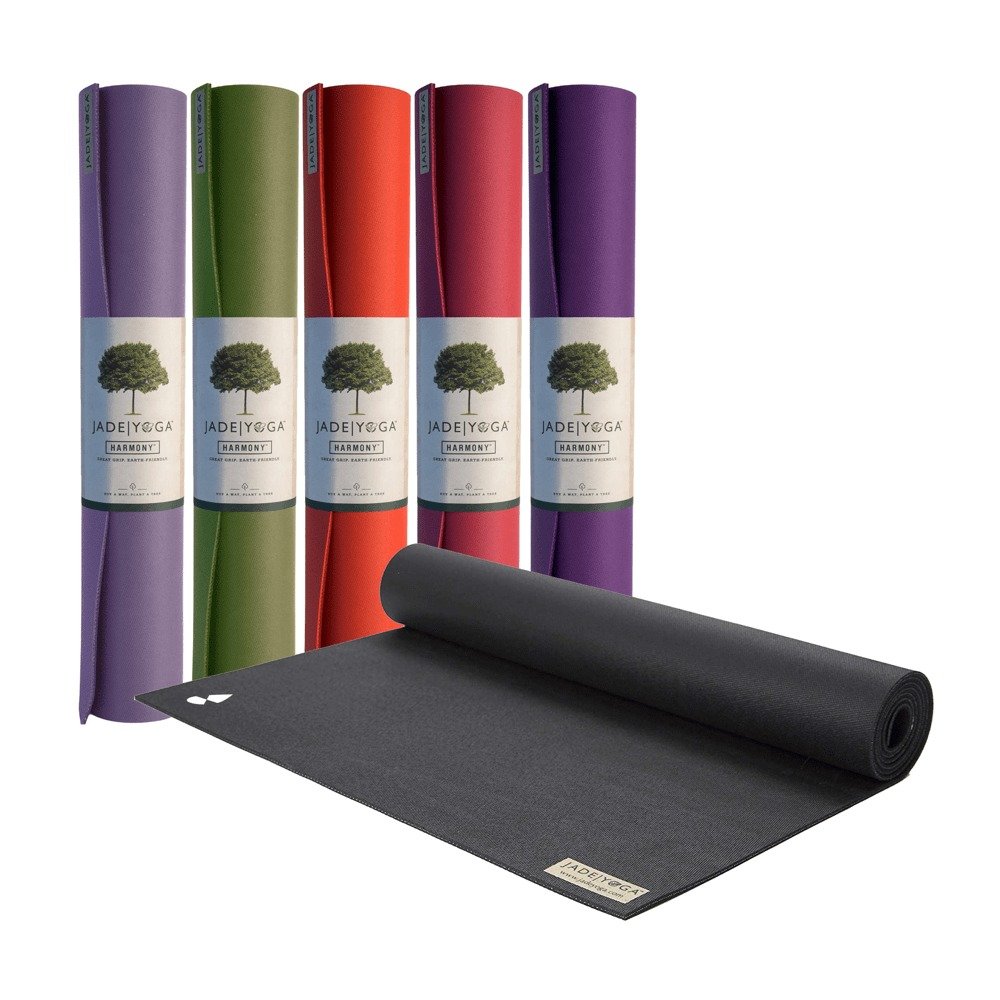
JadeYoga Harmony Mat
The JadeYoga Harmony is the mat for buyers who want natural materials without giving up grip. It is made from natural rubber with no PVC, EVA, or synthetic rubber, and its open-cell surface delivers the tacky, dependable dry grip that made it a favorite in independent testing for vigorous sessions.
At 68 x 24 inches and 4.75mm thick, it is a standard-size mat with a slightly springy feel that suits vinyasa well, and at around 4.5 lb it is lighter than the Manduka PRO. Jade also plants a tree for every mat sold, which is a genuine, verifiable sustainability commitment rather than a vague eco label.
The honest notes match every open-cell rubber mat: the surface absorbs moisture, so it needs careful cleaning and air drying, and the rubber smell takes a few weeks to fade. It also comes in a standard length only, so taller practitioners should check the longer options from Liforme or Manduka. At around $92, it is the best-value natural rubber mat on this list.
Pros:
- Excellent natural rubber grip, no break-in needed
- No PVC, EVA, or synthetic rubber
- A tree planted for every mat sold
- Good balance of cushion and stability at 4.75mm
Cons:
- Open-cell surface absorbs moisture and needs careful cleaning
- Rubber smell for the first weeks
- Standard 68 in length may feel short for taller users
Best for: Eco-conscious practitioners who want natural rubber grip.
Who should avoid it: Anyone who wants a wipe-clean, low-maintenance mat – the closed-cell Manduka PRO is easier to care for.
5. Gaiam Premium Yoga Mat 6mm – Best Budget Pick for Beginners
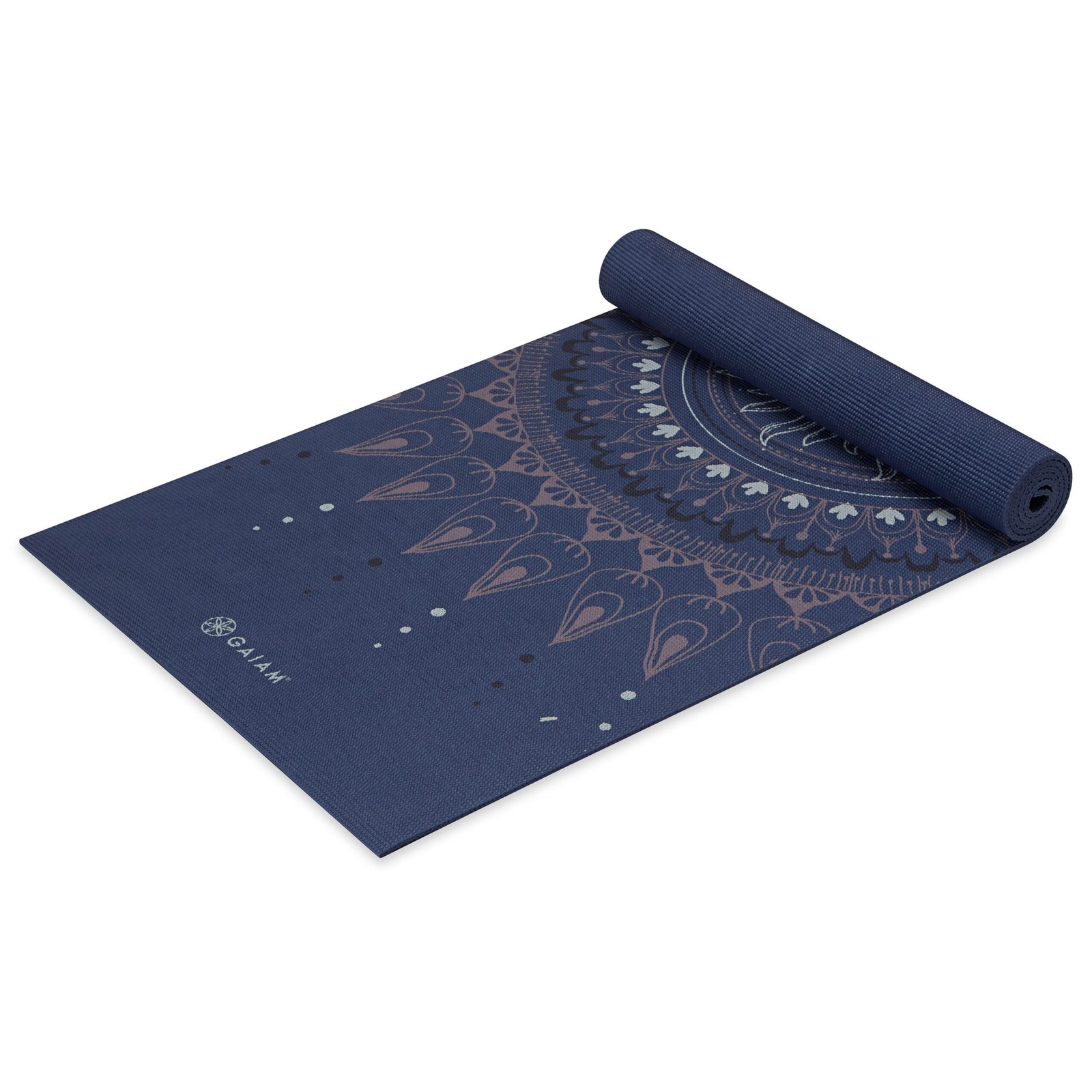
Gaiam Premium Yoga Mat 6mm
Not sure yoga will stick? Start here. The Gaiam Premium 6mm is the classic beginner mat: around $30, plush 6mm cushioning that is kind to knees and wrists, a sticky textured PVC surface, and a light build at around 3.5 lb that is easy to carry and store.
For gentle and beginner practice it genuinely delivers. The cushioning makes floor poses comfortable from day one, the size (68 x 24 in) suits most bodies, and the huge range of prints means you can pick one you actually like looking at, which matters more than people admit for building a habit. If you practice at home alongside other gear, it pairs well with a massage gun for post-practice recovery and a walking pad for rest-day movement.
The honest limits: grip drops off significantly when sweaty, so it is not a hot yoga mat, and the build will not last as long as a Manduka or Jade mat under daily use. Think of it as a low-risk first mat. If you fall in love with practice, upgrade later with confidence about what you actually need.
Pros:
- Around $30 – the cheapest mat on this list by far
- Plush 6mm cushion is gentle on knees and wrists
- Light at around 3.5 lb and easy to carry
- Sticky surface and wide range of prints
- Easy to wipe clean
Cons:
- Grip fades badly when sweaty – not for hot yoga
- Shorter lifespan under daily use than premium mats
- Less stable for advanced balance work
Best for: Beginners and casual home practice on a budget.
Who should avoid it: Sweaty or hot yoga practitioners and daily heavy users – step up to JadeYoga or Liforme.
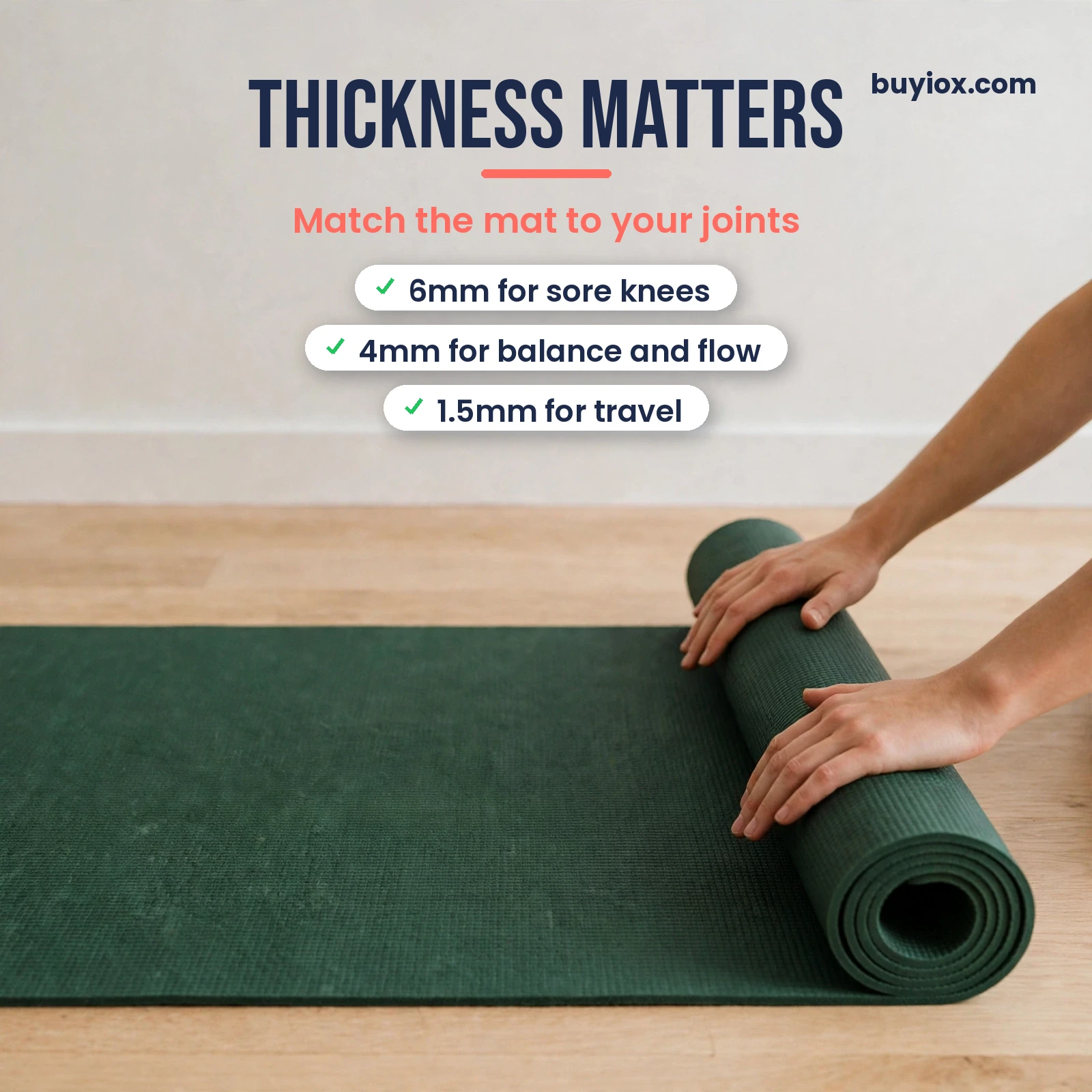
Thickness matters – match the mat to your joints and your practice
6. Manduka eKO Superlite Travel Yoga Mat 1.5mm – Best Travel Mat
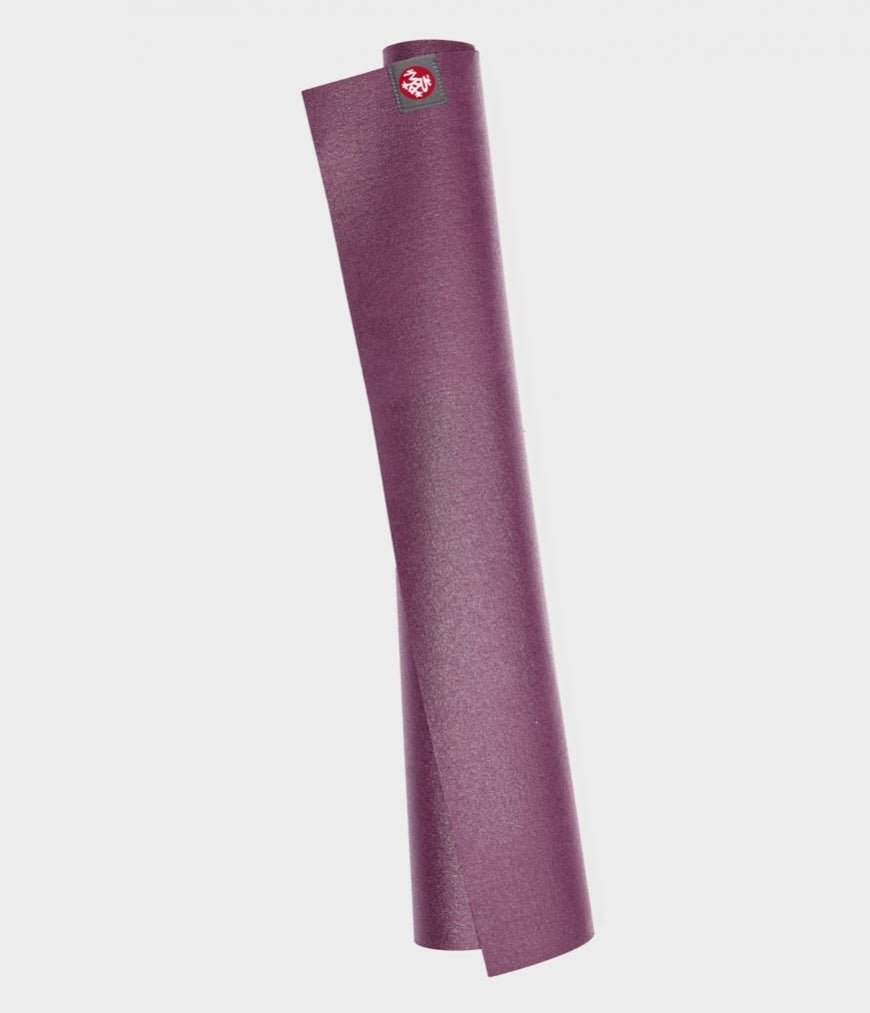
Manduka eKO Superlite Travel Yoga Mat 1.5mm
A regular mat does not travel well. It is bulky, heavy, and eats half a suitcase. The Manduka eKO Superlite solves that by being just 1.5mm thick: it folds and rolls down small, weighs around 2 lb, and still delivers real Manduka grip thanks to its natural rubber construction.
At 71 x 24 inches it is full-length, so you are not practicing on a postage stamp in a hotel room, and the sealed-cell top layer keeps it more hygienic than most thin travel mats. It also works as a grippy top layer over a studio mat or a hotel carpet when you want extra traction without extra bulk.
The tradeoff is obvious and unavoidable: 1.5mm gives almost no cushion. On hard hotel floors, your knees will notice, so many travelers pair it with a folded towel for kneeling poses. It is also not a replacement for your home mat – it is the second mat that keeps your practice alive on the road. At around $54, it is a smart companion purchase, especially if your home mat is already a Manduka PRO.
Pros:
- Around 2 lb and folds small – true suitcase portability
- Full 71 in length, not a cropped travel mat
- Natural rubber grip, no PVC
- Sealed top layer for easier cleaning on the road
Cons:
- Almost no cushion on hard floors
- Not a substitute for a proper home mat
- Thin mats can bunch on smooth floors without a towel underneath
Best for: Travelers, hotel-room practice, and as a grip layer over other mats.
Who should avoid it: Anyone with sore knees who practices only at home – get the PRO or Gaiam 6mm instead.
Comparison Table
| Product | Best For | Thickness | Weight (approx) | Price (approx) |
|---|---|---|---|---|
| Manduka PRO 6mm | Daily home practice | 6mm | Around 7 lb | Around $140 |
| Liforme Original | Alignment, sweaty hands | 4.2mm | Around 5.5 lb | Around $160 |
| lululemon The Mat 5mm | Mixed practice | 5mm | Around 5.2 lb | Around $118 |
| JadeYoga Harmony | Eco-friendly grip | 4.75mm | Around 4.5 lb | Around $92 |
| Gaiam Premium 6mm | Beginners, budget | 6mm | Around 3.5 lb | Around $30 |
| Manduka eKO Superlite | Travel | 1.5mm | Around 2 lb | Around $54 |
Buying Guide: How to Choose the Right Yoga Mat
Thickness: match it to your joints, not your ambition
For most people, 4mm to 6mm is the sweet spot. Go thicker (6mm) if your knees, wrists, or elbows complain on hard floors, or if you practice gentle and restorative styles with long floor holds. Go thinner (3mm to 4.5mm) if you prioritize balance and ground feedback, or if you practice standing and balancing poses where a squishy mat works against you.
Remember the density rule: a dense 4.7mm mat can cushion better than a soft 6mm one. That is why the Manduka PRO at 6mm and the JadeYoga Harmony at 4.75mm both feel supportive despite different numbers. If you are choosing between two mats, density and material matter more than a millimeter of foam.
Grip: dry grip and wet grip are different skills
Dry grip is about texture and tackiness on a clean, dry surface – most decent mats do this well. Wet grip is about what happens once your hands sweat, and this is where mats split into two camps. Closed-cell PVC mats like the Manduka PRO can feel slick until broken in. Open-cell rubber and polyurethane tops like Liforme and JadeYoga grip harder as moisture builds.
Be honest about your sweat level. If your hands stay dry, almost any mat on this list will grip fine. If you drip in a flow class, buy for wet grip first and treat everything else as secondary. A mat towel can rescue a slippery mat, but it is a workaround, not a solution.
Material: PVC, rubber, or TPE – what actually matters
PVC mats are durable, easy to clean, and affordable, but they are not biodegradable and some buyers avoid them on environmental grounds. Natural rubber mats grip beautifully and are more eco-friendly, but they need more care, can smell at first, and are not suitable for latex-sensitive users. TPE mats sit in the middle: lighter, recyclable, and latex-free, but often less grippy than rubber.
There is no universally best material, only the best material for your priorities. If low maintenance wins, choose closed-cell PVC. If grip and eco credentials win, choose natural rubber. If weight wins, look at TPE or a thin rubber travel mat.
Size: standard is not always enough
A standard mat is around 68 x 24 inches. If you are over 6 feet tall, or if you like room to move in wide stances, look for 71 to 73 inches long and 26 to 27 inches wide. The Liforme Original and Manduka PRO both offer that extra room, and the difference in practice is bigger than the numbers suggest.
Travel: one mat or two?
Serious practitioners often end up with two mats: a full mat at home and a thin travel mat for the road. That is not a marketing trick, it is practical. A 6mm mat is miserable in a suitcase, and a 1.5mm mat is miserable on a hard floor every day. If you travel more than a few times a year, the eKO Superlite pays for itself in saved luggage space and kept-up practice.
For a calmer home routine around your practice, a diffuser for post-yoga wind-down or a white noise machine for better sleep after evening practice can round out the ritual without adding clutter.

A good travel mat folds into a suitcase and still grips
Care: the habit that doubles a mat’s life
Wipe your mat after sweaty sessions and give it a deeper clean every one to two weeks. Always follow the maker’s instructions, because materials differ: closed-cell PVC tolerates a damp cloth easily, while open-cell rubber needs a diluted, oil-free soap and full air drying before rolling. Never roll a damp mat – trapped moisture breeds odor and bacteria. Store it loosely rolled in a cool, dry place out of direct sun.
Frequently Asked Questions
What is the best yoga mat for beginners?
A beginner usually does best with a mid-thickness mat that balances comfort and stability. Look for a mat around 4mm to 6mm thick with dependable grip and easy maintenance, like the Gaiam Premium 6mm at around $30. Avoid making the first purchase too specialized unless you already know you need extra cushioning or high sweat performance.
How thick should a yoga mat be?
A standard mat is about 1/8 inch (around 3mm) thick, but most home practitioners are happier at 4mm to 6mm. If you need more cushioning for joints, look for a mat around 1/4 inch (6mm) thick. Remember that density matters as much as thickness: a dense mat at 4.7mm can cushion better than a soft foam mat at 6mm, and very thick mats can make balance poses wobbly.
What makes a yoga mat non-slip?
A non-slip mat combines material, texture, and sometimes moisture response. Some mats grip better when dry, while others become stickier with sweat. Natural rubber and polyurethane top layers are common choices for strong traction, especially in dynamic or heated practices, which is why the Liforme Original and JadeYoga Harmony lead on grip.
How do I clean a yoga mat?
Wipe the mat after sweaty sessions and do a deeper clean every one to two weeks. Most mats can be cleaned with a mix of water and mild soap: spray or wipe the solution on, wipe it down with a cloth, and let it air dry completely before rolling it up. Always follow the manufacturer’s instructions, because some materials tolerate gentler cleaners than others, and never soak a mat unless the maker says it is safe.
Are eco-friendly yoga mats worth it?
Often yes, but only if the mat also fits your practice and lasts long enough to justify the purchase. Look beyond the label and evaluate durability, material sourcing, and maintenance needs. A truly good eco-friendly choice, like the JadeYoga Harmony or Liforme Original, reduces waste by holding up over time rather than being replaced every year.
Should I buy a travel mat or a regular mat?
If you practice mainly while traveling or need a mat that packs easily, a travel mat makes sense. If you practice mostly at home or in a studio, a regular mat will usually provide better comfort and stability. Many serious practitioners keep both: one for home, one for the road. The Manduka eKO Superlite at around $54 is a strong travel companion to a full-size home mat.
Final Verdict
For most home practitioners, the Manduka PRO 6mm is the best yoga mat overall: dense cushioning, a hygienic closed-cell surface, and a build that lasts for years. If sweaty hands are your main problem, the Liforme Original is worth every cent of its premium price for grip and alignment guidance. And if you are just starting out, the Gaiam Premium 6mm at around $30 removes every excuse not to begin.
Choose the JadeYoga Harmony if natural materials matter to you, the lululemon The Mat 5mm if your practice mixes gentle and dynamic styles, and the Manduka eKO Superlite if your practice needs to fit in a suitcase. Whichever you pick, the best mat is the one you actually roll out – so pick the one matched to your body and your practice, not just the one with the prettiest color.