
As an Amazon Associate I earn from qualifying purchases. This costs you nothing extra and helps us keep Buyiox free.

The Night Your Puppy Cried at 2 A.M. (And What Actually Helps)
Bringing home a new dog is pure joy until about 2 a.m., when the whining starts. The puppy paces the kitchen, chews the table leg, and looks at you with those eyes. You wonder if you made a mistake. You did not – you just do not have the right setup yet.
A crate changes that night completely. Dogs are den animals by instinct, and the American Kennel Club notes that a properly introduced crate gives puppies a secure space for rest while making potty training dramatically easier (https://www.akc.org/expert-advice/training/crate-training-step-by-step/). PetMD’s crate training guide adds the critical rule: the crate must always be a positive place, never used for punishment, or the whole thing backfires (https://www.petmd.com/dog/general-health/crate-training-puppies).
But walk into this category blind and you will drown in options: wire, plastic, soft-sided, heavy-duty steel, wooden furniture crates. Buy the wrong type and your escape artist bends the wire, your chewer eats the mesh, or your airline rejects the kennel at check-in. Buy the wrong size and you either cramp your dog or sabotage housebreaking.
We researched six real, currently available crates – verified specs, verified approximate prices, real owner complaints included – with one rule guiding every pick: would this keep a real dog safe, calm, and comfortable?
One more thing before the list. These are research-based recommendations, not lab-tested claims. Every spec comes from official brand or retailer listings, and all prices are marked approximate because they shift constantly on Amazon.
Quick Comparison: The 6 Best Dog Crates
| Product | Best For | Approx. Price |
| — | — | — |
|---|---|---|
| MidWest Homes for Pets iCrate Double Door | Best overall | Around $60-$90 by size |
| BOLDBONE 48 Inch Heavy Duty Dog Crate | Best escape-proof for strong or anxious dogs | Around $130-$160 |
| Petmate Sky Kennel | Best for airline travel | Around $70-$270 by size |
| Amazon Basics Foldable Metal Wire Dog Crate | Best budget pick | Around $25-$72 by size |
| EliteField 3-Door Folding Soft Dog Crate | Best soft portable crate | Around $55-$155 by size |
| KOOPRO Wooden Dog Kennel Furniture | Best furniture-style crate | Around $150 |
Prices change often on Amazon, so treat these as rough guides. The links below take you to live Amazon search results where you can check the current price.
1. MidWest Homes for Pets iCrate Double Door – Best Overall
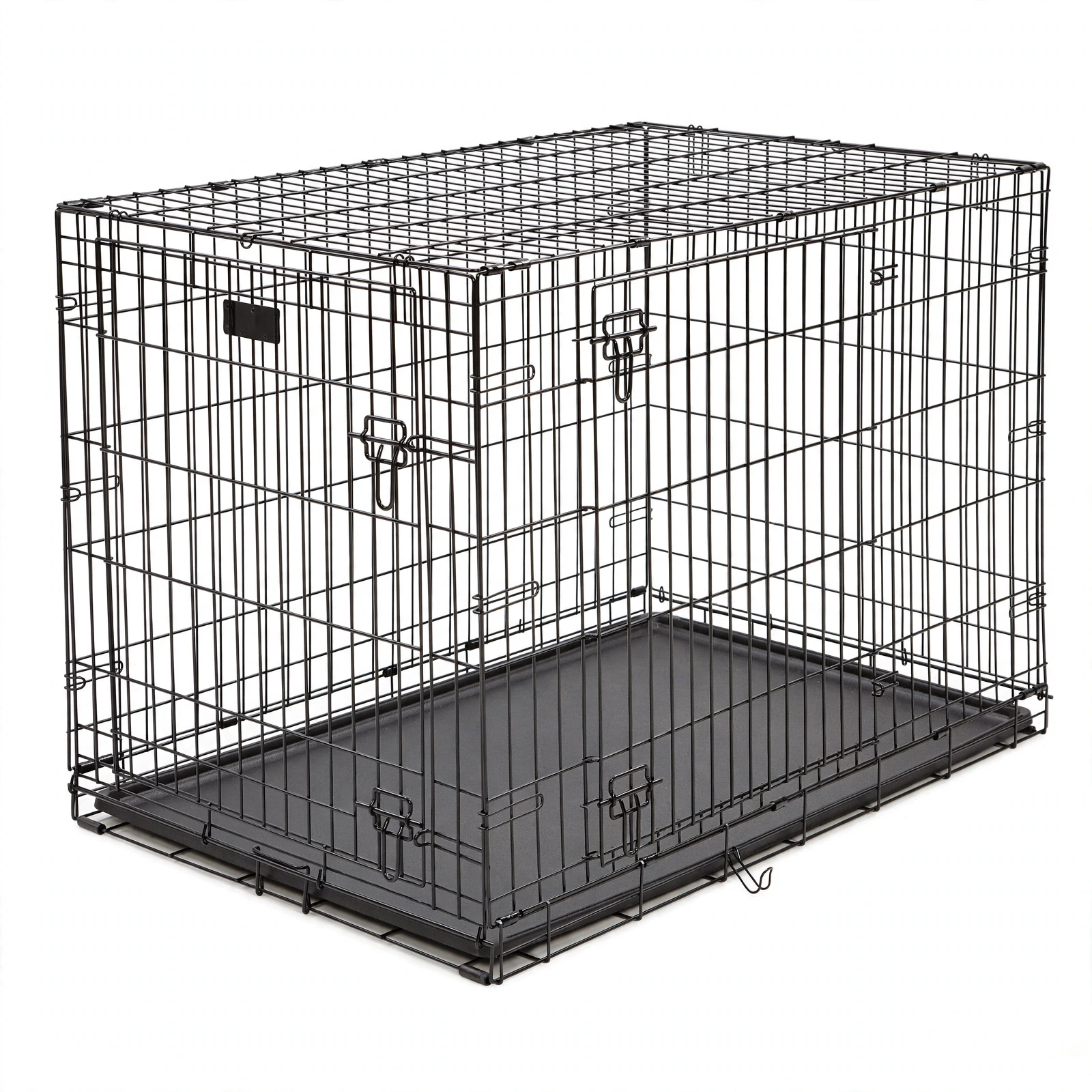
The MidWest iCrate: double doors, slide-bolt latches with Paw Block, a divider panel, and a leak-proof pan – the crate most trainers recommend first.
If you ask dog trainers which crate to buy for a first dog, most of them name this one. The MidWest iCrate is the default recommendation across trainer roundups for a simple reason: it gets the fundamentals right at a price most owners can afford. Two doors (front and side) mean you can tuck it into a corner and still open it toward the room. The slide-bolt latches now carry MidWest’s patented Paw Block with locking tips, a small but meaningful upgrade that makes it harder for a clever paw to nudge the latch open.
The sizing range is the real strength. The iCrate comes in sizes from 18 inches all the way to 54 inches, covering everything from a Chihuahua to a Great Dane, and the popular 24, 30, 36, 42, and 48 inch sizes hit every common breed. The included divider panel is what makes it a puppy crate: buy the adult size once, wall off the extra space while your puppy is small, and slide the divider back as the dog grows. The leak-proof plastic pan slides out for easy cleaning, rubber feet protect your floors, and the whole thing folds flat with a carrying handle for travel or storage. Setup takes seconds with no tools.
The honest limits: this is a wire crate, and wire has a ceiling. Determined chewers and true escape artists can bend the wires or work the latches, and one testing outlet specifically warns that feisty pups can hurt themselves trying to chew or claw through the grid. If your dog has separation anxiety severe enough to destroy crates, skip straight to the BOLDBONE below. For a normal puppy or a calm adult dog, though, nothing beats this combination of price, flexibility, and proven track record.
Pros:
- Double doors (front and side) for flexible room placement
- Slide-bolt latches with Paw Block security upgrade
- Divider panel included – buy the adult size once for a growing puppy
- Leak-proof plastic pan, rubber feet, and carrying handle included
- Folds flat in seconds with no tools required
- Size range from 18 to 54 inches covers every breed
Cons:
- Not escape-proof – determined chewers can bend wires or work latches
- Dogs with severe separation anxiety can injure themselves trying to break out
- Wire construction looks industrial, not decorative
Best for: First-time owners, puppies (thanks to the divider), and calm to moderately energetic adult dogs. The best dog crate overall for most households.
Skip if: Your dog is a proven escape artist or destroys crates – you need the heavy-duty pick below.
2. BOLDBONE 48 Inch Heavy Duty Dog Crate – Best Escape-Proof for Strong or Anxious Dogs
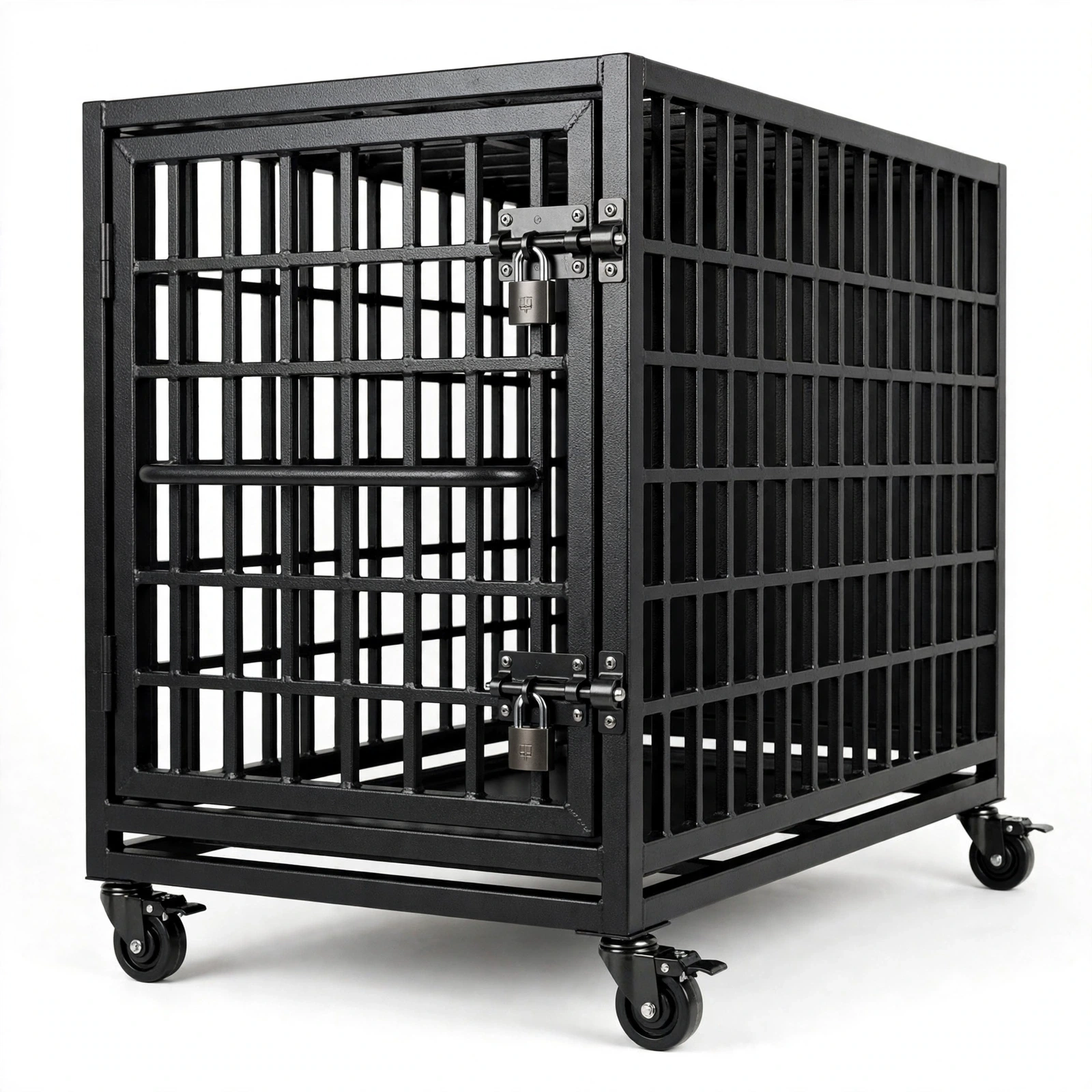
The BOLDBONE 48 inch: thick steel-bar construction, four lockable caster wheels, and multiple heavy locks – built for dogs that defeat normal crates.
Some dogs treat a wire crate like a suggestion. They bend the bars, pop the latches, and greet you at the door when you get home – next to the chewed drywall. If that is your dog, a standard crate is not just inadequate, it is dangerous: bent wire can trap paws and jaws. The BOLDBONE is the answer for that dog.
This is a different class of construction. The frame uses upgraded 20-gauge steel with reinforced steel tubes, a massive step up from the thin wire of standard crates. The 48 inch model measures 48 inches long by 31 inches wide by 36 inches high, sized for large and giant breeds, and it also comes in 38, 42, and 54 inch sizes. Four sturdy locks secure the double doors, and four 360-degree caster wheels – all lockable – let you roll this heavy unit around for cleaning and then anchor it in place. Removable trays (two, in the double-door configuration) slide out for cleaning.
The honest trade-offs: it is heavy, it is expensive at around $130-$160, and it looks like what it is – a serious containment unit, not furniture. It also does not fix anxiety by itself. A heavy-duty crate keeps an anxious dog safely contained, but separation anxiety needs training too – consider pairing containment with calming support like the best dog calming chews and a proper desensitization plan. What this crate does is buy you safety while you work on the behavior: no more escapes, no more injuries from bent wire, no more destroyed crates every three months.
Pros:
- 20-gauge steel frame with reinforced tubes – far stronger than wire crates
- Multiple heavy-duty locks on double doors for true escape-proofing
- Four lockable 360-degree caster wheels for moving and anchoring
- Removable trays for easy cleaning
- 48 inch size fits large and giant breeds (38, 42, and 54 inch also available)
Cons:
- Heavy and bulky – not a travel crate
- Around $130-$160, several times the price of a wire crate
- Industrial look; not something you show off in the living room
- Does not treat anxiety itself – training is still required
Best for: Escape artists, powerful chewers, and dogs with separation anxiety that have destroyed standard crates. The best escape proof dog crate here.
Skip if: Your dog is calm in a crate already – the iCrate above does the job for a third of the price.
3. Petmate Sky Kennel – Best Airline Travel Crate
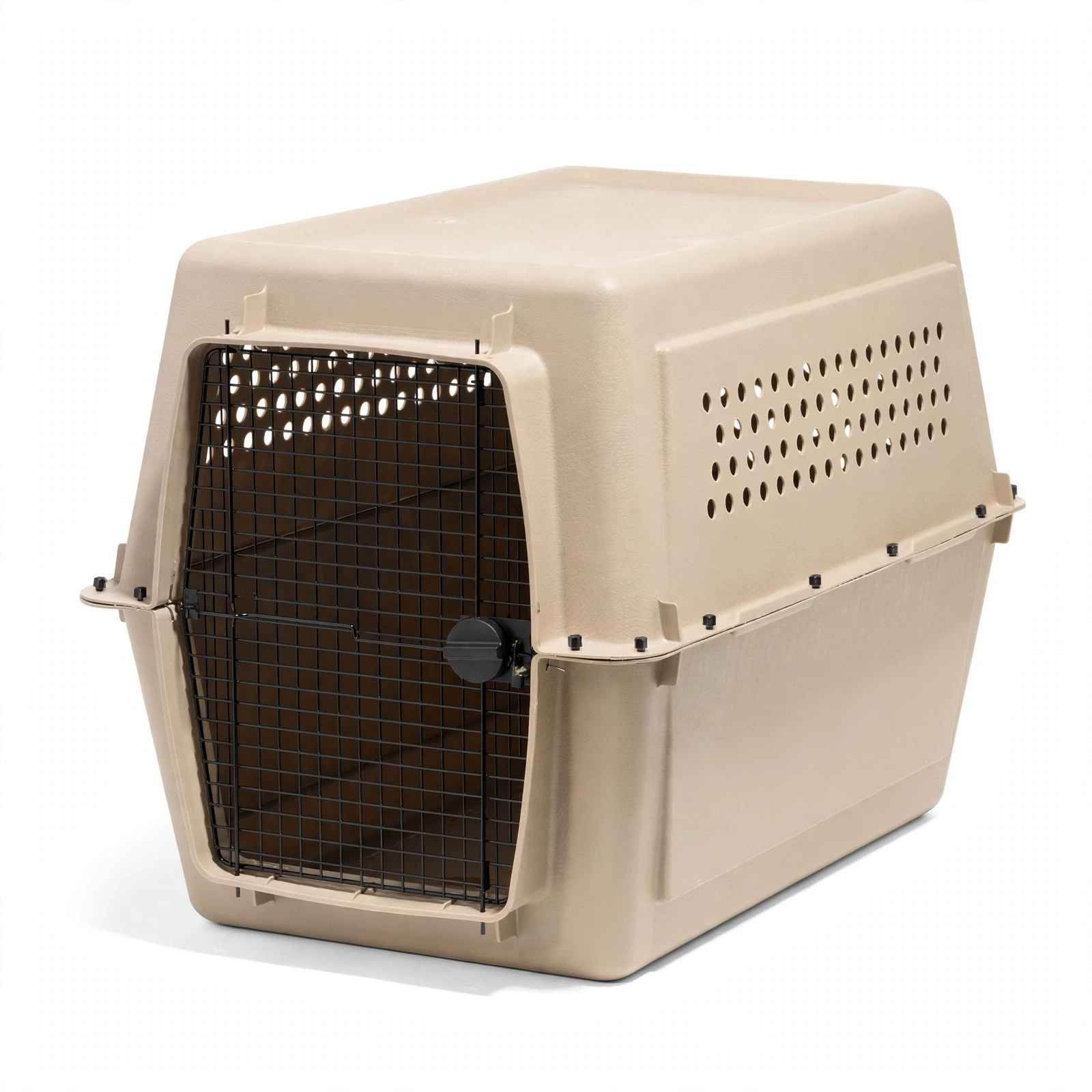
The Petmate Sky Kennel: heavy-duty plastic shell, steel wire door, and airline-ready hardware – the classic kennel for flying with your dog.
Flying with a dog is stressful enough without the airline rejecting your crate at check-in. The Petmate Sky Kennel has been the go-to travel kennel for decades because it is built around airline requirements: it meets most IATA and airline cargo standards, with the sturdy two-shell construction that cargo handlers expect.
The design is straightforward and proven. Two heavy-duty plastic halves bolt together with metal bolts (four-bolt assembly on the larger sizes), a steel wire door latches securely, and ventilation openings on all four sides keep airflow moving in the cargo hold. It comes in six sizes – 21, 28, 32, 36, 40, and 48 inches – covering toy breeds up to giant breeds like Great Danes and Mastiffs, with weight capacities from 30 lb on the small end to 125 lb on the 48 inch. Thoughtful extras come in the box: “Live Animal” decals, ID stickers, and clip-on food and water bowls. It is made in the USA, and the 36 inch model fits a Labrador while the 40 inch suits a German Shepherd.
The honest limits: always confirm with your specific airline before flying, because individual carriers add their own rules on top of IATA standards – “meets most requirements” is not a guarantee for every flight. As a home crate it is darker and less ventilated than wire, and the two-shell design is bulkier to store than a folding crate. But if your dog flies in cargo, this is the category standard for a reason.
Pros:
- Meets most IATA and airline cargo requirements
- Bolted two-shell construction with steel wire door
- Six sizes from 21 to 48 inches, up to 125 lb capacity
- Ventilation on all four sides
- Includes Live Animal decals, ID stickers, and food/water bowls
- Made in the USA
Cons:
- Always verify with your airline – individual carriers add their own rules
- Darker and less airy than a wire crate for everyday home use
- Bulky to store; does not fold flat like wire crates
- Large sizes get expensive (around $270 for the 48 inch)
Best for: Anyone who flies with their dog in cargo, and owners who want a den-like, sturdy kennel for car travel. The best crate for large dogs that travel by air.
Skip if: Your dog never flies – a wire crate gives better ventilation and folds flat for storage.
4. Amazon Basics Foldable Metal Wire Dog Crate – Best Budget Pick
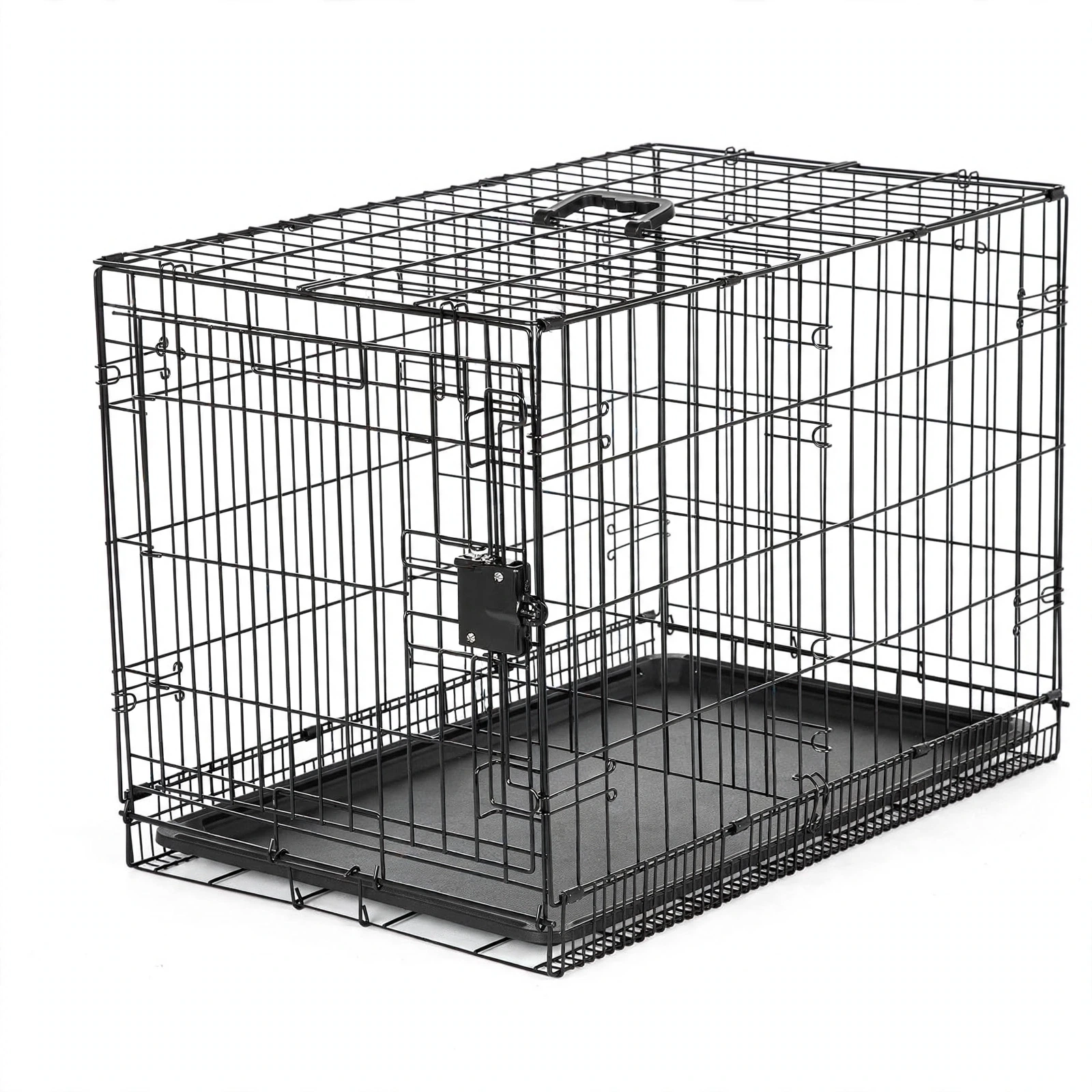
The Amazon Basics wire crate: the same foldable wire-crate formula as the big brands, at the lowest price in the category.
Here is the open secret of the crate world: most wire crates are variations on the same design, and the Amazon Basics version proves it. Durable metal wire construction, a manual slide-bolt door lock, a divider panel, a removable plastic base tray, a top handle for carrying, and a frame that sets up in seconds and folds flat. It does the same job as crates costing twice as much.
The size range is generous: 22, 24, 30, 36, 42, and 48 inches, with single or double door configurations available, all in black. Pricing runs from around $25 for the 22 inch up to around $72 for the 48 inch – the cheapest path to a full-size crate on this list by a wide margin. Reviewers consistently praise the easy setup and the value, and Amazon’s return policy makes it a low-risk first crate: if the size is wrong, swapping it is painless.
The honest limits: you get what you pay for in the details. The wire gauge is lighter than the MidWest, the latches are simpler, and some owners report the door lock takes figuring out. Like every wire crate here, it is not for escape artists or heavy chewers. But as a first crate for a normal puppy or a calm dog – especially when you are not sure about sizing yet and might exchange it – the value is unbeatable.
Pros:
- Lowest price in the category: around $25-$72 depending on size
- Same core formula as premium wire crates: divider, tray, folding frame
- Six sizes (22 to 48 inches) with single or double door options
- Sets up in seconds, folds flat, top handle for carrying
- Amazon’s easy returns make sizing mistakes painless
Cons:
- Lighter wire and simpler latches than the MidWest iCrate
- Only available in black
- Not for chewers or escape artists
- Some owners find the door lock fiddly at first
Best for: Budget shoppers, first-time owners who may need to exchange sizes, and multi-crate households (one for home, one for the car). The best budget dog crate.
Skip if: You want the sturdier latches and Paw Block security of the iCrate and do not mind paying more.
5. EliteField 3-Door Folding Soft Dog Crate – Best Soft Portable Crate
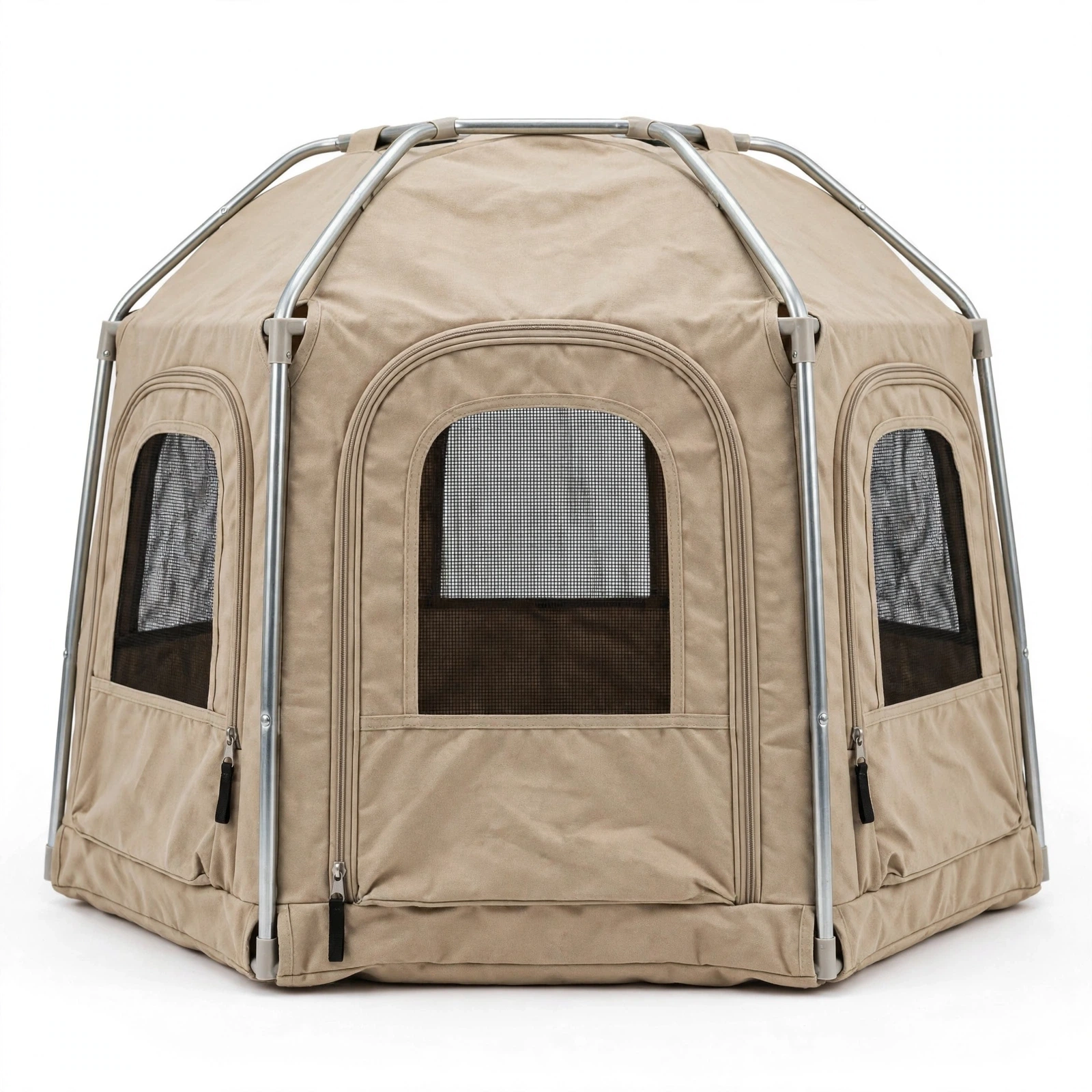
The EliteField 3-Door: a steel-tube frame with 600D fabric and hex mesh, three zippered doors, and a carry bag – the soft crate that actually holds its shape.
Soft crates have a bad reputation, and most of them earn it: they collapse, the zippers fail, and one determined dog turns them into confetti. The EliteField is the exception that testing outlets keep naming as the soft crate worth buying. The difference is the frame – lightweight but genuinely sturdy steel tubing that pops the crate open and holds it square, instead of the floppy fabric tunnels that pass for crates at lower prices.
The details are well thought out. Three mesh doors – front, side, and top – mean you can place the crate anywhere and still have an entry facing you, and the top door is perfect for lowering a puppy in. The doors use locking zippers for added security, the 600D fabric with hex mesh panels balances airflow and privacy, and it comes with a fleece bed and a carrying case in the box. Five sizes (20, 24, 30, 36, and 42 inches) cover small through large dogs, and it folds down in seconds for the car or travel. Prices run from around $55 for the 20 inch to around $155 for the 42 inch.
The honest limits, stated plainly: this is for crate-trained, calm dogs only. It is not for chewers, diggers, or escape-prone dogs – a determined dog will go through fabric and mesh, full stop. It is also not for unsupervised all-day containment of an untrained dog. But for a trained dog at a hotel, a show, a campsite, or Grandma’s house, it is lighter and friendlier than hauling a wire crate, and it looks like it belongs in a living room.
Pros:
- Steel tube frame holds its shape – no floppy collapse
- Three doors (front, side, top) for flexible placement
- Locking zippers for added security
- Fleece bed and carrying case included
- Folds down in seconds; light enough for real travel
- Five sizes from 20 to 42 inches
Cons:
- Not for chewers, diggers, or escape artists – fabric cannot contain them
- Not for unsupervised containment of untrained dogs
- Mesh panels can snag on claws over time
- Costs more than a basic wire crate of the same size
Best for: Crate-trained calm dogs, travel, hotels, dog shows, and camping. The best soft portable dog crate.
Skip if: Your dog chews, digs, or has ever escaped a crate – get wire or heavy-duty steel instead.
6. KOOPRO Wooden Dog Kennel Furniture – Best Furniture-Style Crate
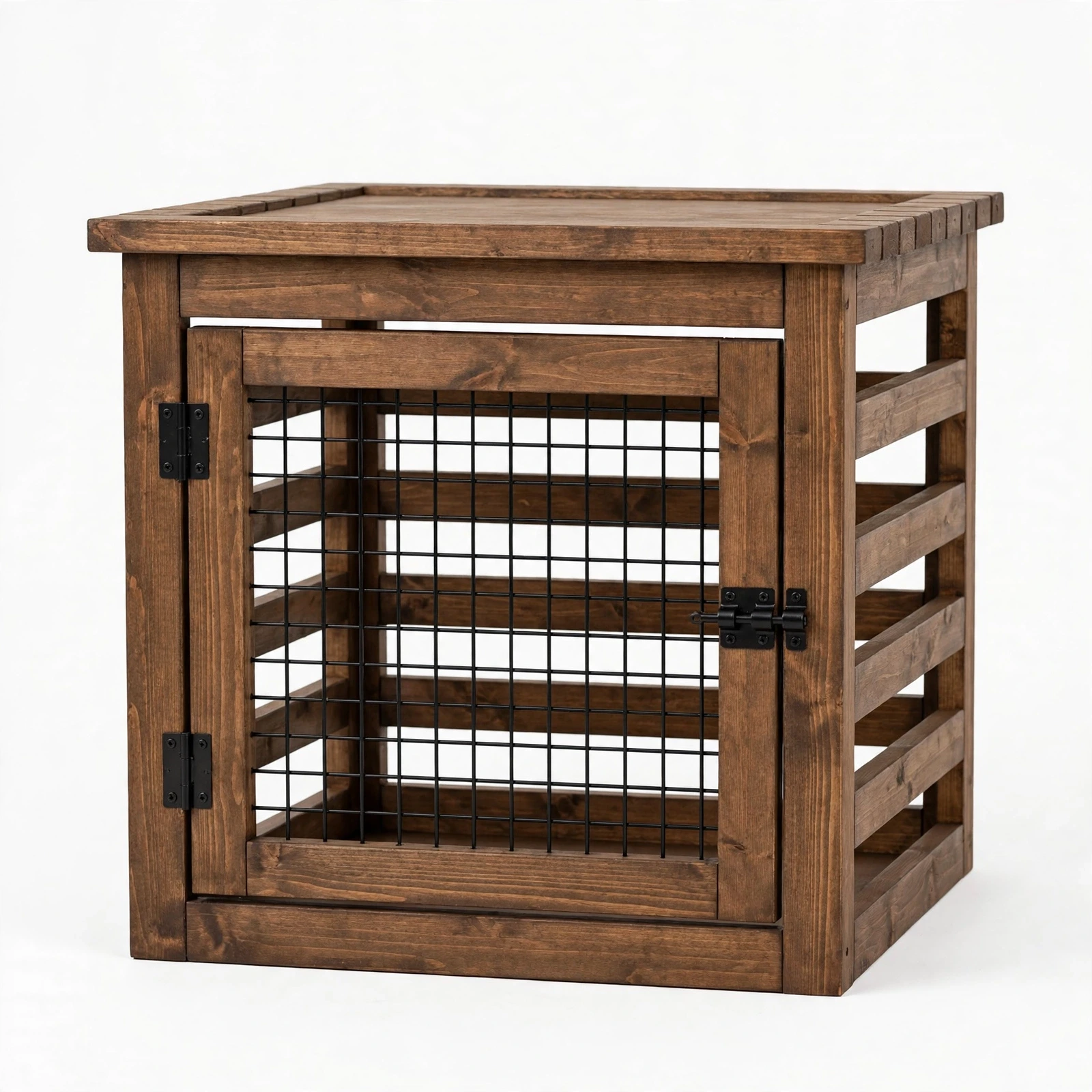
The KOOPRO wooden kennel: engineered wood with thick metal fencing, a flat end-table top, and a lockable sliding door – a crate that looks like furniture.
Let us be honest about wire crates: they are ugly. They dominate the living room, clash with everything, and guests ask about them. Furniture-style crates exist for owners who refuse to choose between their decor and their dog’s den, and the KOOPRO is one of the better-executed options in the category.
The construction mixes engineered wood panels with thick metal fencing on the door and sides, which gives it genuine chew resistance that all-wood crates lack – a determined chewer meets metal, not particleboard. The flat top is a real end table: sturdy enough for a lamp, books, or decor. The lockable sliding door saves swing space in tight rooms, two entrances make access easy, and an anti-slip cushion comes included so the crate is comfortable from day one. The 40 inch model, the most popular size, runs around $150-$158 and suits small to medium dogs.
The honest limits: furniture crates are a compromise by nature. They are heavier and harder to move than wire crates, they do not fold flat, ventilation is lower than wire mesh all around, and a truly destructive chewer can still work on wood corners. They also cost more per cubic inch of dog space than any other type here. But if the crate lives in your living room permanently – and for most owners it does – the daily visual payoff is real.
Pros:
- Looks like real furniture – doubles as an end table or nightstand
- Thick metal fencing adds genuine chew resistance
- Flat, sturdy top holds lamps, books, and decor
- Lockable sliding door saves space in tight rooms
- Cushion included; two entrances for easy access
Cons:
- Heavier and harder to move than wire crates; does not fold
- Less ventilation than an all-wire crate
- Determined chewers can still work wood corners
- More expensive per unit of dog space than wire
- Best suited to small and medium dogs
Best for: Design-conscious owners whose crate lives in the living room full-time. The best furniture-style dog crate.
Skip if: You need to move or store the crate often, or your dog is a heavy chewer – wire or steel serves better.
Buying Guide: How to Choose the Right Dog Crate
The wrong crate is worse than no crate: a cramped dog that cannot stand, an oversized crate that sabotages housebreaking, or a flimsy crate that an anxious dog destroys in an hour. Three decisions keep you out of that trap.
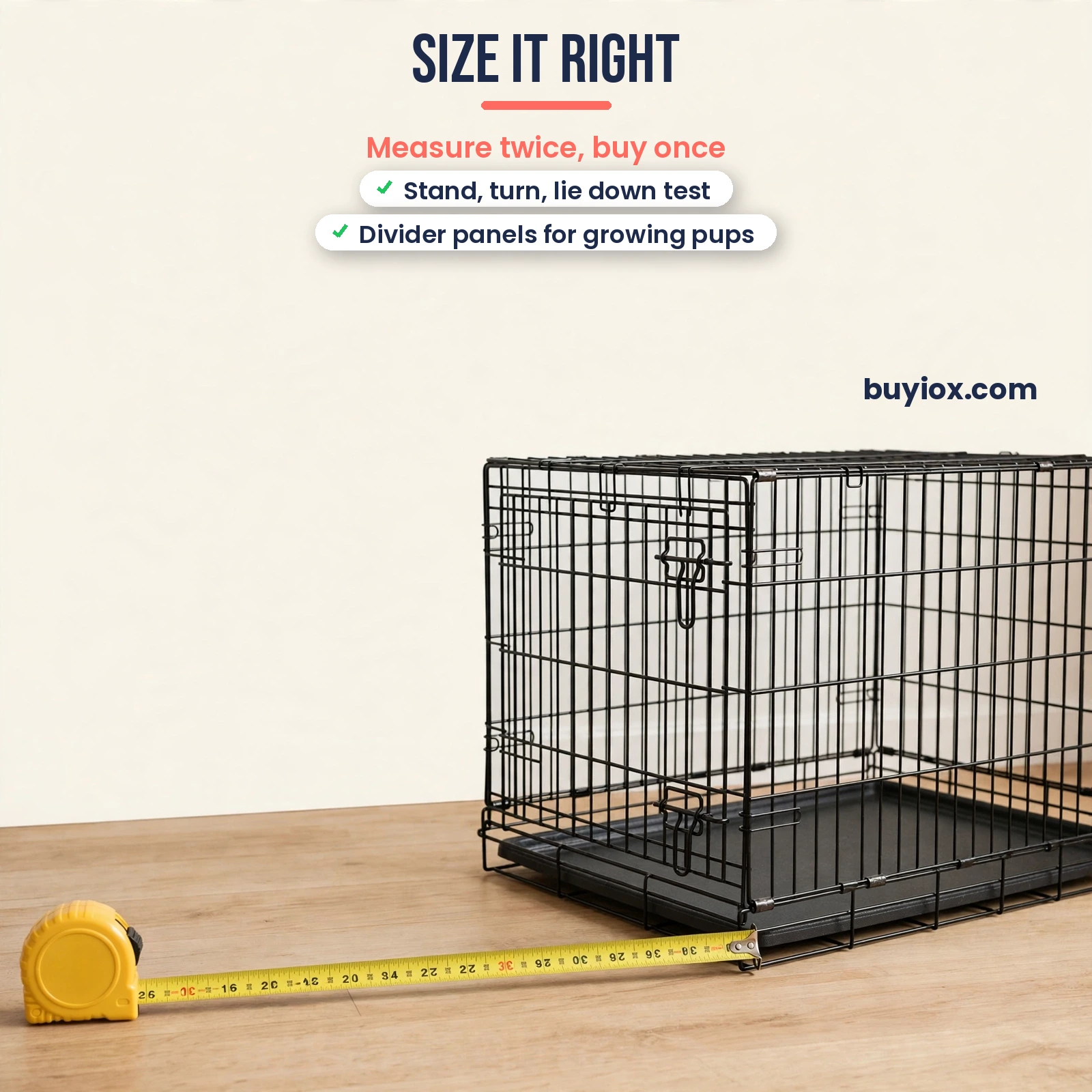
Sizing: the stand, turn, lie-down test
This is the only sizing rule that matters, and every authority from the AKC to VCA agrees on it: your dog should be able to stand up without crouching, turn around freely, and lie down stretched out. VCA’s crate training guide puts it plainly – a crate is like a crib for a small child, a safe resting space, not a storage box (https://vcacanada.com/know-your-pet/general-dog-care/training-your-dog).
Measure your dog from nose to tail base and from floor to top of head, then add 2 to 4 inches. For a growing puppy, buy the adult size once and use the divider panel that comes with wire crates like the iCrate and the Amazon Basics – wall off the extra space now, expand it as the puppy grows. An oversized crate for a puppy is a real problem: the puppy sleeps at one end and eliminates at the other, which teaches exactly the habit you are trying to prevent.
Wire vs plastic vs soft vs furniture: match the crate to the dog
Wire crates (iCrate, Amazon Basics) are the default for a reason: maximum ventilation, easy cleaning with the slide-out tray, fold-flat storage, and the lowest prices. Choose wire for puppies, for training, and for everyday home use – unless your dog is an escape artist.
Plastic kennels (Petmate Sky Kennel) trade ventilation for security and den-like coziness, and they are the only sensible choice for airline cargo. Choose plastic if your dog flies, or if your dog prefers a darker, more enclosed den.
Soft crates (EliteField) trade security for portability and looks. They are wonderful for trained, calm dogs on the move – and useless for chewers, diggers, or any dog left unsupervised before it is fully crate-trained. Be honest about which dog you have.
Furniture crates (KOOPRO) trade flexibility for aesthetics. They do not fold, they are heavy, and they cost more – but they are the only crate you will not want to hide when guests come over. Choose furniture when the crate lives in the living room permanently and your dog is already crate-comfortable.
Crate training basics: the crate must predict good things
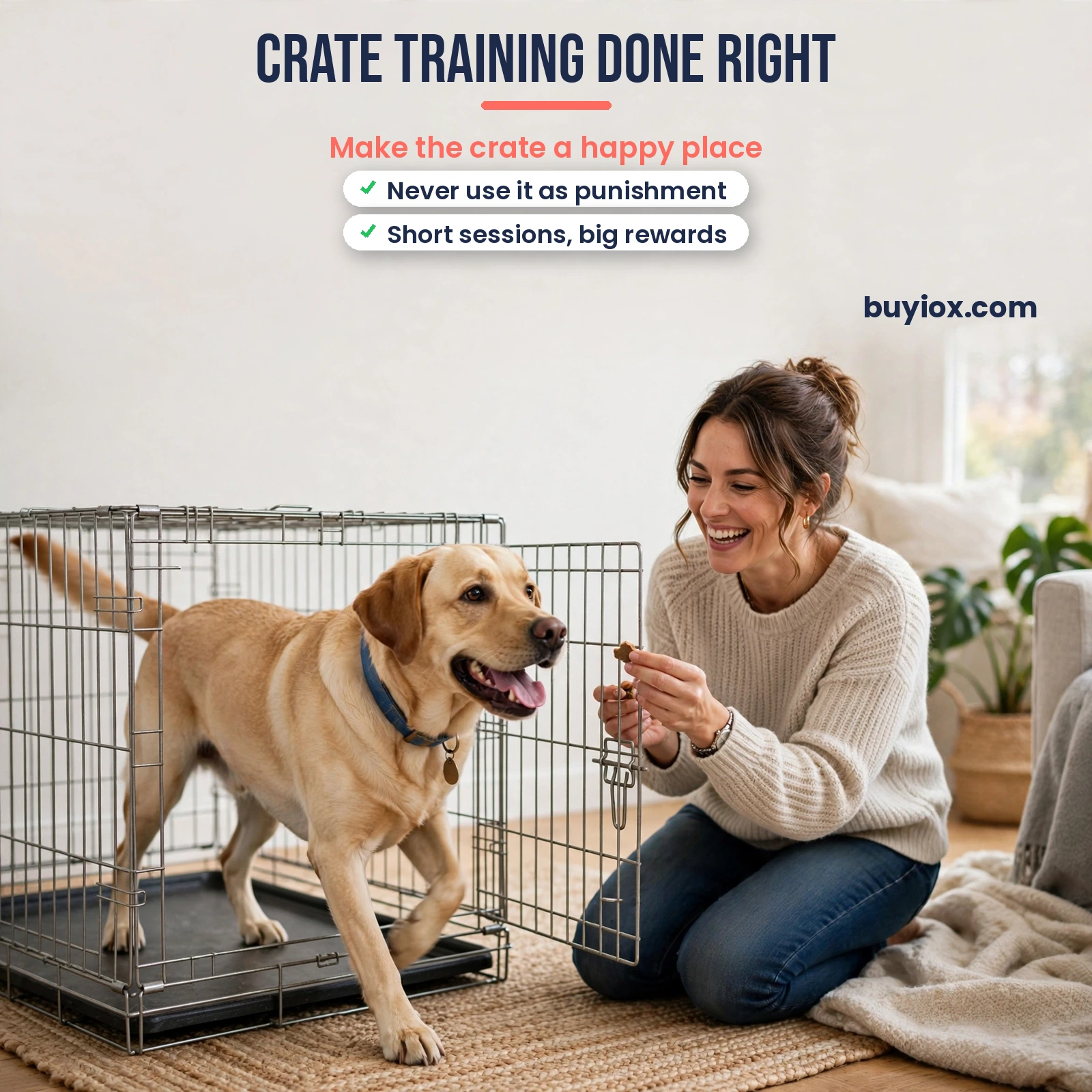
The crate is a training tool, not a jail cell, and every major authority stresses the same rule: never use the crate as punishment. PetMD’s guide is explicit – always use the crate as a positive place, or the training backfires. Start with the door open and treats inside, feed meals in the crate, build up closed-door time in short sessions, and let the dog out before it gets distressed. A comfortable bed or mat inside helps – see the best orthopedic dog beds for options that fit standard crate sizes.
For puppies, keep initial sessions short and build gradually, and never leave a young puppy crated longer than it can hold its bladder – roughly one hour per month of age is the widely cited guideline. Anxious dogs need the same positive buildup, just slower, and a heavy-duty crate like the BOLDBONE keeps them safe during the process. If anxiety is severe, talk to your vet or a certified trainer rather than just buying a stronger box.
Frequently Asked Questions
What size dog crate do I need?
Use the stand, turn, lie-down test: your dog should stand without crouching, turn around freely, and lie down fully stretched. Measure nose to tail base and floor to top of head, then add 2 to 4 inches. For a puppy, buy the adult size and use the divider panel to shrink the space while housebreaking – an oversized crate lets the puppy eliminate in one corner and sleep in the other.
Are wire crates or plastic crates better?
Neither is universally better – they solve different problems. Wire crates win for everyday home use: better ventilation, easier cleaning, fold-flat storage, and lower prices. Plastic kennels like the Petmate Sky Kennel win for airline travel and for dogs that prefer a darker, den-like space. If your dog flies in cargo, plastic is the answer; for everything else at home, most owners prefer wire.
How long can a dog stay in a crate?
Adult dogs that are properly crate-trained can typically handle 4 to 6 hours during the day, and overnight is fine since dogs sleep through it. Puppies are limited by bladder control – roughly one hour per month of age is the standard guideline, so a 3-month-old puppy needs a break every 3 hours. Never use the crate as all-day storage while you are at work; a dog walker or daycare is the humane answer for long absences.
Is crate training cruel?
Not when done correctly. Dogs are den animals, and a properly introduced crate becomes a private bedroom the dog chooses voluntarily – many crate-trained dogs nap in theirs with the door open. What is cruel is forcing an untrained dog into a crate for hours, using the crate as punishment, or crating a dog with untreated separation anxiety without addressing the underlying distress. The AKC, PetMD, and VCA all endorse crate training with positive methods.
Can I crate a dog with separation anxiety?
Yes, but the crate alone does not treat the anxiety – it only keeps the dog safe while you work on it. Use a heavy-duty crate like the BOLDBONE so the dog cannot injure itself escaping, build positive associations gradually, keep departures low-key, and consider calming support. For moderate to severe cases, work with your vet or a certified separation-anxiety trainer; a stronger crate without a training plan just contains the panic.
Do I need a divider panel for a puppy?
Strongly recommended. The divider lets you buy the adult-size crate once – the economical move – while keeping the puppy’s living space small enough to support housebreaking. Puppies naturally avoid soiling their sleeping area, but only if the space is small; give a puppy a full 48 inch crate and it will designate a bathroom corner. Both the MidWest iCrate and the Amazon Basics crate include a divider panel.
What should I put inside a dog crate?
Keep it simple: a comfortable bed or mat sized to the crate, a safe chew toy, and water if the dog will be crated for several hours. Skip anything the dog might shred and swallow – no loose blankets for heavy chewers, no toys with squeakers that can be ripped out. For chewers, a durable rubber toy is safer than plush. And never put food bowls loose inside with an unsupervised puppy; feed meals in the crate, then remove the bowl.
Final Verdict: Which Dog Crate Should You Buy?
If you want our single top recommendation, it is the MidWest iCrate Double Door. The double doors, the Paw Block latches, the included divider panel, and the size range from 18 to 54 inches make it the right answer for the majority of dogs and owners – and at around $60-$90 it does not punish your wallet. It is the crate most trainers reach for first, for good reason.
For the escape artist or the anxious powerhouse, the BOLDBONE 48 inch is the only honest pick – steel bars and real locks instead of wishful thinking. Flyers should get the Petmate Sky Kennel and confirm the size with their airline. Budget shoppers get 90 percent of the iCrate’s function from the Amazon Basics crate at the lowest price here. Travelers with a calm, trained dog will love the EliteField soft crate, and design-conscious owners should look at the KOOPRO furniture kennel.
A crate is one part of a calm, well-managed dog. Pair it with the right gear for the rest of the routine: the best no-pull dog harnesses for walks, the best dog calming chews if anxiety is part of the picture, and the best dog GPS trackers if your dog is a bolter. Get the crate right, train it positively, and that 2 a.m. whining becomes a memory.