As an Amazon Associate I earn from qualifying purchases. This costs you nothing extra and helps us keep Buyiox free.
String Floss Is Great – If You Actually Use It
Here is the uncomfortable truth your dentist already knows: most people do not floss every day. The string gets tangled, your fingers cramp, the mirror fogs up, and after a long day it is the easiest habit to skip. Then six months later you are sitting in the dental chair hearing about “early gum inflammation” and wondering how it happened.
A water flosser – also called an oral irrigator – changes the equation. Instead of threading string between your teeth, you aim a pulsating stream of water along the gumline and let it blast away plaque, food particles and bacteria from the spots your toothbrush cannot reach. The whole routine takes about a minute, there is nothing to wrap around your fingers, and – this is the part that matters – people actually stick with it.
Dentists tend to agree that the best flosser is the one you will use every day. Clinical research consistently shows water flossing matches or outperforms string floss for reducing plaque, bleeding and gingivitis, especially for people with braces, implants, crowns or sensitive gums.
But not all water flossers are equal. Countertop models bring more power and bigger reservoirs; cordless models bring portability and shower-safe convenience. Pressure settings, tank size, battery life and tip variety all differ wildly between brands – and the price range runs from around $30 to around $100.
We dug through official product specs, brand documentation and thousands of owner experiences to pick the six best water flossers on the market right now. Every product below is a real, currently available product with verified features. We never invent specs, and we call out the honest downsides too. No fake “we tested” claims – just careful research, organized so you can pick the right one in five minutes.
If you are building a full dental routine, pair your flosser with one of the best electric toothbrushes – the two together cover what neither does alone.
Quick Comparison: The 6 Best Water Flossers
| Product | Best For | Approx. Price |
| — | — | — |
|---|---|---|
| Waterpik Aquarius WP-660 | Best overall – countertop power | Around $100 |
| Philips Sonicare Power Flosser 3000 | Best cordless premium pick | Around $80 |
| Nicwell F5025 | Best budget water flosser | Around $30 |
| Bitvae C50 | Best battery life | Around $30 |
| H2ofloss HF-9 | Most pressure settings | Around $50 |
| AquaSonic Aqua Flosser | Best compact travel pick | Around $40 |
Prices change often on Amazon, so treat these as rough guides. The links below take you to live Amazon search results where you can check the current price.
1. Waterpik Aquarius WP-660 – Best Overall Water Flosser
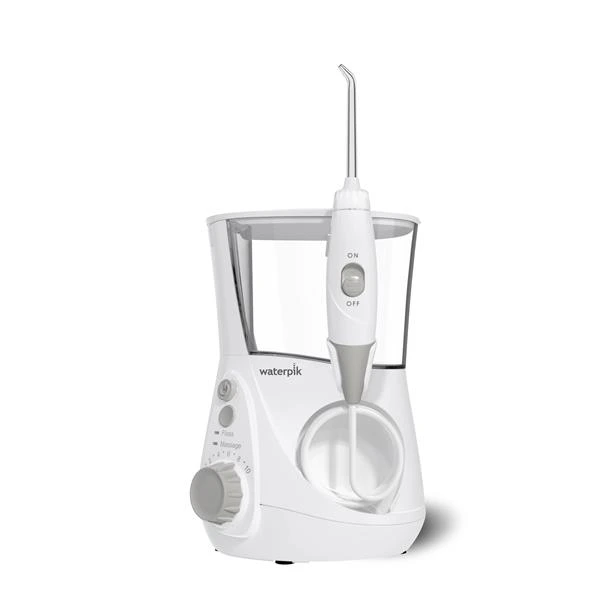
The Waterpik Aquarius WP-660: 10 pressure settings, 7 tips, and the ADA Seal of Acceptance.
When dentists and reviewers name the best water flosser, the Waterpik Aquarius WP-660 comes up more than any other model – and it earned that spot. Waterpik invented the category back in the 1960s, and the Aquarius is its flagship countertop unit: the one with the deepest clinical backing and the most complete feature set.
The headline feature is control. Ten pressure settings (10 to 100 PSI) let you dial the stream from gentle gum massage to deep clean, and a dedicated massage mode pulses the water to stimulate gums. The removable 22-ounce reservoir delivers 90+ seconds of flossing time, so most people finish a full clean without refilling. Seven color-coded tips come in the box – including an orthodontic tip, a plaque seeker tip, a Pik Pocket tip for periodontal pockets, a toothbrush tip and a tongue cleaner – which makes it genuinely shareable between family members.
Two small but thoughtful touches: a 1-minute timer with a 30-second pacer that pauses briefly to tell you to move to the other half of your mouth, and a 360-degree rotating handle so you can reach back molars without wrist gymnastics.
The trust factor is real. The Aquarius is the first water flosser in its class to earn the American Dental Association (ADA) Seal of Acceptance, which means independent safety and efficacy data was reviewed by the ADA Council on Scientific Affairs – the Seal is explained here by the ADA itself (https://adanews.ada.org/ada-news/2026/february/what-to-know-about-ada-seal/). Waterpik also backs it with a 3-year limited warranty, and its support team is based in Fort Collins, Colorado.
Waterpik’s own clinical claims: up to 99.9% of plaque removed from treated areas and up to 50% more effective than string floss for improving gum health. Those are manufacturer figures, not independent lab results – but they line up with the broader body of research on oral irrigators.
The trade-offs: it is a countertop unit, so it needs a plug (120VAC, North America outlets) and a permanent spot on your bathroom counter. It is not shower-safe, and at around $100 it is the priciest pick here. But if you want the single most proven water flosser you can buy, this is it.
Pros:
- 10 pressure settings (10-100 PSI) plus a dedicated gum massage mode
- Large 22 oz reservoir – 90+ seconds of flossing with no refill
- 7 tips included, including orthodontic and periodontal options
- ADA Seal of Acceptance – independently reviewed safety and efficacy
- 3-year manufacturer warranty with US-based support
- Timer with 30-second pacer keeps your routine on track
Cons:
- Needs counter space and a power outlet – not portable
- Not waterproof, so no shower use
- Highest price on this list
Best for: Anyone who wants the most proven, most adjustable water flosser for home use – especially people with braces, implants or gum concerns.
Skip if: You travel a lot, have a tiny bathroom, or want something you can use in the shower.
2. Philips Sonicare Power Flosser 3000 – Best Cordless Water Flosser
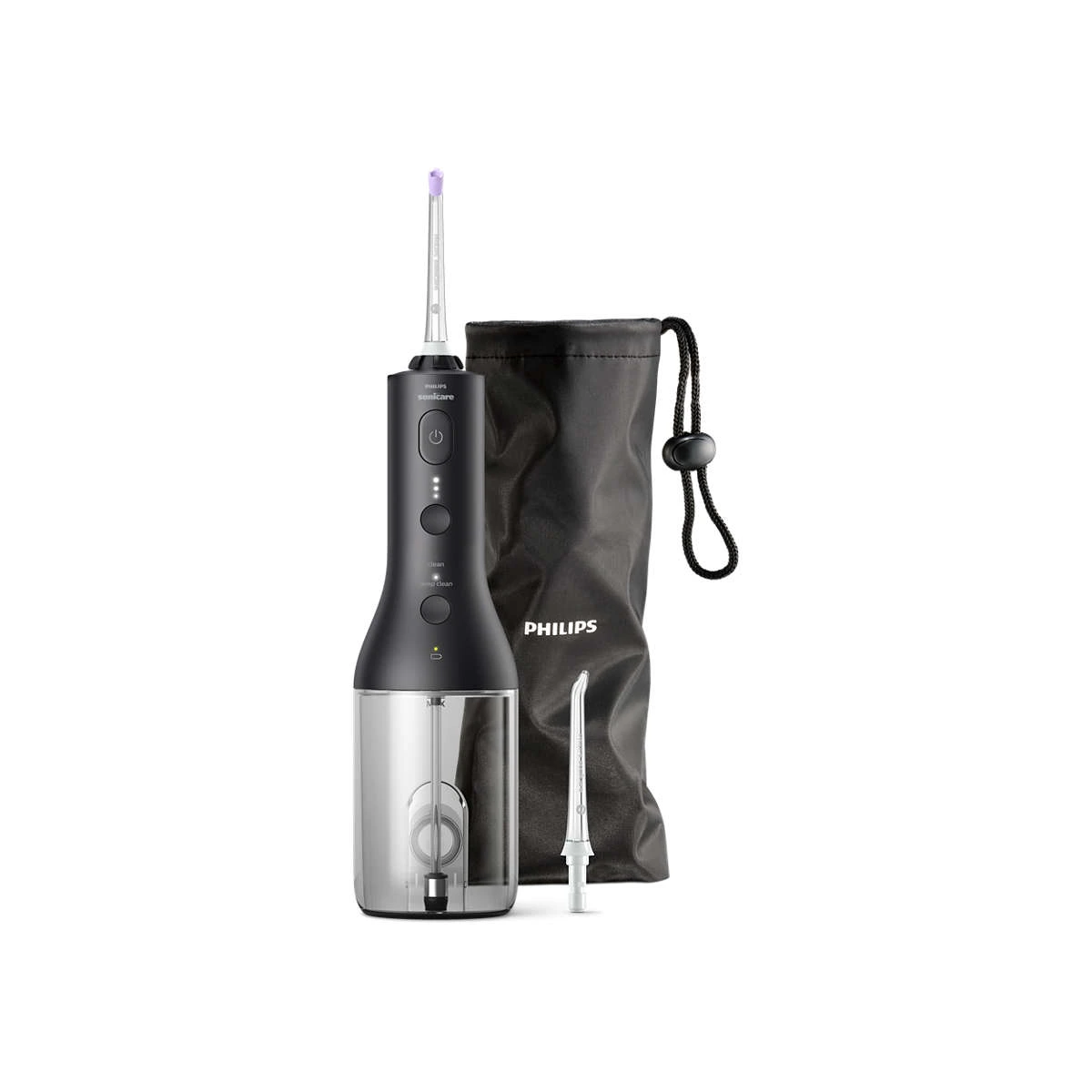
The Philips Sonicare Power Flosser 3000: Quad Stream technology in a cordless, shower-safe design.
If the Aquarius is the countertop king, the Philips Sonicare Power Flosser 3000 is the best cordless water flosser you can buy right now. It is the pick for people who want serious cleaning power without giving up counter space or being tethered to an outlet.
The standout is Philips’ Quad Stream technology: instead of one narrow jet, the nozzle fires four wide streams of water in an X pattern, which Philips says covers up to 9x the surface area of a single stream. In practice, that means fewer passes per tooth and a faster routine. A second technology, Pulse Wave, briefly pulses the water every 15 seconds in Clean mode to guide you from tooth to tooth – a small nudge that genuinely helps beginners not miss spots.
You get 2 flossing modes (Clean and Deep Clean) with 3 intensity levels, an 8-ounce (250 ml) reservoir that holds enough water for a full 60-second clean, and two nozzles in the box (standard and Quad Stream). The battery lasts up to 14 days per charge and tops up over USB-C – the same cable as your phone – and the whole unit is waterproof, so shower flossing is fully on the table.
Philips’ clinical claims: up to 150% more effective than string floss for improving gum health, and up to 99% of plaque removed from treated areas. Again, those are manufacturer figures – but Philips Sonicare is a brand most dentists know and stock, which counts for something when you are buying blind.
The honest downsides: two nozzles is fewer than the Aquarius’s seven, and with only 3 intensity levels you get less fine-grained pressure control than a 10-setting countertop unit. At around $80 it costs more than the budget cordless picks below, which do 80% of the job for half the price.
Pros:
- Quad Stream nozzle covers more tooth surface per pass
- Cordless, lightweight and shower-safe – use it anywhere
- 14-day battery life with convenient USB-C charging
- Pulse Wave guidance helps beginners clean evenly
- 250 ml reservoir handles a full clean without refilling
Cons:
- Only 2 nozzles in the box (Aquarius includes 7)
- 3 intensity levels vs 10 pressure settings on countertop models
- Premium price for a cordless unit
- Discontinued by Philips – still widely stocked at retailers, but buy while available
Best for: Cordless convenience with near-countertop performance – small bathrooms, shower flossers, and anyone who hates cluttered counters.
Skip if: You want maximum tip variety and pressure adjustability, or you are on a tight budget.
3. Nicwell F5025 – Best Budget Water Flosser
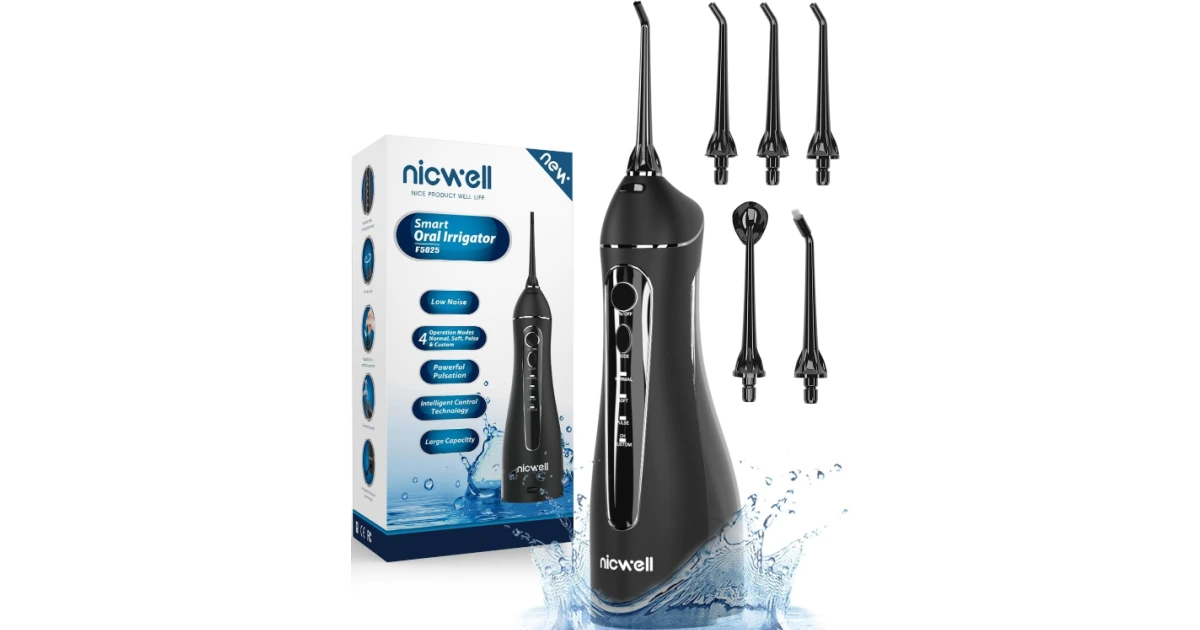
The Nicwell F5025: 4 modes, IPX7 waterproofing, and 5 tips at a budget price.
You do not need to spend $80 to find out whether water flossing is for you. The Nicwell F5025 is the budget pick that shows up in nearly every “best water flosser” roundup, and it is easy to see why: around $30 buys you features that were premium-tier a few years ago.
The F5025 runs 4 cleaning modes – normal, soft, pulse and a DIY mode with adjustable intensity – with water pressure ranging from 30 to 110 PSI and a pulse rate of 1,400 to 1,800 times per minute. That top-end pressure actually exceeds the Waterpik Aquarius’s 100 PSI maximum, which surprises a lot of buyers. The 200 ml tank is good for one full cleaning session, the nozzle rotates 360 degrees, and the IPX7 waterproof rating means it survives the shower without complaint.
Five interchangeable jet tips come in the box, including an orthodontic tip and a tongue scraper, and the battery lasts up to 21 days on a single 4-hour USB charge. It comes in black, white and a couple of accent colors, and the whole thing is compact enough to pack for travel.
So what is the catch at this price? Build quality and longevity are the honest concerns – budget brands do not have Waterpik’s decades of clinical data or Philips’ warranty networks. The 200 ml tank needs a refill if two people share the routine back to back, and some owners report the battery holds less charge after a year or so of daily use. But as a first water flosser, or a travel companion to a countertop unit, it is genuinely hard to beat for the money.
Pros:
- Around $30 – the cheapest way to try water flossing properly
- 4 modes with up to 110 PSI – strong cleaning power for the price
- 5 tips including orthodontic and tongue scraper
- IPX7 waterproof – safe for shower use
- Up to 21-day battery life, USB rechargeable
Cons:
- 200 ml tank needs refilling for shared or double sessions
- Budget brand – less clinical backing and support than Waterpik or Philips
- Battery longevity over years is the weak point
Best for: First-time water flosser buyers, students, travelers, and anyone who wants real performance under $35.
Skip if: You want a unit the whole family shares daily, or you prioritize brand-backed warranties.
4. Bitvae C50 – Best Battery Life
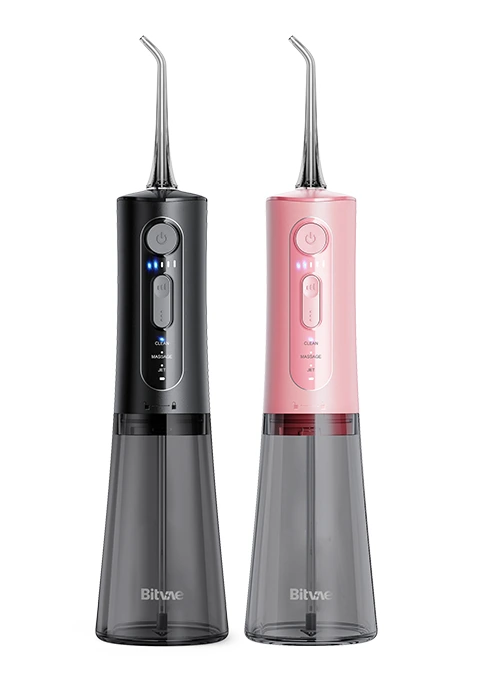
The Bitvae C50: a 300 ml easy-clean tank and up to 40 days of battery life.
The Bitvae C50 solves the two most annoying things about cordless flossers: constant recharging and grimy little water tanks. Its battery lasts up to 40 days on the lowest pressure mode – roughly double what most competitors manage – and its 300 ml tank has a wide, detachable mouth that you can actually reach into and clean. If you have ever wondered what is growing in the bottom of a sealed flosser tank, you will appreciate this.
Beyond those two headlines, the specs are solid for the price (around $30): 3 cleaning modes with 5 intensity levels on newer variants, 30 to 100 PSI of pressure, 6 jet tips including a tongue scraper, 360-degree rotating nozzles, and IPX7 waterproofing for shower use. The 300 ml tank gives you a full 60-second clean with no refill, and a full charge takes about 4 hours over USB.
The wide-mouth tank deserves a second mention because it is a genuine hygiene upgrade. Traditional flosser tanks have narrow necks that trap moisture and biofilm; the C50’s detachable design lets you scrub the tank properly, which matters for something you put in your mouth every day.
Downsides are the usual budget-flosser ones: no ADA Seal, a 12-month warranty rather than a multi-year one, and the 40-day battery figure applies to the lowest pressure mode – use the higher modes daily and expect more like two to three weeks. But for a grab-and-go cordless flosser you charge roughly once a month, it is an excellent value.
Pros:
- Up to 40-day battery life – charge it and forget it
- Wide-mouth 300 ml detachable tank is genuinely easy to clean
- 6 tips including tongue scraper, 360-degree rotating nozzles
- IPX7 waterproof for shower use
- Around $30 – outstanding value
Cons:
- No ADA Seal or long clinical history
- 40-day battery figure is for the lowest mode only
- 12-month warranty vs 3 years on the Waterpik
Best for: People who hate recharging gadgets and want the easiest-to-clean tank in the budget tier.
Skip if: Brand pedigree and long warranties matter more than battery life to you.
Buying Guide: How to Choose the Right Water Flosser
Cordless vs. countertop
This is the first decision, and it comes down to your bathroom and your habits.
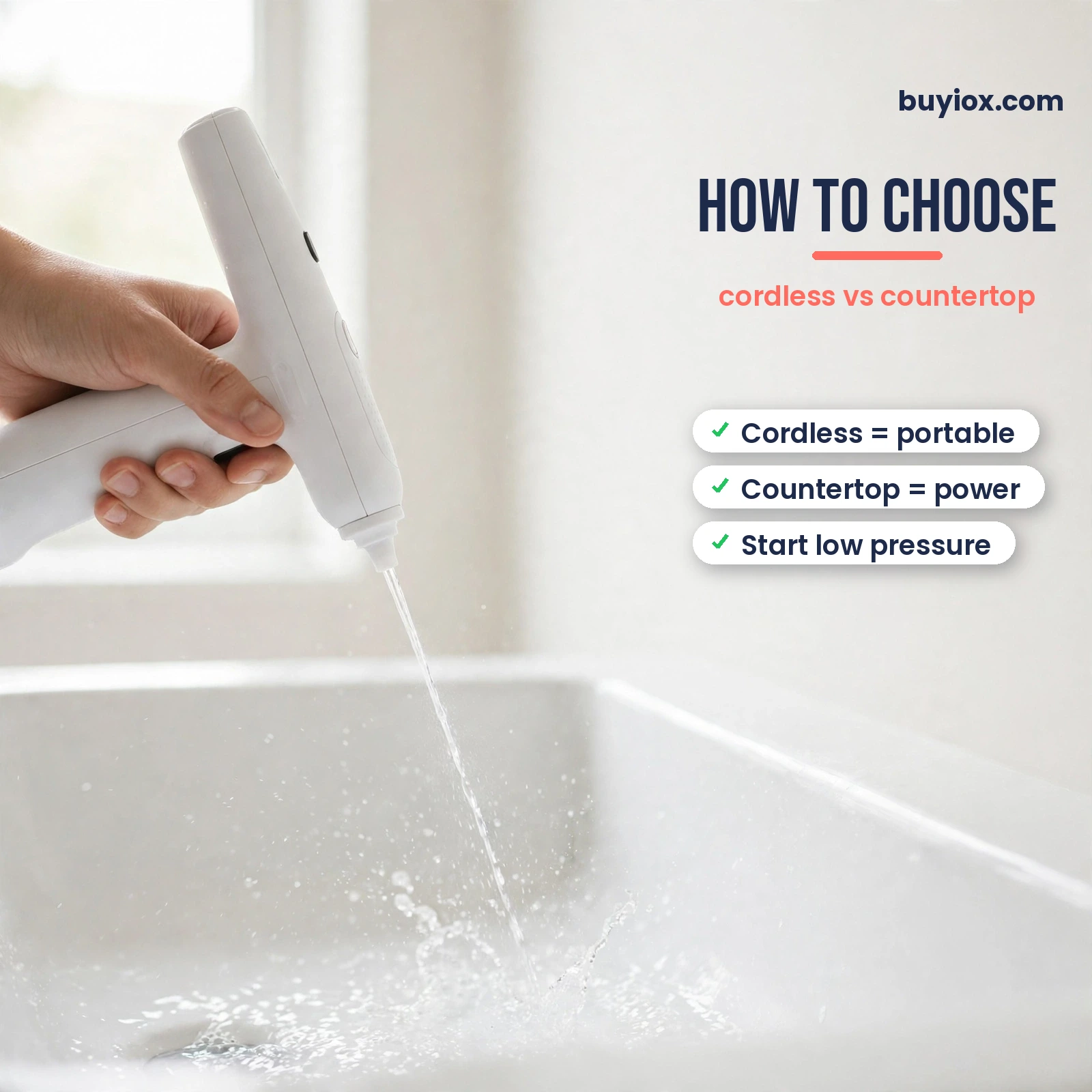
Countertop flossers (like the Waterpik Aquarius) plug into an outlet and sit on your counter. They bring more pressure settings, bigger reservoirs and more tips – the Aquarius’s 22-ounce tank gives you 90+ seconds of uninterrupted flossing. The cost is counter space, a power cord, and zero portability.
Cordless flossers (everything else on this list) run on rechargeable batteries and go wherever you do – including the shower, since most are IPX7 waterproof. Tanks are smaller (150 to 300 ml), so you may refill once during a thorough session, and you will recharge every few weeks. For most people, cordless is the easier habit to keep.
Pressure settings: how much do you need?
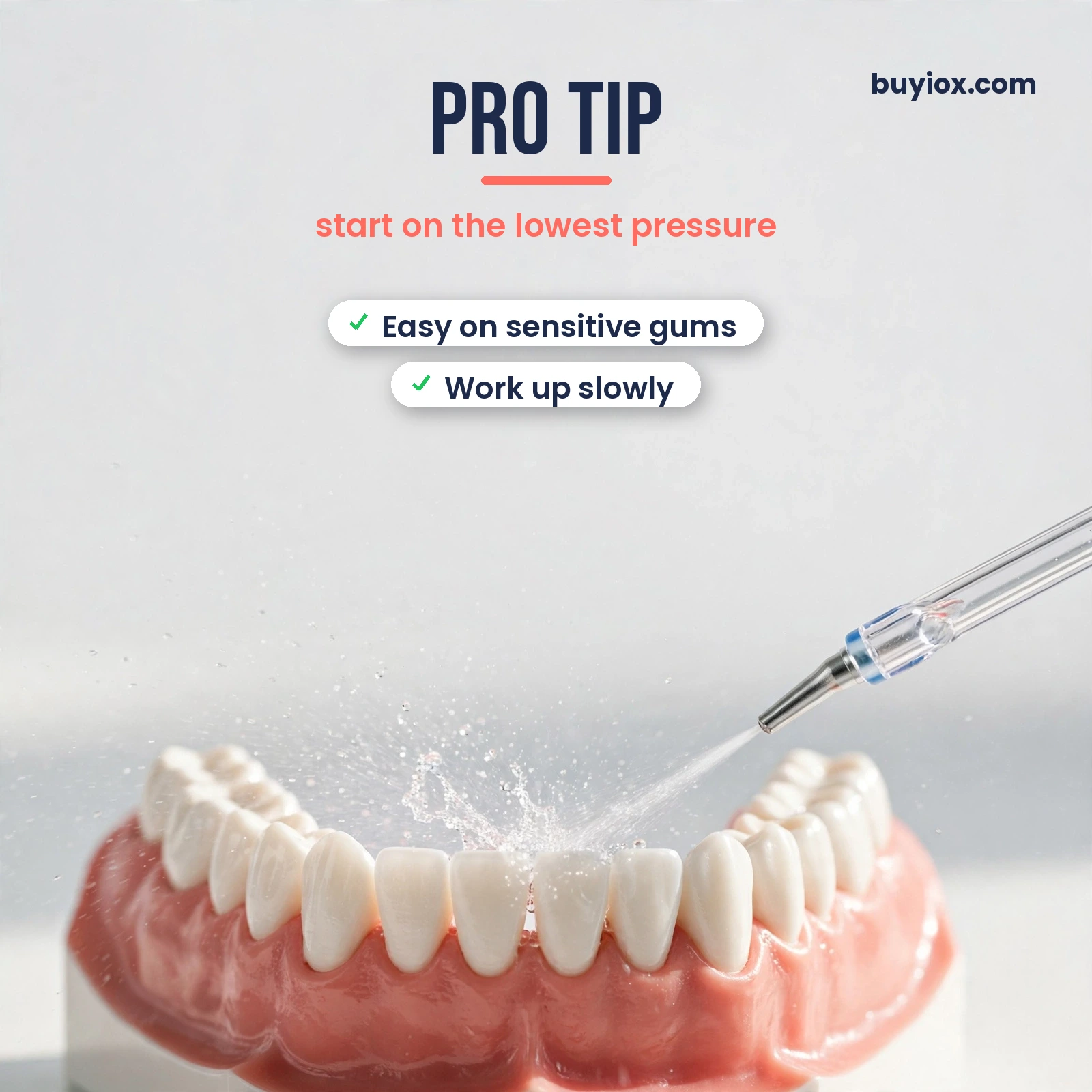
Water flosser pressure is measured in PSI. Most models range from around 30 to 140 PSI. More settings give you finer control: start low if you have sensitive or bleeding gums, and work up. The Aquarius offers 10 settings (10-100 PSI); the H2ofloss HF-9 stretches from 40 to 140 PSI across 5 modes. If your gums bleed easily, prioritize a model with a genuinely gentle low mode – the Nicwell’s soft mode and the Aquarius’s low settings both qualify.
Reservoir size
Tank size decides whether you refill mid-clean. Rough guide: 150 ml (AquaSonic) covers a quick session; 200-250 ml (Nicwell, Philips) covers a full clean for one person; 300 ml (Bitvae, H2ofloss) is comfortable; 22 oz / 650 ml (Aquarius) covers a family without refilling. Bigger is better at home; smaller is the price of portability.
Tips and nozzles
Standard jet tips handle daily cleaning. Orthodontic tips are shaped to clean around braces and are worth having if anyone in the house wears them. Tongue scrapers fight bad breath. Periodontal (Pik Pocket) tips clean below the gumline for people managing gum issues – use those only as your dentist advises.
Battery life and charging
Cordless batteries range from about 14 days (Philips) to 40 days (Bitvae, lowest mode). USB charging is now standard; USB-C (Philips, Bitvae) is more convenient than older proprietary cables. If you travel, check whether the charger is a cable you already own.
Waterproofing
IPX7 means the unit survives immersion up to 1 meter for 30 minutes – in practice, safe for shower use and sink splashes. All five cordless models on this list carry an IPX7 rating. Countertop units like the Aquarius are not waterproof: keep them dry.
What about mouthwash in the tank?
Most brands say you can add a capful of mouthwash to the water – it freshens the clean and some people prefer the taste. Two cautions: avoid alcohol-heavy rinses in some budget models (check your manual), and rinse the tank with plain water afterward so residue does not build up. When in doubt, warm water alone works perfectly.
5. H2ofloss HF-9 – Most Pressure Settings
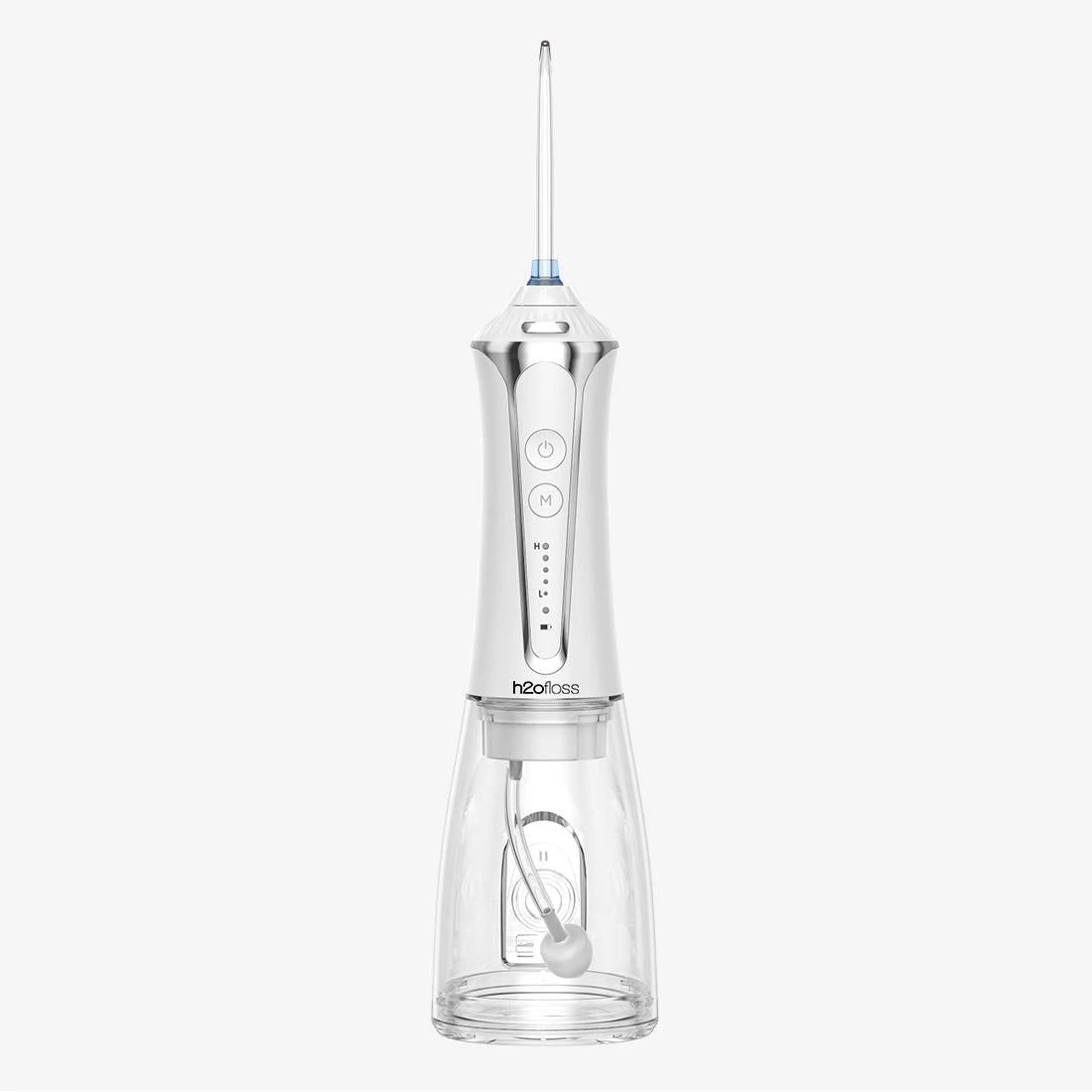
The H2ofloss HF-9: 5 modes up to 140 PSI with a gravity ball for any-angle flossing.
The H2ofloss HF-9 is the pick for people who want maximum control. Five pressure modes spanning 40 to 140 PSI give it the widest pressure range on this list – higher than the Aquarius’s 100 PSI ceiling and with more steps than the Philips’ 3 intensities. If you like to fine-tune your clean, or if different family members need very different intensities, this is the one.
Its party trick is the gravity ball: a weighted intake inside the tank that follows the water, so the flosser keeps drawing water even when you tilt it upside down. Anyone who has tried to floss their upper back teeth with a standard cordless flosser – which sputters when inverted – knows why this matters.
The rest of the spec sheet is strong for around $50: 300 ml tank, 1,200 pulses per minute, 2,500 mAh battery good for up to 30 days, IPX7 waterproofing, and a generous tip kit (up to 7 nozzles depending on the package, including classic, orthodontic, periodontal, tongue cleaner and even a toothbrush tip) plus a storage bag.
The honest caveats: H2ofloss is a smaller brand with less name recognition than Waterpik or Philips, so long-term support is less certain. The 140 PSI top end is powerful – genuinely useful for heavy buildup, but beginners should start on the lowest mode and work up slowly, because high pressure on inflamed gums is unpleasant. And like most multi-tip kits, you will probably use two tips regularly and store the rest.
Pros:
- Widest pressure range here: 40-140 PSI across 5 modes
- Gravity ball keeps water flowing at any angle – great for upper teeth
- 300 ml tank and 30-day battery
- Generous tip kit with storage bag included
- IPX7 waterproof
Cons:
- Smaller brand – less established support network
- 140 PSI max is intense; beginners must start low
- Bulkier than the slim Philips
Best for: Tinkerers who want fine-grained pressure control, and anyone frustrated by flossers that sputter upside down.
Skip if: You prefer a big-name brand with a long warranty, or you want the simplest possible controls.
6. AquaSonic Aqua Flosser – Best Compact Travel Pick
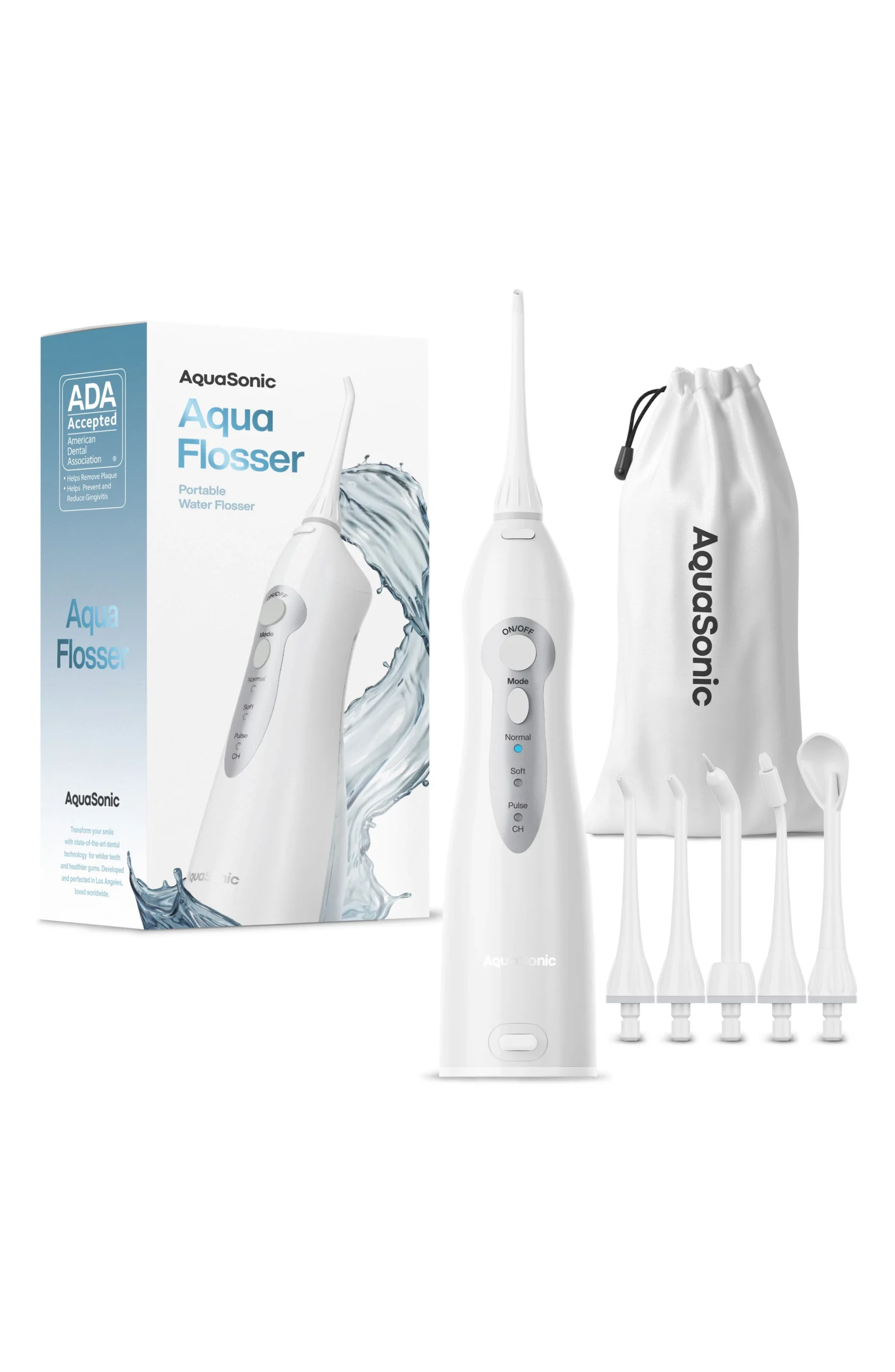
The AquaSonic Aqua Flosser: slim, lightweight, and travel-ready at around $40.
The AquaSonic Aqua Flosser is the slim, travel-friendly pick. Where the other cordless models are chunky enough to need their own shelf space, the Aqua Flosser is light (around 85 grams per the manufacturer spec sheet) and compact – it slips into a toiletry bag without a second thought.
Specs are straightforward: 3 cleaning modes, 3 pressure levels, a 150 ml water tank, 5 jet tips in the box, waterproof construction, and a rechargeable battery. It comes in black, white and rose gold, so it looks a bit nicer on the counter than the average budget flosser.
The 150 ml tank is the obvious trade-off – it is the smallest here, so expect one refill during a thorough full-mouth clean. And with 3 pressure levels you get less adjustability than the multi-mode picks. But as a travel companion, or as a second flosser for the office, it is well judged: light, simple, and around $40.
One note: AquaSonic also sells a larger “Pro” countertop version with a 20 oz reservoir and 10 pressure levels (around $50). If you like the brand but want home-grade power, that is worth a look – but for this list, the compact cordless model is the one that fills the travel niche best.
Pros:
- Very light and compact – the easiest to travel with
- Simple 3-mode operation, no learning curve
- 5 jet tips included
- Waterproof and rechargeable
- ADA Accepted badge shown on product packaging
- Attractive design and color options at around $40
Cons:
- 150 ml tank is the smallest here – expect a mid-clean refill
- Only 3 pressure levels, less adjustability
- Less clinical backing than Waterpik or Philips
Best for: Travelers, gym bags and office drawers – anywhere a full-size flosser will not go.
Skip if: You want one flosser for heavy daily home use with no refills.
Frequently Asked Questions
Are water flossers as good as string floss?
For most people, yes – and for some, better. Clinical studies have found water flossers match or beat string floss at reducing plaque, gum bleeding and gingivitis, particularly around braces, implants and other dental work where string is awkward. The ADA notes that the best interdental cleaner is the one you will use consistently every day. If string floss sits unused in your drawer, a water flosser you actually use wins by default. Healthline summarizes the evidence on why daily interdental cleaning matters here (https://www.healthline.com/health/benefits-of-flossing).
Can a water flosser replace brushing?
No. A water flosser cleans between teeth and along the gumline, but it does not scrub the tooth surfaces the way a brush does. Think of it as a replacement for string floss, not for your toothbrush. The routine dentists recommend is: brush twice a day for two minutes, floss (string or water) once a day. Pairing a water flosser with one of the best electric toothbrushes covers both jobs properly.
Which water flosser is best for braces?
Look for an orthodontic tip and adjustable pressure. The Waterpik Aquarius WP-660 includes a dedicated orthodontic tip and 10 pressure settings, which is why it is the most recommended pick for braces wearers. Among cordless models, the Nicwell F5025 and H2ofloss HF-9 both include orthodontic tips at much lower prices. Start on the lowest pressure setting – brackets and wires trap a lot of debris, and a gentle setting still clears it effectively.
Do water flossers help with bleeding gums?
They can, but ease in. Bleeding usually means your gums are inflamed from plaque buildup, and consistent gentle cleaning is what calms that down. Start on the lowest pressure setting for the first week or two – every model on this list has a gentle mode – and let your gums adjust before increasing intensity. If bleeding persists after two weeks of daily use, see your dentist: persistent bleeding can signal gum disease that needs professional treatment, and no home device fixes that.
How often should you replace water flosser tips?
Most manufacturers recommend replacing jet tips every 6 months, similar to a toothbrush head. Orthodontic and specialty tips may wear faster. If a tip looks discolored, the stream feels weaker, or the nozzle is visibly worn, replace it sooner. Replacement tip packs are inexpensive and widely available – factor a few dollars a year into your running costs.
Can you use mouthwash in a water flosser?
Usually yes, in small amounts. Most brands allow a capful of mouthwash mixed into the water reservoir. Avoid very thick or alcohol-heavy formulas in budget models unless the manual approves them, and always rinse the tank with plain water afterward to prevent residue buildup. Plain warm water works perfectly well on its own – mouthwash is a preference, not a requirement.
Is a water flosser worth it if I already floss with string?
If you floss with string every single day without fail, you are already doing great – a water flosser is a nice-to-have, not a must. But be honest with yourself: most people skip days. A water flosser shines for consistency because it is faster and easier, and it reaches spots string struggles with – under bridgework, around implants, along the gumline of back molars. Many dedicated string-flossers keep a water flosser for a deeper weekly clean.
Final Verdict: Which Water Flosser Should You Buy?
If you want our single top recommendation, it is the Waterpik Aquarius WP-660. Ten pressure settings, a 22-ounce tank, seven tips and the ADA Seal of Acceptance make it the most proven water flosser you can buy. It is the one dentists name most, and it is the one we would buy for a family bathroom.
Want cordless? The Philips Sonicare Power Flosser 3000 brings Quad Stream cleaning, a 14-day battery and shower-safe design at around $80 – the best cordless water flosser for most people.
On a budget? The Nicwell F5025 delivers 4 modes and up to 110 PSI for around $30. If battery life matters more, the Bitvae C50 stretches to 40 days per charge with the easiest-to-clean tank here. The H2ofloss HF-9 is for control freaks (in the best way) with its 40-140 PSI range and gravity-ball design, and the AquaSonic Aqua Flosser is the travel pick that actually fits in your bag.
Whichever you choose, remember the real secret: the best water flosser is the one you will use every single day. Pick the one that fits your bathroom, your budget and your routine – then use it tonight. Your gums will notice within two weeks.
Pair your new flosser with one of the best electric toothbrushes for a complete routine that covers brushing and interdental cleaning together.