Affiliate Disclosure: As an Amazon Associate, Buyiox earns from qualifying purchases. This means we may earn a small commission if you buy through the links on this page, at no extra cost to you. It helps us keep creating free, honest sleep content.
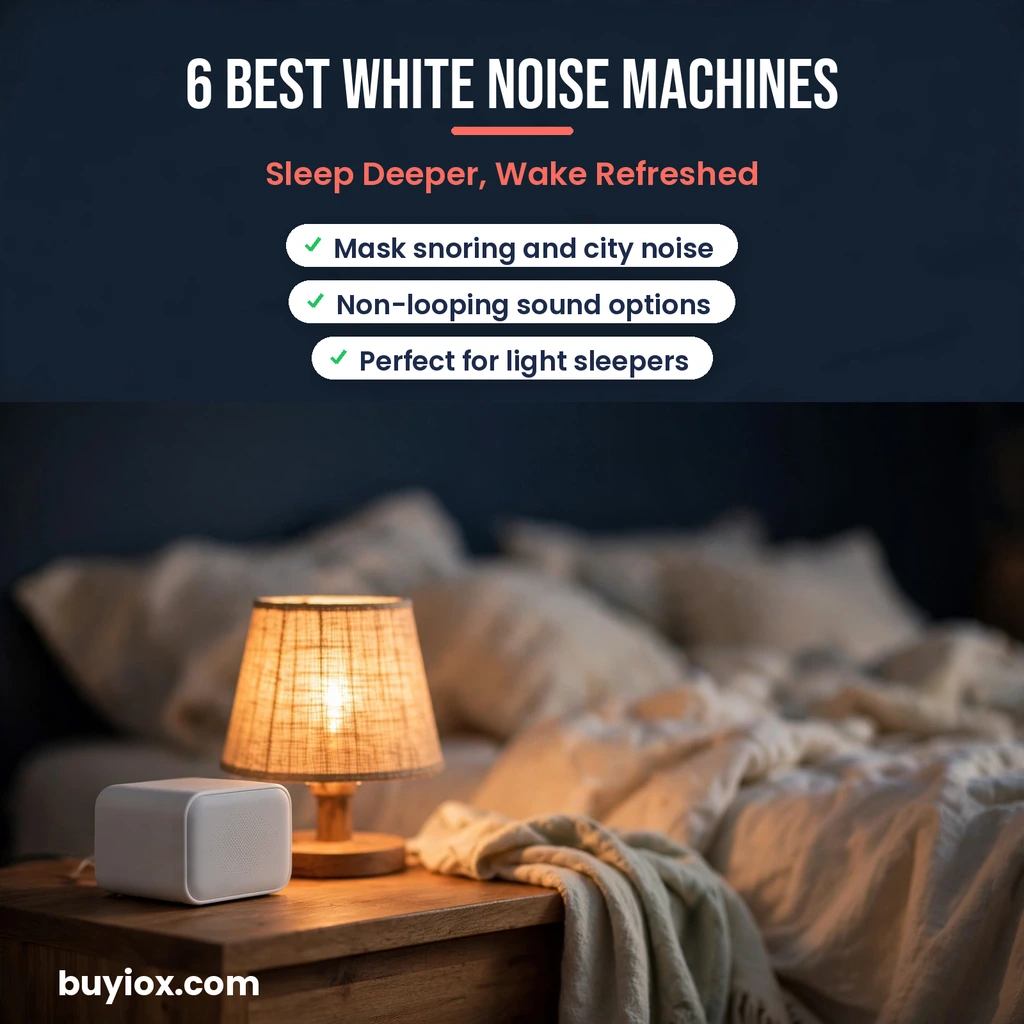
It is 2:14 in the morning. Your partner is snoring like a chainsaw, the neighbors are watching something loud, and a car alarm just went off somewhere down the street. You have been staring at the ceiling for an hour, and your alarm goes off in four hours.
Sound familiar? Most of us do not live in a recording studio. We live with thin walls, street noise, and people who make sounds they cannot help. A white noise machine does not fix any of that. It simply makes your brain stop noticing it, by filling the silence between sounds with one steady, boring, wonderful hum.
We dug through roundups, thousands of verified buyer reviews, and hands-on test reports to find the six white noise machines actually worth buying. You will find honest reviews with real pros and cons, approximate prices, and a buying guide that explains the one decision that matters most: digital sounds or a real fan.
Quick Picks: Our Favorite White Noise Machines at a Glance
- Best overall: LectroFan Classic – 20 non-looping sounds, pin-point volume control, compact design
- Best real-fan classic: Yogasleep Dohm Classic – genuine fan sound, two speeds, a category icon for decades
- Best premium fan sound: SNOOZ Original – real fan, 10 volume levels, app scheduling
- Best budget: Magicteam Sound Machine – 20 non-looping sounds and 32 volume levels for around $22
- Best portable: Dreamegg D11 Max – rechargeable battery, child-lock, memory function, palm-sized
- Best sunrise smart combo: Hatch Restore 3 – sunrise alarm, sound machine, smart light and reading light in one
1. LectroFan Classic

The LectroFan Classic in white, our best overall pick for non-looping digital sound.
If you have ever read a “best white noise machine” list, you have seen the LectroFan Classic at or near the top. It earned that spot for one reason: its sounds do not loop. Most cheap sound machines play a short recording on repeat, and sensitive sleepers can hear the seam where it restarts. The LectroFan generates its sounds digitally on the fly, so there is no seam to hear.
The sound library covers 20 options: 10 fan sounds and 10 variations of pure white noise, including pink and brown noise for people who find pure white noise too harsh. The volume control is genuinely precise, with small steps that let you dial in exactly the level you need, from a whisper up to surprisingly loud. The unit itself is compact at 4.4 x 4.4 x 2.2 inches, so it disappears on a nightstand, and a built-in sleep timer means you can have it fade off after you fall asleep.
It runs on AC or USB power, which makes it flexible for travel if you have a power source. Buyer feedback consistently praises the sound quality for the price, with many owners reporting they have used the same unit for years.
- Pros:
- 20 non-looping digital sounds (10 fan + 10 white noise variations including pink and brown)
- Pin-point volume control with fine steps
- Compact 4.4 x 4.4 x 2.2 inch design fits any nightstand
- Built-in sleep timer
- AC or USB powered
- Cons:
- No battery – it must stay plugged in
- Purely a sound box: no night light, no nature sounds, no app
- Price: around $50
- Best for: Light sleepers who hate audible loops, and anyone who wants the proven all-rounder.
- Skip if: You need battery power for camping or travel without outlets – the Dreamegg does that better.
2. Yogasleep Dohm Classic

The Yogasleep Dohm Classic in gray, the original real-fan sound machine.
The Dohm is the original. It was invented by a company founder who had trouble sleeping, and it makes sound the old-fashioned way: a real fan spins inside the case, and air rushing through vents creates the whoosh. There is no recording, no speaker, and therefore nothing to loop. What you hear is genuine moving air.
Two speed settings plus a twistable cap let you tune the tone and volume. Twist it one way and the sound gets deeper; twist it the other way and it brightens up. That analog tuning is something digital machines simply cannot copy, and it is why the Dohm has survived for generations while competitors came and went. It comes in multiple colors, runs on a 7-foot AC cord, and is assembled in the USA.
The honest trade-off: it only makes fan sound. There are no digital ocean waves, no rain, no brown noise. It also has no timer and needs a wall outlet. But if the sound of a fan is what puts you to sleep, nothing digital quite matches the real thing.
- Pros:
- Real internal fan – genuine air sound with zero looping
- Two speeds plus twist-to-tune tone and volume
- Simple, durable design with decades of owner loyalty
- Multiple colors, assembled in the USA
- Cons:
- Fan sound only – no digital sound library
- No sleep timer
- AC power only, not portable
- Price: check the current price (it varies by color)
- Best for: People who already know they fall asleep to a fan, and purists who distrust digital sounds.
- Skip if: You want variety – the LectroFan’s 20 sounds give you far more options.
3. SNOOZ Original

The SNOOZ Original, a premium real-fan sound machine with app scheduling.
The SNOOZ takes the Dohm’s core idea – a real fan inside – and wraps it in a modern package. The fan produces a deep, natural rush of air with no digital artifacts, and the fabric-covered body looks like something you would actually want on your nightstand rather than something you hide behind a book.
Where it pulls ahead of the Dohm is control. The SNOOZ offers 10 volume levels ranging from 47 to 87 dBA, which gives you real granularity for matching the machine to your room’s noise floor. A free companion app adds auto on/off scheduling and remote control, so the machine can turn itself on at bedtime and off in the morning. The physical design stays simple: three buttons on top, a 6-foot cord, and a compact 5.6 x 5.6 x 3.2 inch body weighing about 1.1 lb.
The catch is the same one as the Dohm: one fan sound, nothing else. If you crave variety, you will get bored. And like most fan machines, it needs to stay plugged in.
- Pros:
- Real fan sound – deep, natural, non-looping
- 10 volume levels (47-87 dBA) for precise matching to your room
- Free app with scheduling and remote control
- Clean, modern fabric design
- Cons:
- Only one fan sound – no digital variety
- Must stay plugged in
- App smart features need your phone nearby
- Price: around $80
- Best for: Design-conscious buyers who want real-fan sound plus modern scheduling.
- Skip if: You want rain, ocean, or brown noise – pick a digital machine instead.
4. Magicteam Sound Machine

The Magicteam sound machine in black, our budget pick with 20 non-looping sounds.
Here is the budget pick that punches far above its price. The Magicteam packs 20 non-looping sounds – white, brown, pink, and blue noise, plus fan, rain, ocean, birds, and bonfire – into a unit that regularly sells for around $22. For context, that is less than half the price of the LectroFan, with a similar non-looping promise.
The feature list is generous: 32 volume levels, sleep timers at 1, 2, 3, and 4 hours plus continuous play, and a memory function that restarts your last-used sound and volume. It runs on AC or USB power, measures just 3.01 x 3.01 x 1.77 inches, weighs 0.36 lb, and carries FCC, CE, and RoHS certifications. Tens of thousands of ratings on Amazon back up the basics.
What you give up versus the premium picks is refinement. The speaker is smaller and the sound is less deep and rich than a real fan or the LectroFan’s digital engine. Some owners also note it has no battery, so it needs an outlet just like the big machines. But as a first white noise machine, or a second one for the guest room or office, it is hard to argue with.
- Pros:
- 20 non-looping sounds at a budget price
- 32 volume levels and 1/2/3/4-hour timers plus continuous play
- Memory function restarts your last settings
- Tiny and light (3.01 x 3.01 x 1.77 in, 0.36 lb)
- AC or USB powered, safety certified
- Cons:
- Sound is less deep and rich than premium machines
- No battery – must stay plugged in
- Price: around $22
- Best for: First-time buyers, tight budgets, and second units for travel or guest rooms.
- Skip if: You are sensitive to sound quality – the LectroFan sounds noticeably better.
5. Dreamegg D11 Max

The Dreamegg D11 Max in white, the portable rechargeable pick for travel and loud rooms.
The Dreamegg D11 Max is the one to buy when your sleep problems travel with you. Its 1800mAh rechargeable battery runs up to about 30 hours of continuous play, which covers multiple nights away from an outlet. USB-C charging, a palm-sized 4 x 3.7 x 1.8 inch body, and a 10.2 oz weight make it genuinely packable.
It is well specified for the money: 21 soothing sounds, 32 volume levels, a child-lock (so curious little fingers do not change your settings), a memory function, and timers at 30, 60, and 90 minutes or always-on mode. The manufacturer sells it as kid-friendly, and the child-lock plus rounded design back that up.
Two honest caveats. First, the sounds are digital and looped, so very sensitive sleepers may notice the repeat point that the LectroFan avoids. Second, the price swings a lot: it lists around $32 but runs frequent deep coupon discounts, so check the listing rather than assuming the sticker price.
- Pros:
- Rechargeable 1800mAh battery – up to ~30 hours of continuous play
- USB-C charging, palm-sized and travel-friendly (10.2 oz)
- 21 sounds, 32 volume levels, child-lock, memory function
- 30/60/90-minute timers or always-on
- Cons:
- Digital looping sounds – sensitive sleepers may hear the loop
- Price swings with coupon deals, so check before buying
- Price: around $32 (often discounted with coupons)
- Best for: Travelers, campers, kids’ rooms, and anyone far from an outlet.
- Skip if: You are an audiophile sleeper – the LectroFan or a real fan machine sounds more natural.
6. Hatch Restore 3

The Hatch Restore 3, a sunrise alarm clock with a built-in sound machine.
The Hatch Restore 3 is a different animal: a sunrise alarm clock with a sound machine, smart light, and reading light built in. Instead of being jolted awake by a phone alarm, you wake to light that gradually brightens like a sunrise, paired with gentle sounds. If your mornings feel brutal, this is the machine that addresses the whole sleep cycle, not just the noise.
The feature set is deep: a library of sleep sounds, wind-down routines, and meditations, customizable through the Hatch Sleep app, with new sounds and improved audio over earlier generations and on-device buttons for basic control. The fabric-front design looks like home decor, not tech, and the digital clock display shows the time without a glowing phone screen. An optional Hatch+ subscription ($4.99 a month or $49.99 a year) unlocks the full content library, though basic functions work without it.
Now the honest con, stated plainly: Wi-Fi and the free Hatch Sleep app are required for setup and for customizing routines. You cannot fully set this device up from the buttons alone. It is also the most expensive pick here at around $170, with sale prices sometimes dropping near $140 during big sales events.
- Pros:
- Sunrise-simulation alarm wakes you with light, not jarring sound
- Sound machine, smart light, and reading light in one device
- Deep library of sleep sounds, wind-down routines, and meditations via app
- On-device buttons and improved audio over earlier generations
- Optional subscription – basic functions work without it
- Cons:
- Wi-Fi and the Hatch Sleep app are required for setup and customization
- Premium price (around $170)
- Full content library needs the optional paid subscription
- Price: around $170
- Best for: People who want to fix their mornings too, and anyone building a phone-free bedroom routine.
- Skip if: You want a simple plug-and-play machine with no apps, accounts, or Wi-Fi – the Dohm is your pick.
Side-by-Side Comparison
| Product | Sound type | Sounds | Best for | Approx. price |
| — | — | — | — | — |
|---|---|---|---|---|
| LectroFan Classic | Digital non-looping | 20 | Best overall | around $50 |
| Yogasleep Dohm Classic | Real fan | 1 (fan) | Real-fan purists | check listing |
| SNOOZ Original | Real fan | 1 (fan) | Premium fan + app | around $80 |
| Magicteam Sound Machine | Digital non-looping | 20 | Budget pick | around $22 |
| Dreamegg D11 Max | Digital looping | 21 | Travel / battery | around $32 |
| Hatch Restore 3 | Digital + sunrise light | Library via app | Mornings + smart | around $170 |
Buying Guide: How to Choose the Right White Noise Machine
1. Digital non-looping vs real-fan sound: the big decision
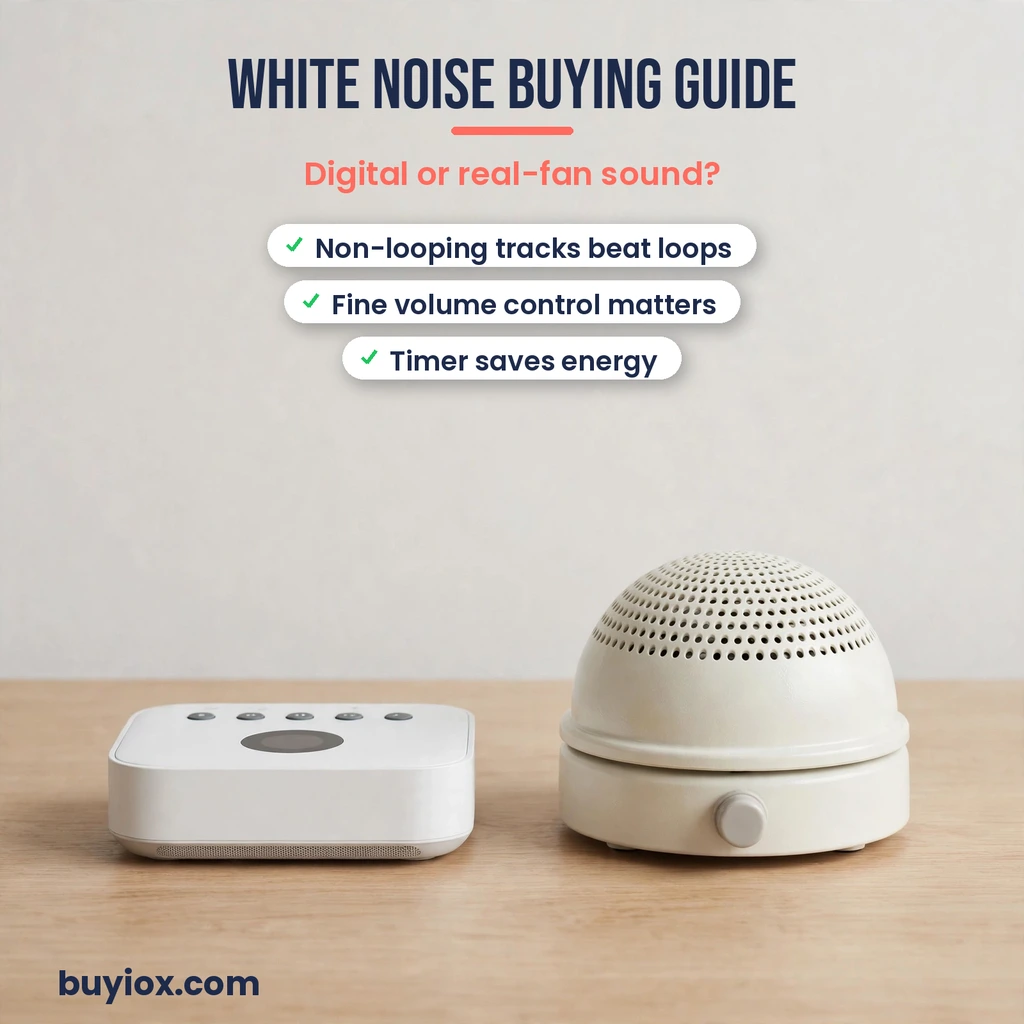
Every white noise machine falls into one of two camps. Digital machines (LectroFan, Magicteam, Dreamegg, Hatch) generate or play recorded sounds through a speaker. The good ones generate sounds on the fly so nothing loops; the cheaper ones loop a short recording, and some sleepers can hear the repeat point.
Real-fan machines (Yogasleep Dohm, SNOOZ) put an actual fan inside the case. The sound is moving air, which means it physically cannot loop and many people find it more natural. You cannot argue with physics: no recording, no seam, no loop.
Which to choose? If you already fall asleep to a fan, buy a real fan machine. If you want variety (rain, ocean, brown noise), buy a digital one, and prefer non-looping models like the LectroFan or Magicteam over looped ones.
2. Volume control precision matters more than max volume
Almost every machine can get loud enough. What separates good machines from frustrating ones is how finely you can adjust the level. A machine that jumps from “too quiet” to “too loud” in one step will annoy you nightly. Look for many volume steps: the LectroFan’s pin-point control, the Magicteam and Dreamegg’s 32 levels, or the SNOOZ’s 10 distinct levels (47-87 dBA). For more on why consistent, moderate sound helps sleep, see the Sleep Foundation’s guide to white noise machines.
3. Timer or always-on?
Some people want the machine to run all night; others want it to switch off once they are asleep. Check the timer options before you buy. The Magicteam offers 1, 2, 3, and 4-hour timers plus continuous play; the Dreamegg does 30, 60, and 90 minutes or always-on; the LectroFan has a built-in sleep timer. The Dohm has no timer at all, so it runs until you switch it off – fine for always-on sleepers, annoying for everyone else.
4. Portability and power
Think about where the machine will live. Most machines need a wall outlet (LectroFan, Dohm, SNOOZ, Magicteam). If you travel, camp, or just hate being tethered, the Dreamegg D11 Max’s rechargeable battery (up to about 30 hours) is the standout. The LectroFan’s USB power option is a decent middle ground for travel if you have a power bank.
5. Extra features and the privacy trade-off
Night lights, sunrise alarms, apps, and scheduling are genuinely useful – the Hatch Restore 3’s sunrise alarm is the best example. But every smart feature has a price beyond money: apps and Wi-Fi mean accounts, updates, and a device that phones home. If you want a bedroom free of tech, a dumb machine like the Dohm is a feature, not a limitation. Decide which camp you are in before you pay for features you will resent.
6. Keep the volume safe
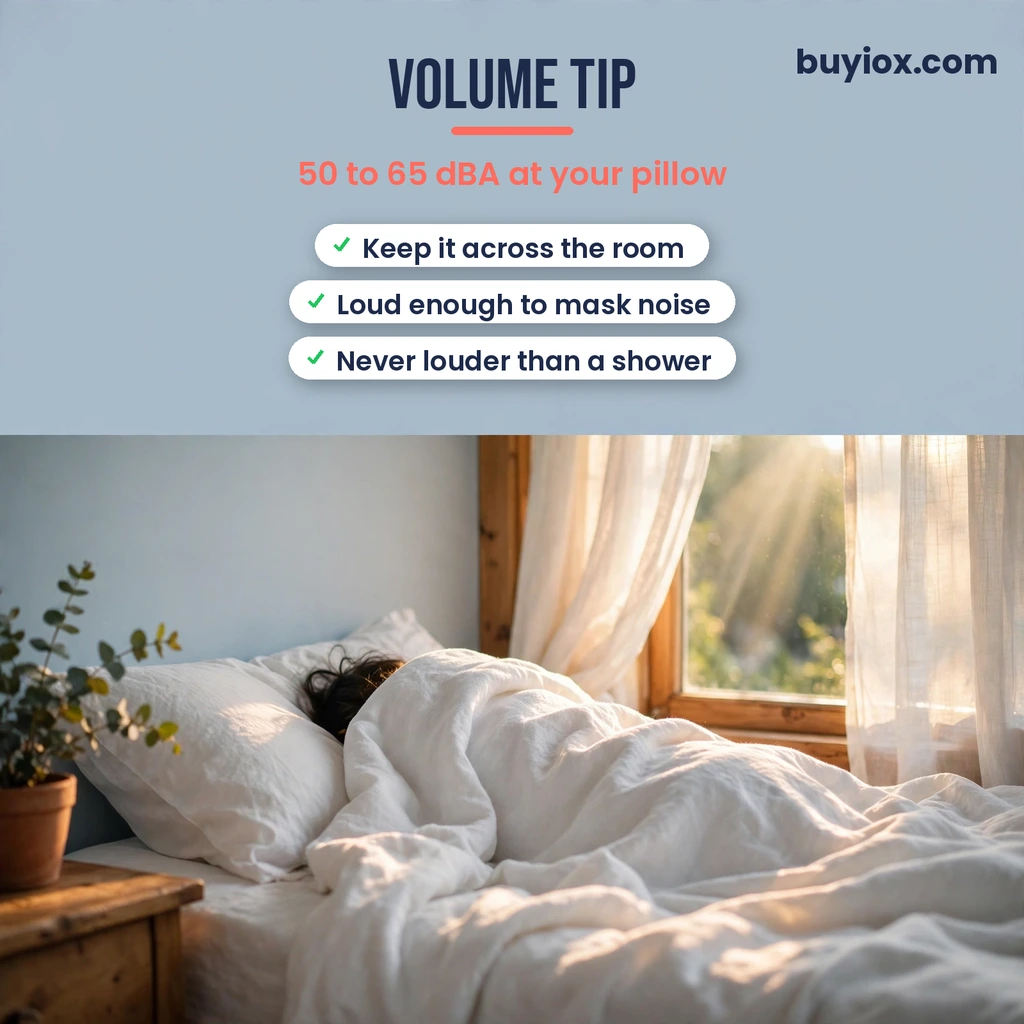
The goal is masking noise, not competing with it. A widely cited safe range for adult sleep is roughly 50 to 65 dBA measured at your pillow – about the level of a quiet conversation to a running shower. Place the machine across the room rather than right next to your head, and keep the volume as low as it can go while still doing its job. For babies and kids, be more conservative: a study published in Pediatrics found that many infant sleep machines can exceed 50 decibels at close range, and pediatric guidance recommends keeping the volume low and the machine away from the crib. If anyone in the house has hearing concerns, talk to a doctor before cranking it up.
Frequently Asked Questions
Do white noise machines really help you sleep?
They help many people, mainly by masking. Sudden noises – a door slamming, a dog barking, a partner snoring – wake you because your brain notices the change. A steady background hum raises the baseline so those spikes stand out less. Studies on hospital patients and city dwellers have found consistent sound masking improves subjective sleep quality. It will not cure insomnia on its own, but for noise-driven wakeups it is one of the simplest fixes available.
What is the difference between white, pink, and brown noise?
It is about which frequencies dominate. White noise spreads energy evenly across all audible frequencies, which sounds like TV static – bright and hissy. Pink noise tilts toward lower frequencies, sounding deeper, like steady rainfall. Brown noise tilts even further down, sounding like a low rumble or distant thunder. Many sleepers find pink or brown noise less harsh than pure white noise, which is why machines like the LectroFan include all three.
What volume is safe for a white noise machine?
For adults, aim for roughly 50 to 65 dBA at your pillow – loud enough to mask background noise, but never louder than a shower. Place the machine across the room instead of right next to your head. For babies, keep it quieter: pediatric research has found infant sleep machines can exceed 50 decibels at close range, and the guidance is to keep the volume low and the machine away from the crib. When in doubt, choose the lowest volume that still masks the noise.
Why do some white noise machines sound like they loop?
Because they do. Cheaper digital machines play a short audio recording on repeat, and your brain – which is excellent at pattern detection – notices the seam where the recording restarts. That is why non-looping machines like the LectroFan and Magicteam exist: they generate sound continuously instead of replaying a clip. Real-fan machines like the Dohm and SNOOZ never loop because there is no recording at all, just moving air.
Should I choose a real-fan machine or a digital one?
Choose a real-fan machine (Yogasleep Dohm, SNOOZ) if you already sleep well with a fan running and want the most natural, loop-free sound. Choose a digital machine (LectroFan, Magicteam, Dreamegg, Hatch) if you want variety – rain, ocean, brown noise, lullabies – or smart features like timers, apps, and sunrise alarms. There is no universally better option, only the one that matches what your ears already like.
Can I leave a white noise machine on all night?
Yes. White noise machines are designed for continuous use, and most digital models plus all fan models can run all night without issue. Battery-powered models like the Dreamegg will drain, so use the timer or plug them in for all-night use. The only real consideration is volume: keep it moderate (50 to 65 dBA at your pillow) and consistent rather than loud.
Our Verdict
For most people, the LectroFan Classic remains the best white noise machine you can buy. Twenty non-looping sounds, precise volume control, a compact design, and a price around $50 make it the safest recommendation for the widest range of sleepers. Fan-sound purists should get the Yogasleep Dohm Classic, budget buyers the Magicteam, travelers the rechargeable Dreamegg D11 Max, and anyone who wants to fix their mornings too should look at the Hatch Restore 3.
Whichever you choose, the setup advice is the same: put it across the room, start quiet, and raise the volume only until the background noise fades. Your ceiling-staring nights are numbered.