

Affiliate Disclosure: Buyiox is reader-supported. When you buy through links on this page, we may earn a small commission at no extra cost to you. We only recommend products we would use for our own dogs.
Your dog eats dinner, and an hour later the gurgling starts. Then comes the loose stool in the yard, the grass eating at midnight, and sometimes the vomit on the rug at 3 in the morning. You have tried three different foods already, and every switch seemed to help for a week before the same problems came back. If that cycle sounds familiar, your dog probably has a sensitive stomach, and the food in the bowl matters more than anything else you can buy.
But here is the honest truth most roundups will not tell you: “sensitive stomach” is not a diagnosis, it is a description. It can mean a food intolerance, a reaction to one specific protein, too much fat in the diet, a gut that hates sudden changes, or a real medical problem like parasites or inflammatory bowel disease. No bag of kibble can fix a medical problem, and no honest guide should pretend it can. The AKC guide to the best dog food for sensitive stomachs says the first step is always a vet visit to find out what is actually causing the trouble, because the right food depends on the cause. The six best dog foods for sensitive stomachs below are the over-the-counter recipes with the strongest vet backing, the clearest labels, and the most consistent owner results. We state the limits of each one plainly, including the budget pick that uses egg instead of meat protein, and the premium pick that costs more per pound than any other food here.
Before you buy, know the three things that actually calm a sensitive stomach. First, high digestibility: lean protein, moderate fat, and some fiber, so the gut has less work to do. Second, a short, honest ingredient list, so there are fewer suspects when something goes wrong. Third, a slow switch: the AKC recommends moving to a new food over 7 to 10 days, starting with about 10 percent new food and 90 percent old food, and raising the new share a little each day. Even the best food on this list will cause diarrhea if you switch overnight. Start with the food that fits your dog’s likely trigger, switch slowly, keep a simple diary of stools and gas for two weeks, and judge the food by what comes out the other end, not by the first bowl.
Our Top 6 Dog Foods for Sensitive Stomachs at a Glance
- Hill’s Science Diet Sensitive Stomach and Skin, Chicken Recipe – Best overall, the vet-recommended kibble most owners should try first
- Purina Pro Plan Sensitive Skin and Stomach, Salmon and Rice – Best value, the salmon-first staple with live probiotics at the lowest cost per pound
- Royal Canin Digestive Care, Medium Adult – Best for chronic digestive issues, the size-specific formula with the strongest stool-quality record
- Blue Buffalo Basics Limited Ingredient, Turkey and Potato – Best grain-free, the single-protein pick for elimination diets
- Diamond Care Sensitive Stomach Formula – Best budget, the cheapest gentle food here, built on egg and potato
- Wellness Simple Limited Ingredient, Turkey and Potato – Best limited ingredient, the cleanest short label on this list
1. Hill’s Science Diet Sensitive Stomach and Skin, Chicken Recipe – Best Overall
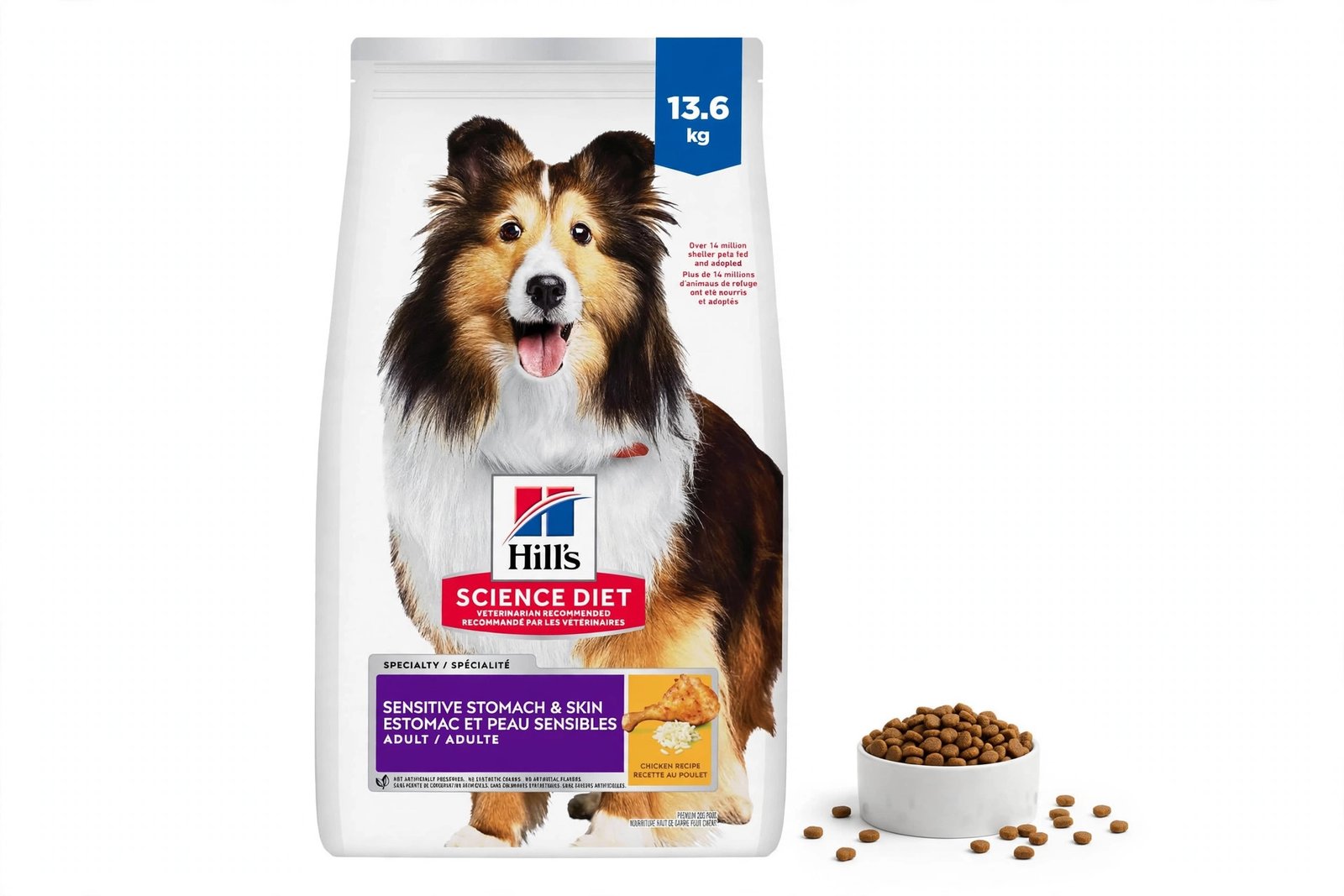
Hill’s Science Diet Sensitive Stomach and Skin, Chicken Recipe (product-style image)
The Hill’s Science Diet Sensitive Stomach and Skin is the best dog food for sensitive stomachs for most owners, and the reason is simple: it is the safest first buy. The recipe is built on prebiotic fiber that feeds the good bacteria in the gut, plus omega-6 fatty acids and vitamin E for skin and coat, so it treats the stomach and the itchy skin that often comes with it at the same time. It is a complete and balanced adult maintenance diet, it meets AAFCO standards, and it comes in chicken, salmon, and grain-free chicken and potato recipes, with puppy and senior versions too, so you can stay with the same brand as your dog’s life stage changes.
What makes this bag lead the list is the combination of vet trust and owner record. Hill’s is one of the brands veterinarians name first when a dog has ongoing digestive trouble, and the PetMD guide to feeding dogs with stomach upset lists Hill’s Sensitive Stomach and Skin among the best options for sensitive stomachs, alongside veterinary gastrointestinal diets. The formula is also one of the most widely sold sensitive stomach kibbles in the world, with a long record of owners reporting firmer stools and less gas within a couple of weeks. At around $90 for a 30 lb bag, it sits in the middle of the price range, not the cheapest and not the most expensive, and for a first sensitive stomach food, for a dog with both stomach and skin trouble, and for an owner who wants a vet-backed starting point, this is the honest best overall pick.
The honest trade-off is the protein. The chicken recipe starts with chicken, and chicken is one of the most common food allergens in dogs, so if your dog’s problem is a chicken sensitivity, this bag will not help, and the salmon recipe below is the better first try. The formula also contains grains, which suits most dogs fine but will not suit an owner who wants a grain-free diet. And while the price per bag looks reasonable, the 30 lb bag is the large breed size, so owners of small dogs may find the bag too big to finish before the kibble goes stale. But for its job, which is a gentle, vet-trusted, everyday food for a dog with a mildly sensitive stomach, the Hill’s is the most trustworthy bag on this list.
Why we like it
- Prebiotic fiber supports digestive health and feeds good gut bacteria
- Omega-6 fatty acids and vitamin E support skin and coat at the same time
- Vet-recommended brand, named by vets and by PetMD among the best sensitive stomach options
- Available in chicken, salmon, and grain-free recipes, plus puppy and senior versions
- Complete and balanced adult maintenance diet that meets AAFCO standards
Pros
- Best dog food for sensitive stomachs for most owners, with the safest formula here
- Best pick for dogs with both stomach trouble and itchy or flaky skin
- Wide range of recipes and life stages, so you can stay with one brand
Cons
- Chicken recipe will not help a dog that is sensitive to chicken, a common allergen
- Contains grains, so it is not the pick for owners who want grain-free
- Large bags can go stale before a small dog finishes them
Price: around $90 for a 30 lb bag on Amazon
Best for: first-time sensitive stomach food buyers, dogs with both stomach and skin trouble, and owners who want a vet-backed starting point.
Who should skip it: owners whose dog reacts to chicken, where the salmon-based Purina Pro Plan below is the better first try, and owners who want a grain-free or single-protein elimination diet, where the Blue Buffalo Basics below is the better pick.
2. Purina Pro Plan Sensitive Skin and Stomach, Salmon and Rice – Best Value
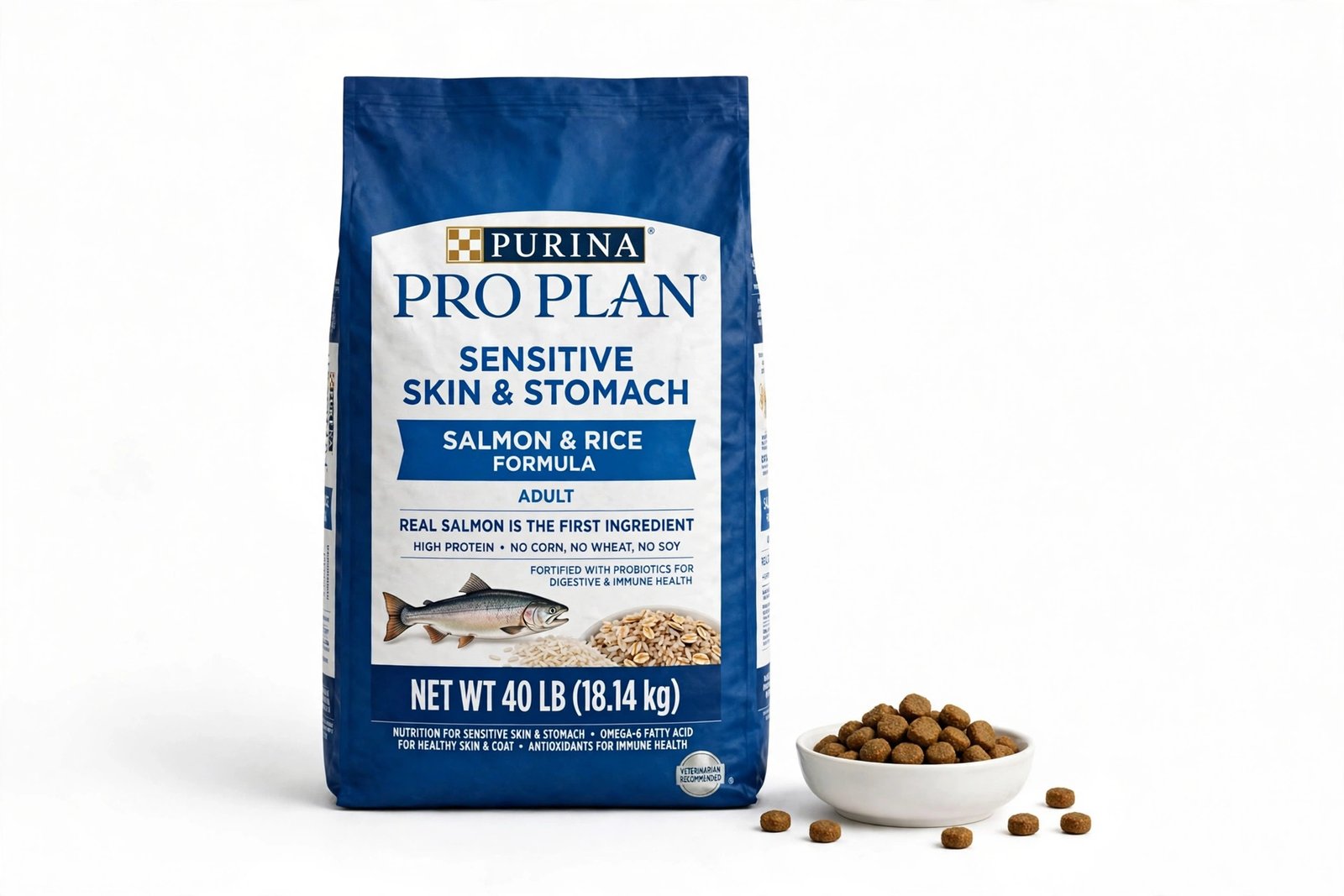
Purina Pro Plan Sensitive Skin and Stomach, Salmon and Rice (product-style image)
The Purina Pro Plan Sensitive Skin and Stomach is the best value dog food for sensitive stomachs, and the reason is the math. Salmon is the first ingredient, rice and oatmeal are easy on the gut, live probiotics are added for digestive health, and there is no corn, wheat, or soy in the recipe. At around $77 for a 30 lb bag, it costs about $2.58 per pound, which is the lowest cost per pound of any vet-trusted food on this list, and for a dog that eats every day for years, that gap adds up to real money. It is also the formula most commonly suggested by vets for dogs with ongoing digestive sensitivity, and it comes in puppy, small breed, large breed, and 7+ senior versions, plus a wet pate for dogs that need softer food.
What makes this bag special is that it solves the two most common triggers at once. Salmon is a novel protein for most dogs, which means it is a protein the dog has probably never eaten, so it sidesteps the chicken and beef sensitivities that cause so many stomach problems. The live probiotics help the gut settle during a food change, which is exactly when sensitive dogs have the most trouble. The label is honest and complete: 26 percent protein, 16 percent fat, and 449 kcal per cup, which is a solid energy level for an active adult dog. Owners consistently report firmer stools and less gas, and the salmon recipe is the one vets reach for first when the trigger is unknown. If you want one bag that is gentle, affordable, and easy to find in any store, this is the one to buy.
Be honest about what it is not. First, it is not a limited ingredient diet: the recipe contains several ingredients beyond salmon and rice, so it is not the right tool for a strict elimination diet, where the Blue Buffalo Basics or the Wellness Simple below are better. Second, the salmon smell is strong, and some owners find the fishy odor unpleasant, especially in a small home. Third, it is not the pick for a dog with a diagnosed fish allergy, and it is not a prescription diet, so a dog with a diagnosed condition like inflammatory bowel disease or pancreatitis still needs a vet-directed food. Buy it as an everyday gentle staple for a mildly sensitive stomach, and it is the best value on this list by a clear margin.
Why we like it
- Salmon is the first ingredient, a novel protein that sidesteps chicken and beef sensitivities
- Live probiotics added for digestive and immune health
- Rice and oatmeal are easy to digest, with no corn, wheat, or soy
- Around $77 for a 30 lb bag, the lowest cost per pound of any vet-trusted food here
- Available in puppy, small breed, large breed, senior, and wet pate versions
Pros
- Best value dog food for sensitive stomachs, the cheapest way to feed a sensitive dog long term
- Best pick for dogs that react to chicken or beef, and for owners who want a vet-trusted staple
- Probiotics help the gut settle during a food change, when sensitive dogs struggle most
Cons
- Not a limited ingredient diet, so it is not the tool for a strict elimination diet
- Strong salmon smell that some owners find unpleasant in a small home
- Not a prescription diet, so diagnosed conditions still need a vet-directed food
Price: around $77 for a 30 lb bag on Amazon
Best for: budget-conscious owners, dogs that react to chicken or beef, and anyone who wants a gentle everyday staple they can buy anywhere.
Who should skip it: owners doing a strict elimination diet, where the Blue Buffalo Basics is the better pick, and owners whose dog reacts to fish, where the chicken-based Hill’s above is the better first try.
3. Royal Canin Digestive Care, Medium Adult – Best for Chronic Digestive Issues
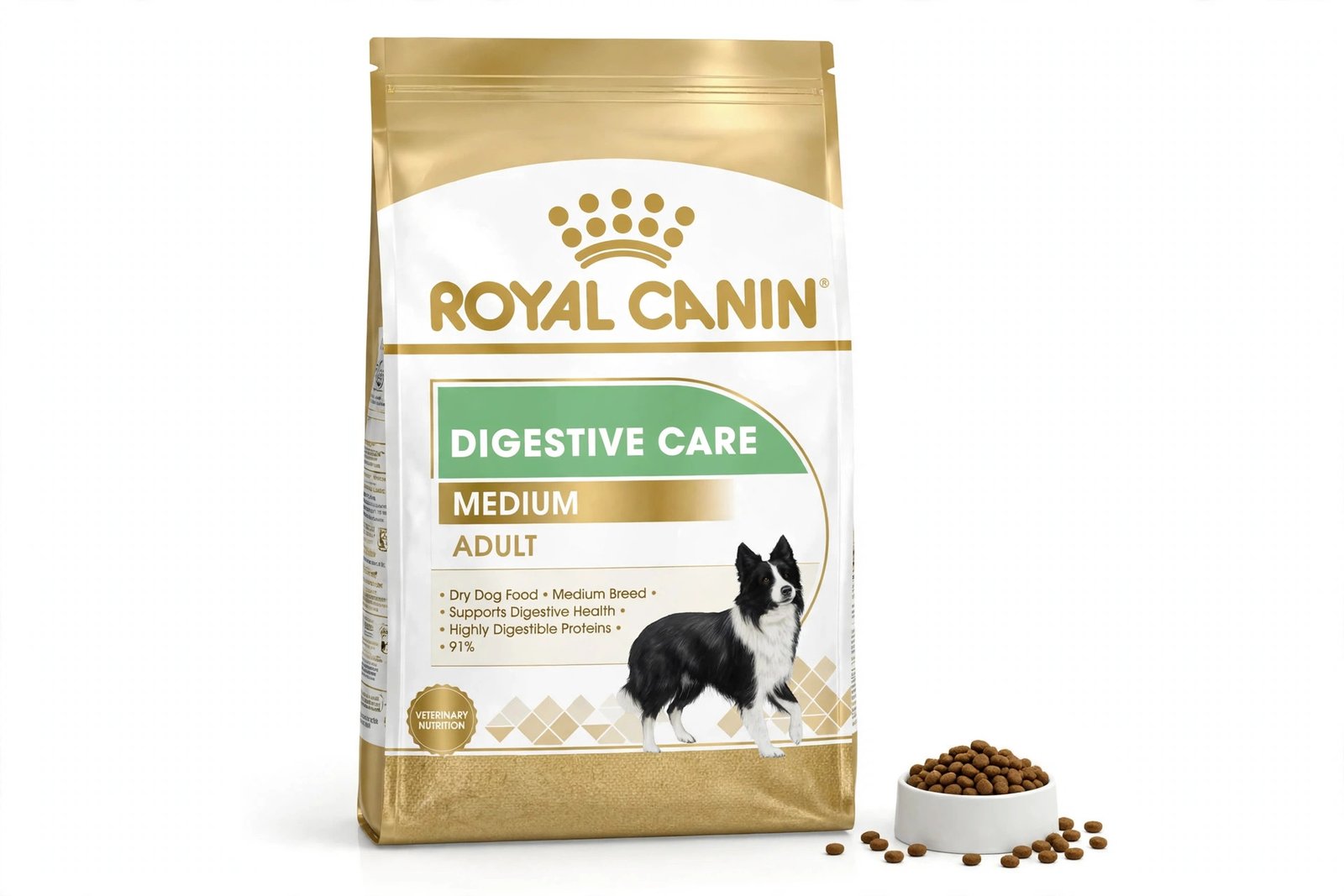
Royal Canin Digestive Care, Medium Adult (product-style image)
The Royal Canin Digestive Care is the best dog food for sensitive stomachs when the problem is chronic, not occasional. This is the only food on this list that engineers the formula and the kibble shape for your dog’s size: Small, Medium, and Large versions use different kibble sizes, different nutrient profiles, and different fiber ratios, because a small dog and a large dog do not chew or digest food the same way. The Medium formula uses a blend of prebiotics and highly digestible proteins, and Royal Canin’s own feeding studies report that 91 percent of medium-breed dogs fed the Digestive Care formula produced optimal stool quality. That is a specific, measurable claim that most competitors simply do not make.
What makes this bag worth its premium price is the engineering. The prebiotic blend, including beet pulp and fructooligosaccharides, feeds the good bacteria in the gut, and the fiber mix is calibrated to firm the stool without causing constipation. The label is clear: the Medium formula runs around 23 percent protein, 16 percent fat, and 3.7 percent fiber, which is a moderate, gut-friendly balance. The AKC guide to sensitive stomach foods names Royal Canin Digestive Care alongside Purina Pro Plan as one of the popular options vets point owners toward. At around $80 for a 17 lb bag, it is the most expensive food here per pound, but for a dog whose stomach has been a problem for months, and for an owner who has already tried two cheaper foods without success, it is the most targeted over-the-counter food you can buy without a prescription.
Now the honest problems. First, the price: at around $80 for 17 lb, it costs roughly twice as much per pound as the Purina Pro Plan, and on a large dog that eats four cups a day, the monthly cost is real. Second, the recipe starts with chicken by-product meal and contains corn, so it is neither corn-free nor a limited ingredient diet, and a dog with a chicken sensitivity will not do well on it. Third, you must buy the right size formula: the Small, Medium, and Large recipes are genuinely different, and buying the wrong size means the wrong kibble size and the wrong fiber balance. Buy it when the stomach problem is persistent and the cheaper foods have not worked, and it earns its price. Buy it as a first try for a mild stomach, and the Hill’s or the Pro Plan does the same job for less.
Why we like it
- Size-specific formulas with different kibble sizes and fiber ratios for small, medium, and large dogs
- Prebiotic blend with beet pulp and fructooligosaccharides for gut health
- Feeding studies report 91 percent of medium-breed dogs reached optimal stool quality
- Named by the AKC guide as a popular vet-pointed sensitive stomach option
- Highly digestible proteins chosen for gentle, efficient nutrient absorption
Pros
- Best dog food for sensitive stomachs with chronic, persistent digestive trouble
- Best pick when two cheaper foods have already failed
- Most targeted over-the-counter digestive formula you can buy without a prescription
Cons
- Around $80 for a 17 lb bag, the most expensive food here per pound
- Contains chicken by-product meal and corn, so it is not a limited ingredient diet
- You must buy the right size formula, or the kibble and fiber balance will be wrong
Price: around $80 for a 17 lb bag on Amazon
Best for: dogs with chronic, months-long digestive trouble, owners who have already tried cheaper foods, and medium-breed dogs in the 23 to 55 lb range.
Who should skip it: owners on a tight budget, where the Purina Pro Plan is the better buy, and owners whose dog reacts to chicken or corn, where the Blue Buffalo Basics below is the better pick.
4. Blue Buffalo Basics Limited Ingredient, Turkey and Potato – Best Grain-Free
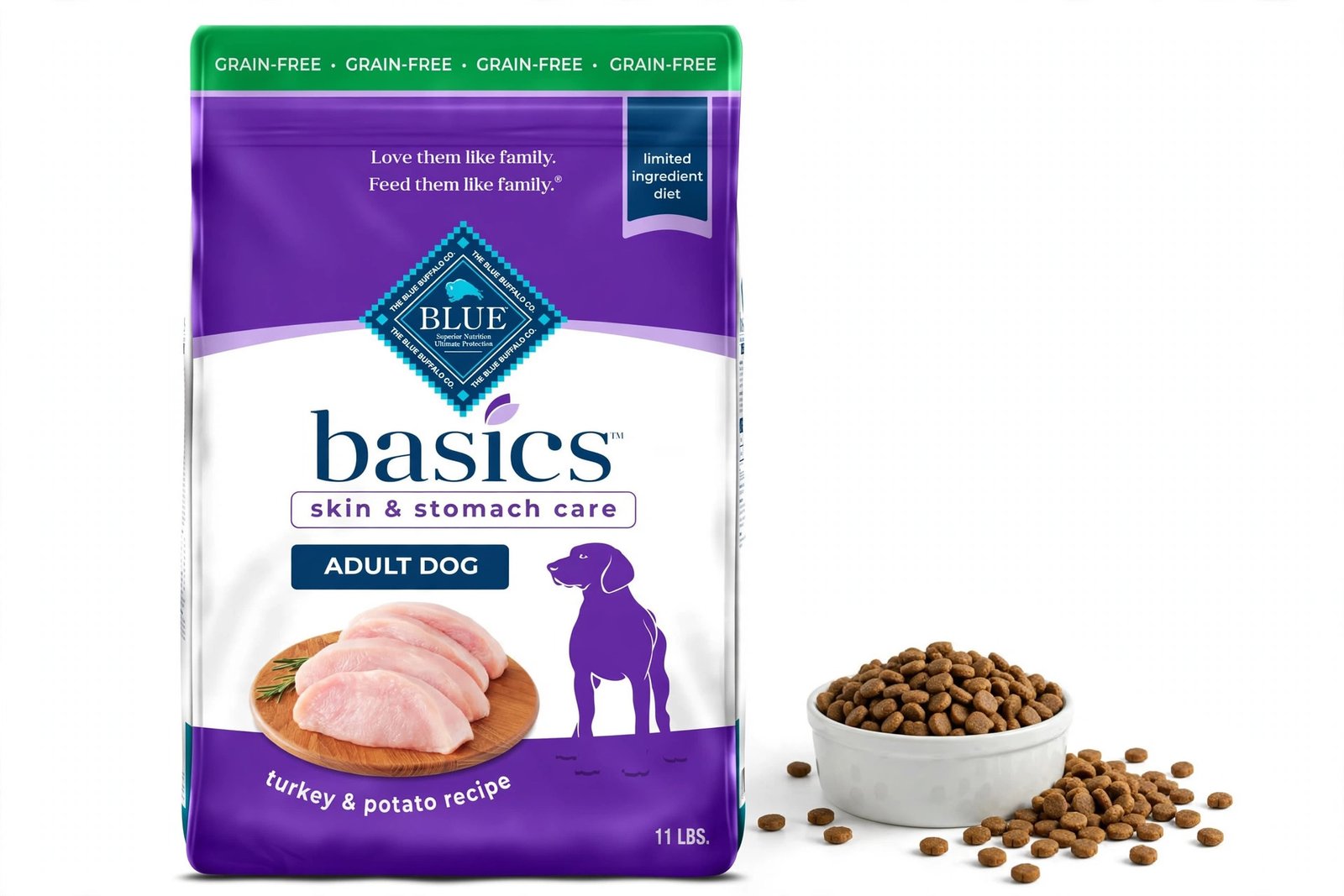
Blue Buffalo Basics Limited Ingredient, Turkey and Potato (product-style image)
The Blue Buffalo Basics Limited Ingredient is the best grain-free dog food for sensitive stomachs, and it is the right tool when you need to find out what is actually causing the problem. The recipe is stripped down to the essentials: one animal protein, deboned turkey, and one main carbohydrate, potato, with no chicken, corn, wheat, soy, or poultry by-product meals. That short list is the whole point. When a dog eats ten ingredients and gets sick, you have ten suspects. When a dog eats two main ingredients and gets sick, you have two. The formula also includes Blue Buffalo’s LifeSource Bits, a blend of vitamins, minerals, and antioxidants, and it comes in turkey and potato, salmon and potato, and duck and potato recipes, so you can switch proteins without switching brands.
What makes this bag special is the elimination diet. Vets use limited ingredient diets to find the trigger, and VCA Animal Hospitals explains that the best way to diagnose a food allergy is an elimination trial with a diet that contains no ingredients the dog has eaten before, fed exclusively for 8 to 12 weeks. The Blue Buffalo Basics is built for exactly that job. The label is honest and complete: around 20 percent protein, 10 percent fat, 6 percent fiber, and 352 kcal per cup, which is a lighter, lower-fat recipe that suits dogs whose stomachs react to rich food. At around $70 for a 24 lb bag, it costs more per pound than the Purina Pro Plan, but for a dog that needs a clean test, it is the most affordable true limited ingredient diet on this list.
Be very clear about the limits. First, a shorter ingredient list does not automatically mean easier digestion, and a limited ingredient diet is a diagnostic tool, not a magic fix: if the trigger is not a food ingredient at all, this bag will not help, and you still need the vet. Second, the recipe is lower in fat and calories than the other foods here, so a very active dog may need more cups per day, which raises the real monthly cost. Third, the kibble is a single-protein recipe, so if your dog turns out to be sensitive to turkey, you will need to switch to the salmon or duck recipe and start the test again. Buy it when you need to find the trigger, when the vet has suggested an elimination diet, or when your dog reacts to chicken and grains. Buy it as a first food for a mild stomach, and the Hill’s or the Pro Plan is simpler and cheaper.
Why we like it
- Single animal protein, deboned turkey, with one main carbohydrate, potato
- No chicken, corn, wheat, soy, or poultry by-product meals
- Grain-free recipe, ideal for elimination diets and finding the trigger
- LifeSource Bits add vitamins, minerals, and antioxidants
- Also sold in salmon and potato and duck and potato recipes
Pros
- Best grain-free dog food for sensitive stomachs, and the best elimination diet tool here
- Best pick for dogs that react to chicken, grains, or multiple ingredients
- Short, honest label that makes it easy to spot the trigger
Cons
- Lower fat and calories, so active dogs may need more cups per day
- A limited ingredient diet is a test, not a cure, and it will not help if the cause is not food
- If your dog reacts to turkey, you must switch proteins and restart the test
Price: around $70 for a 24 lb bag on Amazon
Best for: owners doing an elimination diet, dogs that react to chicken or grains, and dogs whose trigger is still unknown.
Who should skip it: owners who want the cheapest everyday staple, where the Purina Pro Plan is the better buy, and owners of very active dogs, where the higher-calorie Pro Plan feeds more energy per cup.
5. Diamond Care Sensitive Stomach Formula – Best Budget
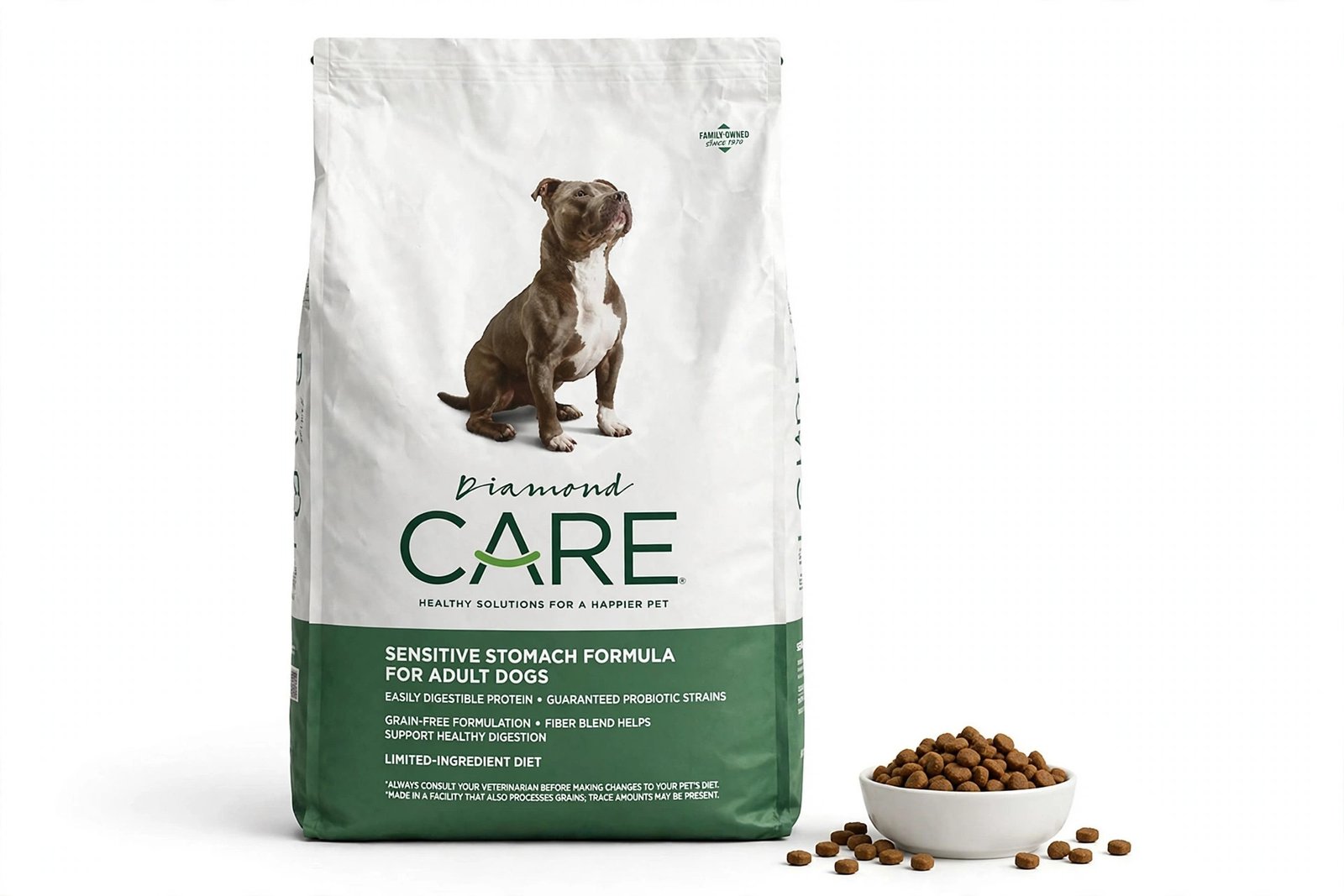
Diamond Care Sensitive Stomach Formula (product-style image)
The Diamond Care Sensitive Stomach Formula is the best budget dog food for sensitive stomachs, and it is the cheapest gentle food on this list by a clear margin. Egg and potato are the main protein and carbohydrate sources, which is an unusual combination that suits dogs that react to beef and chicken, the two most common meat triggers. The recipe includes probiotics and prebiotic fiber for a healthy gut, it is easy to digest, and it contains no corn, wheat, or soy. It is made in the USA, and it is safe for prolonged use, so if you find it helps your dog, you can keep feeding it for years. At around $55 for a 25 lb bag, it costs about $2.20 per pound, which is less than any other food here, and for a large dog that eats four or five cups a day, that saving is the difference between a food you can afford and a food you cannot.
What makes this bag special is the egg protein. Most sensitive stomach foods are built on chicken, salmon, or turkey, but the Diamond Care is built on egg, which is a highly digestible protein that many dogs have never reacted to. The label is honest and complete: 25 percent protein, 13 percent fat, and 410 kcal per cup, which is a solid, moderate energy level for an adult dog. Owners of large dogs praise it most, because a big dog eats so much that the price per pound matters more than anything else, and the 25 lb bag at around $55 is the lowest monthly cost of any food on this list. It is also sold in an 8 lb bag for around $20, which is a cheap way to test whether your dog likes it before you commit to the big bag.
Now the honest problems. First, the brand is less well known than Hill’s or Purina, and it is harder to find in grocery stores, so you will probably buy it online or at a pet store. Second, egg is the main protein, and while egg is highly digestible, a small number of dogs are allergic to eggs, so if your dog has ever reacted to eggs, this bag is the wrong pick. Third, the recipe is a limited ingredient diet in spirit but it is not marketed as a strict elimination diet, and it is not a prescription diet, so a dog with a diagnosed condition still needs a vet-directed food. Buy it when money matters, when your dog is large, and when chicken and beef are the suspected triggers. Buy it as a first food for a small dog, and the Hill’s or the Pro Plan is easier to find and just as gentle.
Why we like it
- Egg and potato are the main protein and carbohydrate sources, which suits dogs that react to beef and chicken
- Probiotics and prebiotic fiber included for a healthy gut
- No corn, wheat, or soy, and made in the USA
- Around $55 for a 25 lb bag, the cheapest food on this list per pound
- Safe for prolonged use, so you can keep feeding it for years if it works
Pros
- Best budget dog food for sensitive stomachs, the lowest monthly cost here
- Best pick for large dogs, where the price per pound matters most
- Egg protein is highly digestible and rarely the trigger
Cons
- Less well known brand, and harder to find in grocery stores than Hill’s or Purina
- Egg is the main protein, so dogs with an egg allergy must avoid it
- Not a prescription diet, so diagnosed conditions still need a vet-directed food
Price: around $55 for a 25 lb bag on Amazon
Best for: budget buyers, large dogs that eat a lot, and dogs that react to beef and chicken.
Who should skip it: owners whose dog reacts to eggs, where the salmon-based Purina Pro Plan is the better pick, and owners who want a brand they can buy in any grocery store, where the Hill’s is easier to find.
6. Wellness Simple Limited Ingredient, Turkey and Potato – Best Limited Ingredient
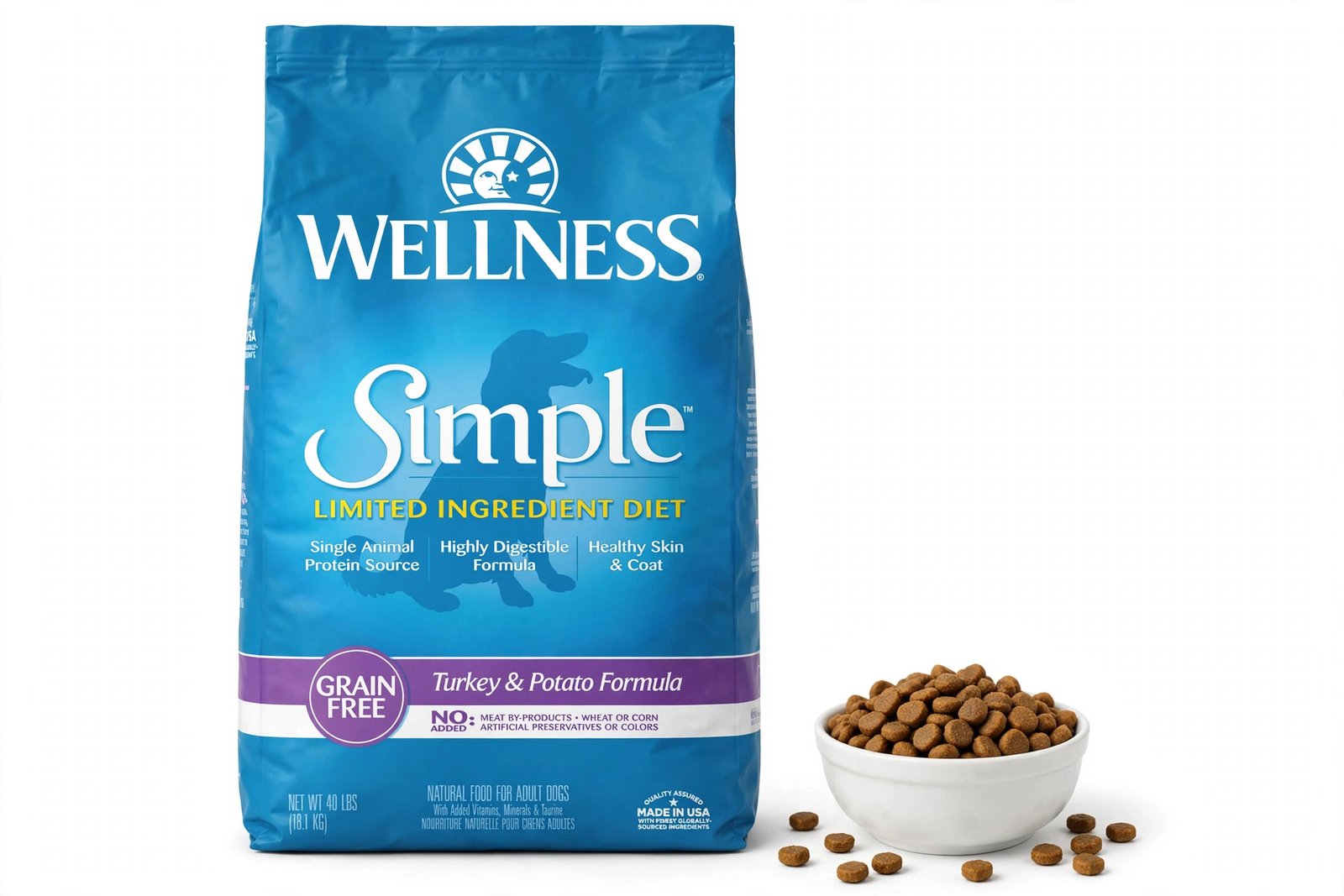
Wellness Simple Limited Ingredient, Turkey and Potato (product-style image)
The Wellness Simple Limited Ingredient is the best limited ingredient dog food for sensitive stomachs, and it has the cleanest short label on this list. One protein, turkey. One carbohydrate, potato. No meat by-products, no wheat, no corn, no artificial preservatives, and no artificial colors. The recipe adds glucosamine for joint health and taurine for heart health, which are small extras that most limited ingredient diets skip. It is also sold in lamb and oatmeal, salmon and potato, and duck and oatmeal recipes, plus wet cans, so you can match the protein to your dog’s history without changing the brand. For an owner who reads every label and wants the fewest possible ingredients in the bowl, this is the most honest bag on this list.
What makes this bag special is the discipline of the label. Where the Purina Pro Plan has a long ingredient list and the Hill’s has a moderate one, the Wellness Simple has almost nothing extra, which makes it the easiest food here to troubleshoot. If your dog does well on it, you know the turkey and potato combination works. If your dog does not do well, you know the problem is not a hidden ingredient, because there are almost no hidden ingredients. The label is honest and complete: around 26 percent protein, 12 percent fat, and 4 percent fiber, which is a lean, gut-friendly balance. Our guide to the best dog probiotics for sensitive stomachs covers the probiotic supplements that pair well with a limited ingredient diet like this one, because a short label plus a good probiotic is the combination vets often suggest for a dog whose gut needs time to settle.
Now the honest problem, and it is a big one: the price. At around $119 for a 26 lb bag, it costs more per pound than any other food on this list except the Royal Canin, and for a large dog it is the most expensive way to feed a sensitive stomach. The bag is also grain-free, and the AKC guide warns that grain-free diets are often lower in fiber and can replace grains with carbohydrates that block nutrient absorption, so a grain-free diet is not automatically better for a sensitive stomach. And while the label is clean, it is still an over-the-counter food, not a prescription diet, so a dog with a diagnosed allergy still needs a vet-directed elimination diet. Buy it when you want the cleanest label, when you are troubleshooting a trigger, and when the price does not scare you. Buy it as a first food for a mild stomach, and the Hill’s or the Pro Plan does the same job for much less.
Why we like it
- Single protein, turkey, and single carbohydrate, potato, with almost nothing extra
- No meat by-products, wheat, corn, artificial preservatives, or artificial colors
- Added glucosamine for joints and taurine for heart health
- Also sold in lamb and oatmeal, salmon and potato, and duck and oatmeal recipes, plus wet cans
- Cleanest short label on this list, which makes troubleshooting easy
Pros
- Best limited ingredient dog food for sensitive stomachs, with the cleanest label here
- Best pick for owners who read every label and want the fewest possible ingredients
- Best pick for troubleshooting a trigger, because there are almost no hidden ingredients
Cons
- Around $119 for a 26 lb bag, the most expensive food here except the Royal Canin
- Grain-free, which is not automatically better for a sensitive stomach
- Not a prescription diet, so diagnosed allergies still need a vet-directed food
Price: around $119 for a 26 lb bag on Amazon
Best for: label readers, owners troubleshooting a trigger, and dogs that need a truly short ingredient list.
Who should skip it: owners on a tight budget, where the Diamond Care does a similar job for half the price, and owners who want a grain-inclusive food, where the Hill’s or the Pro Plan is the better pick.
Dog Food for Sensitive Stomachs Comparison Table
| Dog Food | Best For | Main Protein and Type | Key Feature | Around Price |
|---|---|---|---|---|
| Hill’s Science Diet Sensitive Stomach and Skin | Most owners, best overall | Chicken, grain-inclusive kibble | Prebiotic fiber, omega-6 for skin | ~$90 for 30 lb |
| Purina Pro Plan Sensitive Skin and Stomach | Best value, everyday staple | Salmon, grain-inclusive kibble | Live probiotics, salmon first | ~$77 for 30 lb |
| Royal Canin Digestive Care, Medium | Chronic digestive issues | Chicken, size-specific kibble | Prebiotic blend, 91% optimal stool | ~$80 for 17 lb |
| Blue Buffalo Basics Limited Ingredient | Best grain-free, elimination diets | Turkey, grain-free kibble | Single protein, LifeSource Bits | ~$70 for 24 lb |
| Diamond Care Sensitive Stomach Formula | Best budget, large dogs | Egg, grain-free kibble | Probiotics, egg and potato base | ~$55 for 25 lb |
| Wellness Simple Limited Ingredient | Best limited ingredient, cleanest label | Turkey, grain-free kibble | Single protein, glucosamine, taurine | ~$119 for 26 lb |
Does Sensitive Stomach Dog Food Actually Work? The Honest Answer
Yes, but only for the job it is built for, and that job is smaller than the bag promises. A sensitive stomach food works by giving the gut less to struggle with: highly digestible ingredients, moderate fat, a little extra fiber, and fewer potential triggers. For a dog with a mild food intolerance, a reaction to one protein, or a gut that hates sudden changes, that is often enough to turn loose stools into firm ones within two weeks. What it cannot do is fix a medical problem. Parasites, inflammatory bowel disease, pancreatitis, and a true food allergy need a vet, not a different bag of kibble, and no over-the-counter food changes that.
The second honest point is that the switch matters as much as the food. The AKC recommends switching foods gradually over 7 to 10 days, starting with about 10 percent new food mixed into the old food and raising the new share a little each day, because even a gentle food will cause diarrhea if you switch overnight. The gut bacteria need time to adjust to new ingredients, and a sudden change wipes out the good bacteria before the new ones can grow. If your dog’s stools get worse in the first few days of a switch, slow down, go back a step, and give the gut more time. A food that fails on a fast switch can succeed on a slow one.
The third point is the difference between a food intolerance and a food allergy, and it decides which food to buy. A food intolerance is a digestive problem: the gut cannot handle an ingredient, and the signs are vomiting, loose stools, and gas. A food allergy is an immune problem: the body overreacts to a protein, and the signs are usually itchy skin, paws, and ears, with digestive trouble less common. VCA Animal Hospitals explains that the most common food allergens in dogs are proteins from dairy, beef, chicken, chicken eggs, soy, and wheat gluten, and the only reliable way to diagnose a food allergy is an elimination trial with a hypoallergenic diet for 8 to 12 weeks. A sensitive stomach kibble helps an intolerance. A diagnosed allergy needs a vet-directed hydrolyzed or novel protein diet, and no over-the-counter bag replaces that.
One warning that cannot be repeated often enough: never use a new food to cover up symptoms that will not go away. Vomiting more than once or twice, blood in the stool, weight loss, lethargy, or symptoms that last more than two or three days are a vet visit, not a shopping problem. A sensitive stomach food can hide a problem for a week, but it cannot fix an infection, a blockage, or a chronic disease, and hiding it only delays the treatment your dog needs. If your dog’s symptoms are severe, sudden, or getting worse, book the vet before you buy another bag.

Buying Guide: How to Choose the Right Dog Food for a Sensitive Stomach
A sensitive stomach food looks simple on the shelf, but the wrong one is built on the protein your dog reacts to, too rich in fat, or the wrong format for your dog’s size. Match the food to your dog’s likely trigger first, then check the label, then think about the price, because those three answers decide everything else.
1. Find the likely trigger before you buy
Before you spend money on a new bag, think about what your dog has eaten and when the trouble started. Did the loose stools begin after a new treat, a new food, or a table scrap? Does your dog also itch, scratch the ears, or lick the paws, which points toward an allergy rather than a simple intolerance? The most common triggers are chicken, beef, and dairy, so a dog that eats a chicken-based food and has trouble is a good candidate for a salmon or turkey recipe. If you cannot guess the trigger, start with the salmon-based Purina Pro Plan, because salmon is a novel protein for most dogs. If the trouble keeps coming back no matter what you feed, stop guessing and ask your vet about an elimination diet, because the trigger might not be food at all.
2. Read the label like a vet would
The label tells you more than the front of the bag. Look for a named protein as the first ingredient, salmon, chicken, turkey, or lamb, not a vague “meat meal” or “animal by-products.” Look for a “complete and balanced” statement, which means the food meets AAFCO standards for your dog’s life stage. Look for fiber sources like beet pulp, pumpkin, or chicory root, and for probiotics if your dog’s gut needs extra help. Avoid foods with a long list of artificial colors, flavors, and preservatives, and avoid foods with three or four different proteins when you are trying to find a trigger. A short label is not just cleaner, it is easier to troubleshoot. Our guide to the best dog dental chews covers the chews to choose while your dog is on a new food, because treats count too, and a chew with a trigger protein can undo a whole food trial.
3. Choose the protein with a plan, not a guess
Every protein on this list suits a different dog. Salmon suits a dog that reacts to chicken or beef, and it is the easiest novel protein to find. Chicken suits a dog that has never reacted to chicken and needs a vet-trusted staple. Turkey suits a dog that needs a limited ingredient diet and a clean test. Egg suits a dog that reacts to beef and chicken and needs a cheap, highly digestible protein. Pick one protein, feed it exclusively for at least six to eight weeks, and do not change it because the first week was not perfect. A food trial only works if you give it time, and switching proteins every week tells you nothing. If the first protein does not help after eight weeks, switch to a different one and start the clock again.
4. Decide whether grain-free is right for your dog
Grain-free is not automatically better for a sensitive stomach, and the AKC guide says so plainly. Grain-free diets are often lower in fiber, and they can replace grains with carbohydrates that block nutrient absorption. For most dogs with a sensitive stomach, a grain-inclusive food with rice or oatmeal is gentler on the gut than a grain-free food with peas or lentils. Grain-free makes sense in two cases: when your dog has a diagnosed grain sensitivity, which is uncommon, or when you are doing a strict elimination diet and want the shortest possible label. If neither applies, choose the grain-inclusive Hill’s or Purina Pro Plan first, and save the grain-free Blue Buffalo Basics or Wellness Simple for the elimination diet. Our guide to the best dog dry shampoos covers the gentle grooming products that pair well with a sensitive stomach routine, because a dog with food trouble often has skin trouble too, and the right shampoo helps the coat while the food helps the gut.
5. Match the bag size and the price to your dog
A 30 lb bag is a bargain for a large dog and a waste for a small one, because kibble goes stale once the bag is open, and stale kibble upsets a sensitive stomach faster than fresh kibble does. Divide the price by the pounds before you compare, and then divide again by the cups your dog eats each day, because the cost per day is what actually matters. The Purina Pro Plan at around $2.58 per pound is the cheapest vet-trusted food here, and the Diamond Care at around $2.20 per pound is cheaper still. The Royal Canin at around $4.70 per pound and the Wellness Simple at around $4.58 per pound are the most expensive, and on a large dog they cost two or three times as much per month. Buy the smallest bag first to test whether your dog likes the food, then buy the big bag once you know it works.
6. Switch slowly, and keep a food diary
The switch is where most owners fail, and it is the easiest part to get right. Mix about 10 percent new food with 90 percent old food on day one, then raise the new share by about 10 percent each day, so the switch takes 7 to 10 days. If the stools get loose, go back to the last mix that worked and stay there for two more days before you try again. Keep a simple diary: what your dog ate, how the stools looked, how much gas there was, and whether your dog itched or vomited. A diary turns a vague feeling into a clear pattern, and it is the first thing your vet will ask for if the food does not work. Do not give table scraps, new treats, or flavored medicines during a food trial, because any one of them can ruin the test. Our guide to the best dog joint supplements covers the supplements to check before you add them to a new diet, because a supplement with a trigger ingredient can look exactly like a food failure.
7. Know when a bag of food is not enough
A sensitive stomach food is the right tool for a mild, recurring upset, for a dog that reacts to one protein, and for a dog whose gut hates sudden changes. It is the wrong tool for a dog that vomits blood, passes bloody stools, loses weight, refuses to eat, or has symptoms that last more than a few days. It is also the wrong tool for a dog with a diagnosed condition like inflammatory bowel disease, pancreatitis, or a true food allergy, where the vet will prescribe a hydrolyzed or veterinary gastrointestinal diet. Those prescription diets, like Hill’s i/d and Royal Canin Gastrointestinal, are made in special facilities with strict cleaning protocols, and no over-the-counter bag matches them. If your dog’s symptoms are severe, sudden, or getting worse, the vet comes first and the food comes second.

Frequently Asked Questions
What are the signs of a sensitive stomach in dogs?
The usual signs are loose stools or diarrhea, occasional vomiting, excess gas, loud stomach gurgling, lip licking or drooling, a fussy or variable appetite, and straining while eliminating. The AKC lists these signs and adds that prolonged vomiting and diarrhea can lead to dehydration, and that changes in eating or drinking habits, more frequent bowel movements, or blood in the stool can signal a more serious condition. If your dog shows these signs regularly, speak with your vet before you change the food, because the cause matters more than the brand.
What causes a sensitive stomach in dogs?
There are many possible causes, and the food is only one of them. Food sensitivities or allergies to a specific protein, too much fat in the diet, a sudden food change, stress, parasites, viruses, and inflammatory bowel disease can all cause the same symptoms. The AKC notes that fatty table scraps can lead to an upset stomach or even pancreatitis, and that stress colitis, diarrhea caused by a change in routine or travel, is very common. A vet visit with a stool sample is the cheapest way to rule out parasites before you spend money on a new food.
Is grain-free dog food better for a sensitive stomach?
Not necessarily, and for most dogs it is not better at all. The AKC guide quotes a vet who recommends avoiding grain-free diets, because they are often lower in fiber and can replace grains with carbohydrates that produce anti-nutrients, which block the absorption of important nutrients. Grain-free makes sense when your dog has a diagnosed grain sensitivity, which is uncommon, or when you are doing a strict elimination diet and want the shortest possible label. For most dogs, a grain-inclusive food with rice or oatmeal is gentler on the gut than a grain-free food.
How do I switch my dog to a new food without upsetting the stomach?
Switch slowly over 7 to 10 days. Start with about 10 percent new food mixed with 90 percent old food, and raise the new share by about 10 percent each day until the old food is gone. If the stools get loose at any step, go back to the last mix that worked and stay there for two more days before you try again. Do not give table scraps, new treats, or flavored medicines during the switch, because any one of them can cause diarrhea and make it look like the new food failed. A bland diet of plain boiled chicken and rice for a few days can help settle an upset stomach, but it is a short-term bridge, not a long-term diet.
What is the difference between a food allergy and a food intolerance?
A food intolerance is a digestive problem: the gut cannot handle an ingredient, and the signs are vomiting, loose stools, and gas. A food allergy is an immune problem: the body overreacts to a protein, and the signs are usually itchy skin, paws, and ears, with digestive trouble less common. VCA Animal Hospitals explains that the most common food allergens in dogs are proteins from dairy, beef, chicken, chicken eggs, soy, and wheat gluten, and that the only reliable way to diagnose a food allergy is an elimination trial with a hypoallergenic diet for 8 to 12 weeks, followed by a food challenge. A sensitive stomach kibble helps an intolerance. A diagnosed allergy needs a vet-directed diet.
When should I take my dog to the vet instead of just changing food?
Book the vet if your dog vomits more than once or twice, passes blood in the stool, loses weight, refuses to eat, seems lethargic, or has symptoms that last more than two or three days. A vet visit is also the right first step if the symptoms keep coming back no matter what you feed, because the cause might be parasites, inflammatory bowel disease, pancreatitis, or another condition that no bag of kibble can fix. Bring a stool sample and a simple diary of what your dog ate and how the stools looked, because that is the first thing your vet will ask for.
Can I feed my dog chicken and rice instead of a sensitive stomach food?
Yes, but only for a few days, not for weeks. A bland diet of plain boiled chicken and white rice, with no butter, oil, or seasoning, is the standard short-term fix for a mild upset stomach, and PetMD notes that a bland diet should be highly digestible, low in fat, and fed only until the stomach settles. It is not a complete and balanced diet, and feeding it long term causes nutritional deficiencies. Once the stools are back to normal, transition gradually back to a complete and balanced commercial food, and if the trouble keeps coming back, ask your vet about a sensitive stomach formula instead of staying on chicken and rice.
Our Verdict: Which Dog Food for Sensitive Stomachs Should You Buy?
If you want one dog food that does the most for the most dogs, get the Hill’s Science Diet Sensitive Stomach and Skin, Chicken Recipe. It is the safest formula here, it treats the stomach and the skin at the same time, and at around $90 for a 30 lb bag it costs less than a single vet visit. For most owners, for most dogs, and for most stomachs, it is the honest first buy.
If you want the best value, get the Purina Pro Plan Sensitive Skin and Stomach, Salmon and Rice, because it gives you a salmon-first recipe, live probiotics, and a vet-trusted formula for around $77 for a 30 lb bag. If you want the most targeted food for a chronic stomach, get the Royal Canin Digestive Care, Medium Adult, with its size-specific formula and 91 percent optimal stool record, for around $80 for a 17 lb bag. If you want the best grain-free elimination diet, get the Blue Buffalo Basics Limited Ingredient, Turkey and Potato, the single-protein pick for finding the trigger, for around $70 for a 24 lb bag. If you want the cheapest gentle food, get the Diamond Care Sensitive Stomach Formula, the egg and potato pick for large dogs, for around $55 for a 25 lb bag. And if you want the cleanest label, get the Wellness Simple Limited Ingredient, Turkey and Potato, the shortest ingredient list here, for around $119 for a 26 lb bag.
Whatever you choose, remember the simple rule: find the likely trigger, switch slowly over 7 to 10 days, keep a diary for two weeks, and judge the food by the stools, not by the first bowl. And if the symptoms are severe, sudden, or getting worse, book the vet before you buy another bag. A good sensitive stomach food is quiet, boring, and over in a few weeks. Start today, and your dog’s next meal might be the first one that stays down.
Was this guide helpful? Share it with a fellow dog owner whose dog has a sensitive stomach. And if you try one of these foods, come back and tell us how your dog liked it – your experience helps other owners choose with confidence.