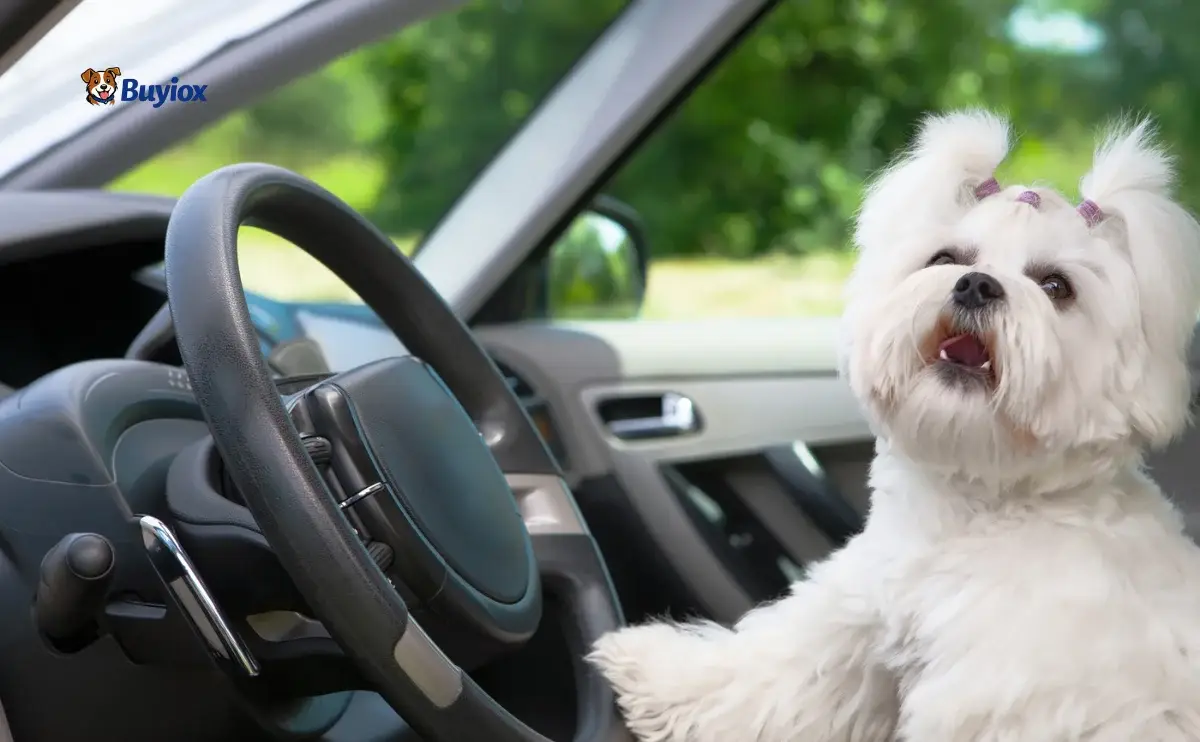
A barking dog in the car can turn a 10-minute ride into a stressful ride. Your dog barks. You feel tense. You try “shhh!” and it gets louder. Then you worry about driving safely.
Here’s the good news: most car barking has a reason. And when you fix the reason, barking usually drops a lot.
Quick answer (2~4 lines)
To stop car barking, you need two things: a calmer setup and a small routine. Start by reducing what your dog can react to, give them a safe “job” (sit/lie), and reward calm moments. Don’t wait until the barking explodes, catch it early.
Why do dogs bark in the car (in simple words)
Most dogs bark in the car for one of these reasons:
1) “I’m excited!”
Some dogs think the car means fun: park, beach, friends. Their body gets excited, and barking is how they release that energy.
2) “I’m worried or scared.d”
Car sounds, motion, and new places can make some dogs nervous. Barking is their way of saying, “I don’t like this!”
3) “I see everything!”
Windows are like a movie screen. Dogs see people, bikes, cats, and other dogs, and they react. The more they can see, the more they bark.
4) “I learned barking works.”
If barking gets attention (talking, petting, yelling), some dogs learn: “Barking = humans react.” Even “stop it!” can feel like attention.
First fix: make the car setup calmer (this helps fast)
Before training, fix the environment. This is the quickest win.
Step 1: Block the “movie screen” a little
If your dog barks at people and cars, they may be overstimulated by the view.
Try this:
- Put your dog in the back seat with a seat cover/hammock.
It gives them a stable area so they don’t bounce around and react more. - Lower the window view or limit the side view.
When your dog can’t see every trigger, the brain calms down.
Step 2: Keep your dog in one “safe spot”
Dogs bark more when they move around.
A simple harness + seat belt tether can help your dog stay in one place. This reduces pacing, jumping, and barking bursts.
Safety note: attach the tether to a harness, not a collar.
Step 3: Give your dog a “calm job”
A calm job is something simple your dog can do instead of barking.
Examples:
- lie down
- chew a safe chew
- lick a treat mat (if you use one)
Chewing and licking can help many dogs relax because it keeps the mouth busy and the brain focused.
The 10-minute training routine (do this for 7 days)
This is easy. You don’t need a perfect dog. You just need short practice.
Day 1~2: Practice inside the parked car
- Put your dog in the car. Don’t start the engine.
- Wait for 2~3 seconds of quiet.
- Say “Good” and give a small treat.
- Repeat 10 times.
Your dog learns: quiet = reward.
If your dog barks instantly, start smaller:
- reward 1 second of quiet
- then 2 seconds
- then 3 seconds
Day 3~4: Engine on, no driving
Do the same routine with the engine on. Keep it short.
Your dog learns: engine sound doesn’t mean “panic time.”
Day 5~7: Very short drives (2~5 minutes)
Drive around the block. If your dog is quiet for a moment, reward it at the next safe stop.
Important: don’t wait for perfect silence. Reward small, calm moments. That’s how calm grows.
What to do in the moment when barking starts
This is the part people need most.
1) Don’t yell
Yelling can sound like “joining the barking.” It often makes dogs bark more.
2) Don’t beg or talk too much
Too much talking can become attention. Attention can accidentally reward barking.
3) Look for the first tiny pause
Dogs don’t bark forever without breathing.
The moment your dog stops for even 1 second:
- Say “Good” (calm voice). Give a treat
- This teaches: “quiet is the thing that pays.”
4) If barking is nonstop, change the picture
If your dog is barking at a trigger outside, move away from it when safe.
Example: if your dog barks at a busy street, choose a quieter road for practice rides at first. Calm training is easier in a calm place.
Common barking triggers (and the fix for each)
Trigger: other dogs or people
Fix: reduce view + reward calm before the trigger gets close.
If your dog sees a trigger and stays quiet for 1 second, reward immediately. That is a win.
Trigger: car stops (traffic lights)
Fix: give a chew or acalm job right before stops.
Many dogs bark more when the car stops because they can “focus” on outside things.
Trigger: leaving the house
Fix: do 1~2 minutes of calm sitting in the driveway before the trip.
This stops the pattern of “door opens = bark time.”
Common mistakes (that keep barking going)
Mistake 1: Only practicing on big trips
Big trips have many triggers. Start with tiny rides where your dog can succeed.
Mistake 2: Rewarding barking by accident
If you talk, pet, or hand treat while your dog is barking, your dog can learn that barking works.
Treats should come after a calm moment, not during barking.
Mistake 3: Too much window time
A dog watching everything like TV can stay in “alert mode” the whole ride. Fewer views often equals fewer barking.
Mistake 4: Dog roaming freely
Roaming increases excitement and reactions. A stable back-seat setup reduces the chaos.
Product help (short + honest)
If car barking is your main problem, look for tools that create a calm zone:
A hammock or seat cover helps keep your dog stable and reduces movement. A harness tether helps limit roaming and keeps your dog in the back seat. If your dog gets thirsty or hot, travel water tools can help keep them comfortable on longer rides.
-
Why does my dog bark so much in the car?
Most dogs bark in the car because they are excited, anxious, or reacting to what they see outside. A calmer setup and rewarding quiet moments usually reduce barking.
-
How do I stop my dog from barking at people while driving?
Reduce the window view, keep your dog in a stable back-seat spot, and reward small quiet moments before your dog starts barking. Start practice rides in quieter areas first.
-
Should I ignore my dog when they bark in the car?
Don’t yell or give attention during barking. Instead, wait for a tiny pause, then reward quiet. This teaches your dog that calm behavior is what earns treats.
-
What can I do if my dog barks the whole car ride?
Start with very short practice rides, reduce triggers (less window view), and give a calm job like chewing. Reward even one second of quiet so your dog learns a new pattern.
-
Do dog seat covers help with barking?
They can help because a stable back-seat setup reduces sliding and pacing, which can reduce barking. Many dogs bark less when they feel secure and have fewer triggers to react to.