
As an Amazon Associate, Buyiox earns from qualifying purchases made through links on this page, at no extra cost to you. We only recommend products we would use in our own kitchen.
A dull knife is the most dangerous tool in your kitchen. It slips off onion skins, crushes ripe tomatoes instead of slicing them, and forces you to push harder with every cut. That extra force is exactly what causes accidents, and it turns simple prep work into a chore.
The good news is that you do not need a new knife set. Most dull knives just need a proper edge, and the best knife sharpener for your kitchen depends on how much effort you want to spend and how sharp you want the result to be. Some cooks want a machine that does everything in two minutes. Others enjoy the slow ritual of a whetstone. Both paths lead to a razor-sharp blade.
We researched electric sharpeners, guided systems, whetstones, manual pull-throughs, pocket sharpeners and honing steels, then narrowed the field to six picks that cover every type. Each one below is a real, widely sold model with a long track record, and each one has honest pros and cons so you can pick with confidence.
The 6 Best Knife Sharpeners at a Glance
If you are in a hurry, here is the short version. The Chef’sChoice 15XV is our top pick for most home kitchens because it is fast, repeatable and needs no skill. The Work Sharp Precision Adjust is the pick for anyone who wants exact angle control. The Sharp Pebble whetstone is the best way to learn real sharpening on a budget. The Chef’sChoice Pronto 463 is the simplest drawer tool. The Smith’s PP1 is the pocket pick for travel and tackle boxes. The Mercer Genesis steel is the maintenance tool that keeps a good edge going between sharpenings.
| Sharpener | Type | Best For | Price Range |
|---|---|---|---|
| Chef’sChoice Trizor 15XV EdgeSelect | Electric, 3-stage | Most home kitchens | Around $166 |
| Work Sharp Precision Adjust | Guided clamp | Exact angle control | Around $70 |
| Sharp Pebble Premium Whetstone 1000/6000 | Whetstone kit | Learning to sharpen | Around $46 |
| Chef’sChoice Pronto 463 | Manual pull-through | Quick drawer touch-ups | Around $40 |
| Smith’s PP1 Pocket Pal | Pocket / portable | Travel and outdoors | Around $10 |
| Mercer Culinary Genesis Sharpening Steel 10 Inch | Honing steel | Daily edge maintenance | Around $20 |
Prices change often, so treat the ranges above as a guide at the time of writing and check the live price before you buy.
How to Choose the Right Knife Sharpener
There is no single sharpener that suits every cook, so start with an honest look at your knives and your patience. If you own a good set of kitchen knives and want them sharp with zero learning curve, an electric sharpener is the sensible choice. If you enjoy the process and want the sharpest possible edge, a whetstone rewards the practice. If you want a tool that lives in a drawer and works in thirty seconds, a manual pull-through is hard to beat.
Angle matters more than most people realise. Western-style kitchen knives are usually sharpened at about 20 degrees per side, while Japanese-style knives are usually sharpened at about 15 degrees per side. A sharpener that forces the wrong angle on your knives will either leave them dull or grind away steel for no reason, so check what angle your sharpener creates before you buy.
Also think about serrated knives. Many electric and manual sharpeners cannot sharpen a serrated edge properly, or can only touch up one side of it. If your bread knife is your most-used blade, pick a sharpener that explicitly handles serrated edges or plan on a separate tool for it.
Honing vs Sharpening: Know the Difference Before You Buy
This is the single most misunderstood idea in knife care, and it decides which tool you actually need. Honing realigns an edge that has rolled or bent slightly during use. It removes almost no metal. Sharpening grinds away worn steel to create a brand new edge.
Think of it this way: honing is like combing your hair back into place, while sharpening is like getting a haircut. Most knives that feel dull just need honing. When honing stops bringing the edge back, that is when you sharpen. For most home cooks, that means honing every few uses and sharpening two to four times a year.
This is why the Mercer steel is on this list even though it does not technically sharpen. It is the tool that keeps your knives cutting well for months between real sharpenings, and it costs less than a takeaway dinner. For a deeper explanation of the tests that tell you which one your knife needs, see the guide at Fond Kitchen on how to sharpen kitchen knives.
1. Chef’sChoice Trizor 15XV EdgeSelect – Best Overall
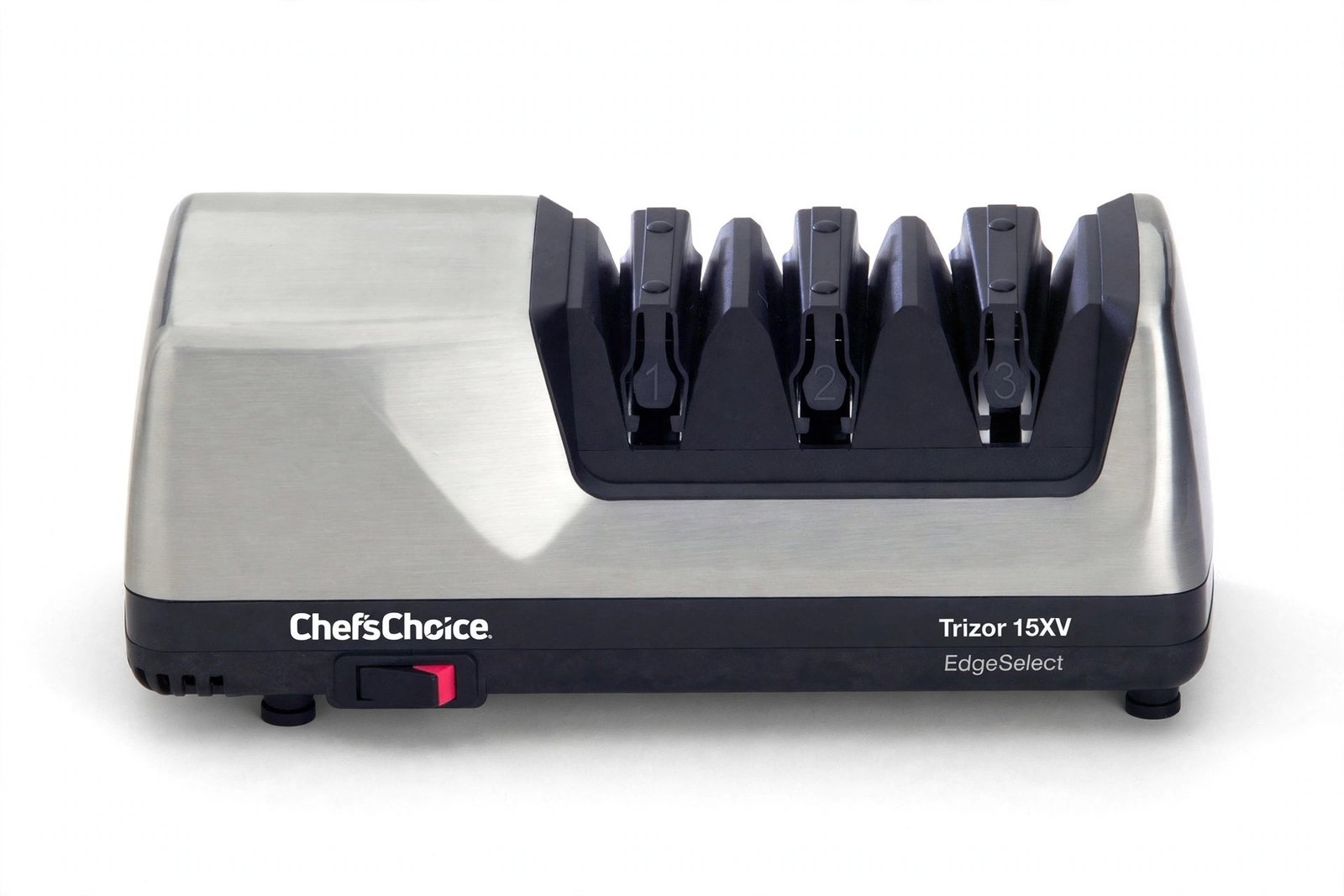
The Chef’sChoice 15XV is the electric sharpener most reviewers come back to, and for good reason. It is the model America’s Test Kitchen recommends under the Trizor XV name, and it turns a dull Western knife into a sharper 15-degree edge in a couple of minutes with no skill from you at all.
It works in three stages. The first two stages use diamond abrasives to grind and hone the edge, and the third stage uses a stropping disk to polish it. Flexible spring guides hold the blade at the correct angle, so you just pull the knife through the slots a few times and let the machine do the work. It also handles serrated knives, which many electric sharpeners cannot.
- Three-stage system: diamond grinding, diamond honing, stropping and polishing
- Converts a 20-degree edge to a sharper 15-degree edge
- Works on straight-edge and serrated knives
- Spring guides hold the angle for you, no freehand skill needed
- Sturdy countertop design that stays put while you work
Pros:
- Fastest path to a genuinely sharp edge in this guide
- Consistent results every time, regardless of your skill
- Three stages in one machine, no separate tools needed
- Handles serrated knives as well as straight edges
- Long track record and strong backing from professional testers
Cons:
- The most expensive pick in this guide at around $166
- Takes up permanent counter space and needs a power outlet
- It is louder than a manual sharpener while it runs
- The 15-degree edge is not ideal for heavy-duty blades meant for a 20-degree edge
- Removes more steel than a whetstone, so it is not the best choice for very expensive Japanese knives you want to preserve
Best for: busy home cooks who want sharp knives fast, families with a mixed set of Western and serrated knives, and anyone who has no interest in learning freehand sharpening.
Who should avoid it: owners of high-end Japanese knives who want to preserve every millimetre of steel, and cooks with very little counter space.
2. Work Sharp Precision Adjust Knife Sharpener – Best Guided System
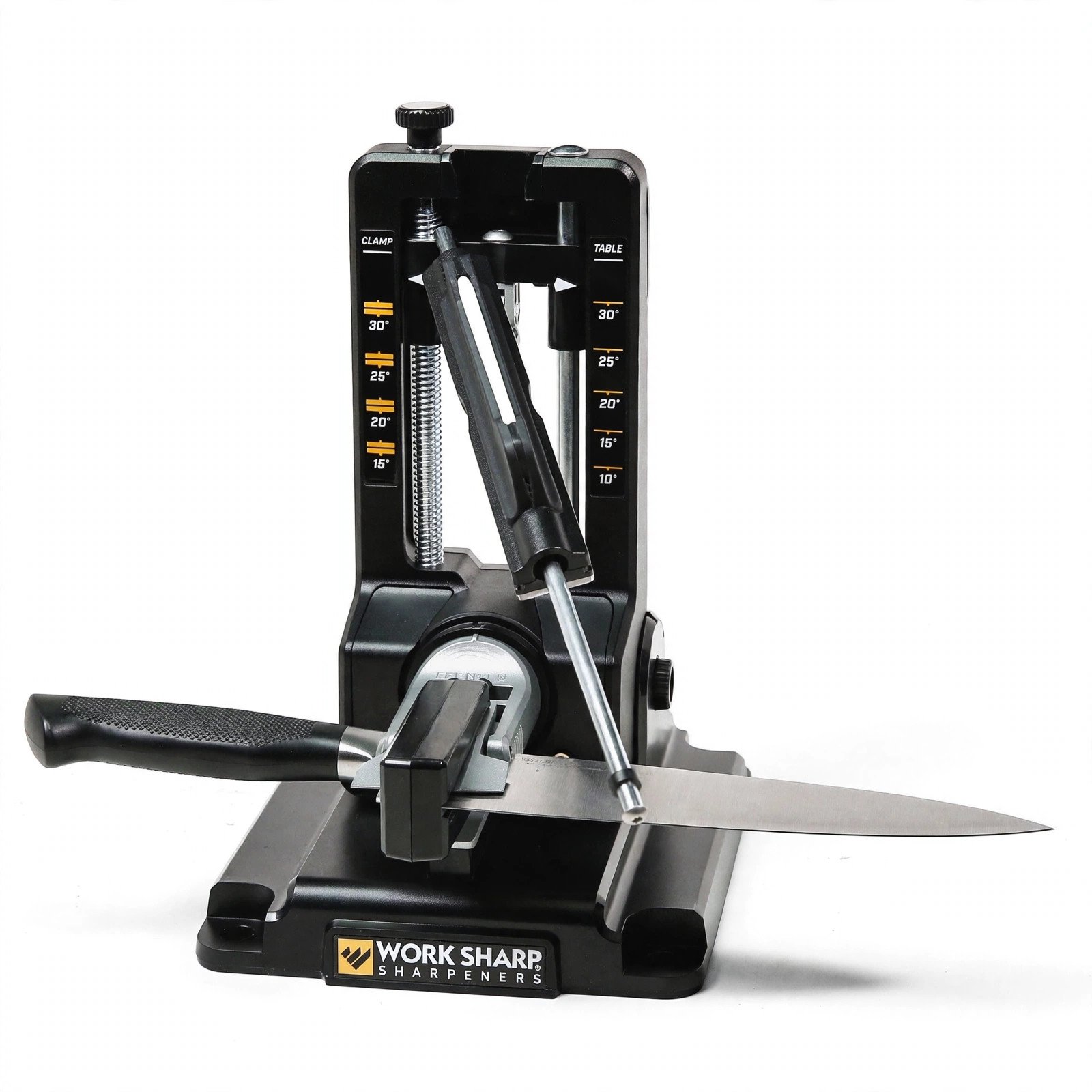
The Work Sharp Precision Adjust is the pick for cooks who want exact control over their sharpening angle without learning freehand whetstone technique. It clamps the knife in place and runs a guided abrasive rod along the edge at a fixed angle, so every stroke is identical. That repeatability is what makes it so popular with hobbyists and with owners of pocket knives as well as kitchen knives.
It is slower than an electric sharpener and takes a few minutes to set up, but the edge it produces is remarkably consistent. Reviewers at GearJunkie found it delivered professional-feeling results at a price far below high-end guided systems, and its upgrade path means you can add finer abrasives later if you catch the sharpening bug.
- Clamp holds the knife steady while a guided rod does the work
- Adjustable sharpening angle for different knife styles
- Comes with coarse and fine abrasives for a two-step edge
- Works on kitchen knives, pocket knives and outdoor blades
- Compact enough to store in a drawer or toolbox
Pros:
- Exact, repeatable angles with no freehand skill needed
- Excellent value at around $70 for a guided system
- Handles kitchen and outdoor knives in one tool
- Upgradeable with finer abrasives later
- Very little steel removed compared with an electric sharpener
Cons:
- Slower than an electric sharpener, with setup time for each knife
- Learning curve to clamp the knife correctly the first few times
- Not ideal for very long blades, which need repositioning
- Does not sharpen serrated knives well
- Feels fiddly if you just want a thirty-second touch-up
Best for: cooks who like precision, owners of pocket and outdoor knives as well as kitchen knives, and anyone who wants a near-whetstone edge without learning freehand technique.
Who should avoid it: cooks who want the fastest possible result, and anyone who finds fiddly setup frustrating.
3. Sharp Pebble Premium Whetstone 1000/6000 – Best First Whetstone
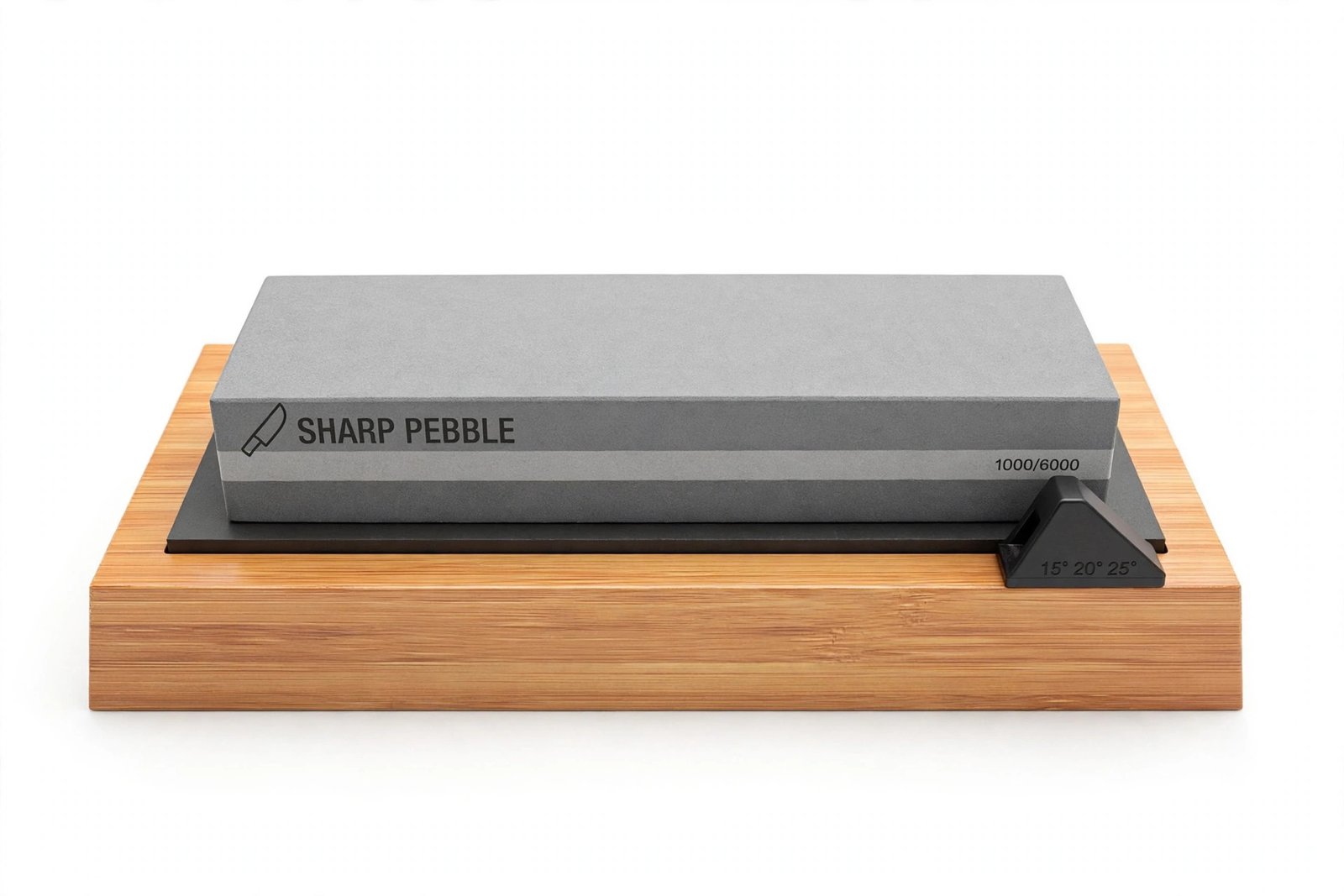
If you have ever wanted to learn real knife sharpening, the Sharp Pebble kit is the most forgiving place to start. It is a two-sided water stone: the 1000-grit side does the actual sharpening on a dull knife, and the 6000-grit side polishes the edge to a smooth, keen finish. The kit adds a non-slip bamboo base, a silicone holder and an angle guide that clips onto the blade, so your first session has everything it needs.
The stone needs a soak in water for about ten to twelve minutes before use, and the angle guide is set at 20 degrees, which suits German-style knives and most pocket knives. It is steeper than the 15-degree edge many Japanese kitchen knives use, so Japanese knife owners should know that going in. For the price, though, it is hard to find a better beginner setup, and it is the kit most guides recommend to first-time stone users.
- Dual grit: 1000 for sharpening, 6000 for polishing
- Bamboo base and non-slip silicone holder included
- Clip-on angle guide set at 20 degrees
- Soak for 10 to 12 minutes before use
- Works on kitchen knives, pocket knives and scissors
Pros:
- Produces the sharpest, most refined edge of any budget option here
- Complete starter kit, nothing else to buy for your first session
- Removes very little steel, so your knives last longer
- Quiet, meditative process with no power and no noise
- Around $46, excellent value for a full kit
Cons:
- Needs practice before your results match an electric sharpener
- Soaking and setup take time, so it is not a quick fix
- The stone wears hollow over time and needs flattening
- The 20-degree guide does not suit Japanese knives
- Messy, with water and slurry on the counter
Best for: curious cooks who want to learn a real skill, owners of decent knives who want the sharpest possible edge, and anyone who enjoys a slow, hands-on kitchen ritual.
Who should avoid it: cooks who want sharp knives in two minutes, and anyone who will not practise enough to hold a steady angle.
4. Chef’sChoice Pronto 463 – Best Manual Pull-Through
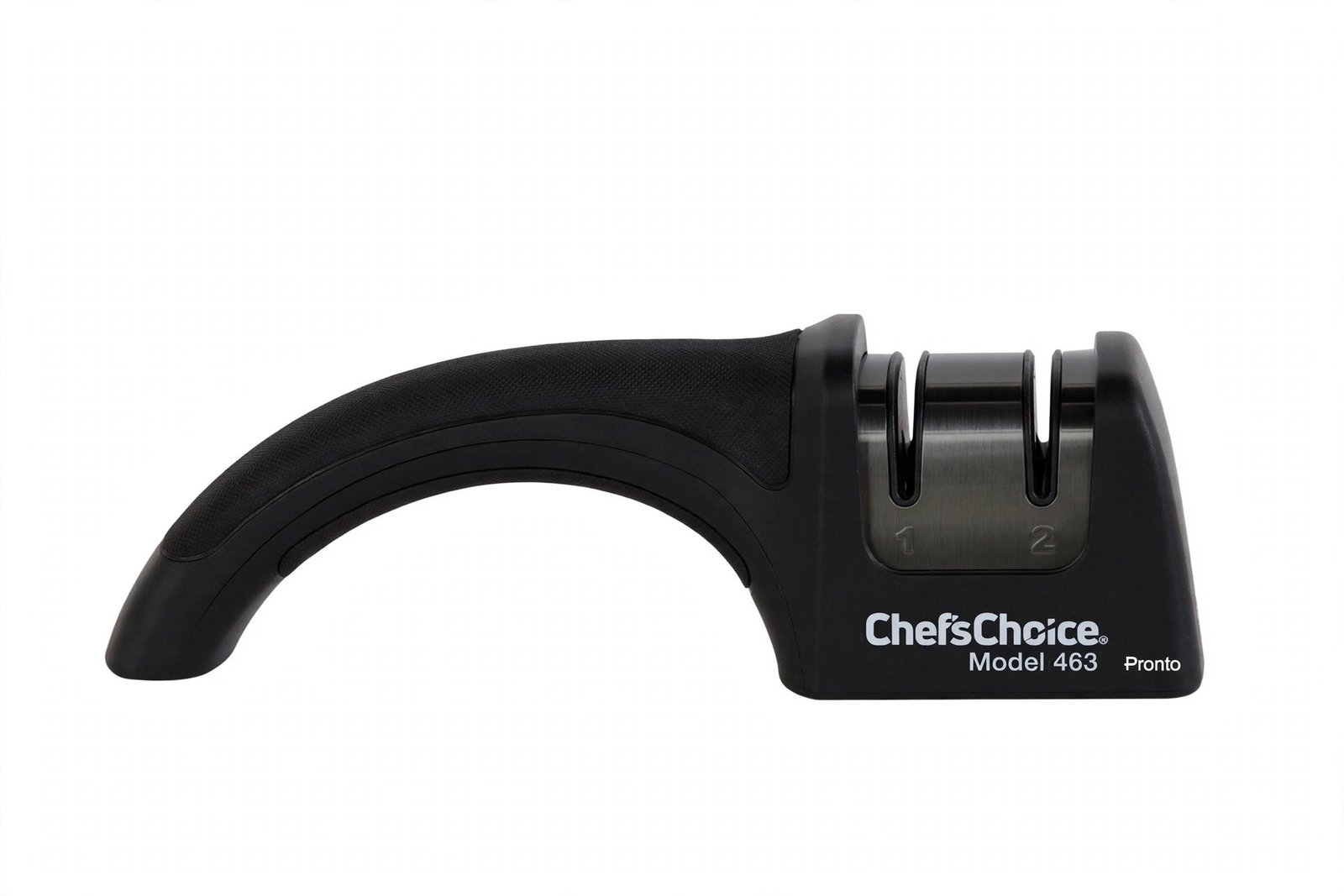
The Chef’sChoice Pronto 463 is the simplest sharpener in this guide, and sometimes simple is exactly right. It is a compact manual pull-through with two slots: a coarse slot with diamond-coated wheels that reshapes the edge, and a fine slot that polishes it. Deep guides hold the blade at a fixed 15-degree angle, so you just pull the knife through a few times and you are done.
It was designed for Asian-style knives, which traditionally use a 15-degree edge, but it works well on any double-bevel knife that suits that angle. It can also touch up serrated blades in the fine stage. There is no power cord, no setup and nothing to learn, and it fits in a kitchen drawer.
- Two-stage manual sharpener with diamond-coated wheels
- Fixed 15-degree angle for Asian-style knives
- Fine stage can touch up serrated blades
- Soft-touch ergonomic handle with rubber feet for grip
- No power, no setup, drawer-sized
Pros:
- Dead simple to use, with genuinely no learning curve
- Fast, a full sharpening takes under a minute
- Small enough to live in a drawer
- Very affordable at around $40
- Sturdy build that lasts for years of home use
Cons:
- Fixed 15-degree angle does not suit Western knives designed for 20 degrees
- Removes more steel than a whetstone and leaves a coarser edge
- Not recommended for ceramic knives or single-bevel Japanese knives
- Cannot rescue a badly chipped or very dull blade as well as a stone
- No fine angle control for picky owners
Best for: owners of Asian-style knives, small kitchens, renters, and anyone who wants the fastest possible manual touch-up with zero fuss.
Who should avoid it: owners of German-style knives who want to keep a 20-degree edge, and owners of expensive knives who want the gentlest possible sharpening.
5. Smith’s PP1 Pocket Pal – Best Pocket and Travel Sharpener
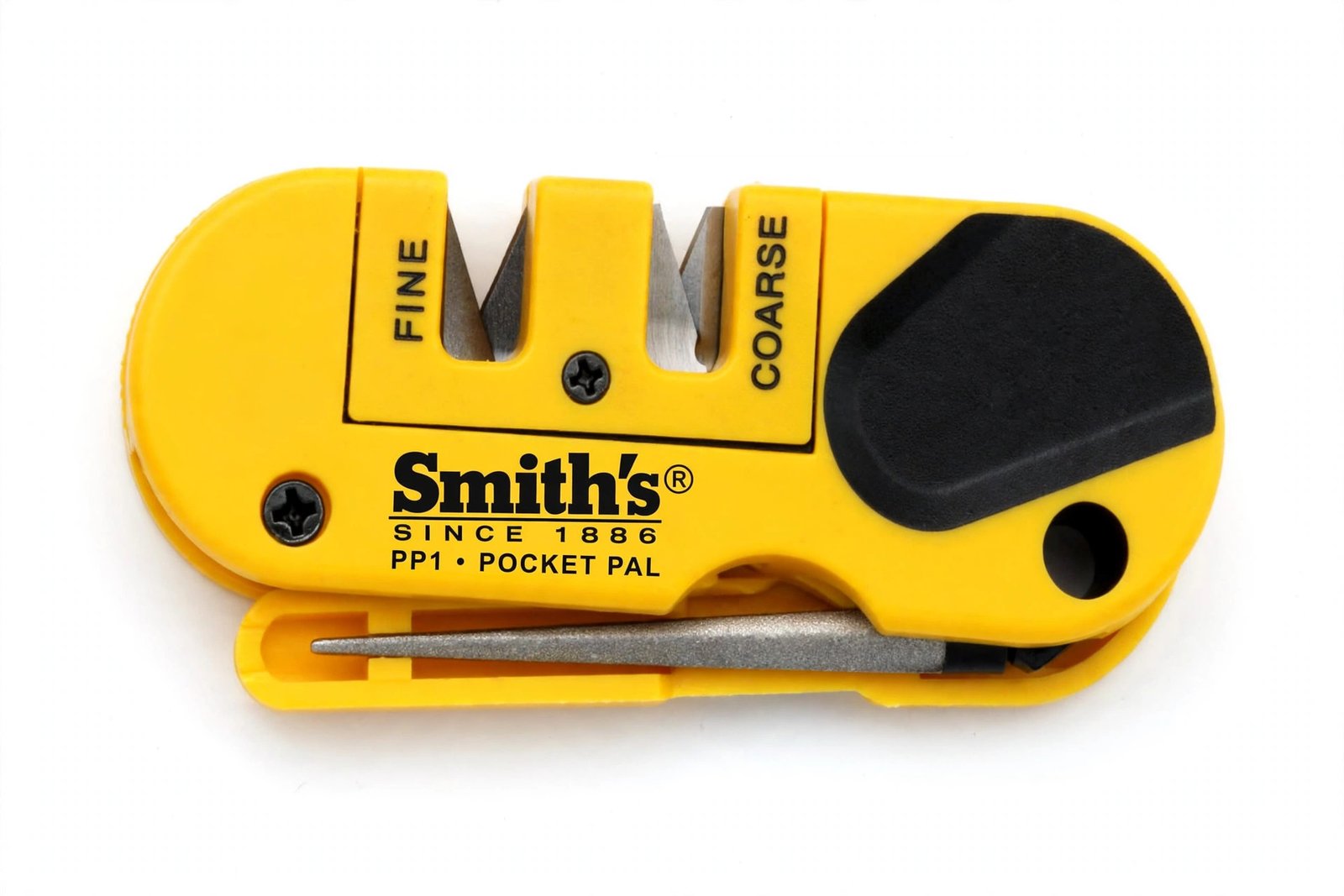
The Smith’s PP1 Pocket Pal is the smallest and cheapest tool on this list, and it earns its place because it goes where the others cannot. It fits in a pocket, a tackle box, a glovebox or a camping kit, and it sharpens a knife anywhere with no power and no water. It has preset carbide blades for a quick coarse edge and ceramic rods for a finer finish, plus a tapered diamond rod for serrated edges.
It will not give you the polished edge of a whetstone or the consistency of an electric sharpener, and it is not the tool for your best kitchen knives. But for a pocket knife on a hike, a fillet knife on a fishing trip, or a kitchen knife at a holiday rental, it is the tool that is actually with you when you need it. That is its whole job, and it does it well.
- Carbide blades for fast edge setting, ceramic rods for finishing
- Tapered diamond rod for serrated edges
- Preset sharpening angles, no skill needed
- Lightweight and pocket-sized with a lanyard hole
- Works on straight-edge and serrated blades
Pros:
- Extremely cheap at around $10, so there is no reason not to own one
- Genuinely portable, fits anywhere
- Handles serrated edges with the tapered diamond rod
- Fast, a dull pocket knife is usable again in a minute
- Tough and simple, almost nothing to break
Cons:
- Coarse edge compared with a whetstone or guided system
- Removes more steel than gentler methods
- Too small and light for long kitchen knives
- Not the right tool for expensive knives you care about
- Preset angles cannot be adjusted
Best for: campers, anglers, hunters, travellers, and anyone who wants a backup sharpener in the car or tackle box.
Who should avoid it: anyone sharpening only good kitchen knives at home, where a larger tool will do a far better job.
6. Mercer Culinary Genesis 10-Inch Sharpening Steel – Best Honing Steel
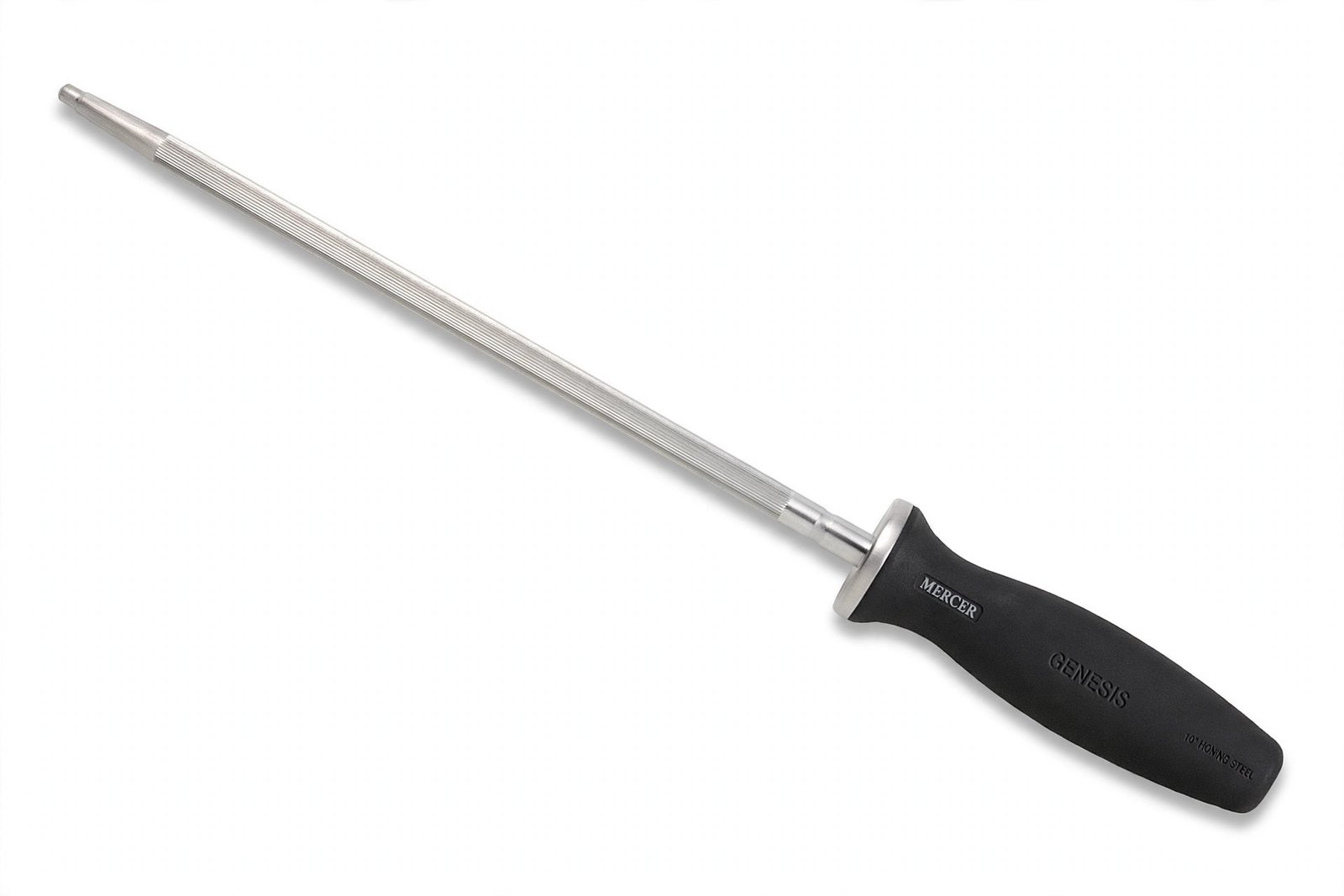
The Mercer Culinary Genesis sharpening steel is not a sharpener in the strict sense, and that is exactly why it belongs here. It is a 10-inch rod of high-carbon German steel with an ergonomic handle and a non-slip grip, built to hone your edge back into alignment between real sharpenings. Used every few cooking sessions, it can stretch the time between sharpenings from weeks to months.
It carries a lifetime limited warranty from the manufacturer, weighs just over half a pound, and costs around $20. Wash it by hand with warm water and mild soap, dry it fully, and keep it out of the dishwasher. Pair it with any sharpener on this list and your knives will stay sharper for far longer than sharpening alone can manage.
- 10-inch rod in high-carbon German steel
- Ergonomic handle with non-slip grip, even with wet hands
- Lifetime limited manufacturer warranty
- Use as needed to maintain the edge between sharpenings
- Hand wash only, dry fully after use
Pros:
- The cheapest way to keep knives sharp day to day
- Takes about ten seconds to use, with no setup
- Extends the time between real sharpenings dramatically
- Solid, well-balanced build with a safe grip
- Lifetime warranty at a budget price
Cons:
- Does not sharpen, it only realigns an existing edge
- Useless on a knife that is already truly dull or chipped
- Needs correct technique, wrong angle can damage the edge
- Not suitable for very hard Japanese steel, which prefers a ceramic rod
- Another long tool to store safely
Best for: every home cook who already owns decent knives, and anyone who wants to sharpen less often.
Who should avoid it: anyone whose knives are already dull and chipped, who needs a real sharpener first, and owners of very hard Japanese knives who should use a ceramic rod instead.
Knife Sharpener Buying Guide: How to Pick the Right One
Choosing a sharpener is easier when you match the tool to your cooking habits rather than to a marketing claim. Work through these five questions before you buy.
1. What knives do you own?
Western-style knives with a 20-degree edge suit the Sharp Pebble guide, the Work Sharp Precision Adjust and most electric sharpeners set to 20 degrees. Japanese-style knives with a 15-degree edge suit the Chef’sChoice 15XV and the Pronto 463. If your set mixes both styles, a guided system with an adjustable angle is the safest single purchase. If you are still building your kitchen, our guide to the best kitchen knife sets will help you pick blades worth sharpening in the first place.
2. How much time will you spend?
Be honest. An electric sharpener takes two minutes and no skill. A whetstone takes fifteen to twenty minutes per knife plus soaking time, and it takes several sessions before your results are good. If you will not practise, buy the electric sharpener and enjoy sharp knives. A whetstone bought with good intentions and never used is just a paperweight.
3. How sharp do you need the edge to be?
For everyday cooking, any sharpener on this list will transform your prep work. For the keenest possible edge, the kind that slides through a tomato under its own weight, a whetstone or a guided system wins. Electric and pull-through sharpeners trade a little refinement for a lot of speed, and for most cooks that is the right trade.
4. Do you have serrated knives?
Bread knives and some tomato knives have serrated edges that most sharpeners cannot handle properly. The Chef’sChoice 15XV and the Smith’s PP1 both deal with serrated edges, and the Pronto 463 can touch them up in its fine stage. If your bread knife matters to you, check this feature before you buy.
5. What is your budget?
You can spend around $10 on the Smith’s PP1 or around $166 on the Chef’sChoice 15XV, and both are good tools for their job. The best value in this guide is probably the Work Sharp Precision Adjust at around $70, which gives guided precision at a mid-range price, or the Sharp Pebble kit at around $46 if you are willing to learn. Whatever you spend, pair it with the Mercer steel so you sharpen less often and your knives last longer.
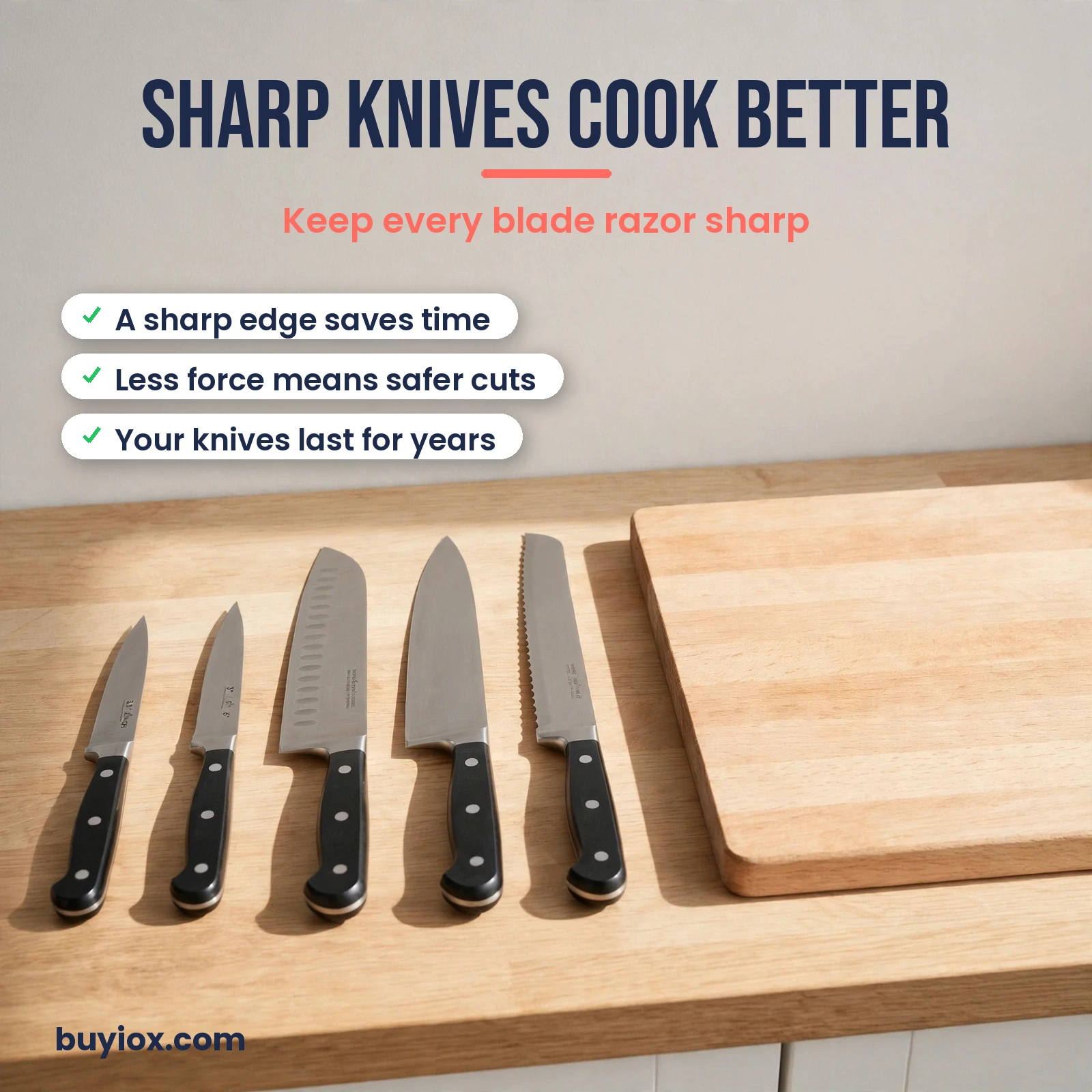
How to Tell When Your Knife Needs Sharpening
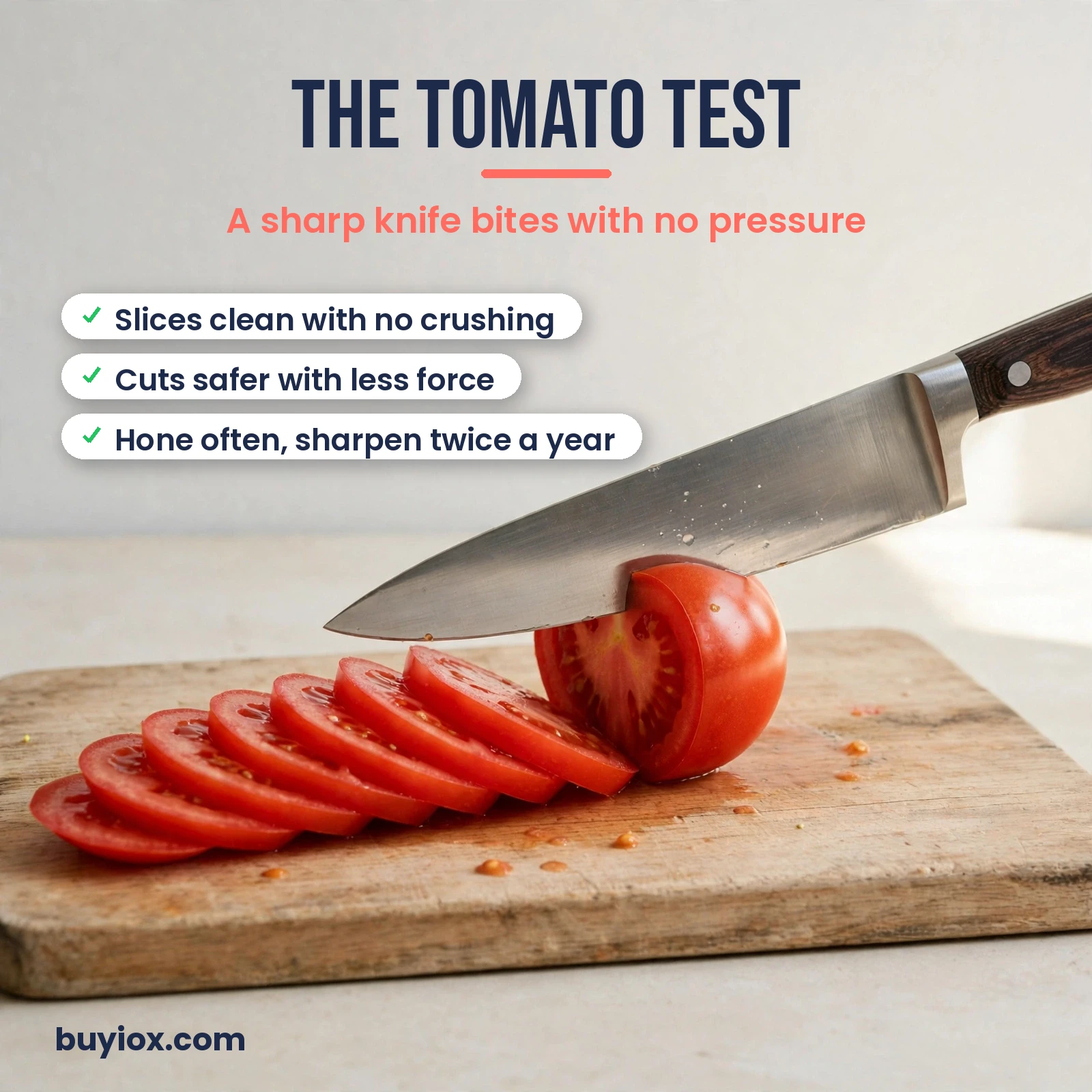
Before you reach for any sharpener, run two quick tests. First, the paper test: hold a sheet of printer paper by its top edge and slice downward through it. A sharp knife glides through cleanly, while a dull knife snags, tears or pushes the paper aside. Second, the tomato test: rest the blade on a ripe tomato without pressing down, then draw it toward you. A sharp knife bites into the skin under its own weight, while a dull knife just slides across it.
If the knife fails these tests, try honing it first with a steel. If a few passes on the steel bring the edge back, you never needed to sharpen at all. If honing does nothing, it is time to sharpen. A good habit is to hone every two or three cooking sessions and sharpen two to four times a year, depending on how much you cook. For more detail on the schedule and the signs, the roundup at GearJunkie and the type-by-type guide at WhetGuide are both worth reading.
Care Tips That Keep Your Knives Sharp Longer
A sharpener can only do so much if your daily habits work against it. Never put good knives in the dishwasher, where they bang against other cutlery and the edge dulls fast. Hand wash and dry them straight away. Cut on wood or plastic boards, never on glass, stone or ceramic plates, which roll and chip edges quickly. Store knives in a block, on a magnetic strip or in blade guards, never loose in a drawer where edges knock together.
And keep a honing steel by your cutting board. Ten seconds of honing before you start cooking is the single best habit in knife care, and it is the reason some cooks sharpen twice a year while others sharpen every month. Good tools deserve good habits, and the same care applies across the kitchen, from your knives to your meat thermometer and food processor, which all last longer when they are cleaned and stored properly.
Frequently Asked Questions
How often should I sharpen my kitchen knives?
For most home cooks, every two to four months, with a quick hone every few uses in between. Daily cooks may need to sharpen every two to three months, while occasional cooks can go four to six months. Go by feel: when honing stops bringing the edge back, it is time to sharpen.
What is the difference between honing and sharpening?
Honing realigns an edge that has rolled or bent slightly, and it removes almost no metal. Sharpening grinds away worn steel to create a brand new edge. A honing steel maintains the edge between sharpenings, while a sharpener rebuilds it when honing no longer helps.
What angle should I sharpen my kitchen knives at?
Western-style knives are usually sharpened at about 20 degrees per side, while Japanese-style knives are usually sharpened at about 15 degrees per side. Check your knife maker’s guidance if you are unsure, and pick a sharpener that matches the angle your knives were designed for.
Can an electric sharpener damage my knives?
It can if it is misused. An electric sharpener removes steel with every pass, so over-sharpening will wear a blade down over time, and using a 15-degree sharpener on a heavy-duty blade designed for a 20-degree edge can leave it too thin for hard work. Used as directed on suitable knives, a good electric sharpener is safe and effective.
Are pull-through sharpeners bad for knives?
They are not bad, but they are a compromise. Pull-through sharpeners remove more steel than a whetstone and leave a coarser edge, and fixed-angle models cannot match every knife. For inexpensive everyday knives they are perfectly fine, but for expensive knives a whetstone or guided system is gentler and gives a better edge.
Can you sharpen serrated knives?
Yes, but not with every sharpener. Some electric sharpeners, like the Chef’sChoice 15XV, have a stage for serrated edges, and pocket sharpeners like the Smith’s PP1 have a tapered diamond rod for them. A fully serrated blade is best sharpened one serration at a time with a tapered rod, or left to a professional.
How do I know when my knife needs sharpening?
Use the paper test and the tomato test. If the blade tears paper instead of slicing it cleanly, or slides off a tomato skin instead of biting in, the edge needs work. Try honing first: if honing fixes it, you did not need to sharpen yet.
Final Verdict: Our Top Recommendation
If you buy one sharpener from this list, buy the Chef’sChoice Trizor 15XV EdgeSelect. It is the fastest, most consistent route to a genuinely sharp edge, it handles serrated knives, and it asks nothing of you except a few pulls through its three stages. For most home kitchens it is the right answer, and the strong recommendation of professional testers backs that up.
That said, the best knife sharpener is the one you will actually use. If you enjoy the craft, the Sharp Pebble whetstone kit will give you a sharper edge and a skill you keep for life, for a fraction of the price. If you want precision on a budget, the Work Sharp Precision Adjust is the smartest mid-range buy. And whatever you choose, add the Mercer Genesis steel to your routine, because ten seconds of honing before dinner is what keeps a sharp knife sharp.
Stop crushing tomatoes and fighting onions. Pick the sharpener that fits your kitchen, your knives and your patience, and enjoy cooking with a blade that actually cuts. Your knives, and your fingertips, will thank you.