Affiliate Disclosure: Buyiox is reader-supported. When you buy through links on this page, we may earn a small commission at no extra cost to you.
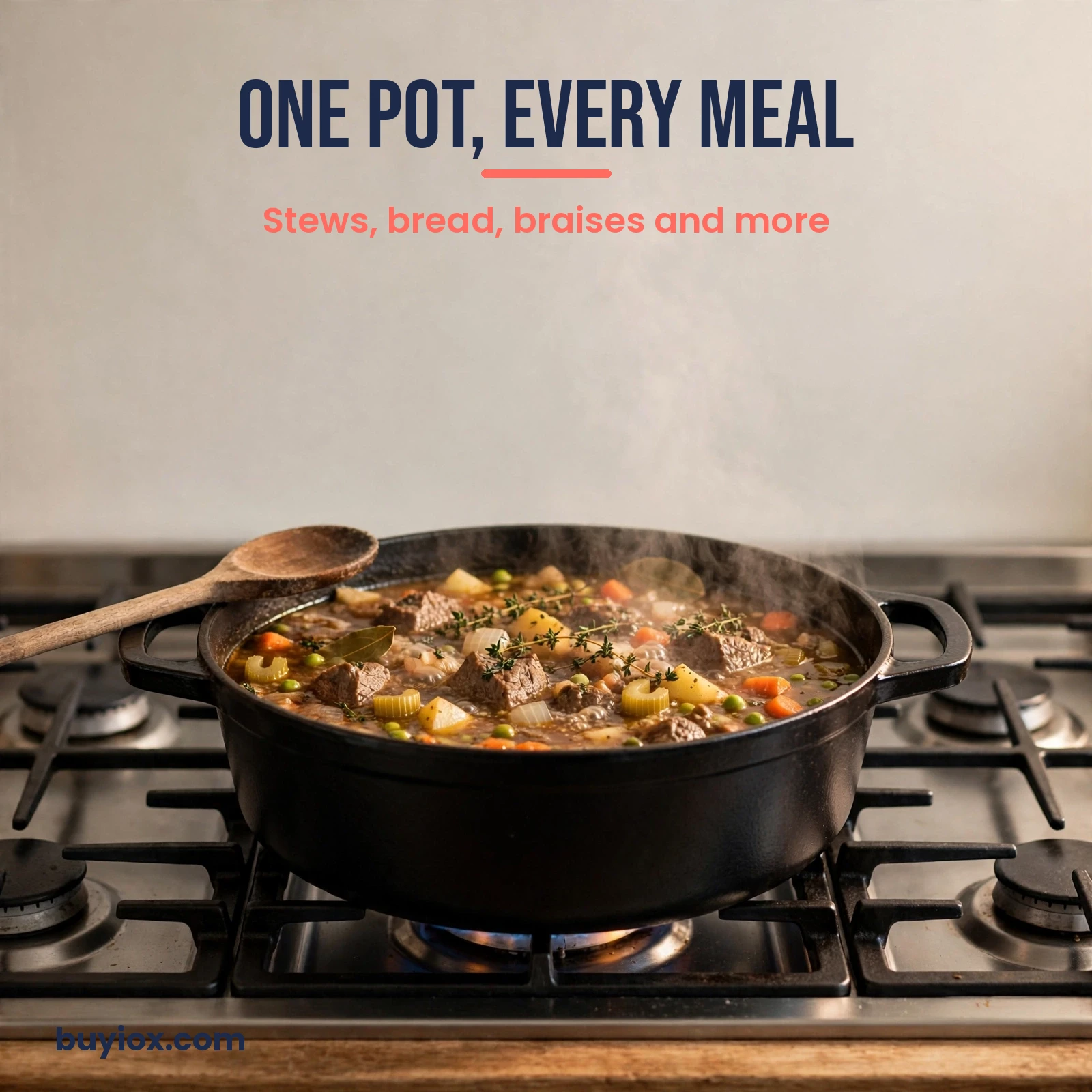
Your cheap stockpot was fine for six months. Then the bottom started scorching. Then the handles went wobbly. Then the lid stopped sealing, and your braises started drying out instead of turning tender. A Dutch oven is the opposite of that cycle. It is a heavy pot with a tight lid that holds heat, traps moisture, and turns cheap cuts of meat into food worth sitting down for. Buy the right one, and it can cook stews, bake bread, braise a roast, and simmer soup for the rest of your life, then go on cooking for the next person who owns it.
That promise is exactly why Dutch ovens can also feel confusing to buy. The pots on this list range from around $45 to around $370, and they all look like the same round pot with a lid. The honest answer is that the cooking mechanism is the same in every pot here: heavy cast iron under a glass-like enamel coating, with a tight lid that keeps moisture in. What changes with price is the quality of the enamel, the fit of the lid, the weight, the handle design, and how long the pot keeps looking good after years of use.
This is a research-based roundup. We did not test these Dutch ovens hands-on in our own kitchen, so every claim below is framed the way it should be: what the manufacturer states, what independent test kitchens found, and what owners report. The test-kitchen consensus is unusually strong here. Serious Eats, Wirecutter, and America’s Test Kitchen all land on the same small group of pots, and they disagree mainly about how much the premium enamel is worth and which size is the sweet spot. Serious Eats retested 26 ovens and still names the Le Creuset 5.5 quart its favorite overall and the Lodge 6 quart its best budget pick. Wirecutter makes the Lodge 6 quart its top pick. America’s Test Kitchen names Le Creuset its winner and the Cuisinart 7 quart its Best Buy. We read those tests, checked current retailer listings, and built this list around everyday cooking: weeknight stews, weekend braises, no-knead bread, and soups that feed a family.
The six best Dutch ovens below cover every sensible budget and every kind of cook. There is a $45 pot that braises the same beef as a $370 pot, a $90 Wirecutter top pick that most kitchens should buy first, a $60 Le Creuset alternative with more room inside, a big 7 quart pot for large families, and two French heirlooms for cooks who want the best enamel money can buy. Pick the pot that fits your household, your strength, and your budget, and the pot will take care of the cooking for decades.
Our Top 6 Dutch Ovens at a Glance
- Lodge Enameled Cast Iron Dutch Oven 6 Quart – Best overall, the Wirecutter top pick that cooks like pots costing four times more, for around $90
- Le Creuset Signature Round Dutch Oven 5.5 Quart – Best premium Dutch oven, the Serious Eats favorite and the benchmark every other pot is judged against, for around $370
- Staub Round Cocotte 5.5 Quart – Best Dutch oven for braising, with a self-basting lid and a matte black interior built for browning, for around $350
- Tramontina Enameled Cast Iron Dutch Oven 6.5 Quart – Best budget Dutch oven under $70, the closest Le Creuset alternative at a sixth of the price, for around $60
- Cuisinart Chefs Classic Enameled Cast Iron Dutch Oven 7 Quart – Best Dutch oven for big families, America’s Test Kitchen Best Buy with the roomiest pot here, for around $90
- Amazon Basics Enameled Cast Iron Dutch Oven 6 Quart – Best cheapest Dutch oven, a real 6 quart enameled pot for around $45
1. Lodge Enameled Cast Iron Dutch Oven 6 Quart – Best Overall
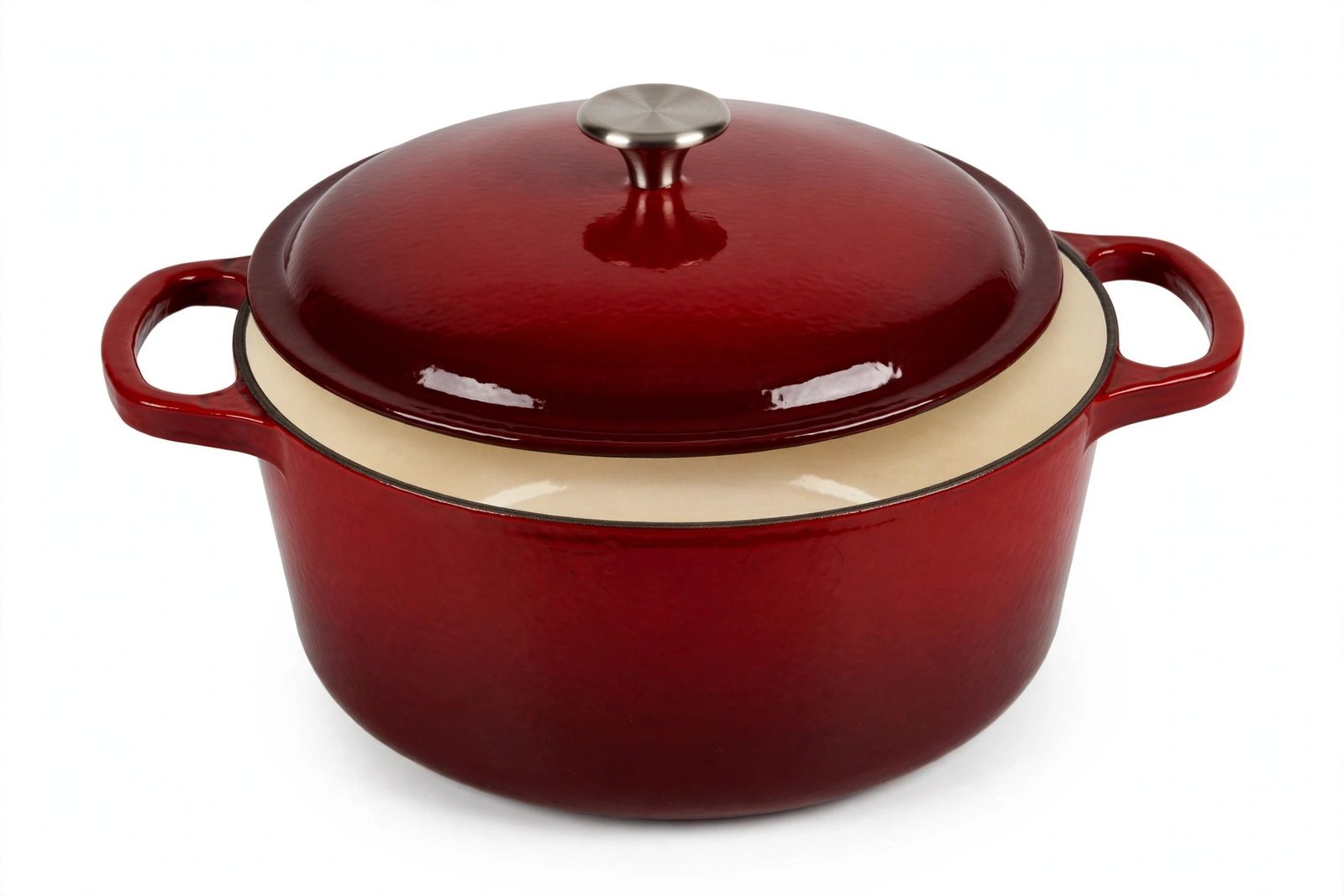
Lodge Enameled Cast Iron Dutch Oven 6 Quart (product-style image)
The Lodge 6 Quart Enameled Dutch Oven is the best Dutch oven for most people, and the reason is not subtle: it cooks as well as pots costing four times as much, for around $90. It is cast iron under a chip-resistant porcelain enamel finish, with a tight-fitting lid, dual loop handles big enough for oven mitts, and a light cream interior that makes it easy to see browning. At 6 quarts, with a 10.75 inch diameter, it is big enough for a pot roast, a whole chicken, a large pot of chili, or a no-knead loaf, and it serves four to six people without a fight. It works on gas, electric, ceramic, and induction cooktops, and it is oven safe to 500F.
What makes this pot the default recommendation is the weight of evidence behind it. Wirecutter makes the Lodge 6 quart its top pick because it cooked as well as far more expensive pots, with large handles and a wide, slightly curved base. Serious Eats names it its best budget pick after retesting 26 ovens. America’s Test Kitchen tested a Lodge 6 quart and rated it Recommended. The iron holds heat the way cast iron is supposed to hold heat. Put a cold chuck roast in a properly preheated Lodge and the pot does not go cold and grey the way a thin pot does. It keeps browning. That is the whole point of a Dutch oven, and this pot delivers it for the price of a takeaway dinner for two.
The honest trade-offs are weight, enamel, and the lid knob. At around 13.5 to 15 lb empty, with sources disagreeing on the exact figure, this is a two-hand pot when it is full of stew, and cooks with wrist trouble should read the lighter Le Creuset below before buying. The enamel is also thinner than the French pots. Serious Eats chipped the rim with a spoon knock, and Wirecutter staff and owners report enamel chips over time, so this pot needs a little more care than a Le Creuset. Use wooden or silicone utensils, do not bang the lid down, and never plunge a hot pot into cold water. The lid knob is rated to 500F on the current model, but older listings have shown a lower rating, so check the knob on the exact listing you buy. None of that changes the verdict. For a first Dutch oven, for a family kitchen, and for a cook who wants the best value in cookware, this is the honest best overall pick.
Why we like it
- 6 quart size with a 10.75 inch diameter, big enough for a pot roast or a whole chicken
- Wirecutter top pick and Serious Eats best budget pick after testing 26 ovens
- Large dual loop handles that fit oven mitts properly
- Light cream interior makes it easy to judge browning
- Oven safe to 500F and compatible with all cooktops, including induction
Pros
- Best Dutch oven for most people, with the strongest test-kitchen consensus here
- Best value by a wide margin, the same braise as pots costing many times more
- Wide base and tight lid suit stews, braises, soups, and bread baking
Cons
- Around 13.5 to 15 lb empty, heavy to lift with one hand when full
- Thinner enamel than the French pots, so chips are reported more often
- Lid knob heat rating has varied across listings, so check before buying
- Rounded bottom reduces the flat cooking surface a little
Price: around $90, list price $99.90 on Lodge.com; seen from around $72 to $90 by color on Amazon
Best for: first-time Dutch oven buyers, family cooking, and anyone who wants one pot that braises, bakes bread, and lasts for decades.
Who should skip it: cooks with wrist or grip trouble, where the lighter Le Creuset below is the better buy, and cooks who want the toughest enamel available, where the French pots below justify their price.
2. Le Creuset Signature Round Dutch Oven 5.5 Quart – Best Premium Dutch Oven
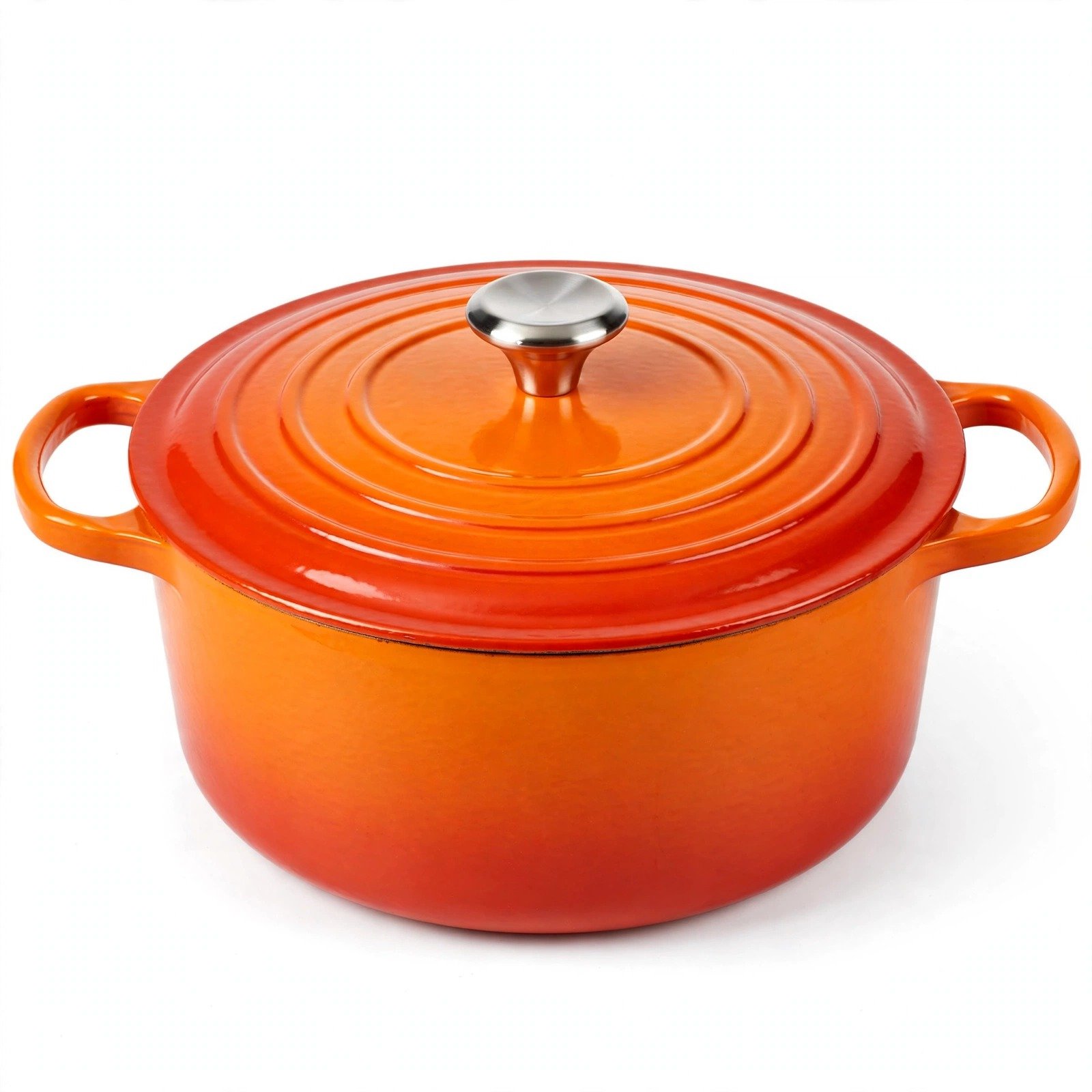
Le Creuset Signature Round Dutch Oven 5.5 Quart (product-style image)
The Le Creuset Signature Round Dutch Oven is the pot every other Dutch oven is measured against, and it has held that position for a reason. It is cast iron under a dense, multi-layer enamel, made in France, with a light sand-colored interior that makes it easy to watch food brown, wide loop handles that fit oven mitts properly, and a stainless steel knob rated to 500F. At 5.5 quarts, it serves five to six people per batch, and it goes from the burner to the oven to the table in a color that matches the rest of a Le Creuset kitchen, which is part of the appeal for cooks who treat the pot as part of the kitchen, not just a tool in a cupboard.
What makes the Signature version worth its premium is the testing record. Serious Eats still names the Le Creuset 5.5 quart its favorite overall after retesting 26 ovens, praising its even heating, steady simmer, and durable enamel. Wirecutter names it its upgrade pick. America’s Test Kitchen names Le Creuset its winner in the 5 to 6 quart class. The pot is also the lightest premium pot here, at around 11.5 to 13.5 lb depending on the source, with Williams-Sonoma listing 11 lb 4 oz with the lid, which matters every time you lift a full pot out of a low oven. The enamel is denser and more chip-resistant than the budget pots, the lid fits tightly, and the lifetime warranty backs a pot that is built to be handed down, not replaced.
Now the honest cost. At around $370 on Amazon, with a list price of $455, this pot costs roughly four times the Lodge above, and it does not braise four times better. Independent testers agree it braises a little better, with more even heat and a tougher finish, not dramatically better. The enamel can still chip if you drop the pot or bang it against a hard surface, and a chipped pot is a damaged pot, so it needs careful handling. The 5.5 quart size is also a little smaller than the 6 quart Lodge, so if you routinely cook for six or more, you will be cooking in batches. And the weight is real: even the lightest premium pot here is still 11 lb or more of cast iron before the food goes in. Buy it when you cook with a Dutch oven several times a week, when you want the toughest enamel and the best lid fit, and when the pot will live on the stove as much as in the cupboard. For that cook, it is the best premium Dutch oven you can buy.
Why we like it
- Light sand interior makes it easy to judge browning and fond
- Stainless steel knob rated to 500F, so the whole pot goes in a hot oven
- Wide loop handles that fit oven mitts properly for safer lifting
- Dense multi-layer enamel with a lifetime warranty, made in France
- Serious Eats favorite overall, Wirecutter upgrade pick, ATK winner in its size class
Pros
- Best premium Dutch oven, the benchmark every other pot is judged against
- Best pick for cooks who use a Dutch oven several times a week and want the toughest enamel
- Lightest premium pot here, which matters every time you lift a full pot
Cons
- Around $370, roughly four times the price of the Lodge above
- 5.5 quarts is a little smaller than the 6 quart Lodge, so big batches mean cooking in batches
- Enamel can still chip if dropped or banged, and chips cannot be repaired like seasoning
- Weight figures disagree across sources, so treat any single figure with care
Price: around $370 on Amazon, list price $455; sale prices around $289 to $310 seen
Best for: serious home cooks, cooks who braise and bake bread weekly, and anyone who wants a pot that will last for decades and look good doing it.
Who should skip it: budget buyers, where the Lodge above braises just as well for around $90, and cooks who need the biggest pot possible, where the 7 quart Cuisinart below is the better size.
3. Staub Round Cocotte 5.5 Quart – Best Dutch Oven for Braising
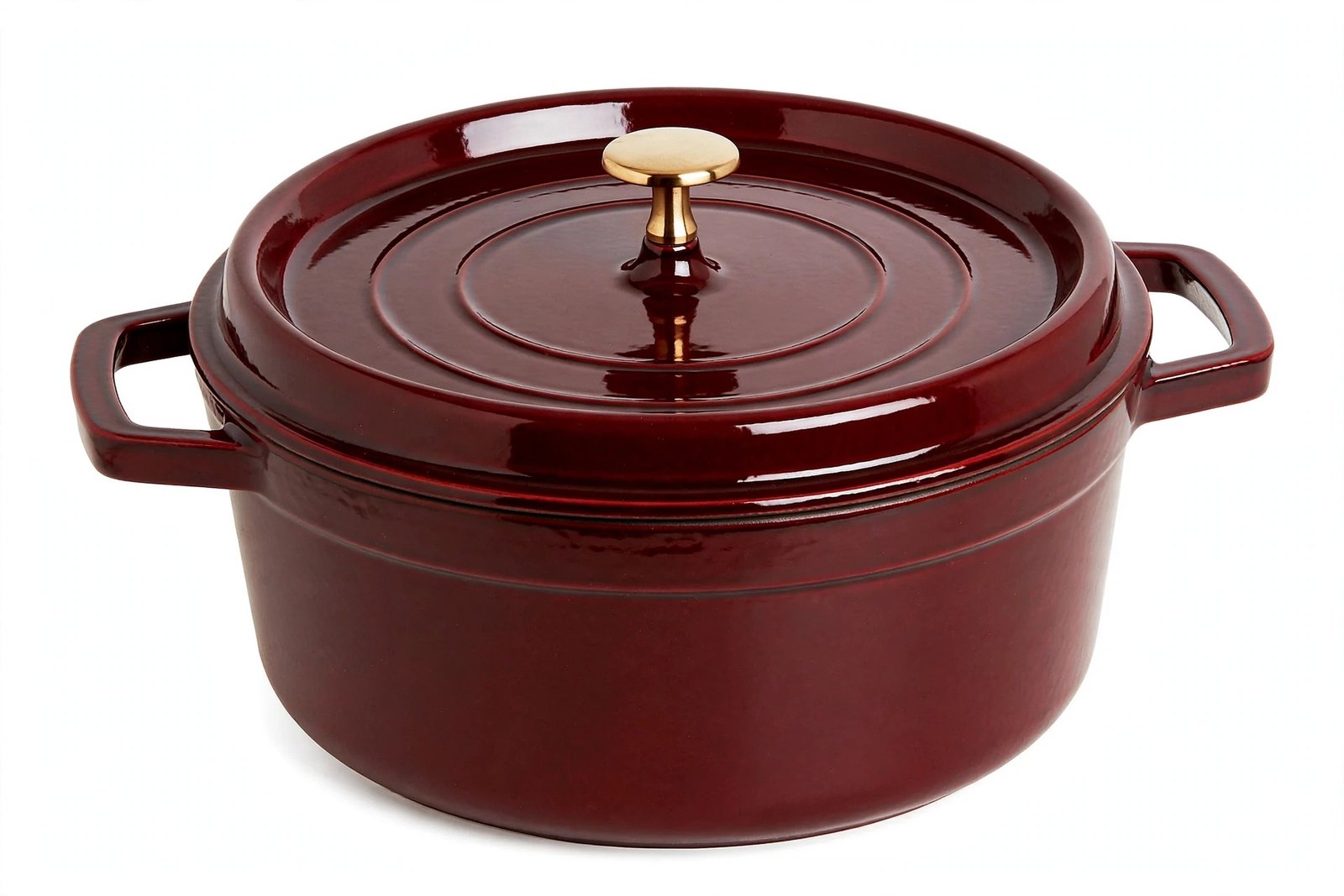
Staub Round Cocotte 5.5 Quart (product-style image)
The Staub Round Cocotte is the Dutch oven for cooks who braise first and ask questions later. Where the Le Creuset above uses a smooth light interior, Staub uses a textured matte black enamel interior, and that texture is deliberate. The rough surface is built for browning: it grips food a little, it holds heat, and it hides staining that would show on a cream enamel, so the pot keeps looking good after years of searing. The lid is the other Staub signature. Its underside carries a grid of small downward-facing nubs, called Chistera spikes, that catch condensation and drip it back onto the food during a long braise, so the meat stays moist without extra liquid.
What makes this pot special is how it behaves in a long cook. Comparative testing has found the Chistera lid produces more uniform moisture distribution during long braises, and one reviewer test series measured the Staub holding heat better than the Le Creuset, retaining about 20F more in their test. The pot is made in France, oven safe to 500F, with a brass knob rated to 500F, and it works on all cooktops including induction. At 5.5 quarts, it fits a 4 lb chicken with vegetables, a 3 lb chuck roast with braising liquid, or a no-knead boule with room for the rise, and it serves four to six people. At around $350, it also costs meaningfully less than the Le Creuset above at list price, which makes it the smarter French buy for cooks who care more about braising than about color matching a set.
Be honest about the limits. At around 12 to 13.2 lb empty, with sources disagreeing on the exact figure, the Staub is the heaviest premium pot here, and a loaded cocotte with a chicken and vegetables runs 16 to 18 lb, which is a two-hand lift no matter how strong you are. The handles are short and integrated, so they are less generous than the wide loop handles on the Le Creuset. The dark interior hides browning just like a dark skillet does, so you cook by timing and feel rather than by watching the fond develop. Enamel can chip if the pot is dropped, and the buy box on Amazon has at times belonged to a third-party seller rather than Amazon itself, so check the seller before you order. Buy it when braising is your main event, when you want the best moisture retention here, and when you want French enameled quality for less than Le Creuset money.
Why we like it
- Chistera self-basting lid spikes drip condensation back onto the food during long braises
- Textured matte black enamel interior built for high-heat browning
- Dark interior hides staining, so the pot keeps looking good for years
- Brass knob rated to 500F, made in France, works on all cooktops including induction
- Best measured heat retention in reviewer test series, about 20F more than Le Creuset
Pros
- Best Dutch oven for braising, with the best moisture retention here
- Best pick for cooks who want Le Creuset quality for less money
- Matte interior and self-basting lid are genuine functional features, not decoration
Cons
- Around 12 to 13.2 lb empty, the heaviest premium pot here
- Short integrated handles are less generous than the Le Creuset loop handles
- Dark interior hides browning, so you cook by feel rather than by sight
- Enamel can chip if dropped, and Amazon seller varies, so check before ordering
Price: around $350, list price $499.95; seen from around $340 to $380 by color
Best for: cooks who braise often, small households of four to six, and anyone who wants the best braising pot with a self-basting lid.
Who should skip it: cooks with wrist or grip trouble, where the lighter Le Creuset is the better buy, and budget buyers, where the Lodge above braises nearly as well for around $90.
4. Tramontina Enameled Cast Iron Dutch Oven 6.5 Quart – Best Budget Dutch Oven
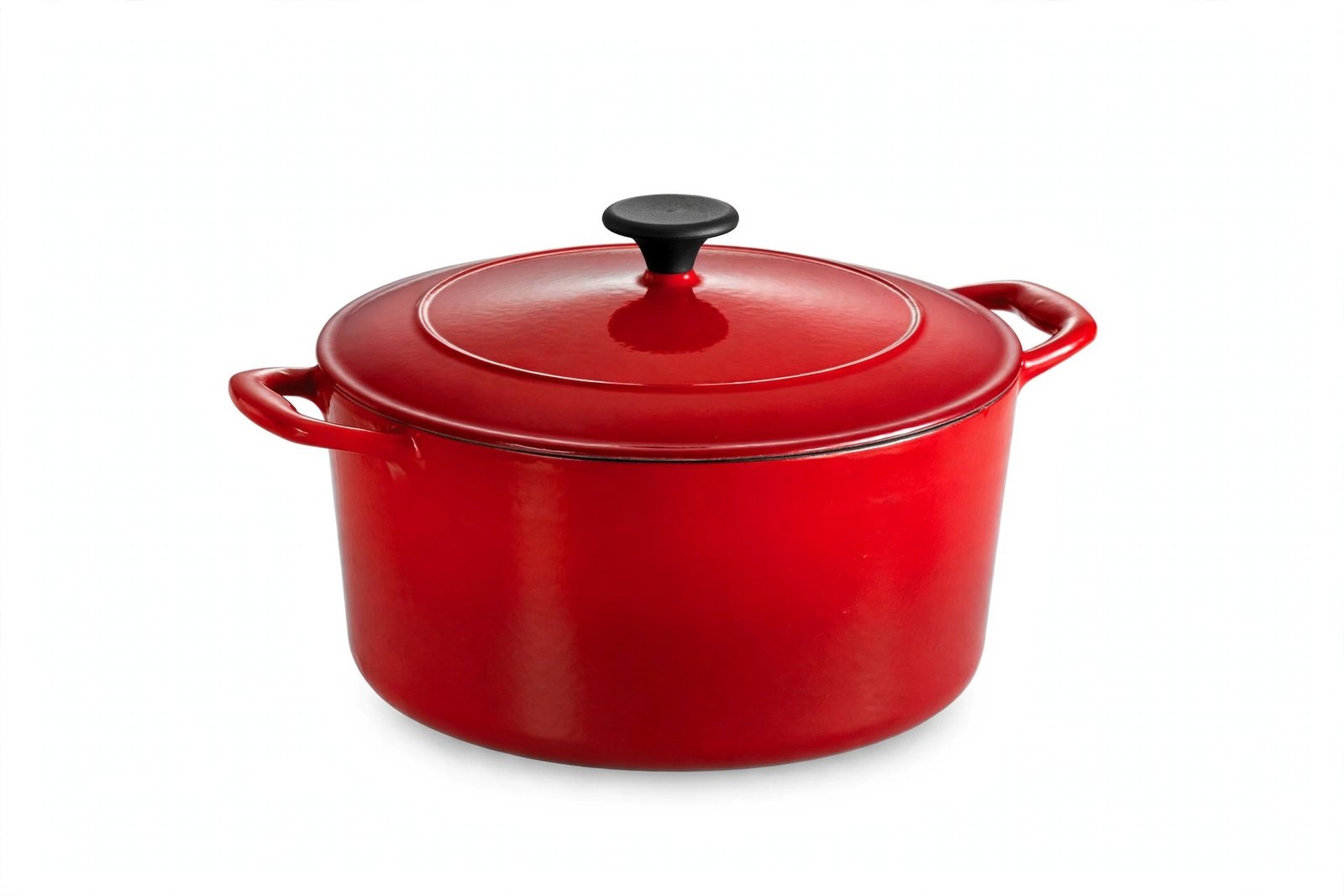
Tramontina Enameled Cast Iron Dutch Oven 6.5 Quart (product-style image)
The Tramontina 6.5 Quart is the pot to buy when you want Le Creuset character at a sixth of the price. It is enameled cast iron made in Brazil, with a light interior, a generous 6.5 quart capacity, and a shape close enough to the Le Creuset Signature that blind braise tastings have found the results indistinguishable. At around $60, it is the cheapest way into a large enameled Dutch oven that still feels like a proper pot, and it is the Dutch oven that cookware communities recommend more than any other Le Creuset alternative. For nearly one-seventh the price of a Le Creuset, the cooking gap in day-to-day use is small enough that most cooks will never notice it.
What makes this pot worth considering is how much room it gives you for the money. At 6.5 quarts, it is the second-largest pot on this list, bigger than the Lodge, the Le Creuset, and the Staub, and that extra half quart is the difference between a whole chicken fitting with vegetables and a whole chicken fitting on its own. Heat retention in reviewer testing measured close to the Lodge and the Le Creuset, within a few degrees in one test series. The enamel is smooth and light inside, so browning is easy to see, and the pot comes in several colors. It works on gas, electric, ceramic, and induction cooktops, and Tramontina states it is oven safe to 450F, which covers almost every home recipe, from a slow braise to a no-knead loaf.
Now the honest caveats, because a $60 pot is not a $370 pot. The enamel is thinner than the French pots, so it chips more easily on the rim if you stack pots or bang the lid, and one independent tester received a unit with a chipped lid out of the box, so inspect the pot on arrival. The knob is rated to 400F by some testers, lower than the 450F pot rating, so do not put it in a ripping-hot oven for bread without checking your exact model. The handles are smaller than the Lodge handles, and the pot is heavy at around 13 to 15 lb empty. Tramontina also publishes less information than Le Creuset, with no lifetime warranty to match the French pots, so you are buying on less documentation. Buy it when the budget is tight, when you want the biggest pot for the least money, and when you are willing to handle it with a little care. Buy the Lodge above when you want the strongest test-kitchen backing and the biggest handles for a little more money.
Why we like it
- 6.5 quart capacity, the second-largest pot here, for around $60
- Light interior makes browning easy to see
- Heat retention measured close to the Lodge and Le Creuset in reviewer testing
- Made in Brazil with consistent quality control across units
- Closest Le Creuset alternative at a sixth of the price
Pros
- Best budget Dutch oven under $70, with the best value per quart here
- Best pick for cooks who want the biggest pot for the least money
- Bread performance rated top tier in reviewer testing
Cons
- Thinner enamel chips more easily on the rim, so handle it with care
- Knob rated to 400F by some testers, lower than the pot rating, so check your model
- Smaller handles than the Lodge, and around 13 to 15 lb empty
- No lifetime warranty and less published information than the French pots
Price: around $60, seen from around $53 to $72 by color and retailer
Best for: budget buyers, first apartments, and anyone who wants the biggest enameled pot for the least money.
Who should skip it: buyers who want the toughest enamel available, where the Le Creuset or Staub above justify their price, and cooks who bake bread at very high oven temperatures, where the 500F pots above are the safer choice.
5. Cuisinart Chefs Classic Enameled Cast Iron Dutch Oven 7 Quart – Best Dutch Oven for Big Families
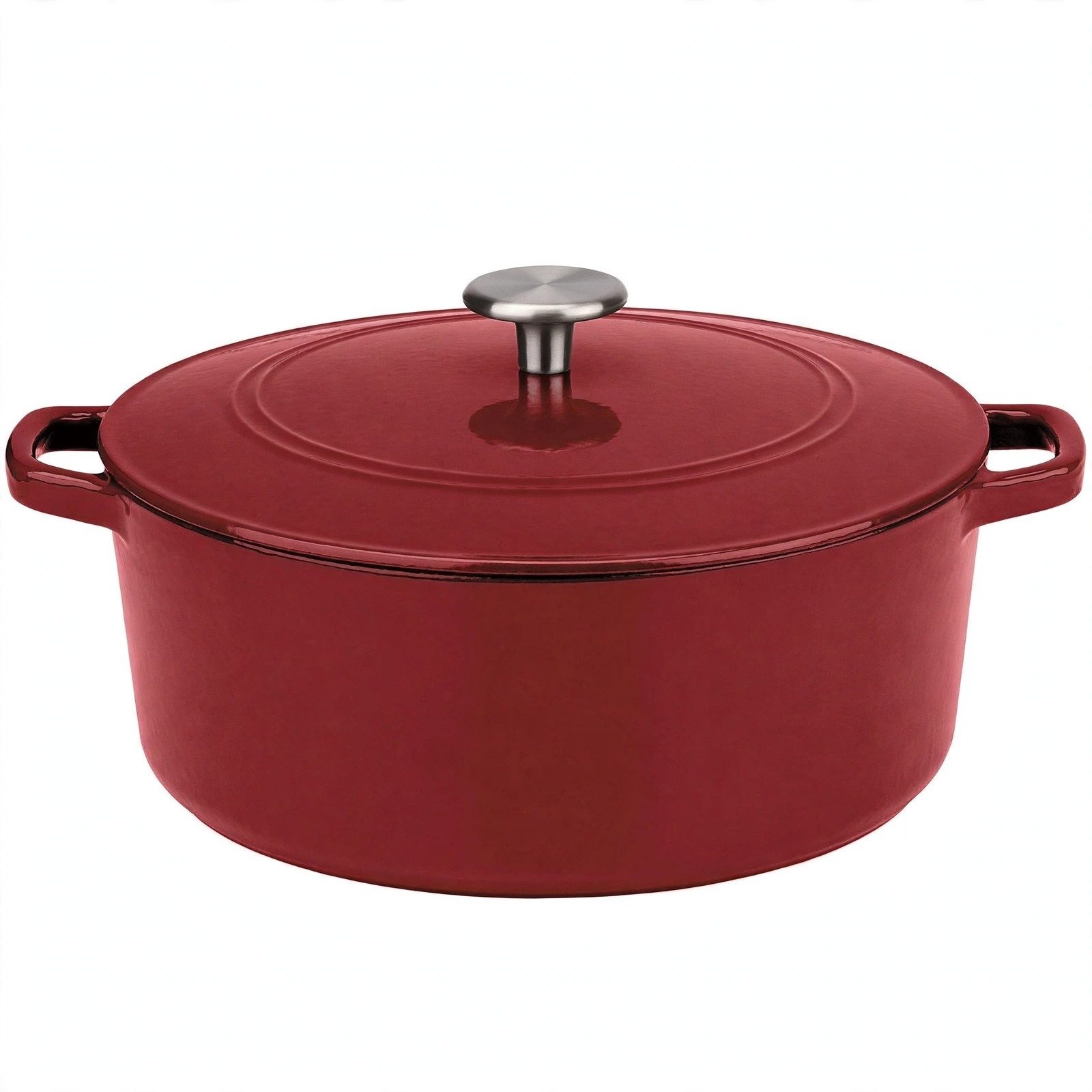
Cuisinart Chefs Classic Enameled Cast Iron Dutch Oven 7 Quart (product-style image)
The Cuisinart Chefs Classic 7 Quart is the pot to buy when your household outgrows a normal Dutch oven. At 7 quarts, it is the biggest pot on this list, with a broad flat cooking surface, a 10 inch cooking diameter, and low straight sides that make searing faster, because more food touches the hot surface at once. It is the pot for big batches of chili, a whole chicken with room to spare, a large pot of soup for the freezer, or a roast that feeds six or more without cooking in batches. And it is America’s Test Kitchen Best Buy in the 6.5 to 7.5 quart class, which is a serious endorsement for a pot that costs around $90.
What makes this pot special is the shape. America’s Test Kitchen found it had the same advantageous shape as the Le Creuset, with a broad cooking surface and low straight sides, and that it performed just as well as its favorite at about a quarter of the price. The looped handles are comfortable to hold, though a little smaller than ideal, and the light porcelain interior makes browning easy to see. It is induction compatible, it works on every normal cooktop, and it is dishwasher safe, which not every enameled Dutch oven can claim, though hand washing is still the safer habit for the enamel. At around $90 for 7 quarts, the price per quart is the lowest on this list, which is exactly what a big family needs.
Be very clear about what the low price costs you. At 16.7 lb empty, per America’s Test Kitchen, this is the heaviest pot here, and a full 7 quart pot of stew can weigh well over 25 lb, so this is a two-person lift from a low oven and a poor choice for anyone with wrist trouble. The rim and lid chipped cosmetically when America’s Test Kitchen repeatedly slammed the lid onto the pot in abuse testing, so it is less durable than the Le Creuset winner, and the pot needs the same gentle handling as every enameled pot here. The lid knob is the other catch: the pot is oven safe to 500F, but the standard knob is rated to 350F, so a high-heat bread bake needs a knob swap or a different pot. Buy it when you cook big batches, when you feed six or more, and when you want the most capacity for the least money. Buy the Lodge above when a 6 quart pot is big enough and you want a lighter pot with bigger handles.
Why we like it
- 7 quart capacity, the biggest pot here, with a 10 inch cooking surface
- America’s Test Kitchen Best Buy in the 6.5 to 7.5 quart class
- Broad flat base and low straight sides make searing faster
- Light porcelain interior makes browning easy to see
- Dishwasher safe, and the lowest price per quart on this list
Pros
- Best Dutch oven for big families, with the roomiest pot here
- Best pick for big batches, whole chickens, and freezer cooking
- Same advantageous shape as Le Creuset at about a quarter of the price
Cons
- 16.7 lb empty, the heaviest pot here, and well over 25 lb when full
- Rim and lid chipped in America’s Test Kitchen abuse testing, so less durable than Le Creuset
- Lid knob rated to 350F, lower than the 500F pot, so check before a high-heat bake
- Handles a little smaller than ideal for a pot this heavy
Price: around $90, seen from around $86 to $100 by color; America’s Test Kitchen test price was $83.70
Best for: large families, batch cooking, freezer meals, and anyone who regularly feeds six or more.
Who should skip it: cooks with wrist or grip trouble, where every pot here is lighter, and small households, where a 7 quart pot is too big to heat, lift, and store for two people.
6. Amazon Basics Enameled Cast Iron Dutch Oven 6 Quart – Best Cheapest Dutch Oven
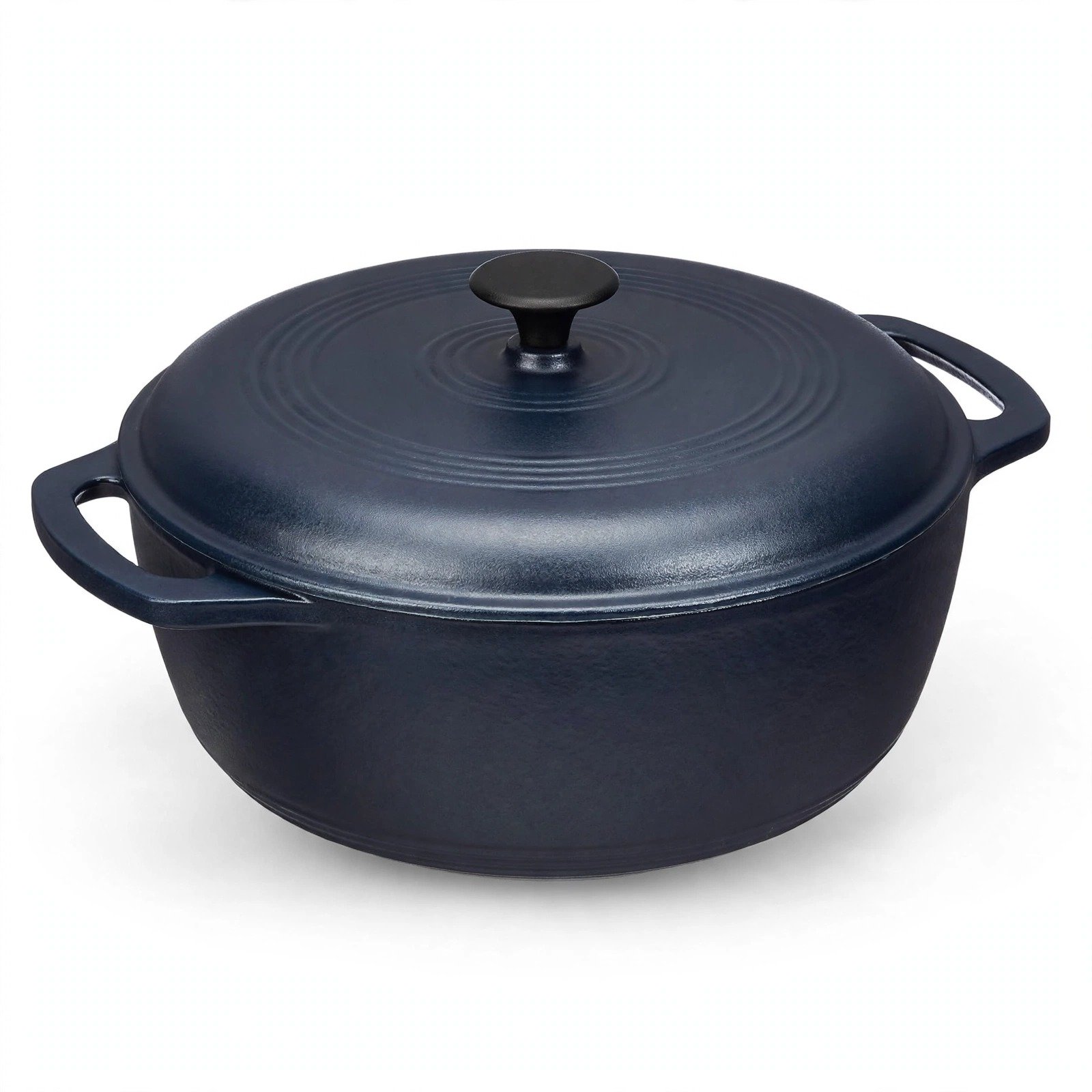
Amazon Basics Enameled Cast Iron Dutch Oven 6 Quart (product-style image)
The Amazon Basics 6 Quart is the floor of the enameled Dutch oven market, and it is an honest floor. It is a real 6 quart enameled cast iron pot, with dual loop handles, a matching enamel lid, and a published oven rating of 500F, the same figure Lodge and Le Creuset publish for their enamel. At around $45, it costs less than half the Lodge above and about an eighth of the Le Creuset, and it braises the same beef, simmers the same stew, and bakes the same loaf. It serves four to six people, it works on all stovetops including induction, and it carries tens of thousands of owner reviews at around 4.7 stars. For a cook who is not sure a Dutch oven will earn its place in the kitchen, this is the cheapest honest way to find out.
What makes this pot worth recommending is how little you give up in core function. The cooking mechanism is the same as every pot here: heavy iron, a tight lid, trapped moisture, steady heat. The 6 quart size is the sweet spot for most households, large enough for a whole chicken, a batch of chili, or a loaf of no-knead bread, but not so heavy that it is awkward to lift when full. At 13.06 lb per the Amazon listing, it is lighter than the Lodge and the Cuisinart, and it is the same size as the Wirecutter top pick for half the money. If your Dutch oven will mostly slow-braise at 325F to 375F, simmer soup, and bake the occasional loaf, this pot does that job as well as any pot here.
Now the honest trade-offs, because a $45 pot is not a $90 pot. What you give up is enamel quality, published warranty terms, and any expectation that the pot will still look new in ten years. Amazon Basics publishes no warranty for this pot and no country of manufacture, so you are buying on less documentation than any other pot here. The enamel is good for the price, not refined like Le Creuset or Staub, and owners should expect it to show wear sooner. The listing also carries a caution in some roundups that the pot is best for slow braising rather than the hottest bread bakes, so check the exact listing and knob rating before a 500F bake. Buy it when the budget is the deciding factor, when you want a first Dutch oven without a big commitment, and when you will mostly braise and simmer. Buy the Lodge above when you want the strongest test-kitchen backing, the biggest handles, and a limited lifetime warranty for about twice the money.
Why we like it
- 6 quart capacity, the sweet spot for most households, for around $45
- Published oven rating of 500F, the same figure Lodge and Le Creuset publish
- Dual loop handles and a matching enamel lid
- Works on all stovetops, including induction
- Tens of thousands of owner reviews at around 4.7 stars
Pros
- Best cheapest Dutch oven, the lowest-cost way into a real 6 quart enameled pot
- Best pick for cooks who are not sure a Dutch oven will earn its place yet
- Same core cooking job as pots costing many times more
Cons
- No published warranty and no published country of manufacture
- Enamel quality is good for the price, not refined like the French pots
- Will show wear sooner than the premium pots here
- Check the exact listing and knob rating before a very high-heat bake
Price: around $45, seen from around $43 to $45; color-dependent prices run from around $41 to $56
Best for: tight budgets, first Dutch ovens, and cooks who mostly slow-braise, simmer soup, and bake the occasional loaf.
Who should skip it: cooks who want a lifetime warranty and the toughest enamel, where the Lodge above is the better buy for about twice the money, and cooks who bake bread at very high heat every week, where the 500F pots with rated knobs above are the safer choice.
Dutch Oven Comparison Table
| Dutch Oven | Best For | Size | Finish | Around Price |
|---|---|---|---|---|
| Lodge 6 Quart | Most cooks, best overall | 6 qt | Cream enamel interior | ~$90 |
| Le Creuset Signature 5.5 Quart | Best premium, toughest enamel | 5.5 qt | Light sand enamel interior | ~$370 |
| Staub Round Cocotte 5.5 Quart | Braising, self-basting lid | 5.5 qt | Matte black enamel interior | ~$350 |
| Tramontina 6.5 Quart | Budget buy, biggest for the money | 6.5 qt | Light enamel interior | ~$60 |
| Cuisinart Chefs Classic 7 Quart | Big families, biggest pot | 7 qt | Light porcelain interior | ~$90 |
| Amazon Basics 6 Quart | Cheapest real enameled pot | 6 qt | Cream enamel interior | ~$45 |
Does a Dutch Oven Actually Last a Lifetime? The Honest Answer
Yes, and that is not marketing talk. A Dutch oven is a heavy pot with no moving parts and no coating that wears out the way a nonstick coating does. The enamel is glass fused to iron at high heat, and the iron underneath does not wear out. Le Creuset backs its pots with a lifetime warranty, Lodge offers a limited lifetime warranty, and Staub and the other makers here stand behind their enamel for years of normal use. A pot that is used three times a week and cared for properly can cook for decades, and many families pass a Le Creuset or a Staub down to the next generation.
The second honest point is that lasting a lifetime does not mean staying perfect without care. Enamel is glass, and glass chips. The most common ways a Dutch oven dies early are all avoidable: dropping the pot, banging the lid down hard, using metal utensils that knock the rim, plunging a hot pot into cold water, and stacking pots without protection between them. Treat the pot like glass, not like bare iron, and it lasts. Use wooden or silicone utensils, lower the lid into place rather than dropping it, let the pot cool before washing, and put a cloth or a paper towel between stacked pots. That is the whole care routine for an enameled pot, and it takes no extra time.
The third point is that a Dutch oven can be a bad buy even when it lasts forever, if it is the wrong size or weight for your kitchen. A 7 quart pot that does not fit your oven, your burner, or your storage will sit in a cupboard while you reach for a smaller pot every night. A pot that is too heavy to lift when full will sit in a cupboard too. That is why this guide spends so much time on weight and size. The best Dutch oven is not the most expensive one, and it is not the one the test kitchens ranked first. It is the one you will actually pick up, cook with, wash, dry, and put away, three times a week, for years. Buy that one. Our guide to the best cast iron skillet makes the same point for the other lifetime tool in the kitchen, because a good skillet and a good Dutch oven together cover most of the cooking a home kitchen ever does.
Buying Guide: How to Choose the Right Dutch Oven
A Dutch oven looks simple on the shelf, but the wrong size, weight, or lid turns a lifetime tool into a cupboard ornament. Match the pot to your household first, then decide on the interior, then check the knob and the weight, because those answers decide everything else.
1. Pick the right size for your household
Size is the first decision, and it is the one most buyers get wrong. A 5.5 quart pot serves four to six people, fits a 4 lb chicken with vegetables, and bakes a standard no-knead loaf with room for the rise. A 6 quart pot serves four to six with a little more room, and it is the size most test kitchens default to. A 6.5 quart pot adds room for a bigger chicken or a bigger batch of chili. A 7 quart pot serves six or more and suits batch cooking and freezer meals, but it is heavier, it needs a bigger burner to heat evenly, and it needs more storage space. The Le Creuset and Staub above are 5.5 quart pots, which is why they suit small to medium households so well. The Lodge and Amazon Basics above are 6 quart pots, which is why they suit families. The Cuisinart above is the only 7 quart pot here, which is why it suits big families. If you cook for four or more most nights, buy the 6 quart or larger. If you cook for one or two, a 5.5 quart pot is already generous, and a smaller pot is easier to lift and store.
2. Decide how much weight you can live with
Weight is the second decision, and it matters more than most buyers expect, because you lift a Dutch oven far more often than you think. Every pot here weighs 11 lb or more empty, and a full pot of stew can weigh 20 lb or more. The Le Creuset is the lightest premium pot here at around 11.5 to 13.5 lb, the Staub runs around 12 to 13.2 lb, the Amazon Basics lists 13.06 lb, the Lodge runs around 13.5 to 15 lb, the Tramontina runs around 13 to 15 lb, and the Cuisinart is the heaviest at 16.7 lb. Try this test before you buy: hold the pot at arm’s length for ten seconds, then lift it from the stove to the oven with two hands while wearing oven mitts. If your wrist complains, buy lighter. Cooks with arthritis, wrist trouble, or a small frame should treat weight as the first filter, not an afterthought. A pot you cannot lift safely is a pot you will not use.
3. Choose a light interior or a dark interior
This is the biggest fork in the road after size, and it decides how you cook. A light interior, like the cream enamel on the Lodge, the light sand enamel on the Le Creuset, and the light porcelain on the Cuisinart, lets you see browning and fond clearly, so you can tell exactly when a sear is ready. The trade-off is that a light interior shows staining over time, and tomato sauces and seared meat will leave marks that need soaking to remove. A dark interior, like the matte black enamel on the Staub, hides staining beautifully and grips food a little more for browning, but it hides the fond too, so you cook by timing and feel rather than by sight. Neither is better in absolute terms. If you sear meat often and want to watch the browning, buy a light interior. If you braise often and want the pot to keep looking good for years, buy a dark interior. Our guide to the best slow cooker covers the other one-pot tool that pairs well with a Dutch oven, because a Dutch oven for searing and braising and a slow cooker for set-and-forget meals cover most weeknight dinners between them.
4. Understand enameled vs raw cast iron
Every pot on this list is enameled cast iron, and that is deliberate. Enameled cast iron has a fused porcelain coating that needs no seasoning, never rusts, handles tomato sauce from day one, and washes with soap and a sponge. Raw cast iron, like the skillets in our guide to the best cast iron skillet, needs seasoning, a thin layer of oil baked onto the iron that builds into a natural nonstick surface, and it needs hand washing, prompt drying, and a thin coat of oil after washing. Raw iron rewards you with a surface that improves with age and a pot you can drop without damage, and it costs far less. Enameled iron costs far more, it can chip if dropped, and it needs gentler handling. For a Dutch oven, enameled iron is the right choice for almost every cook, because a Dutch oven cooks acidic foods like tomato sauce and wine braises from day one, and a raw iron pot handles those badly until its seasoning is well built up. If you love the ritual of seasoning, buy a raw iron Dutch oven separately. If you want to cook and wash and be done, buy enameled iron.
5. Check the lid and the knob heat limits
The lid is half the pot, and the knob is the part buyers forget to check. A tight lid is what makes a Dutch oven work: it traps moisture, it keeps a braise from drying out, and it turns the pot into a small oven for bread. The Staub lid goes further, with self-basting spikes that drip condensation back onto the food. The knob sets the oven limit, and the limits differ more than buyers expect. The Lodge, Le Creuset, Staub, and Amazon Basics pots are rated to 500F including the knob on current models. The Tramontina pot is rated to 450F, with the knob rated to 400F by some testers. The Cuisinart pot is rated to 500F, but the standard knob is rated to 350F, so a high-heat bread bake needs a knob swap. Check the knob rating on the exact listing you buy, not just the pot rating, because a 500F pot with a 350F knob is a 350F pot until you change the knob.
6. Match the pot to your stove and your oven
Every pot on this list works on gas, electric, ceramic, and induction cooktops, and in the oven, but the details still matter. A 6.5 or 7 quart pot needs a burner close to its size to heat evenly, and on a small burner the edges will run cooler than the center. On a glass or ceramic cooktop, lift the pot rather than sliding it, because cast iron can scratch the surface. In the oven, check the limit: the 500F pots here cover almost every home recipe, while the 450F Tramontina covers most but not a ripping-hot bread bake. Measure your oven before you buy a 7 quart pot, because a pot that does not fit with the lid on is a pot you will regret. And never put an enameled Dutch oven over a campfire or direct flame, because enamel does not like direct flame and rough outdoor handling. Our guide to the best electric pressure cooker covers the other one-pot tool that pairs well with a Dutch oven, because a Dutch oven for slow braises and a pressure cooker for fast braises cover the same meals at two different speeds.
7. Know the care before you buy, not after
Enameled cast iron care is simple, but it is not optional, and buyers who skip this step are the ones who end up with a chipped pot in a cupboard. Wash with warm soapy water and a soft sponge, never with steel wool or metal scouring pads that can chip the enamel. Let the pot cool before washing, and never plunge a hot pot into cold water, because thermal shock can crack enamel. Dry it promptly and thoroughly, and store it with the lid ajar or with a cloth between the lid and the pot, so trapped moisture does not sit in the rim. For stuck food, soak the pot in warm soapy water, then use a wooden spoon or a soft scraper to lift the residue. For stains on a light interior, a paste of baking soda and water left overnight usually lifts them. Hand washing is the safest habit even for pots the maker calls dishwasher safe, because the dishwasher cycle bangs the pot against other dishes and can chip the rim. If you will not wash by hand, buy the cheapest pot here and be honest about it.
8. Set a budget that matches the job, not the badge
The price spread in this guide is wide on purpose, because it shows what money does and does not buy. Around $45 buys the same braise as a $370 pot. Around $60 buys the biggest pot for the least money. Around $90 buys the best test-kitchen backing or the biggest pot here. Around $350 buys the best braising lid and the best heat retention. Around $370 buys the toughest enamel, the lightest premium pot, and the best lid fit. None of those higher prices buys a better stew. They buy comfort, durability, and beauty. That is a fair trade if you cook with a Dutch oven several times a week and you value it, and it is a waste if you cook twice a month and a $45 Amazon Basics would do. Our guide to the best kitchen knife set makes the same point for a different tool, because the best buy is the one that fits how you actually cook, not the one with the highest price tag.
Frequently Asked Questions
What size Dutch oven should a beginner buy?
For most beginners, a 6 quart Dutch oven is the safest first buy, because it fits most burners and ovens, it serves four to six people, it holds a whole chicken or a large pot of chili, and it bakes a standard no-knead loaf with room for the rise. The Lodge 6 quart and the Amazon Basics 6 quart above are both 6 quart pots, which is why they suit first-time buyers so well. If you cook for one or two, a 5.5 quart pot like the Le Creuset or Staub above is already generous and a little easier to lift and store. If you cook for six or more most nights, buy the 7 quart Cuisinart above, because a smaller pot will force you to cook in batches and crowd the food. Start with the size that matches your household, not the size that looks impressive on the shelf.
Is Le Creuset really better than Lodge?
Yes, but only in the ways that matter over decades, not in the way dinner tastes tonight. Serious Eats, Wirecutter, and America’s Test Kitchen all agree that the Lodge 6 quart cooks as well as the Le Creuset 5.5 quart in a single meal, with the same braise and the same bread. Where the Le Creuset earns its price is the denser multi-layer enamel, the tighter lid fit, the lighter weight at around 11.5 to 13.5 lb against the Lodge at around 13.5 to 15 lb, the wider handles, and the lifetime warranty. The Le Creuset is also the pot that keeps looking good after years of use, while the Lodge enamel shows wear sooner. If you cook with a Dutch oven several times a week and you want the toughest enamel and the best lid fit, the Le Creuset is worth it. If you cook twice a month, the Lodge gives you the same dinner for around $90, and the extra $280 buys nothing you will notice. A detailed comparison of the test-kitchen evidence is available at DudProof best Dutch oven guide, which summarizes the Wirecutter, Serious Eats, and America’s Test Kitchen verdicts side by side.
What is the best Dutch oven for bread?
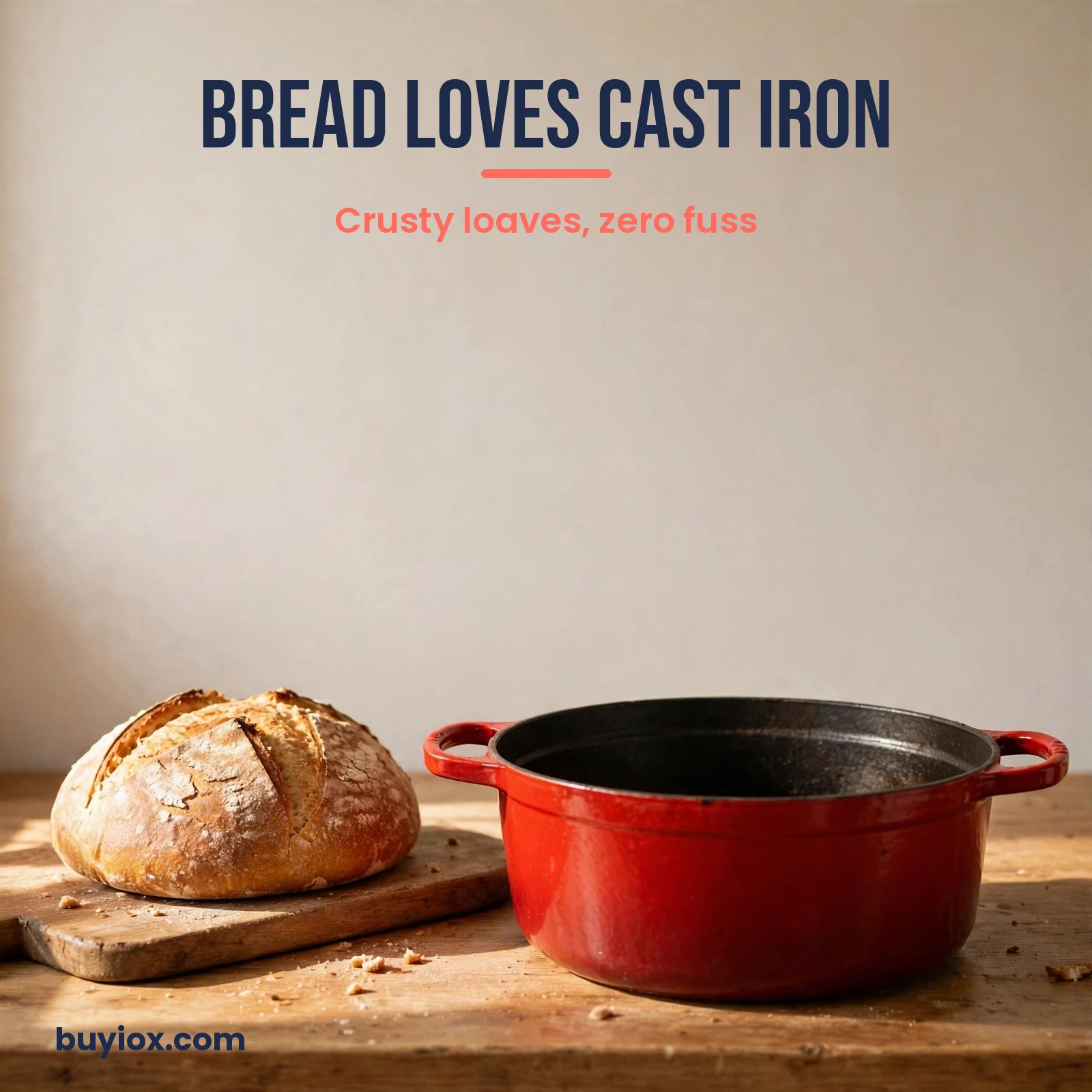
The best Dutch oven for bread is a 5.5 to 6 quart enameled pot with a tight lid and a knob rated to 500F, because bread baking needs trapped steam and a very hot oven. The Lodge 6 quart above is the best value bread pot here: it is oven safe to 500F, it is big enough for a standard no-knead loaf, and it costs around $90. The Le Creuset 5.5 quart above is the best premium bread pot, with the tightest lid fit and the lightest weight for lifting a hot pot out of the oven. The Tramontina 6.5 quart above also bakes bread well, but its 450F pot rating and 400F knob rating make it a poor choice for the hottest bakes, so check your recipe temperature before you buy it for bread. The Cuisinart 7 quart above needs a knob swap for a 500F bake, because its standard knob is rated to 350F. Whichever pot you buy, preheat it in the oven, lower the dough in on parchment, and keep the lid on for the first part of the bake so the steam builds a crusty loaf. A bread-focused comparison of these pots is available at The Bakers Shelf best Dutch oven for bread guide.
Can you put an enameled Dutch oven in the dishwasher?
Yes, some makers say their enameled pots are dishwasher safe, but hand washing is the safer habit, and it takes only a few minutes. The Cuisinart above is dishwasher safe, and Le Creuset and Staub state that their enameled pots are dishwasher safe too, but both makers recommend hand washing to preserve the finish. A dishwasher cycle bangs the pot against other dishes, the harsh detergent dulls the enamel over time, and the damp drying cycle can leave moisture sitting in the rim. Wash with warm soapy water and a soft sponge, dry promptly, and store the lid ajar or with a cloth between the lid and the pot. Hand washing takes two minutes. A dishwasher cycle takes an hour and can chip a pot you meant to keep for life.
Can you use metal utensils in an enameled Dutch oven?
You can, but wooden or silicone utensils are the safer habit. Enameled cast iron is metal-utensil safe by most makers, but a metal spoon knocked against the rim can chip the enamel, and Serious Eats chipped a Lodge rim with a spoon knock during testing. The chip is cosmetic at first, but a chipped rim can spread, and a chipped pot is a damaged pot. Use a wooden spoon for stirring and a silicone spatula for scraping, and lower the lid into place rather than dropping it. Metal tongs are fine for turning meat if you are careful, but do not bang them against the sides. Treat the enamel like glass, not like bare iron, and it lasts.
How do you clean a stained Dutch oven?
For everyday cleaning, wash with warm soapy water and a soft sponge, then dry promptly. For stuck food, fill the pot with warm soapy water and let it soak for an hour, then lift the residue with a wooden spoon or a soft scraper. For stains on a light interior, make a paste of baking soda and water, spread it over the stain, and leave it overnight, then wash as normal. For tougher stains, some owners simmer water with a spoonful of baking soda in the pot for a few minutes, then let it cool and wash it. Never use steel wool, metal scouring pads, or oven cleaner on enamel, because they scratch and chip the coating. And never plunge a hot pot into cold water, because thermal shock can crack the enamel. Patience and baking soda fix almost every stain an enameled pot will ever get.
What should you avoid when buying a Dutch oven?
Avoid four common mistakes. First, do not buy a pot that is too big for your oven, your burner, or your strength, because a pot you cannot lift or fit is a pot you will not use. Second, do not buy on color alone, because prices vary by color and the cheapest color is often the same pot for much less money. Third, do not ignore the knob rating, because a 500F pot with a 350F knob is a 350F pot until you change the knob, and that matters for bread baking. Fourth, do not buy from a third-party seller without checking the seller first, because enamel chips in shipping are reported more often from third-party sellers, and a chipped pot is hard to return. Buy the pot that fits your household, check the knob and the seller, inspect the pot on arrival, and keep the box until you are sure the enamel is sound.
Our Verdict: Which Dutch Oven Should You Buy?
If you want one Dutch oven that does the most for the most cooks, get the Lodge Enameled Cast Iron Dutch Oven 6 Quart. It is the safest first buy here, it braises as well as pots costing many times more, and at around $90 it costs less than a single restaurant dinner for a family. For most cooks, for most kitchens, and for most meals, it is the honest first buy.
If you want the best premium Dutch oven, get the Le Creuset Signature Round Dutch Oven 5.5 Quart, because it gives you the toughest enamel, the lightest premium pot, and the best lid fit, for around $370. If you want the best Dutch oven for braising, get the Staub Round Cocotte 5.5 Quart, with its self-basting lid and matte black browning interior, for around $350. If you want the biggest pot for the least money, get the Tramontina Enameled Cast Iron Dutch Oven 6.5 Quart, for around $60. If you want the biggest pot here, get the Cuisinart Chefs Classic Enameled Cast Iron Dutch Oven 7 Quart, America’s Test Kitchen Best Buy, for around $90. And if you want the cheapest real enameled pot, get the Amazon Basics Enameled Cast Iron Dutch Oven 6 Quart, for around $45.
Whatever you choose, remember the simple rule: treat the enamel like glass, use wooden or silicone utensils, and cook with it often, because a Dutch oven earns its place by being used, not by sitting on a shelf. And if you are still deciding, start with the Lodge. It is the pot the test kitchens keep coming back to, it is one of the cheapest pots on this list, and it is the one you are least likely to regret. A good Dutch oven is quiet, boring, and over in one purchase. Start today, and your next stew might be the first one that tastes the way a stew is supposed to taste.
Was this guide helpful? Share it with a fellow cook whose stockpot just gave up. And if you try one of these Dutch ovens, come back and tell us how your first braise went – your experience helps other cooks choose with confidence.