
Affiliate Disclosure: Buyiox is reader-supported. When you buy through links on this page, we may earn a small commission at no extra cost to you. We only recommend products we would buy with our own money.
You lace up, you head out for your morning run, and halfway through your tracker dies. Or you check your step count at the end of the day and it says 4,000 steps on a day you walked everywhere. Or you buy the shiny new tracker, wear it for a month, and realize the sleep score, the readiness score, and the recovery score all sit behind a monthly subscription you never agreed to in your head. If any of that sounds familiar, you have bought the wrong fitness tracker, and you are not alone. Most people pick a tracker by its looks or its price tag, then discover the real costs later: the dead battery, the wrong numbers, and the paywall.
That is why this guide is different. We picked six trackers that cover every real buying situation, from the best fitness tracker for most people to the best budget fitness tracker that costs less than a dinner out, and we judged them on the things that decide whether you keep wearing one after the first month: how long the battery really lasts, whether the heart rate numbers can be trusted, whether it has its own GPS, and whether the best features are free or locked behind a subscription. Every price below is marked as approximate, because tracker prices move with sales, and every spec comes from the maker or from published reviews, not from a marketing slide.
The honest truth up front: no wrist tracker is perfectly accurate, and no single tracker is right for everyone. A runner who maps routes needs built-in GPS. A light sleeper needs a band so thin it disappears at night. A budget buyer needs a tracker that costs less than the subscription some brands charge in a year. Start with the quick picks below, find the one that matches your life, and then read its full review before you buy.
Our Top 6 Fitness Trackers at a Glance
- Fitbit Charge 6 – Best overall, the only tracker here with built-in GPS
- Garmin Vivosmart 5 – Best for accuracy with no subscription, the lightest screen tracker
- Amazfit Band 7 – Best battery life on a budget, up to 18 days per charge
- Samsung Galaxy Fit3 – Best for Android users, big bright screen for around $60
- Xiaomi Smart Band 9 – Best ultra-budget pick, up to 21 days of battery
- Fitbit Inspire 3 – Best slim everyday tracker, featherweight and 10 days of battery
1. Fitbit Charge 6 – Best Overall
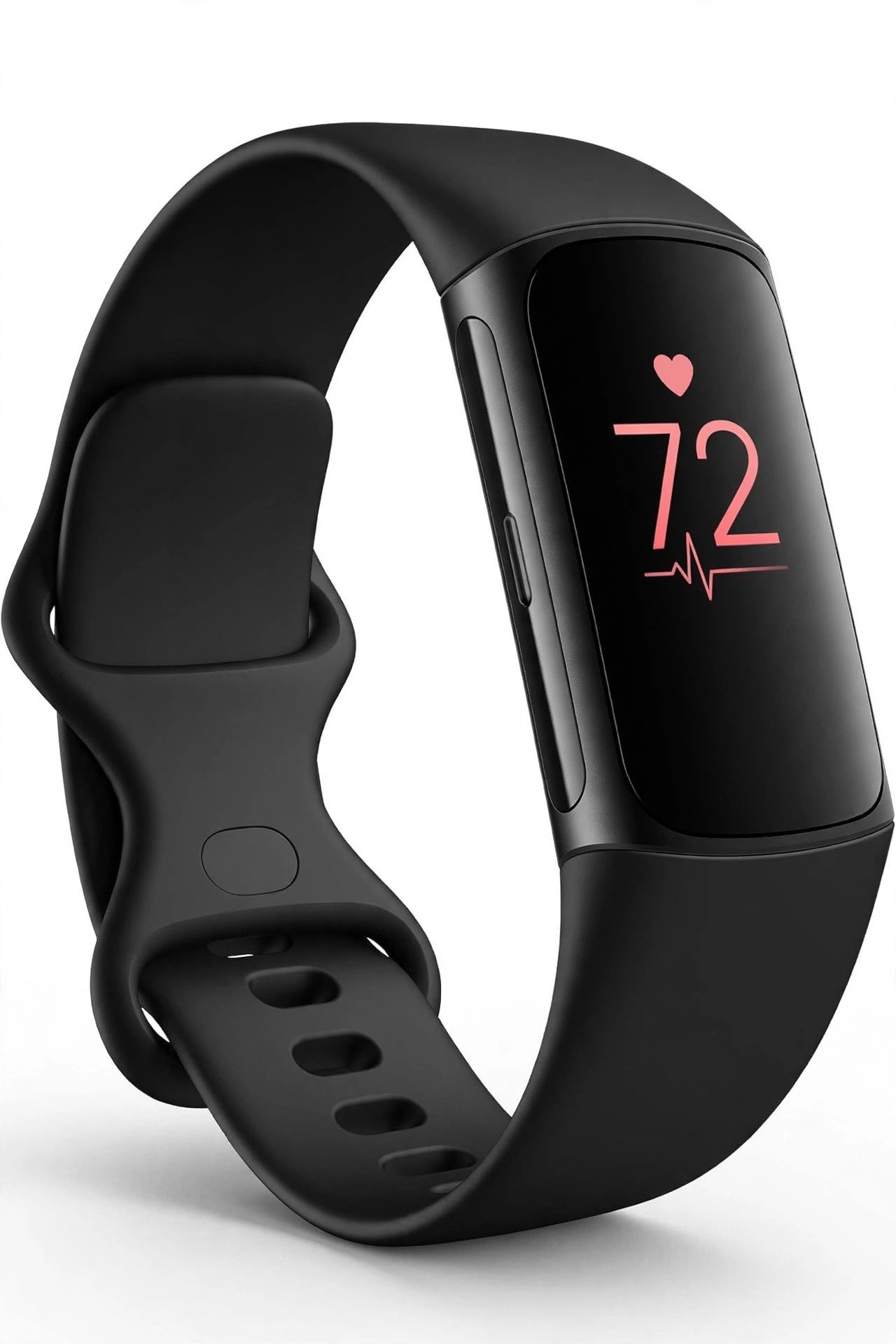
Fitbit Charge 6 (product-style image)
The Fitbit Charge 6 is the best fitness tracker for most people, and the reason is simple: it is the only tracker on this list with built-in GPS, a color touchscreen, and a sensor set that includes ECG and stress sensing, all in a band that weighs around 31 grams. It costs around $160 at list price, though it regularly sells for around $120 to $140 on sale, and for that money you get the most complete tracker Fitbit has ever made. The 1.04-inch color AMOLED touchscreen is bright and readable outdoors, the band comes in black, porcelain, and coral, and it works with both iPhone and Android.
What makes the Charge 6 the best overall pick is the combination of features no rival matches at this price. The built-in GPS and GLONASS map your runs and rides without your phone, which matters every time you want to leave the phone at home. The heart rate sensor uses machine-learning algorithms adapted from the Pixel Watch, and reviewers at DC Rainmaker and Tom’s Guide reported noticeably tighter heart rate tracking during runs and cycling than the Charge 5 managed. The sensor list is long: optical heart rate, SpO2 blood oxygen, ECG for irregular rhythm checks, an EDA stress sensor, skin temperature variation, and a 3-axis accelerometer. It tracks more than 40 exercise modes, it is water resistant to 50 meters, and it puts Google Maps directions, Google Wallet, and YouTube Music controls on your wrist.
The honest trade-offs are real, and you should know them before you buy. First, the standalone GPS is the Charge 6’s weakest point: reviewers at TechRadar and Wareable found slow satellite locks, signal dropouts, and cut corners on outdoor routes when the phone was not along, so runners who care about exact route maps should keep the phone in a pocket or look at a Garmin watch. Second, the battery is rated at up to 7 days, but the always-on display cuts that to around 2 to 3 days, and continuous GPS drains it in about 5 hours. Third, the best insights sit behind Fitbit Premium at $9.99 a month: the Daily Readiness Score and the Sleep Profile need the subscription after the trial, which is a real ongoing cost on a tracker you already paid for. Even with those limits, the Charge 6 does more, more accurately, than any other band at its price, and that is why it leads this list.
Why we like it
- Only tracker here with built-in GPS, so runs map without your phone
- Best heart rate accuracy in the Fitbit range, thanks to the Pixel Watch algorithm
- ECG and EDA stress sensors, plus SpO2 and skin temperature tracking
- Bright 1.04-inch color AMOLED touchscreen, readable outdoors
- Google Maps, Google Wallet, and YouTube Music controls on the wrist
Pros
- Best fitness tracker for most people, the most complete band at its price
- Best pick for runners who want phone-free GPS mapping
- Strongest sleep tracking in the Fitbit range, with stages and a sleep score
Cons
- Standalone GPS accuracy is mixed in reviews, with slow locks and cut corners
- Always-on display cuts battery from 7 days to around 2 to 3 days
- Daily Readiness Score and Sleep Profile need Fitbit Premium at $9.99 a month
Price: around $160 on Amazon, often on sale around $120 to $140
Best for: most people, runners who want built-in GPS, and anyone who wants the most features in one band.
Who should skip it: buyers who refuse subscriptions, where the Garmin Vivosmart 5 gives you every health score for free, and serious runners who need exact GPS, where a Garmin sports watch is the better tool.
2. Garmin Vivosmart 5 – Best for Accuracy, No Subscription
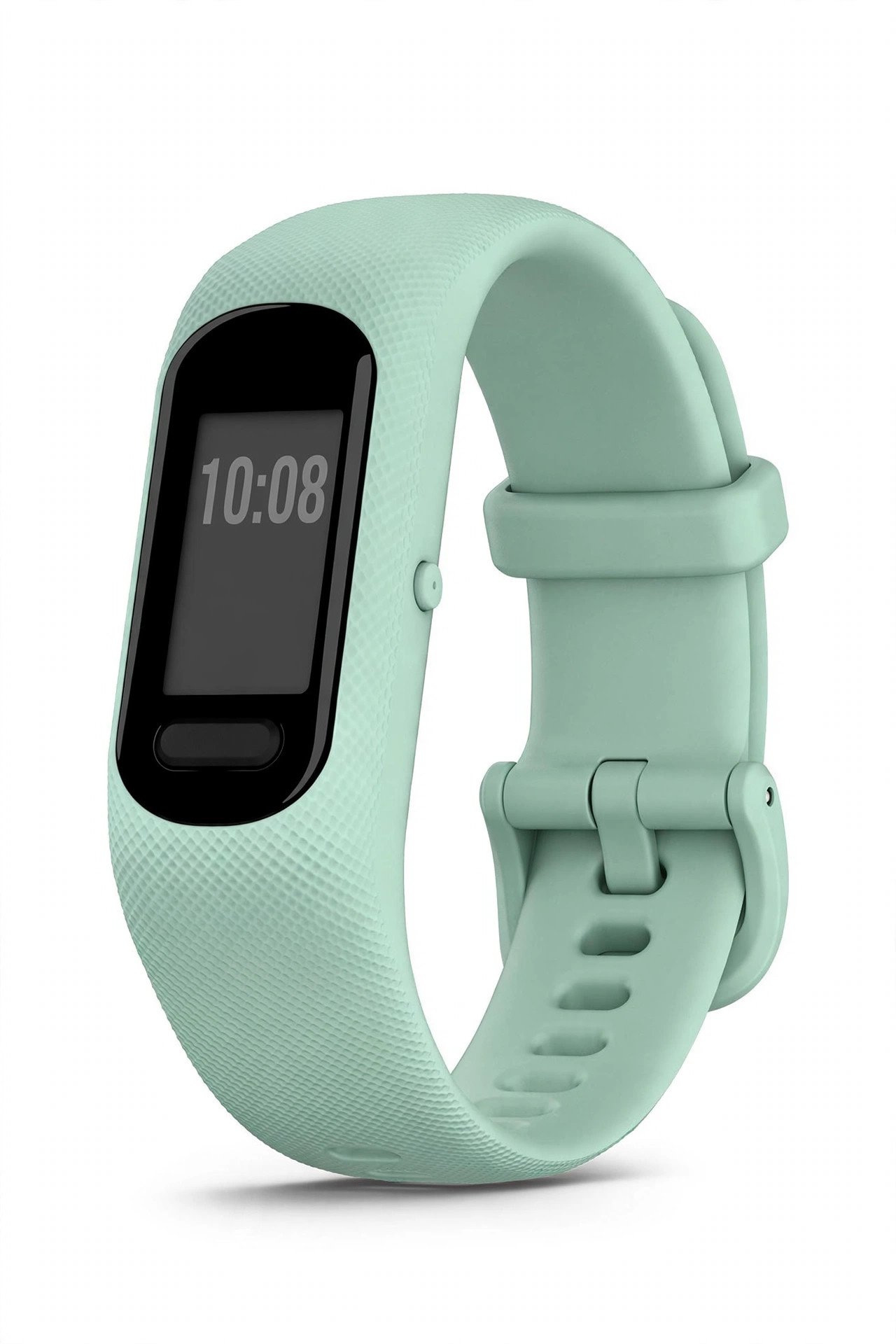
Garmin Vivosmart 5 (product-style image)
If you hate subscriptions and you want the most honest health data in a slim band, the Garmin Vivosmart 5 is your tracker. It costs around $150, it weighs just 24.5 grams in the small and medium size, making it the lightest screen tracker on this list, and every single health feature is free: Body Battery energy monitoring, sleep score, Pulse Ox, stress tracking, respiration tracking, and incident detection all come with no monthly fee and no paywall. Garmin’s own product page made that a selling point at launch, and it is still the Vivosmart 5’s biggest advantage over the Fitbit Charge 6.
What sets the Vivosmart 5 apart is the Garmin Connect app, which is free and genuinely deep. Body Battery shows your energy level through the day, so you can see whether a bad night’s sleep or a hard workout drained you, and the sleep score comes with insights on how to do better tomorrow. The Morning Report greets you with your sleep score, the weather, and your calendar when you wake up. The band tracks walking, running, treadmill, biking, pool swimming, yoga, Pilates, strength, HIIT, and more, with automatic rep counting for strength work. It is water rated to 5 ATM, so it handles swimming and showers, and the battery is rated at up to 7 days, though that drops to around 4 days if you run Pulse Ox all night instead of spot-checking.
Be honest about the trade-offs. The screen is the weak point: a small grayscale OLED, 10.5 by 18.5 mm at 88 by 154 pixels, which is 66 percent larger than the Vivosmart 4 but still tiny and monochrome next to the bright color screens on this list. There is no built-in GPS, so outdoor runs and rides rely on your phone’s GPS. There is no NFC, so no contactless payments. And some reviewers report real-world battery well under the 7-day claim, with one Android Central reviewer unable to get more than two days out of it. The band is also an older design now, and its screen feels dated next to the Amazfit and Xiaomi bands that cost a third as much. But if you want accurate health data, a free app, and a band that disappears on your wrist, nothing else here matches it.
Why we like it
- Every health feature is free, no subscription, no paywall, ever
- Body Battery energy monitoring and sleep score, both genuinely useful
- Lightest screen tracker here at 24.5 grams, comfortable all night
- Morning Report with sleep score, weather, and calendar on waking
- Garmin Connect app is free and deeper than Fitbit’s free tier
Pros
- Best fitness tracker without subscription, the pick for buyers who refuse monthly fees
- Best pick for sleep tracking, light enough to forget you are wearing it
- Strongest free app here, with Body Battery and detailed sleep insights
Cons
- Small grayscale screen feels dated next to the color AMOLED rivals
- No built-in GPS, outdoor routes need your phone along
- No NFC payments, and real-world battery can fall short of the 7-day claim
Price: around $150 on Amazon
Best for: buyers who refuse subscriptions, sleep trackers, and anyone who wants Garmin’s health ecosystem in the lightest possible band.
Who should skip it: runners who need phone-free GPS, where the Fitbit Charge 6 wins, and buyers who want a big bright color screen, where the Galaxy Fit3 or Amazfit Band 7 gives you far more display for far less money.
3. Amazfit Band 7 – Best Battery Life on a Budget
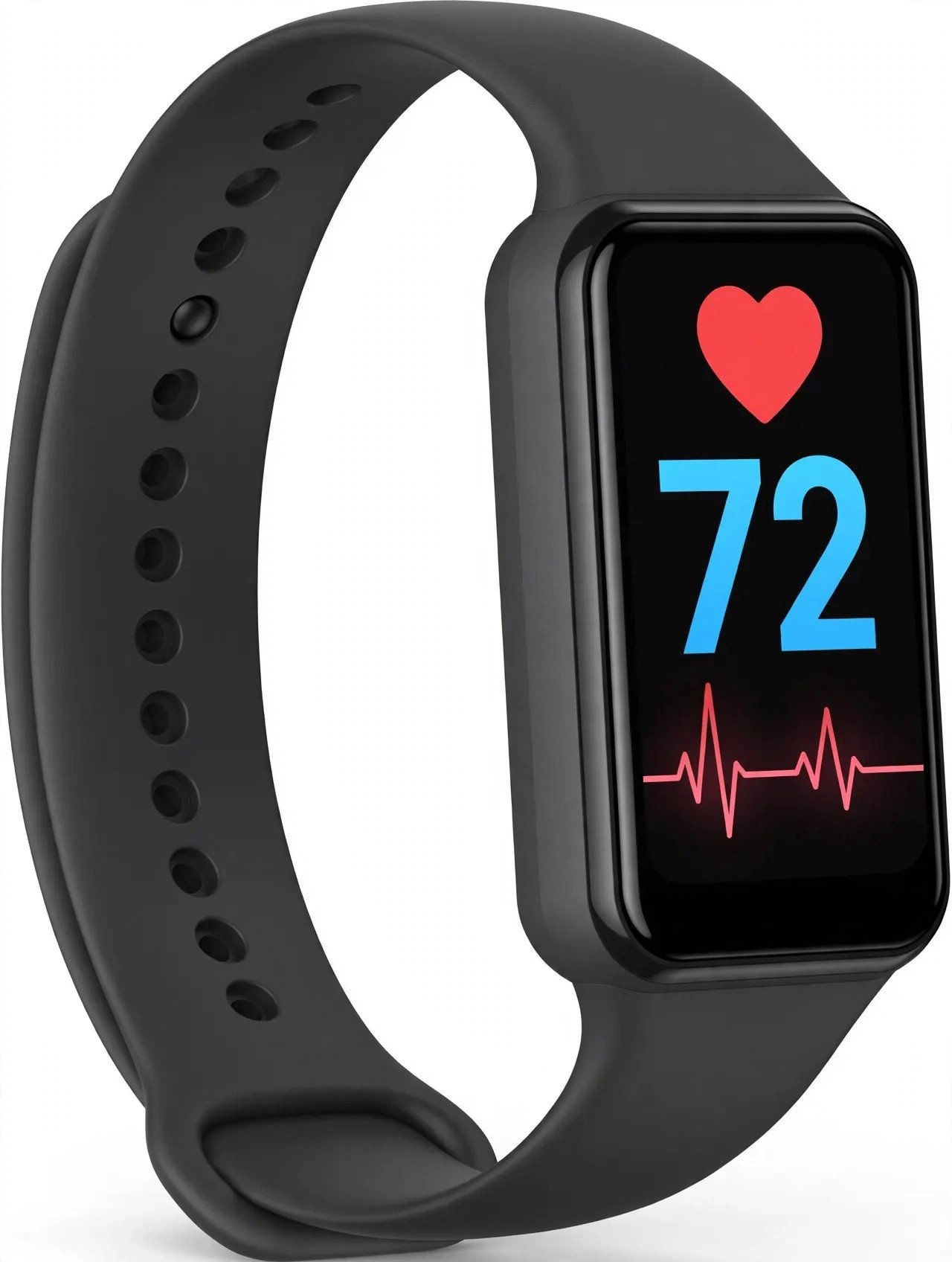
Amazfit Band 7 (product-style image)
The Amazfit Band 7 is the best budget fitness tracker for anyone whose first question is “how often do I have to charge it?” The answer is almost never: Amazfit rates the battery at up to 18 days of typical use, 28 days in battery saver mode, and 12 days under heavy use, from a 232 mAh battery that takes about 2 hours to charge. It costs around $45 to $50, which makes it the cheapest tracker on this list that still feels like a real product, and it pairs that battery with a large 1.47-inch AMOLED display at 198 by 368 pixels, which is bigger and brighter than the screens on trackers costing three times as much.
The Band 7 is not just a long battery with a big screen. It tracks heart rate and blood oxygen around the clock with the BioTracker 3.0 sensor, it covers 120 built-in sport modes, it is water resistant to 5 ATM, and it has Amazon Alexa built in, so you can set alarms, ask questions, and get translations from your wrist, a feature almost unheard of at this price. The Zepp app is free, it shows long-term health trends well, and the PAI score gives you a single number for how active you have been this week. At around $45, the Band 7 is the tracker we recommend to anyone who wants to try fitness tracking without spending real money.
Now the honest problems. There is no built-in GPS, so outdoor runs rely on your phone, and the step and distance accuracy is weaker than Fitbit and Garmin when GPS is not available, because the Band 7 leans on its accelerometer alone. There are no payments, no music storage, and the app, while good for trends, is less polished than Fitbit’s or Garmin’s. The health data is solid for the price but a step below the leaders: heart rate tracking is good, not great, and sleep staging is basic. But none of that changes the value equation. For the price of a takeaway dinner, you get 18 days of battery, a big bright screen, Alexa, and tracking that covers the basics well. If your budget is tight, this is the best fitness tracker you can buy.
Why we like it
- Up to 18 days of battery, more than double the Fitbit and Garmin here
- Large 1.47-inch AMOLED screen, bright and easy to read
- Amazon Alexa built in, rare at this price
- 120 sport modes and 5 ATM water resistance
- Free Zepp app with PAI activity score and health trends
Pros
- Best budget fitness tracker, the most value per dollar on this list
- Best battery life in the budget range, charge it twice a month
- Biggest screen for the money, with Alexa as a bonus
Cons
- No built-in GPS, so outdoor distance accuracy is weaker than Fitbit and Garmin
- Heart rate and sleep tracking are a step below the leaders
- No payments, and the app is less polished than Fitbit or Garmin
Price: around $45 to $50 on Amazon
Best for: budget buyers, anyone who hates charging, and first-time tracker owners who want to try before they spend more.
Who should skip it: runners who need accurate GPS routes, where the Fitbit Charge 6 is the honest pick, and buyers who want the most accurate heart rate data, where Garmin or Fitbit lead.
4. Samsung Galaxy Fit3 – Best for Android Users
Samsung Galaxy Fit3 (product-style image)
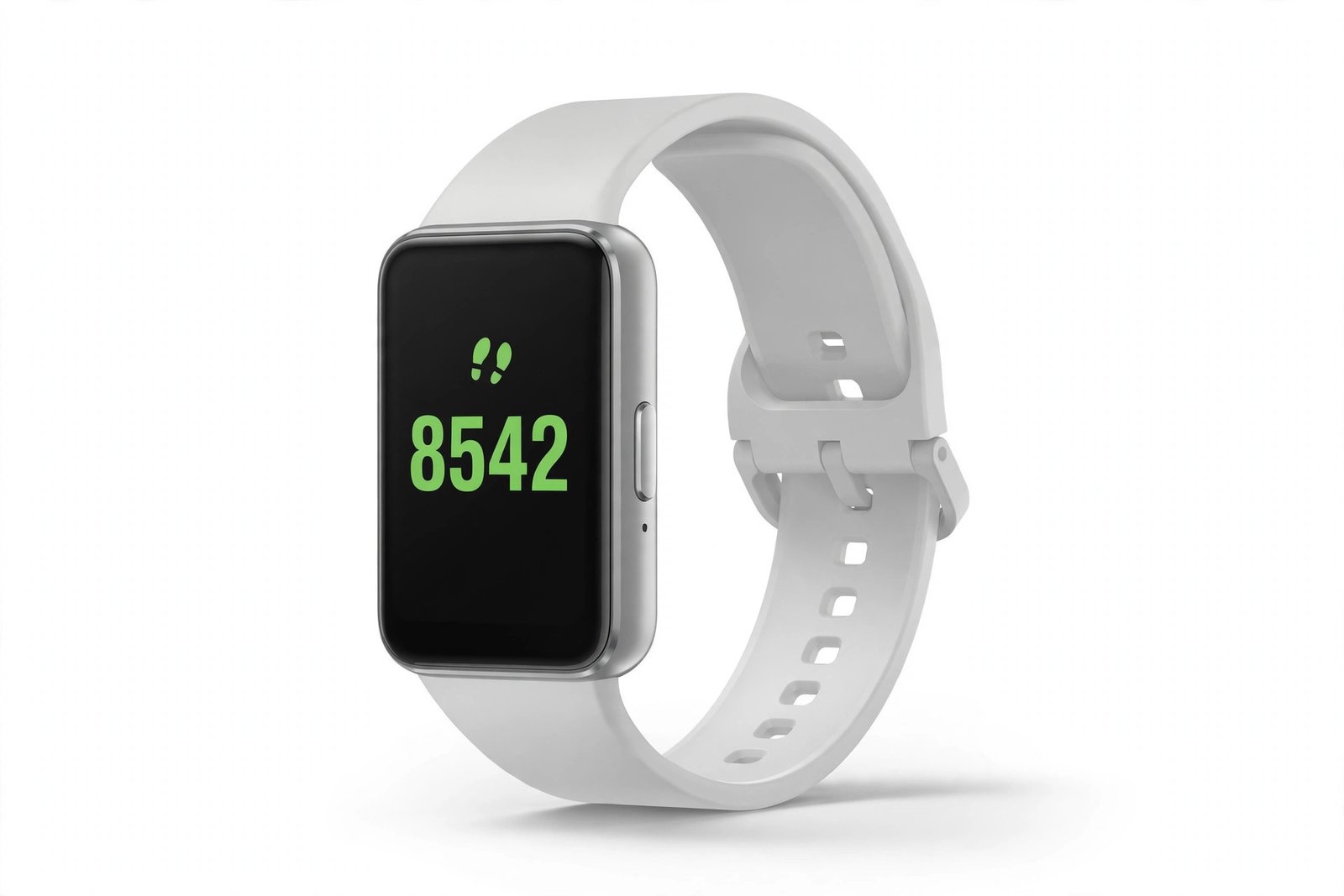
The Samsung Galaxy Fit3 is the best fitness tracker for Android users who want a big, bright screen and a band that feels like it cost twice its price. It costs around $60, it has a 1.6-inch AMOLED display at 256 by 402 pixels, which is 46 percent larger than the Galaxy Fit 2, and the body is slim aluminum that weighs just 18.5 grams without the strap. Samsung rates the battery at up to 13 days, and it charges to 65 percent in about 30 minutes, so even when it does run low, you are back in business before your coffee cools.
The Fit3 covers the essentials well. It tracks heart rate, stress, blood oxygen, and sleep stages, with sleep coaching through the Samsung Health app, and it offers more than 100 workout modes with automatic recognition for running, elliptical, rowing, and pool swimming. It is water resistant to 5 ATM and rated IP68 against dust, so it handles rain, sweat, and swims without a second thought. It works with Android and iOS, though it is clearly happiest inside the Samsung ecosystem, where Samsung Health ties your steps, sleep, and workouts together in one clean app. TechGearLab named it the best budget pick for Android, and the review record backs that up: it is a good tracker at a great price.
Be honest about the battery, because Samsung’s 13-day claim is the most optimistic number on this list. Real-world testing lands closer to 8 or 9 days with the always-on display off, and Samsung’s own specs confirm it drops to around 3.5 days with always-on display on, with some owners reporting as little as 2 days under heavy use. There is no built-in GPS, so outdoor routes need your phone, and there is no subscription, but also no advanced coaching beyond what Samsung Health offers for free. The Fit3 is not the most accurate tracker here, and it is not the longest lasting, but it is the nicest-feeling budget band, with the best screen per dollar and the most polished hardware at this price. If you carry a Samsung phone, this is the natural pick.
Why we like it
- Large 1.6-inch AMOLED screen, the biggest display per dollar here
- Slim aluminum body at just 18.5 grams, light and comfortable
- Fast charging, 65 percent in about 30 minutes
- 100+ workout modes with automatic exercise recognition
- 5 ATM and IP68 water and dust resistance
Pros
- Best fitness tracker for Android users, especially Samsung phone owners
- Best-feeling budget band, with the nicest hardware at this price
- Sleep coaching through Samsung Health, free with no subscription
Cons
- Real battery is 8 to 9 days, well under the 13-day claim, and 3.5 days with always-on display
- No built-in GPS, outdoor routes need your phone
- No advanced coaching beyond Samsung Health’s free features
Price: around $60 on Amazon
Best for: Samsung and Android phone owners, buyers who want the biggest screen for the least money, and anyone who values fast charging.
Who should skip it: iPhone owners who want the deepest app integration, where Fitbit fits better, and runners who need phone-free GPS, where the Charge 6 wins.
5. Xiaomi Smart Band 9 – Best Ultra-Budget Pick
Xiaomi Smart Band 9 (product-style image)
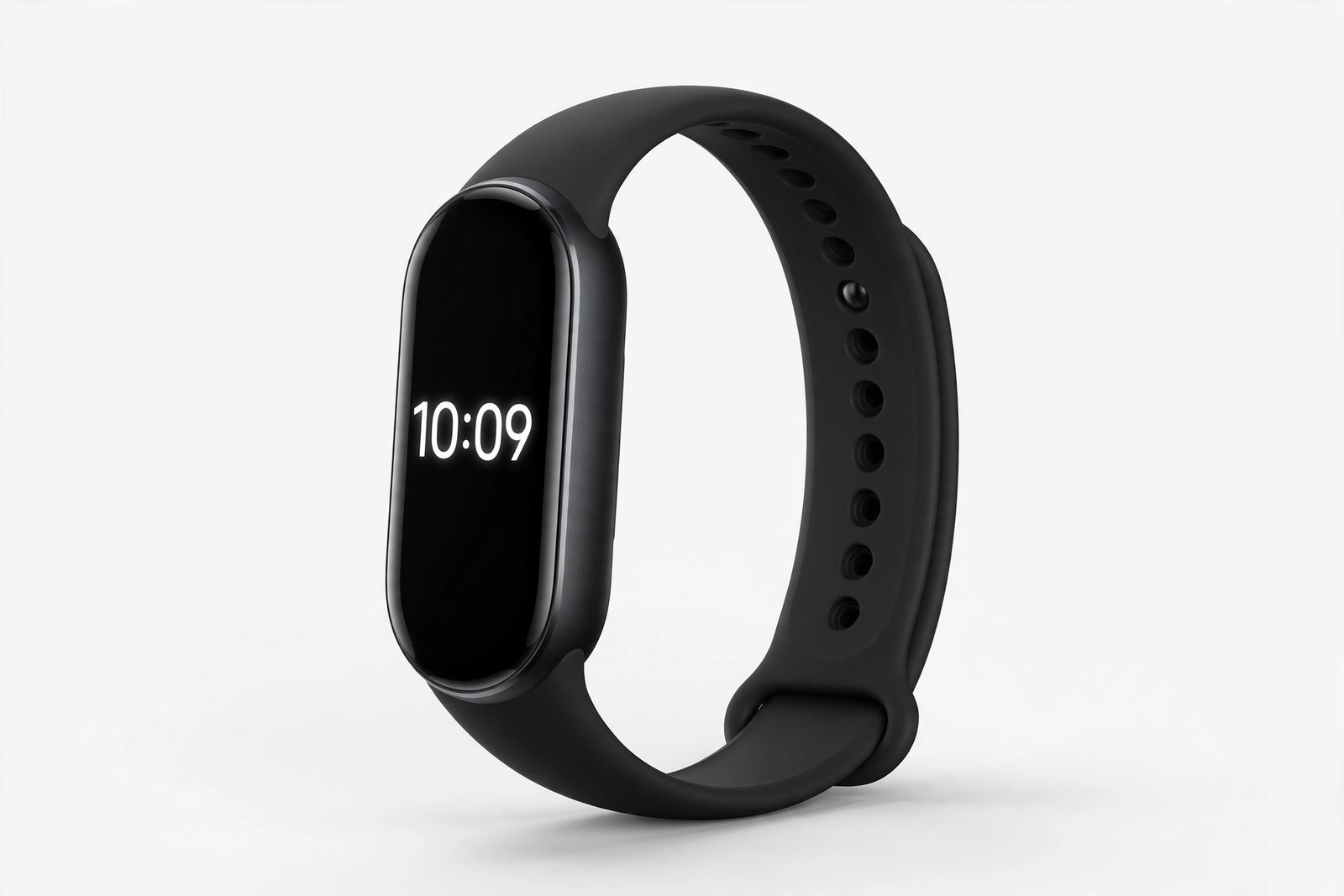
The Xiaomi Smart Band 9 is the cheapest way to get a genuinely good fitness tracker, and it is the longest-lasting tracker on this list by a wide margin. It costs around $60 at list price and often sells for around $40 to $50, and the 233 mAh battery is rated at up to 21 days of typical use, or around 9 days with the always-on display on. The 1.62-inch AMOLED display reaches 1,200 nits of peak brightness, which makes it the brightest screen here and easy to read in direct sunlight, and the whole band weighs just 15.8 grams without the strap, the lightest tracker on this list.
The Smart Band 9 covers more than 150 activities, with auto tracking that works well, and it tracks heart rate, blood oxygen, and sleep with improved sensors over the previous generation. The aluminum alloy frame feels more expensive than the price suggests, the magnetic charger fills the battery in about an hour, and the Mi Fitness app offers more than 100 watch faces and interchangeable straps, including a necklace adapter that turns the band into a fashion accessory. Reviewers at Live Science and Notebookcheck both praised the display and the measurements for the price, and one Live Science tester got nearly a month of battery life in real use. For under $50 on sale, there is no better value in fitness tracking.
The honest limits are the same as every budget band, plus one Xiaomi-specific one. There is no built-in GPS, so outdoor distance relies on your phone, and the step and heart rate accuracy, while good, is a step below Fitbit and Garmin. The Mi Fitness app is the weakest app on this list: it works, but it is less polished, less deep, and less pleasant than Fitbit, Garmin, or Samsung Health. And availability can be awkward in the US, where Xiaomi sells through Amazon and third-party sellers rather than its own stores. But if your budget is under $50 and you want the longest battery and the brightest screen for the money, the Smart Band 9 is the best ultra-budget fitness tracker you can buy.
Why we like it
- Up to 21 days of battery, the longest on this list, and near a month in some tests
- Brightest screen here at 1,200 nits, readable in direct sunlight
- Lightest tracker here at 15.8 grams without the strap
- 150+ sport modes, aluminum frame, and 1-hour charging
- Often sells for around $40 to $50, the cheapest real tracker here
Pros
- Best ultra-budget fitness tracker, unbeatable value under $50
- Best battery life overall, and the brightest screen for outdoor use
- Featherweight and comfortable enough to wear all day and night
Cons
- No built-in GPS, so outdoor distance needs your phone
- Mi Fitness app is the least polished app on this list
- Heart rate accuracy is a step below Fitbit and Garmin
Price: around $60 on Amazon, often on sale around $40 to $50
Best for: tight budgets, buyers who want the longest battery, and anyone who reads their tracker outdoors in bright sun.
Who should skip it: buyers who want a polished app and the most accurate data, where Fitbit or Garmin justify their higher price, and runners who need GPS without a phone.
6. Fitbit Inspire 3 – Best Slim Everyday Tracker
Fitbit Inspire 3 (product-style image)
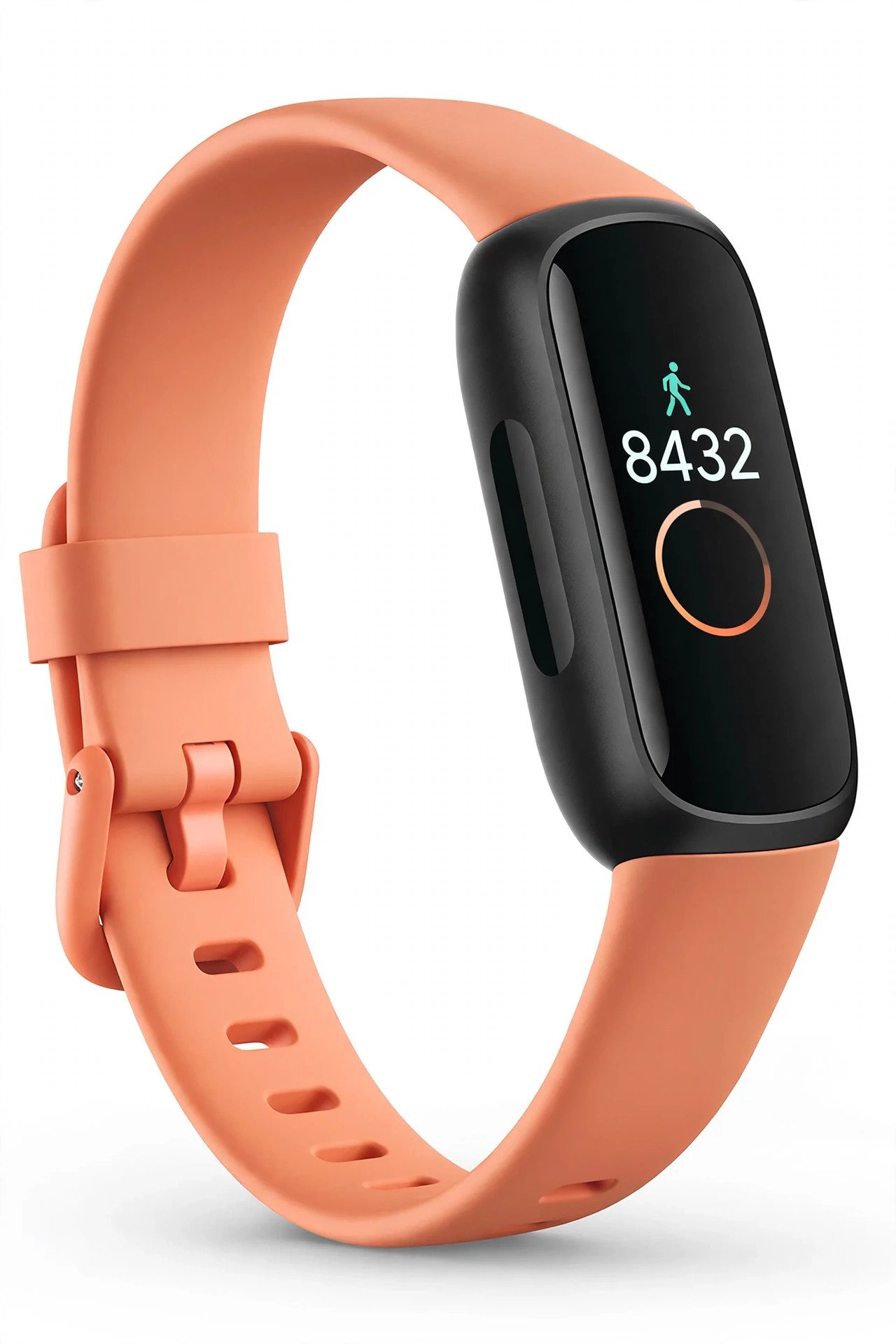
The Fitbit Inspire 3 is the best fitness tracker for beginners and for anyone who wants a tracker that disappears on the wrist. It costs around $100 at list price and often sells for around $70 to $88, it weighs just 17.7 grams without the band, and it is the slimmest tracker on this list, a pebble-shaped band that you genuinely forget you are wearing. That matters more than it sounds: sleep tracking only works if you wear the band to bed, and the Inspire 3 is the easiest tracker here to sleep in, night after night.
The Inspire 3 covers the basics properly. The 0.76-inch color AMOLED touchscreen is small but bright and readable in daylight, the battery lasts up to 10 days, and it tracks heart rate around the clock, SpO2 blood oxygen, skin temperature variation, and sleep stages, with Active Zone Minutes that tie your movement to heart rate zones rather than just counting steps. It auto-detects walking, running, and cycling, it is water resistant to 50 meters, and it comes with six months of Fitbit Premium included, so you get the Daily Readiness Score and Sleep Profile free for the first half year. Android Authority called it the best all-round budget fitness tracker, and Tom’s Guide picked it over the Charge 6 for buyers on a budget.
Be honest about the limits. The screen is small, with thick bezels, and reading notifications on it is a chore, with text often cut off. There is no built-in GPS, so runs and rides rely on your phone. There are only 6 sport modes on the device itself, against more than 40 on the Charge 6. And after the six free months, the Daily Readiness Score and Sleep Profile need Fitbit Premium at $9.99 a month, the same paywall as the Charge 6. But for a beginner who wants reliable steps, heart rate, and sleep tracking in the lightest, cheapest Fitbit, the Inspire 3 is the right buy. Pair it with our guide to the best wireless earbuds for a complete workout setup that costs less than one smartwatch.
Why we like it
- Featherweight at 17.7 grams, the easiest tracker here to wear all night
- Up to 10 days of battery, longer than the Charge 6 and the Vivosmart 5
- Bright color AMOLED screen, a big upgrade over the old monochrome Inspire 2
- Full sleep staging, SpO2, and skin temperature tracking
- Six months of Fitbit Premium included
Pros
- Best fitness tracker for beginners, the simplest and lightest Fitbit
- Best pick for sleep tracking on a budget, comfortable enough to forget
- Cheapest way into the Fitbit app and its sleep insights
Cons
- Small screen makes notifications hard to read
- No built-in GPS, and only 6 sport modes on the device
- Best insights need Fitbit Premium after the six free months
Price: around $100 on Amazon, often on sale around $70 to $88
Best for: beginners, light sleepers, and anyone who wants the lightest Fitbit for the least money.
Who should skip it: runners who need GPS and many sport modes, where the Charge 6 is worth the extra money, and buyers who want a big screen, where the Galaxy Fit3 or Amazfit Band 7 give you far more display.
Fitness Tracker Comparison Table
| Tracker | Best For | Battery Life | Built-in GPS | Screen | Around Price |
|---|---|---|---|---|---|
| Fitbit Charge 6 | Most people | 7 days | Yes | 1.04-inch AMOLED color | ~$160 |
| Garmin Vivosmart 5 | No subscription | 7 days | No, phone GPS | 0.66-inch OLED grayscale | ~$150 |
| Amazfit Band 7 | Budget battery life | 18 days | No, phone GPS | 1.47-inch AMOLED | ~$45-50 |
| Samsung Galaxy Fit3 | Android users | 13 days claimed | No, phone GPS | 1.6-inch AMOLED | ~$60 |
| Xiaomi Smart Band 9 | Ultra-budget | 21 days | No, phone GPS | 1.62-inch AMOLED | ~$60 |
| Fitbit Inspire 3 | Slim everyday wear | 10 days | No, phone GPS | 0.76-inch AMOLED color | ~$100 |
How Accurate Are Fitness Trackers, Really?
Before you spend a dollar, you deserve the honest answer about accuracy, because it is the one thing no tracker box will tell you. Wrist trackers measure heart rate with light: an optical sensor shines light into your skin and watches the blood flow underneath. That works well when you are sitting still, and less well when you are moving hard, sweating, or gripping a handlebar, because every bounce and every shift of the band changes the reading.
The evidence backs that up. In a Cleveland Clinic study, researchers fitted 50 healthy volunteers with wrist trackers, a chest strap, and a clinical EKG, then worked them on a treadmill, a bike, and an elliptical. The chest strap closely matched the EKG, while the wrist devices were off by 15 to 34 beats per minute depending on the activity. The wrist trackers were mostly acceptable on the treadmill and fairly inaccurate on the bike and the elliptical, and accuracy generally fell as effort rose. The Cleveland Clinic researchers concluded that wrist-worn monitors are less accurate than a chest strap, and that anyone who needs to know their heart rate with accuracy, for example for training or for a heart condition, should use a chest strap.
That sounds damning, but keep it in perspective. The trackers in that study were older models, and heart rate sensors have improved a lot since, especially Fitbit’s machine-learning sensor on the Charge 6 and Garmin’s Elevate sensor on the Vivosmart 5. Independent lab tests from TechRadar’s long-running fitness tracker testing find that the best wrist trackers now hold up well for steady runs and cycling, with the biggest errors showing up during interval training and weightlifting, when the wrist moves unpredictably. Steps are the most reliable number: most wearables count steps well, though they can overcount when you wave your arms or drive on a bumpy road. Calories are the least reliable number: every tracker estimates them from a formula, and no wrist device measures them directly, so treat the calorie count as a rough guide, not a fact.
The practical rule is simple. Use your tracker for trends, not for single numbers. If your resting heart rate falls over a month, you are getting fitter. If your sleep score climbs after you fix your bedtime, the change is real. If your step count doubles, you moved more. But do not argue with your doctor over a single heart rate reading from your wrist, and do not plan your meals around a calorie burn number. A tracker is a coach that watches your patterns. It is not a medical device, and the best trackers are honest about that.
Buying Guide: How to Choose the Right Fitness Tracker
A fitness tracker looks simple on the shelf, but the wrong one dies mid-run, hides its best features behind a paywall, or sits in a drawer after two weeks because it is too heavy to sleep in. Match the tracker to your life first, then check the battery, then check the subscription, because those three answers decide everything else.
1. Start with how you will actually use it, not the spec sheet
A runner who maps routes needs built-in GPS, and only the Fitbit Charge 6 on this list has it. A swimmer needs 5 ATM water resistance, which all six trackers here have, so any of them works in the pool. A light sleeper needs a band under 20 grams that disappears at night, which points to the Xiaomi Smart Band 9 at 15.8 grams, the Fitbit Inspire 3 at 17.7 grams, or the Galaxy Fit3 at 18.5 grams. A gym-goer who lifts weights should know that wrist heart rate is least accurate during lifting, so the tracker matters less than the habit. Buy for your real routine, not for a routine you hope to start.
2. Check the battery claim against real life, not the box
Every maker quotes battery life with the always-on display off, notifications low, and workouts light. Real life is different. The Fitbit Charge 6 drops from 7 days to 2 or 3 days with always-on display on. The Galaxy Fit3 drops from a claimed 13 days to 8 or 9 days in normal use, and to 3.5 days with always-on display. The Xiaomi Smart Band 9 drops from 21 days to around 9 days with always-on display. If you hate charging, buy for the worst case, not the best: the Amazfit Band 7 and the Xiaomi Smart Band 9 still give you two to three weeks even with heavy use, which is why they lead this list on battery. And keep a charger where you can reach it: a tracker with a dead battery is a bracelet. Our guide to the best portable chargers covers the small power banks that top up a tracker on the go.
3. Work out the real cost, including the subscription
The price on the box is not the price of the tracker. Fitbit Premium costs $9.99 a month, which is about $120 a year, and it locks the Daily Readiness Score and the Sleep Profile behind it on both the Charge 6 and the Inspire 3. Over two years, a $160 Charge 6 with Premium costs more than $390. The Garmin Vivosmart 5, the Amazfit Band 7, the Galaxy Fit3, and the Xiaomi Smart Band 9 charge no subscription at all, so the price on the box is the price you pay. If you refuse monthly fees, the Garmin is the premium pick and the Amazfit is the budget pick, and both give you every health score for free. Always add two years of subscription to the price before you compare.
4. Pick the screen you will actually read
Screens decide whether you glance at your tracker or ignore it. A big bright AMOLED, like the 1.62-inch screen on the Xiaomi Smart Band 9 or the 1.6-inch screen on the Galaxy Fit3, is easy to read in sunlight and shows more information at a glance. A small screen, like the 0.76-inch display on the Inspire 3 or the grayscale screen on the Vivosmart 5, is harder to read and shows less, but it uses less battery and keeps the band slim. If you read notifications on your wrist, buy a big screen. If you only check steps and time, a small screen is fine, and the battery will thank you.
5. Make sure it fits your phone and your life
Every tracker here works with iPhone and Android, but the experience is not equal. Fitbit works the same on both. Garmin works the same on both. Samsung Health is best on Samsung phones. Xiaomi’s Mi Fitness app is functional on both but polished on neither. Check the app before you buy the band: read recent reviews of the app itself, not just the hardware, because you will live in the app every day. And check the band sizes: the Vivosmart 5 comes in small/medium and large, the Charge 6 includes small and large bands in the box, and the others are one size with adjustable straps. A tracker that does not fit will not be worn, and a tracker that is not worn tracks nothing.
6. Wear it for two weeks before you judge it
A fitness tracker needs two weeks of daily wear before its numbers mean anything. Resting heart rate, sleep patterns, and step baselines all need time to settle, and the first few days are noisy: a new band feels strange, the sleep score looks random, and the step count seems wrong. Wear it every day, charge it on the same day each week, and compare week two with week one, not day one with day two. If the numbers still look wrong after two weeks, check the fit: the band should sit snug above the wrist bone, not loose and sliding, because a loose band is the most common cause of bad heart rate readings. And if you train with music, pair your tracker with our guide to the best noise cancelling headphones under $100 for a workout setup that blocks the gym noise and keeps you moving.
Frequently Asked Questions
Do fitness trackers need a subscription?
Some do, and some do not, and the difference is worth real money. Fitbit charges $9.99 a month for Premium, which locks the Daily Readiness Score and the Sleep Profile on the Charge 6 and the Inspire 3, though both trackers include a free trial, and the Inspire 3 includes six months free. Garmin, Amazfit, Samsung, and Xiaomi charge no subscription at all: every health score on the Vivosmart 5, the Band 7, the Galaxy Fit3, and the Smart Band 9 is free. If you refuse monthly fees, buy the Garmin Vivosmart 5 for the premium experience or the Amazfit Band 7 for the budget one.
Are fitness trackers accurate for heart rate and steps?
Mostly, with limits you should know. Wrist heart rate is good at rest and during steady exercise like running, and less accurate during intense exercise, weightlifting, and cycling, where the wrist moves unpredictably. In a Cleveland Clinic study, wrist trackers were off by 15 to 34 beats per minute depending on the activity, while a chest strap closely matched the clinical EKG. Step counts are the most reliable number, though they can overcount when you wave your arms. Calories are the least reliable: every tracker estimates them from a formula, so treat the number as a rough guide. Use your tracker for trends over weeks, not for single readings.
Fitness tracker vs smartwatch: which should I buy?
Buy a fitness tracker if you want long battery life, a light band, and health tracking without distractions: the trackers here last 7 to 21 days, weigh 16 to 31 grams, and cost $45 to $160. Buy a smartwatch if you want apps, calls, and a big screen on your wrist, and you accept charging every day or two and paying $200 or more. Most people who buy a smartwatch for fitness end up using it as a tracker anyway, and most people who buy a tracker never miss the apps. If you are not sure, start with a tracker: it costs less, lasts longer, and tells you whether you actually want a screen on your wrist all day.
How long do fitness tracker batteries last?
It depends on the tracker and on the always-on display. The Xiaomi Smart Band 9 lasts up to 21 days, the Amazfit Band 7 up to 18 days, the Galaxy Fit3 up to 13 days claimed but 8 to 9 days in real use, the Fitbit Inspire 3 up to 10 days, and the Fitbit Charge 6 and Garmin Vivosmart 5 up to 7 days. Turning on the always-on display cuts battery sharply on every tracker here, often by half or more. The honest rule: budget trackers last two to three weeks, premium trackers last about a week, and any tracker lasts far less with the screen always on.
Can I swim with a fitness tracker?
Yes, with all six trackers on this list. Every one is rated 5 ATM, which means water resistant to 50 meters, so they handle swimming, showering, and rain without a problem. The Galaxy Fit3 adds an IP68 dust rating as well. Two things to remember: rinse the band with fresh water after swimming in a chlorinated pool or the sea, because chlorine and salt dry out silicone over time, and do not press buttons underwater, because that can push water past the seals. None of these trackers is rated for diving, so leave them on the shore for scuba.
Do fitness trackers work without a phone?
Partly. Every tracker here counts steps, measures heart rate, and tracks sleep without a phone nearby, and the Fitbit Charge 6 maps runs with its built-in GPS even when the phone stays home. But the other five trackers need your phone for GPS routes, and all six need a phone to sync data, view detailed trends, and update their software. Think of the phone as the tracker’s memory: the band records all day, and the phone shows you what it recorded. You can leave the phone at home for a run with the Charge 6, but you will still need it to see the full picture afterwards.
Which fitness tracker is best for sleep tracking?
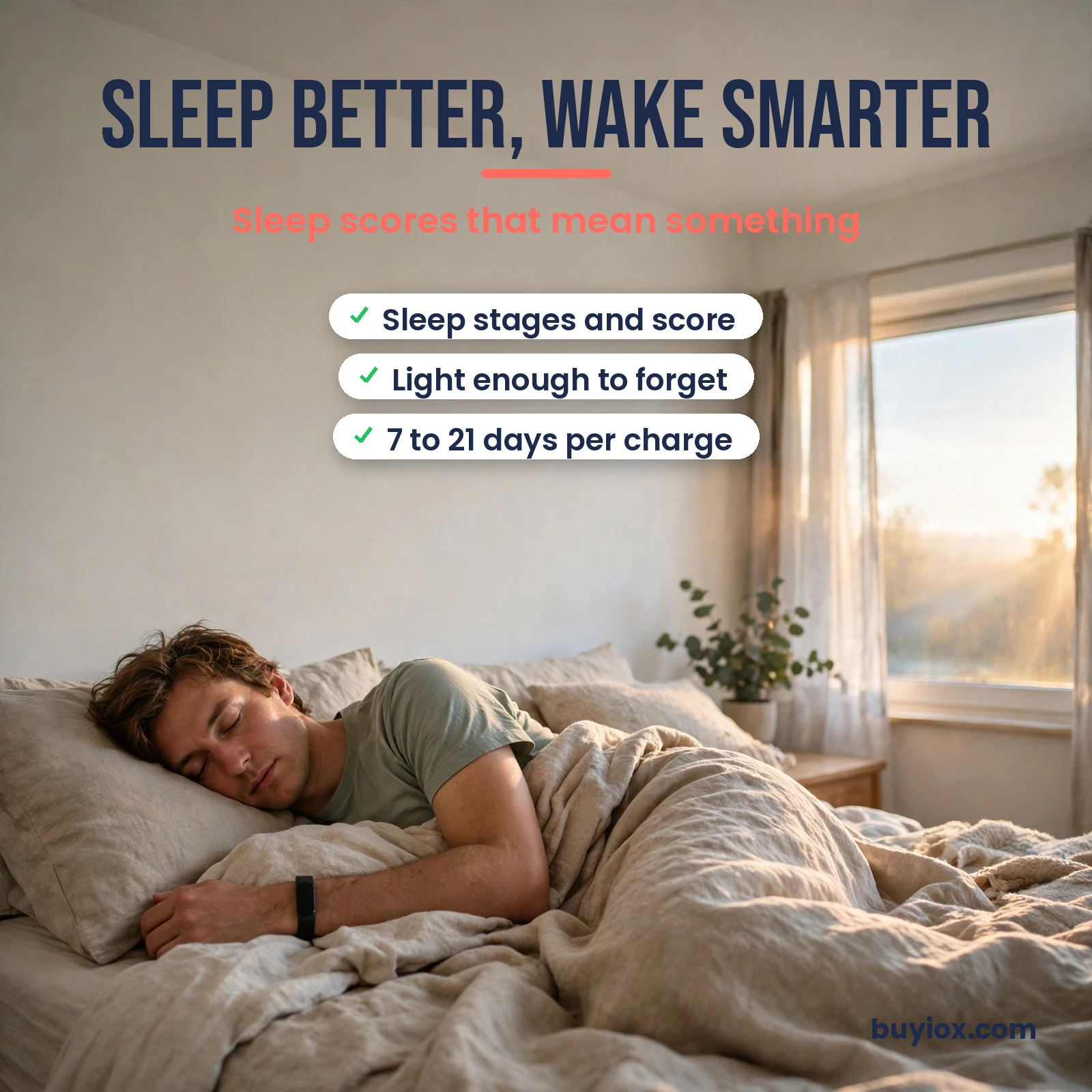
The best sleep tracker is the one you actually wear to bed, which makes weight and comfort the deciding factors. The Fitbit Inspire 3 at 17.7 grams and the Xiaomi Smart Band 9 at 15.8 grams are the easiest to forget overnight, and Fitbit’s sleep staging is the most detailed, with stages and a sleep score, though the full Sleep Profile needs Premium. The Garmin Vivosmart 5 is nearly as light at 24.5 grams and gives you a sleep score and insights for free, with no subscription. The Amazfit Band 7 and Galaxy Fit3 also track sleep stages well for their price. Avoid heavy bands for sleep, and avoid any tracker whose battery dies overnight: charge in the morning, not at night.
Our Verdict: Which Fitness Tracker Should You Buy?
If you want one fitness tracker that does the most for the most people, get the Fitbit Charge 6. It is the only tracker here with built-in GPS, it has the best heart rate accuracy in the Fitbit range, its sleep tracking is the most detailed, and at around $160, often on sale for less, it is the most complete band you can buy. For a runner, a gym-goer, or anyone who wants the most features in one band, the Charge 6 is the honest first buy.
If you refuse to pay a subscription, get the Garmin Vivosmart 5, because every health score is free, Body Battery and the sleep score are genuinely useful, and the band is light enough to wear all night. If your budget is tight, get the Amazfit Band 7, with 18 days of battery and a big bright screen for around $45 to $50, or the Xiaomi Smart Band 9, with 21 days of battery and the brightest screen here for around $60. If you carry a Samsung phone, get the Samsung Galaxy Fit3, with the nicest hardware and the biggest screen per dollar. And if you want the lightest, simplest Fitbit for everyday wear and sleep, get the Fitbit Inspire 3, with 10 days of battery in a band you will forget you are wearing.
Whatever you choose, remember the simple rule: wear it every day for two weeks, judge it by the trends, charge it on the same day each week, and do not pay for a subscription until you know which scores you actually use. A tracker does not make you fit. It shows you what you already do, and that is enough to change it. Start today, and your next run, your next night’s sleep, and your next week will all be measured, which is the first step to improving them.
Was this guide helpful? Share it with a friend who is still guessing about their steps. And if you try one of these trackers, come back and tell us how you liked it – your experience helps other buyers choose with confidence.