A lot of people ask this because it feels like an easy idea: “I have a leash. Can I just secure my dog with it in the car?”
You can secure your dog using a “leash idea,” but you need to do it the safe way. If you do it the wrong way, a leash can pull on your dog’s neck during a sudden stop, and that’s not what anyone wants.
So in this guide, I’ll show you:
- The safest way to “leash-secure” your dog (without choking risk)
- The simple setup that keeps your dog in the back seat
- What to avoid (very important)
- quick fixes if your dog tangles or still jumps forward
Quick answer (2~4 lines)
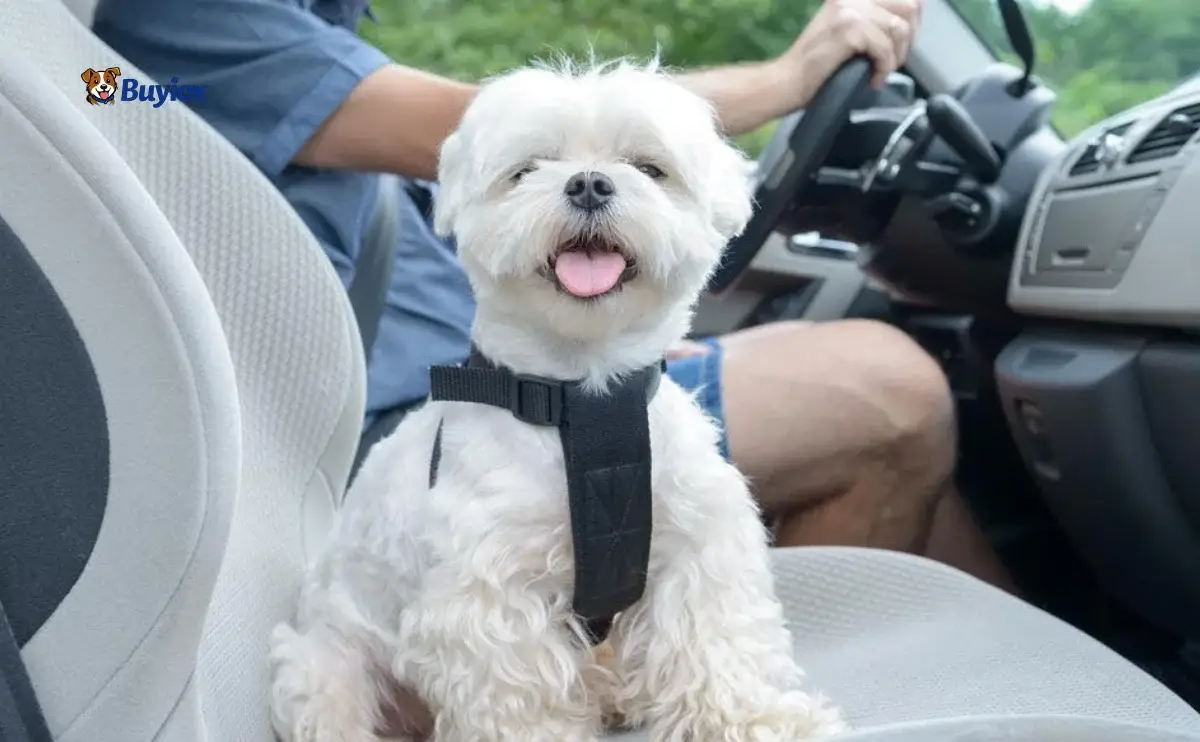
The safest method is: harness + seat belt tether (not a leash clipped to a collar). It limits roaming, keeps your dog in the back seat, and reduces distractions while you drive.
First: Is it safe to use a leash in the car?
Here’s the honest answer in simple words:
A leash on a collar is not a good idea
If the car stops suddenly, the leash can pull hard on your dog’s neck. That can hurt your dog.
A leash-like setup on a harness can be okay.
A harness spreads force across the chest/body instead of the neck. That’s why most safer car setups use a harness + tether.
So when people say “secure my dog with a leash,” what they usually actually need is a tether that works like a leash but is made for car travel.
The safest setup (the one most dog owners should use)
Harness + seat belt tether (best for most cars)
This setup does 3 helpful things:
- It keeps your dog in the back seat zone, so they don’t climb to the front.
- It reduces pacing and jumping, which can lower anxiety for many dogs.
- It makes driving safer because there are fewer distractions.
Safety reminder: always clip to a harness, not a collar.
Step-by-step: How to secure your dog (easy, real-life method)
Step 1: Put a harness on your dog
Make sure it fits snug but not tight. You should be able to fit two fingers under the straps.
A well-fitted harness helps your dog feel secure and reduces twisting if they move.
Step 2: Attach a seat belt tether to the harness
Clip the tether to the harness ring. Then attach the other end to the car’s seat belt buckle or belt system (depending on the tether style).
This works like a “seat belt leash” but is designed to limit movement safely.
Step 3: Adjust the length (this part matters)
Your dog should be able to:
- sit normally
- lie down comfortably
- turn a little to settle
But your dog should NOT be able to:
- Jump into the front seat
- hang their head out far
- bounce from one side to the other
A good length feels “comfortable but controlled.”
Step 4: Create a stable back-seat area
Dogs bark and jump more when they slip. A seat cover or hammock can help your dog feel stable and also protect your car.
“But I only have a leash” what you can do (safer option)
If you only have a leash right now and need a temporary solution:
- Use the leash only with a harness, never with a collar.
This reduces neck risk if the car stops quickly. - Keep the leash short enough that your dog stays in the back seat area.
If the leash is long, your dog can tangle, climb forward, or step into unsafe gaps. - Avoid tying a leash to random car parts.
Some attachment points can break or create sharp angles that cause tangles.
Best long-term fix: get a proper tether made for car travel. It’s cleaner, simpler, and usually less tangly.
Common problems (and simple fixes)
Problem 1: “My dog keeps jumping into the front seat.”
Fix: shorten the tether length slightly so your dog can’t reach the front.
Also, make sure your dog has a stable place to sit/lie down in the back seat (a cover/hammock helps).
Problem 2: “The leash/tether tangles.”
Fix: Use a swivel-style clip if available and keep the length “just enough.”
Long lines tangle more because the dog can rotate and wrap them around its legs.
Problem 3: “My dog cries when restrained.”
Fix: start with tiny practice rides (2~3 minutes).
Reward calm behavior and give a simple,e calm job like a chew. Many dogs adjust when rides become predictable.
Problem 4: “My dog slips on the seat and panics.cs”
Fix: add a non-slip cover/hammock.
Slipping often triggers barking, whining, and frantic movement.
What NOT to do (very important)
Here are the mistakes that cause the most trouble:
- Don’t clip a leash to a collar in the car.
This can pull the neck during sudden stops. - Don’t leave a long leash loose.
Long lines increase tangles and allow jumping forward. - Don’t let the dog roam freely while driving.
Even friendly dogs can become dangerous distractions during a quick brake or turn. - Don’t place the dog in the front seat area.
It’s risky and also leads to more jumping, more barking, and more mess.
-
Can I secure my dog in the car with a leash?
You can, but only safely if the leash is attached to a harness, not a collar. A proper seat belt tether is usually the safest and easiest “leash-like” option for car travel.
-
Is it safe to attach a leash to a dog collar in the car?
It’s not recommended because a sudden stop can pull hard on your dog’s neck. A harness spreads force across the body and is a safer attachment point.
-
How tight should a dog seat belt tether be?
It should allow your dog to sit and lie down comfortably, but it should prevent jumping into the front seat. “Comfortable but controlled” is the goal.
-
How do I stop my dog from jumpiinto to the front seat?
Use a harness with a seat belt tether adjusted short enough to keep your dog in the back seat. A stable seat cover or hammock also helps reduce movement and slipping.
-
What’s the best way to secure a dog in the back seat?
For most dogs, a harness + adjustable seat belt tether is the simplest option. It limits roaming and makes the ride calmer and less distracting for the driver.