
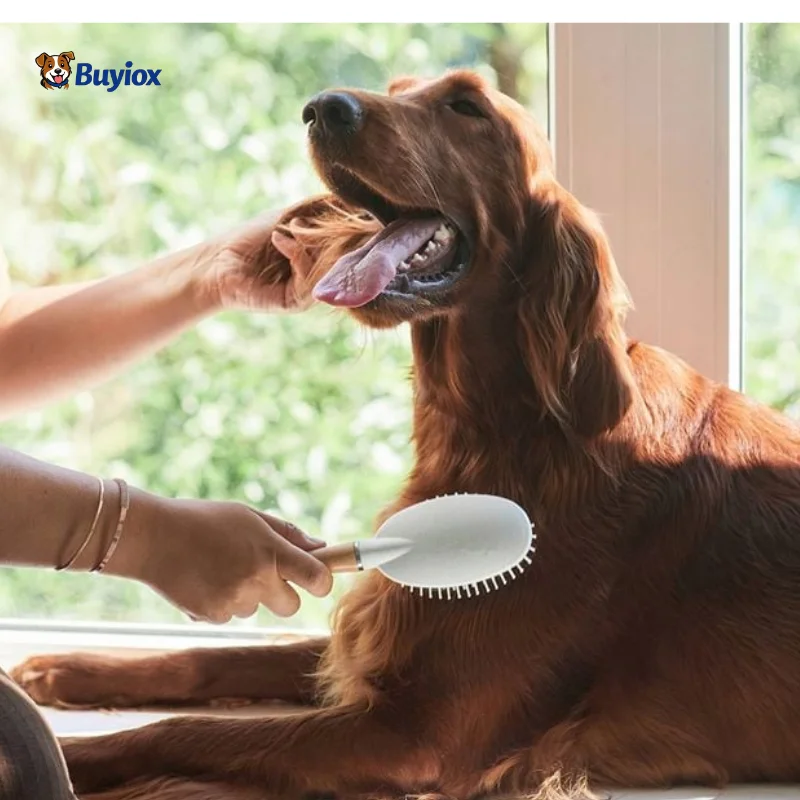
If you live with a dog, you will see hair. That part is normal.
But some days it feels like your dog is making a new sweater on your couch, your floor, and your clothes. You clean, then the hair comes back the next day. That can feel frustrating, especially if you have kids, guests, allergies, or you want your home to look tidy.
Here’s the truth in simple words: you can’t make shedding go to zero. But you can reduce it a lot by doing two things:
- Catch loose hair before it falls (the biggest win)
- Clean smarter, not harder (so your home stays under control)
Quick answer (read this first)
- Brush your dog on a schedule (most shedding improves fast with this alone).
- Use the right brush for your dog’s coat type.
- Bathe only when needed (too much can dry skin and increase shedding).
- Clean in the right order: lift hair → collect → vacuum.
- Put “hair traps” where your dog rests most (blanket, mat, dog bed).
Why dogs shed so much (and when it’s normal)
Shedding is your dog’s way of getting rid of old hair. Some dogs shed a little, some shed a lot. It depends on:
- breed and coat type
- season and weather
- indoor heating/AC (it can affect coat cycles)
- skin health, diet, and stress
- how often loose hair is removed (brushing)
When shedding is normal
- You see hair daily, but your dog looks healthy.
- No bald patches.
- No red, itchy skin.
- No strong smell or flaky skin.
When shedding might be a problem
If your dog has bald spots, lots of itching, red skin, sores, or sudden, big shedding changes, it’s smart to talk to a vet. Sometimes shedding gets worse because of allergies, skin infections, fleas, or other issues.
This article focuses on normal shedding and home routines that help most dog owners.
Step-by-step: a simple shedding routine you can actually follow
This is the routine I recommend for most homes. It’s easy, it works, and it doesn’t require a “perfect life.”
Step 1: Pick the right brush (this matters more than people think)
A lot of people brush… but with the wrong tool. That’s like trying to sweep your floor with a toothbrush.
Here’s a simple guide:
- Short coat (like a Lab): a rubber brush or grooming glove works well.
- Medium coat: A slicker brush can help lift loose hair.
- Double coat (like Husky, German Shepherd): an undercoat rake helps during heavy shedding.
- Curly coat (like Poodle mixes): brushing helps prevent tangles more than shedding, but loose hair still needs removal.
If you’re unsure, start with a gentle brush and see what comes out. The “right” brush should remove loose hair without scratching skin.
Step 2: Brush on a schedule (this is the biggest win)
You don’t need to brush for 30 minutes every day. You need consistency.
Easy schedule that works for most dogs:
- Light shedders: 2–3 times a week, 5–10 minutes
- Heavy shedders: 4–6 times a week, 5–15 minutes
- During shedding season, daily short brushing can help a lot
Best time to brush: before your dog jumps on the couch or before bedtime.
Why? Because you stop loose hair from spreading overnight.
Simple brushing tip: brush outside or over a towel. Then shake the towel out.
Step 3: Bathing (do it smart, not too much)
Bathing can help remove loose hair, but too much bathing can dry skin and make shedding worse.
Simple rule: bathe when your dog is dirty, smelly, or itchy from outdoor time, not just “because shedding.”
If you bathe:
- Use a dog-safe shampoo
- rinse very well (leftover soap can irritate skin)
- dry properly (a damp coat can smell and irritate skin)
Step 4: Put “hair traps” in the right places (lazy but genius)
Your dog usually rests in the same spots:
- one couch corner
- one rug area
- one bed spot
- near a window
Put washable items there:
- a throw blanket on the couch
- a washable mat near the dog bed
- a cover on your dog’s favorite chair
Then you wash the blanket/mat instead of fighting hair across the whole room.
Step 5: Clean in the right order (this saves time)
Here’s the order that makes cleanup easier:
- Lift hair first (rubber tool/brush/glove)
- Collect it (hair piles are easier than scattered hair)
- Vacuum last (vacuum works better after hair is lifted)
When you vacuum first, hair can stay stuck deep in fabric and carpet.
Tools that make shedding cleanup easier (simple, real-life list)
You don’t need a “perfect cleaning closet.” You need a few tools that do different jobs.
1) A reusable hair remover tool (for couch + fabric)
This helps you lift hair from:
- couch cushions
- fabric chairs
- car seats
- blankets
It’s fast and doesn’t feel like hard work. Keep it near the living room so you actually use it.
2) A rug/carpet hair tool (for deep hair)
Carpet holds hair inside the fibers. A rubber-style tool or carpet rake helps pull it out, so vacuuming works.
3) A laundry hair helper (for blankets and clothes)
If your dog sheds heavily, hair loves blankets and hoodies. Laundry helpers can reduce what sticks after washing and drying.
4) A small “quick kit.”
This is what busy people love:
- small reusable roller
- microfiber cloth
- small brush
Keep it in one basket. When you have 2 minutes, you can fix 80% of the mess.
Common mistakes that make shedding worse (or make you feel stuck)
Mistake 1: Brushing only when the house is already messy
If you only brush after your hair is everywhere, you feel behind all the time. Short, regular brushing is easier.
Mistake 2: Using the wrong brush and scratching the skin
If brushing hurts, dogs hate it. If they hate it, you won’t do it. Gentle tools + short sessions = better results.
Mistake 3: Bathing too often
Too much washing can dry skin. Dry skin can lead to itching, which can make shedding feel worse.
Mistake 4: Vacuuming first and getting annoyed
Vacuuming is good, but for pet hair, it works best after lifting the hair. Otherwise, you waste time doing the same spot again and again.
Mistake 5: Ignoring the “main resting spot.”
If your dog rests on one couch corner every day, that corner needs a blanket or cover. That one change can cut cleanup time a lot.
Troubleshooting: “I’m doing everything, but hair is still everywhere.”
Let’s fix the common situations.
If hair is stuck deep in fabric
Use a rubber tool first, then vacuum. Don’t start with a vacuum.
If hair keeps showing up right after cleaning
That usually means loose hair is still coming off your dog. Increase brushing frequency for 1–2 weeks. You’ll often see a big difference.
If your dog sheds a ton in certain months
That can be seasonal shedding. Increase brushing during that time, and use a washable blanket on favorite spots.
If you notice flakes, redness, or a sudden shedding change
That’s a sign to check with a vet, because skin issues can increase shedding.
Product help: what to look for (without the salesy talk)
If you’re shopping for tools to reduce hair in the home, focus on these simple points:
For furniture tools
- safe for fabric (no sharp edges)
- comfortable handle (so you’ll actually use it)
- works on cushions and seams
- easy to clean (washable or quick rinse)
For carpet/rug tools
- rubber or silicone grip (better hair lift)
- gentle enough for your rug type
- easy to store (you’ll use it more if it’s nearby)
For laundry helpers
- safe for washer/dryer use
- easy to rinse and reuse
- works best with a “shake before wash” habit
If you want, you can start with just one furniture tool + one rug tool. That simple combo covers most homes.
-
Can I stop my dog from shedding completely?
No, shedding is normal for most dogs. But you can reduce how much hair ends up on your floors and furniture by brushing regularly and cleaning in the right order.
-
How often should I brush my dog to reduce shedding at home?
Many dogs do well with 2–3 short brushing sessions per week. Heavy shedders may need brushing most days, especially during shedding season.
-
Does bathing reduce shedding?
Bathing can help remove loose hair, but too much bathing can dry skin and make shedding feel worse. A simple brushing routine usually helps more than frequent baths.
-
What’s the fastest way to keep my couch clean from dog hair?
Use a washable throw blanket on your dog’s favorite spot and do quick touch-ups with a reusable hair remover tool. Small habits prevent big hair build-up.
-
Why does dog hair keep coming back right after I clean?
Because loose hair is still coming off your dog. Increase brushing for 1–2 weeks, and focus cleaning on the spots your dog rests on most.
If you want your home to feel cleaner without spending hours, start small: choose one “quick tool” for furniture and one tool for rugs/carpets, and keep them where you can grab them fast. If you ever need help with an order, you can reach us at hello@buyiox.com or WhatsApp +92 335 7313495.