y a combination of excitement and physics.
When the car turns, brakes, or accelerates, your dog tries to balance. If they’re standing or leaning on the door, their paws naturally press harder then they slide a little and their claws catch the panel. Even calm dogs can do this without realizing it.
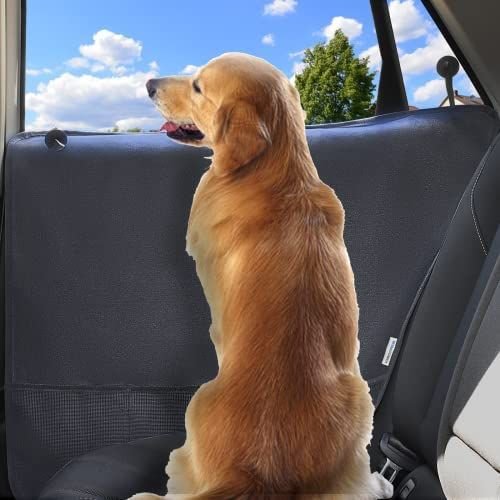
Another common reason is the window habit: your dog shifts toward the door because it feels like the best view. The more time they spend leaning there, the more likely you’ll see scratches and scuffs over time.
There’s also a safety angle here: an unrestrained dog moving around can distract the driver, and some guidance recommends pets be properly restrained in vehicles for safety and to reduce distraction.
Quick answer (fastest way to stop new scratches today)
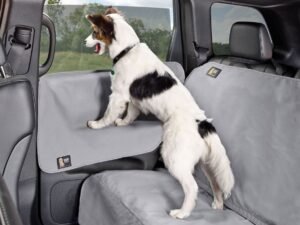
If you want the fastest “do this and you’re protected” setup, here it is:
- Install door scratch protectors (door panel guards)
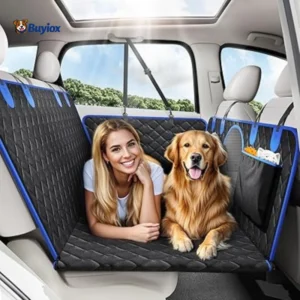
- Add a seat cover or hammock so paws aren’t scrambling
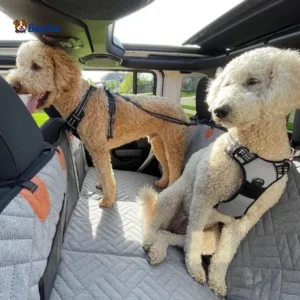
- Use a harness + seat belt tether so your dog stays in a stable back-seat zone
That combo prevents most scratches because it protects the surface and reduces the movement that causes claw marks.
Step 1: Check where the damage is happening (this tells you what to buy)
Before you buy anything, do a 30-second check. Door damage usually falls into one of these patterns:
A) High scratches near the window ledge
This happens when your dog stands tall with paws up on the door.
What it suggests: you need higher coverage and better “stay back-seat” control.
B) Mid-level scuffs and dull marks
This is often from leaning, shifting, and rubbing during turns.
What it suggests: a door guard + more stability under paws.
C) Lower muddy paw prints and hair buildup
This is the “every ride adds a layer” mess.
What it suggests: door guard + quick wipe routine + car cleanup tools.
Knowing the pattern helps you choose the right protector size and placement.
Step 2: Use door scratch protectors (the most direct solution)
Door scratch protectors are exactly what they sound like: a protective layer between your dog and the door panel. They’re one of the cleanest solutions because they stop damage even if your dog still leans on the door sometimes.
What a good door protector should do
A good door protector should:
- cover the exact area your dog reaches most
- stay flat (no sagging, no constant readjustment)
- be easy to wipe and remove
- not block your ability to close the door properly
Picking the right size (simple way)
- If your dog is a window watcher and paws go up: choose taller coverage.
- If your dog mostly leans without paws-up: mid coverage is enough.
- If the problem is mostly dirt/hair: wider coverage helps more than height.
Internal link (add here):
Anchor: door scratch protection → /product-category/dog-car-travel/door-scratch-protection/
Step 3: Reduce slipping and scrambling (because that’s what triggers claw marks)
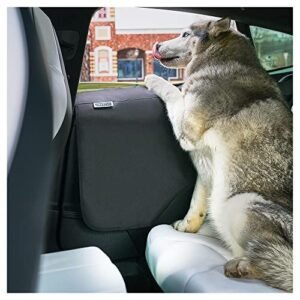
Even with a door guard, your dog can still scratch when they lose footing and “scramble” to catch balance.
This is why a stable riding surface is a major upgrade.
Why seat covers and hammocks help door protection
A good seat cover/hammock does two things:
- It gives paws more stability (less sliding, fewer panic corrections).
- It keeps hair and dirt off upholstery so your interior stays cleaner overall.
Hammock style also blocks the footwell gap, which reduces that “step down and scramble” moment that often ends with claw marks.
Internal link (add here):
Anchor: seat covers and hammocks → /product-category/dog-car-travel/seat-covers-hammocks/
Step 4: Use a harness + seat belt tether (for calmer rides and less door damage)
This is where protection turns into prevention.
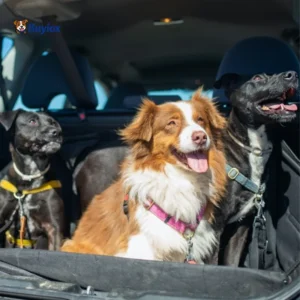
When dogs can roam, they shift positions constantly: door → center → front seat area → door again. That movement increases scratches and also increases driver distraction risk, which is why guidance commonly recommends pets be restrained during travel.
Practical setup (not restrictive)
A good tether setup allows your dog to:
- sit comfortably
- lie down
- turn slightly
- …but prevents them from climbing into the front or bouncing door-to-door.
Internal link (add here):
Anchor: seat belt tethers → /product-category/dog-car-travel/seat-belt-tethers/
Safety tip: attach tethers to a harness, not a collar, to avoid neck injury risk.
Step 5: Fix the “head out the window” habit safely
Many dogs love the wind, but it comes with risks: airborne debris can injure eyes/face, and unrestrained dogs near open windows are at risk in sudden turns or collisions.
You don’t have to take away the joy completely, just make it safer.
Safer alternatives that still feel fun
- Keep windows only partially open (enough for airflow, not enough to lean out).
- Use a stable back-seat setup, so your dog can enjoy the ride without standing.
- Offer a chew toy or calm activity in the back seat on longer drives.
If you’re targeting UK/Europe readers too: guidance in some regions emphasizes dogs should be “suitably restrained” to avoid driver distraction and safety issues (laws vary by country).
Step 6: A quick cleaning routine that keeps doors looking new
Protection prevents new scratches, but cleaning prevents the “permanent worn look.”
After each ride (2 minutes)
- Wipe door panels quickly with a microfiber cloth
- Check for mud streaks (remove before they dry)
- Roll hair off the edge areas where it collects
Weekly (10 minutes)
- vacuum seat corners and door-side seams
- Wipe the lower door panel
- Clean your door protectors if you use them
Internal link (optional, add here):
Anchor: car cleanup essentials → /product-category/dog-car-travel/car-cleanup-essentials/
Common mistakes that keep scratches coming back
Mistake 1: Only covering the seat, not the door
Seat protection helps, but if your dog’s paws reach the door, the panel still takes the hit.
Mistake 2: Installing protectors loosely
A loose protector shifts and exposes the panel again. Tight, flat installation matters.
Mistake 3: Letting your dog roam because “they don’t like being restricted”
Most dogs become calmer once they feel stable and predictable in the back seat. Plus, restraint is widely recommended for safety and to reduce distraction.
Mistake 4: Ignoring slipping
Slipping causes scrambling. Scrambling causes claw marks. Fix stability and many problems improve at once.
Most Frequently Asked Question (5 Min Read)
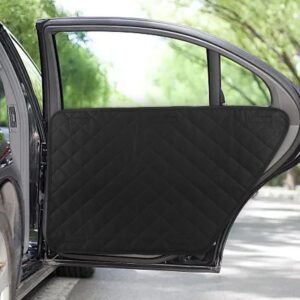
What’s the best way to protect car doors from dog scratches?
The simplest solution is a door scratch protector (door panel guard) plus a stable back-seat setup. Combine it with a non-slip seat cover or hammock and a harness + seat belt tether to reduce scrambling and leaning that cause scratches.
-
Why does my dog scratch the door panel during car rides?
It usually happens when your dog leans on the door for balance or excitement, especially during turns and braking. Slipping on smooth seats also triggers scrambling, which leads to claw marks on the door.
-
Do seat covers stop door scratches?
Seat covers help by improving stability and reducing slipping, but they don’t fully protect the door panel itself. If your dog’s paws reach the door, add door guards for direct protection.
-
Will a harness and seat belt tether reduce door damage?
Yes. A harness + tether keeps your dog in a stable back-seat zone so they’re less likely to roam, jump door-to-door, or brace hard against the panel. Restraining pets is also widely recommended to reduce driver distraction and improve travel safety.
-
Is it safe to let my dog hang out the car window?
It can be risky. Dogs can be injured by airborne debris, and unrestrained dogs near open windows can be at greater risk during sudden turns or collisions. A safer option is keeping the window partially open while your dog is restrained in the back seat.
-
How do I keep my car doors clean from drool and muddy paw prints?
Use a door protector you can wipe down, keep a microfiber cloth in the car, and do a quick wipe after rides before dirt dries. Weekly vacuuming of door-side seams also prevents hair buildup that makes doors look “permanently messy.”
-
What should I do if the scratches are already there?
Protect first so damage doesn’t spread, then consider gentle interior detailing products designed for your door material. If the panel is deeply scratched, a detailer can advise whether it can be improved or needs replacement, but prevention is usually the biggest win long-term.