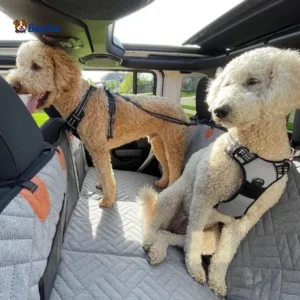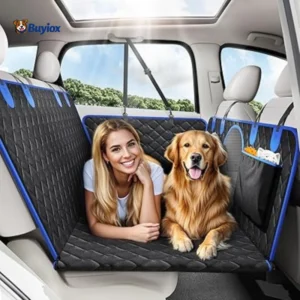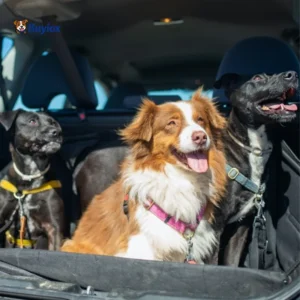
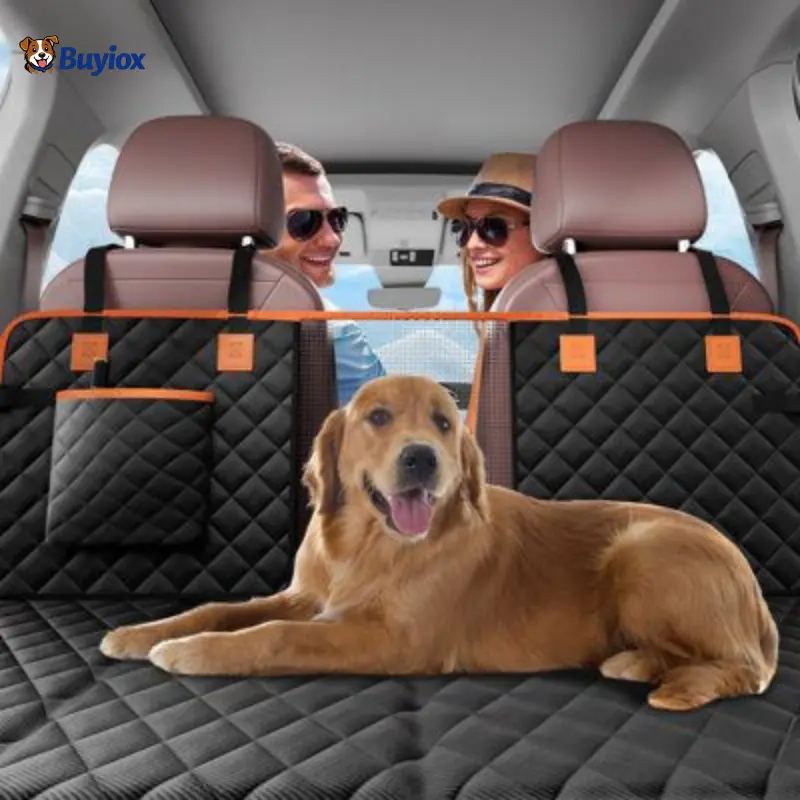
Leather seats look premium until your dog joins the ride.
Even if your dog is calm, leather has two built-in problems: it shows every hair strand, and it can feel slippery under paws during turns and braking. That slippery feeling is a big reason some dogs get tense in the car. They brace, they shuffle, and suddenly you’re dealing with stress, drool, and claw marks.
This guide will help you choose a seat cover that actually works on leather, one that stays put, protects the finish, and makes rides calmer. No jargon, no “perfect product” promises, just a clear buying framework you can trust.
Before you buy: what leather seats really need (the 3 problems to solve)
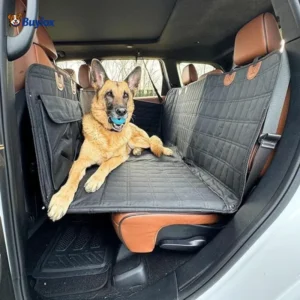
Leather seats aren’t like cloth. A cover that’s “fine” on fabric can be annoying on leather because it slides around, wrinkles, or traps moisture.
Problem 1: Slipping (your dog + the cover)
If the cover shifts even a little, your dog feels unstable and may keep repositioning. That movement spreads hair and increases scratches.
Problem 2: Surface protection (scratches, drool, and dirt film)
Leather can mark from claws and can show scuffs over time, especially near door-side edges where dogs lean for the window view.
Problem 3: Moisture and heat
Wet paws, drool, or damp fur can get trapped if a cover doesn’t breathe or if it bunches up. You don’t want moisture sitting on leather for long periods.
So, the “best seat cover for leather” is the one that solves stability + protection + easy cleanup at the same time.
The seat cover types (and which one usually wins for leather)
Let’s keep it simple. Most dog seat protectors fall into three styles.
1) Standard bench seat cover
This is the basic “covers the seat bottom” option. It’s easy, usually affordable, and works well for calm dogs on short rides.
On leather, the downside is that some bench covers slide around if the backing isn’t truly grippy.
2) Hammock-style cover
A hammock connects to the front and rear headrests and creates a bridge over the footwell gap. For leather seats, this often feels more stable because the tension helps keep it tight.
If your dog moves around, slips, or steps into the gap, hammock style is usually the best pick.
3) Hard-bottom back seat extender (platform style)
This creates a flatter platform and can be very stable for larger dogs. It’s great for long trips, but it’s bulkier, and not everyone wants a “permanent setup.”
For most dog owners with leather seats:
A non-slip hammock (or a very well-designed bench cover with true grip + anchors) is the best blend of clean + stable + practical.
What “best” means for leather seats: the 9 features that matter
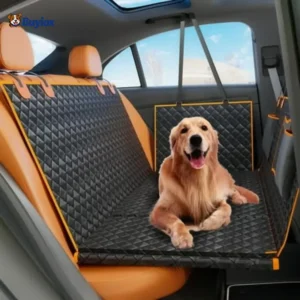
This is the part that saves you money. Lots of covers look similar in photos. The difference is in small details that decide whether you’ll love it or hate it.
1) Real non-slip backing (not marketing “dots” that don’t grip)
For leather, backing is everything. You want a backing that grips leather and reduces shifting when your dog steps, turns, or sits down.
If a cover slides like a rug, you’ll constantly readjust it and your dog may feel uneasy.
2) Anchors that lock into the seat crease
Seat anchors (the little tubes/blocks that tuck into the seat gap) matter more than people think. They stop the cover from creeping forward and wrinkling.
Wrinkles aren’t just ugly; they create “moving spots” that can trigger slipping.
3) Tight headrest straps (and enough strap length)
Straps should tighten enough to remove slack without awkward angles. A tight install makes the seat feel like a stable surface, not a floating layer.
4) A top surface that isn’t slick
Some waterproof fabrics are smooth and can be slippery for paws. A slightly textured top gives traction, especially on leather seats where the baseline friction is already low.
5) Waterproof layer (for muddy paws + drool + accidents)
On leather, you still want waterproofing because it prevents moisture and dirt from working into seams and seat edges.
But waterproof should also be easy to wipe, so you can clean in 30 seconds after a messy ride.
6) Side flaps (if your dog leans on doors)
If your dog is a “window watcher,” side flaps help protect leather edges and the area where claw marks usually happen.
Side flaps also reduce hair collecting in door-side gaps.
7) Seat belt openings (if you use a harness tether)
If you plan to use a harness + seat belt tether, you’ll want proper openings so the cover lies flat and you’re not fighting the fabric every ride.
Vehicle safety guidance generally recommends securing pets to reduce distraction and improve safety during sudden stops.
(If you’re using a tether, always attach to a harness, not a collar.)
8) Easy cleaning (machine washable or wipe-clean)
If it takes effort to clean, it won’t get cleaned, and then it won’t feel worth it. On leather seats, wipe-clean performance is a huge advantage.
9) Fit that matches your car (not “one-size-fits-all” headaches)
You don’t need a perfect fit like a tailored suit, but you do need enough coverage:
- wide enough for your bench
- long enough for the backrest (if included)
- compatible with adjustable headrests
A cover that’s too small shifts more. Too large bunches up.
My recommended choice framework (so you pick in 60 seconds)
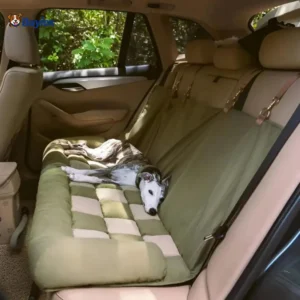
Here’s the simplest decision tree:
If your dog slips on leather (or moves around)
Choose: non-slip hammock
Why: Tension + coverage + stability usually reduces sliding immediately.
If your dog is calm and you want basic protection
Choose: high-grip bench cover with anchors
Why: Less setup, still protects the seat.
If you have a large dog who sprawls, or you do long road trips
Choose: platform-style extender
Why: Flat surface = stable posture = calmer body language.
How to install a seat cover on leather so it doesn’t slide
Even the best cover will feel “meh” if it’s installed loosely. This 2-minute install checklist makes a big difference:
- Center the cover before tightening anything
- Tuck the anchors into the seat crease first
- Tighten headrest straps until slack is gone
- Smooth the top surface so it lies flat (no ridges)
- Sit your dog down and watch where they place their paws
- If they brace in one area, add traction there (more on that below)
Extra traction trick (optional):
If your dog still slips slightly, add a small textured rubber mat on top of the cover where paws land. It’s a simple upgrade that can turn a “good” setup into a “great” one.
How to protect leather from scratches (without overcomplicating it)
If scratch marks are your main fear, focus on the zones where damage happens:
- Door-side seat edge (claws when leaning toward the window)
- Seat front lip (jumping in/out)
- Backrest lower area (pushing/standing)
A cover with side flaps helps, but if your dog actively leans on doors, consider a door guard too.
Internal link idea:
Anchor: door scratch protection → /product-category/dog-car-travel/door-scratch-protection/
Keep rides calmer (seat cover + restraint = less sliding)
A seat cover fixes traction and mess. A restraint system fixes the “roaming” that makes slipping worse.
Many organizations advise restraining pets in vehicles to reduce driver distraction and improve safety during sudden stops.
Simple practical setup:
- Cover/hammock installed tightly
- The dog wears a comfortable harness
- Seat belt tether adjusted so your dog can sit/lie down, but not bounce side-to-side
After rides (2 minutes)
- Shake off loose hair (or quick roller)
- Wipe muddy spots with a damp microfiber
- Let the cover dry before long storage (especially after wet walks)
Weekly (10 minutes)
- Vacuum seams and corners (hair builds up there)
- Wash cover if it’s machine washable
- Wipe leather edges if anything leaked around the cover
FAQs
-
What is the best dog seat cover for leather seats?
The best option is a cover (often hammock-style) with a truly grippy backing, seat anchors, tight straps, and a textured top surface. On leather, stability matters as much as waterproof protection.
-
Will a seat cover scratch leather seats?
A quality cover should protect leather, not scratch it. The bigger risk is a cover that shifts and rubs in the same spot. Install it tight, use anchors, and keep the underside clean so grit doesn’t sit between cover and leather.
-
Should I choose a hammock or a bench seat cover for leather?
Choose a hammock if your dog slips, moves around, or steps into the footwell gap. Choose a bench cover if your dog rides calmly and you mainly want basic protection from hair and dirt.
-
How do I stop a seat cover from sliding on leather?
Pick a cover with grippy backing and anchors, then install it tight: tuck anchors first, tighten straps, smooth wrinkles, and add extra traction (like a small textured mat) where your dog’s paws land.
-
Do I need seat belt openings in the cover?
If you use a harness and seat belt tether, yes. Proper openings help the cover sit flat and keep your restraint setup simple and secure.
-
What features matter most for muddy paws and drool?
Prioritize a waterproof layer, wipe-clean surface, and good edge coverage. Side flaps help if your dog leans toward doors, and a hammock reduces mess falling into the footwell.
-
How often should I wash a dog seat cover?
Wipe it after messy rides and wash it weekly or every two weeks if your dog rides often. Regular cleaning prevents odor buildup and keeps hair from embedding in seams.