A dog slipping and sliding in the car is more than “annoying” it can make your dog anxious, increase drooling or carsickness, and distract you while driving. The cause is usually simple: smooth surfaces + unstable footing + sudden turns/braking.
This guide gives you real solutions (not gimmicks), starting with the fastest fixes first. You’ll learn how to create traction, how to set up the back seat so your dog feels stable, and how to combine comfort with safety using a secure restraint system.
Quick safety note: a calmer ride usually starts with proper restraint. Veterinary guidance commonly recommends securing pets so they don’t become a driver distraction and are better protected during sudden stops.
Quick answer: the 3 fastest fixes (do these first)
If you only do three things, do these:
- Add a non-slip base (non-slip seat cover/hammock or rubber mat)
- Secure your dog with a harness + seat belt tether (reduces sliding + roaming)
- Adjust positioning (back seat, level surface, support under the hips/chest)
These three changes solve slipping for most dogs within one or two rides.
Why dogs slip on car seats (so you fix the real problem)
Slipping usually comes from one (or more) of these:
1) Smooth surfaces (leather/leatherette is the biggest culprit)
Leather feels great to humans, but it’s slick under paws, especially when the seat is angled.
2) Unstable “floor.”
Dogs brace with their paws. When they can’t grip, every turn feels like a mini fall.
3) Speed changes (braking + turning)
Even careful driving can shift a dog’s weight. Without friction, they slide.
4) Anxiety or motion discomfort
A nervous dog often stands, repositions, paces, then slips more. The slipping reinforces the anxiety loop.
The best fixes (ranked by impact)
Start from the top and work down. You’ll often solve it with Fix #1 and #2 alone.
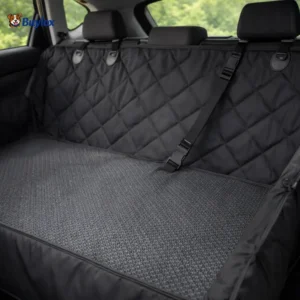
Fix #1: Use a truly non-slip seat cover or hammock (best overall)
A seat cover/hammock isn’t only for hair; it creates a grippier surface and a more stable “platform.”
What to look for (simple checklist)
- Non-slip backing (rubberized dots or textured grip)
- This stops the cover from sliding on the seat itself. A cover that moves will make your dog feel unstable.
- Textured top surface (not shiny fabric)
- Smooth tops can still be slippery even if the bottom grips.
- Anchors + straps that keep it tight
- Loose fabric becomes a “moving rug,” which triggers more slipping.
- Optional: hammock style if your dog steps into the footwell
- Hammocks help prevent your dog from dropping into the gap and panicking.
Quick setup tip (most people skip this)
After installing the cover/hammock:
- Pull it tight, corner-to-corner
- tuck edges into seat creases
- Use the headrest straps to remove slack
That tightness is what creates stability.
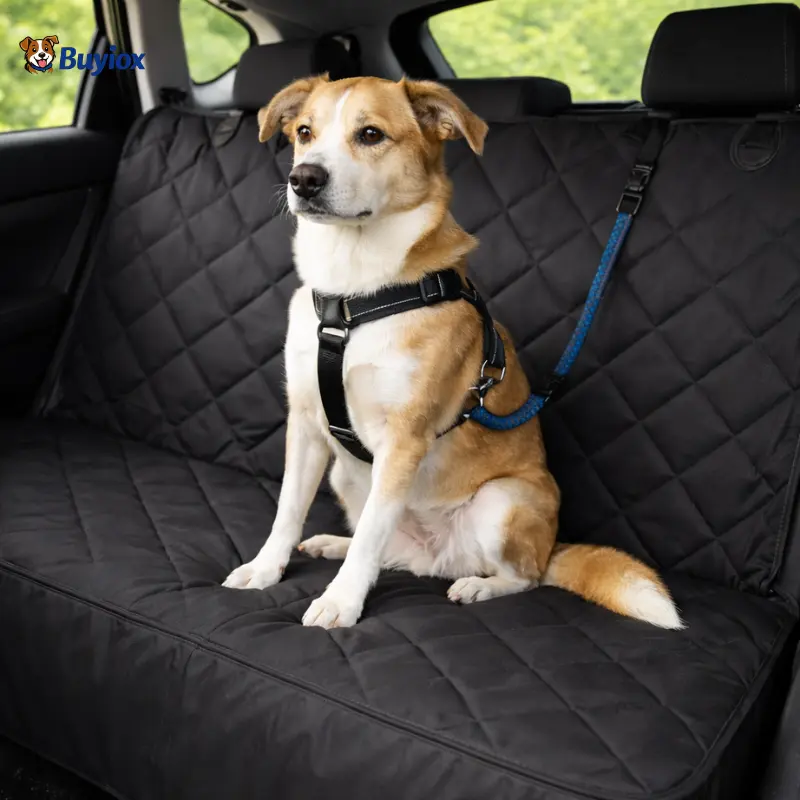
Fix #2: Secure your dog with a harness + seat belt tether (stops sliding + roaming)
If a dog is free to move around, they’ll shift weight constantly, especially during turns. A properly fitted harness + tether helps your dog stay in a stable zone.
Safety-first guidance (what matters)
- Choose a crash-tested option when possible, and be cautious with products that have no safety testing.
- For crash-test certified harness lists, you can check the Center for Pet Safety (CPS) certified page.
How to set it up (simple, stable, not restrictive)
- Put your dog in a well-fitted harness (snug, not tight).
- Attach the tether to the car’s seat belt system (per product instructions).
- Adjust the length so your dog can sit/lie down comfortably but not bounce across the seat.
- Pair it with a seat cover/hammock for the best “stable platform” effect.
Fix #3: Add a grippy layer where paws land (cheap and effective)
If your dog slips mainly when turning or braking, add traction exactly where they brace.
Options that work well
- Non-slip rubber mat (cut to fit)
- Place it on top of the seat cover in the “paw zone” (usually the center of the seat bottom).
- Textured bath mat / yoga-mat style layer (clean, simple)
- Just make sure it’s secured so it doesn’t bunch up.
Placement tip
Most dogs brace with their front paws. Put traction:
- on the front half of the seat bottom, and
- slightly toward the middle (so they’re not leaning into the door)
Fix #4: Make the back seat feel “level” and supported
Dogs slip more when they feel like they’re sliding downhill.
Easy ways to create stability
- Fill the seat gap (the crack between the seat bottom and backrest)
- A gap makes dogs step weirdly and lose footing.
- Support under the hips/chest with a firm folded towel under the cover
- This can help smaller dogs or older dogs who struggle to brace.
- Use a back-seat “platform” setup for larger dogs
- If your dog sprawls, a flatter surface reduces sliding during turns.
Fix #5: Put your dog in the safest, calmest position
Many dogs feel more stable in the back seat, especially when restrained properly.
Positioning rules that reduce slipping
- Encourage lying down rather than standing
- Standing = constant balance corrections = more slipping.
- Keep them centered, not pressed to the door
- Door-side leaning leads to sliding and scratch marks over time.
Fix #6: Reduce motion discomfort (slipping often starts with nausea/anxiety)
A dog who feels unsettled will keep repositioning and slip more.
Comfort improvements that help quickly
- Cool, steady airflow (avoid overheating)
- Smooth driving style (gentle braking/turns)
- Short practice rides (2–5 minutes) to rebuild confidence
- Forward-facing positioning can help some dogs feel less nauseous, and the AKC notes that seeing where they’re going can help with tummy troubles in certain setups.
If your dog drools heavily, vomits, or shows panic signs, it’s worth discussing car sickness/anxiety options with a vet because no seat cover fixes nausea.
Fix #7: Clean the surface properly (yes, grime can make it slippery)
This is underrated: oily residue and product buildup can make seat covers and leather more slippery.
Quick cleaning routine
- Wipe seat cover surface with a mild cleaner (fabric-safe)
- Let it dry fully (damp fabric can be slick)
- Vacuum sand/grit (grit can act like tiny “rollers” under paws)
Best “stable ride” setup (recommended combo)
If your goal is: no slipping + less mess + calmer dog, this setup is hard to beat:
- Non-slip hammock or cover (tight install)
- Harness + seat belt tether (proper length)
- Small grippy mat in the paw zone (if needed)
This combo addresses traction, stability, and safety together. Guidance on restraining pets in vehicles is widely recommended to reduce distraction and improve safety during travel.
Common mistakes (that keep the slipping problem alive)
Mistake 1: Using a slick blanket
Blankets slide on leather and bunch up under paws. They feel cozy but are unstable.
Mistake 2: Loose straps on a hammock/cover
If the cover shifts when your dog moves, your dog learns “the floor moves,” and becomes more tense.
Mistake 3: Tether too long
Too much length allows bouncing side-to-side, which increases sliding and panic.
Mistake 4: Letting your dog roam because “they hate restraints.”
A safer restraint system often makes dogs more comfortable over time because they stop bracing constantly.
-
Why is my dog slipping on the car seat?
Most dogs slip because the surface is smooth (especially leather), the seat is slightly angled, and they don’t have enough traction to brace during turns or braking. Adding a non-slip cover and a stable position usually fixes it quickly.
-
What’s the fastest fix to stop a dog from sliding in the car?
Install a tight, non-slip seat cover or hammock and add a harness + seat belt tether. This creates traction and keeps your dog in a stable zone instead of constantly shifting.
-
Are dog seat belt tethers safe?
They can be safer when used with a properly fitted harness and set to a length that allows sitting/lying down without letting your dog jump around. Many organizations recommend restraining pets in vehicles to reduce distraction and improve safety during sudden stops.
-
What should I look for in a non-slip dog car hammock or seat cover?
Look for non-slip backing, a textured top surface, strong straps/anchors, and a fit that stays tight without sliding. A hammock is especially helpful if your dog steps into the footwell or moves around a lot.
-
My dog still slips with a seat cover, what else can I do?
Add a small grippy mat in the “paw zone,” tighten the cover straps to remove slack, and shorten the tether length so your dog isn’t bouncing side-to-side. Also check if the cover surface is too smooth or dirty.
-
Does slipping mean my dog is anxious or carsick?
Sometimes, yes. Dogs that feel nauseous or nervous often stand and reposition more, which causes slipping. Comfort steps like steady airflow, shorter practice rides, and a stable setup can help, but frequent vomiting or panic is worth discussing with a vet.
-
Where should my dog sit in the car to reduce slipping?
Most dogs feel more stable in the back seat with a non-slip cover and a secure harness+tether. Keeping them centered and encouraging them to lie down reduces sliding during turns.