
As an Amazon Associate I earn from qualifying purchases. This costs you nothing extra and helps us keep Buyiox free.

Why Robot Vacuums Finally Earned Their Keep
Pet hair tumbleweeds rolling across the hallway. Dust collecting under the sofa no one moves. Crumbs under the dining table, again. The daily floor battle is real, and for years robot vacuums promised to fight it while you did literally anything else – then got stuck on a rug fringe and died under the couch.
That era is over. Modern robot vacuums map your home with lasers, empty themselves into docks that hold two to three months of dirt, wash their own mop pads, and steer around phone chargers and pet messes. The good ones genuinely clean every day without supervision. The bad ones are still expensive paperweights with apps.
We researched six currently available models – every spec and price below verified against manufacturer pages and current listings, with independent lab-test scores included where they exist, even the failures most roundups hide. Prices are marked approximate because they shift constantly on Amazon.
Quick Comparison: The 6 Best Robot Vacuums
| Product | Best For | Approx. Price |
| — | — | — |
|---|---|---|
| iRobot Roomba Combo 10 Max | Best for carpets and clutter | Around $750 |
| Roborock Q7 M5+ | Best budget self-emptying | Around $280 |
| Dreame L40 Ultra Gen 2 | Best premium all-in-one dock | Around $570 |
| Shark AV2501AE AI Ultra | Best for pet hair, no bags | Around $300 |
| eufy E25 Omni | Best roller-mop innovation | Around $630 |
| TP-Link Tapo RV30 Max Plus | Best value 2-in-1 | Around $250 |
Prices change often on Amazon, so treat these as rough guides. The links below take you to live Amazon search results where you can check the current price.
1. iRobot Roomba Combo 10 Max – Best for Carpets and Clutter
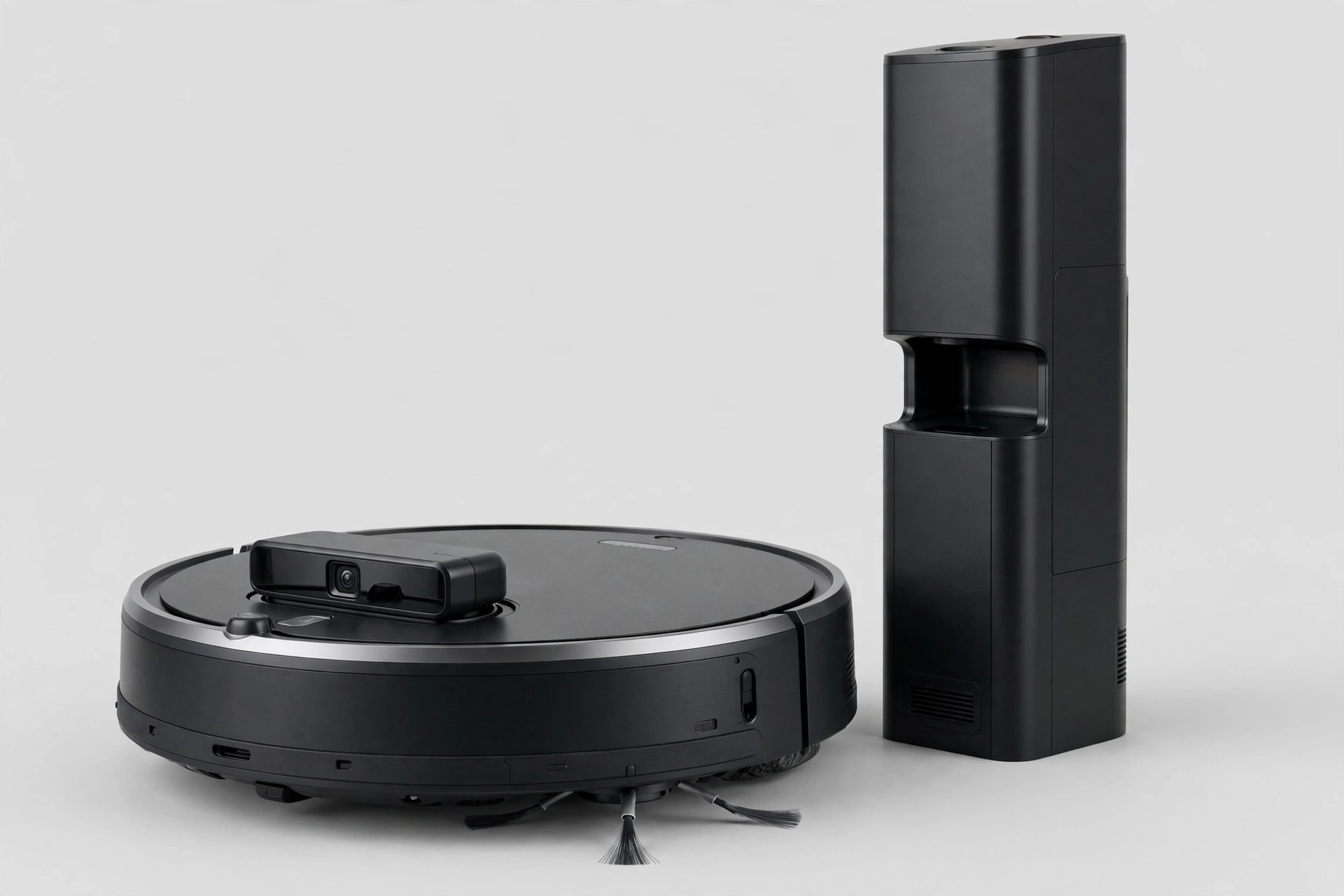
The Roomba Combo 10 Max: camera-based obstacle avoidance, a fully retracting mop, and an AutoWash dock that empties, washes, and dries.
The Roomba Combo 10 Max is built around a different insight than its rivals: most homes are messy in ways that defeat rigid robots. Its PrecisionVision camera system identifies obstacles down to cords, socks, and pet waste, and its mop retracts fully onto the top of the robot – not merely lifted a few millimeters – so high-pile carpet never meets a damp pad.
The AutoWash dock does the genuinely hands-free work: it empties debris into an enclosed bag rated for about 60 days, then washes and dries the mop pad itself and refills cleaning liquid. Dirt Detective learns which rooms get dirty fastest and gives them deeper cleaning, and the robot crosses thresholds up to 16mm.
The honest part: independent lab testing by Vacuum Wars gave it 2.46 out of 5 – its navigation and app functionality lagged behind LiDAR rivals, and the dock left excess water in the mop pad during testing. On the other hand, Tech Advisor’s reviewers concluded it stands out as better at vacuuming carpet than its rivals. And street prices have fallen far below the $1,399.99 list – around $750 on Amazon – which changes the value math considerably.
Pros:
- Best-in-class carpet cleaning according to hands-on reviewers
- Fully retracting mop keeps carpets completely dry
- Camera obstacle avoidance recognizes cords, socks, and pet waste
- AutoWash dock empties debris, washes and dries the mop pad, refills liquid
- Dirt Detective targets the dirtiest rooms automatically
Cons:
- Lab-test navigation and app scores trail LiDAR-based rivals
- Dock can leave the mop pad too wet in testing
- No LiDAR – mapping is less precise than laser rivals
- $1,399.99 list price is steep if you pay full price
- Large dock footprint needs real floor space
Best for: Carpet-heavy, clutter-heavy homes – kids, pets, cables everywhere – that need a robot to cope rather than complain. The best robot vacuum for carpets and clutter.
Skip if: You want LiDAR-grade mapping precision, or the most hands-off mopping system – the Dreame below washes its mops better.
2. Roborock Q7 M5+ – Best Budget Self-Emptying

The Roborock Q7 M5+: 10,000 Pa suction, LiDAR mapping, and a self-emptying dock for around $280.
The Q7 M5+ is the value equation that broke the category: 10,000 Pa of HyperForce suction, PreciSense LiDAR mapping, and a RockDock Plus that empties the dustbin into a sealed 2.7L bag rated for 7 to 9 weeks – for around $280 on sale. A year ago that combination cost twice as much.
Pet owners get the meaningful upgrades: JawScrapers on the main brush and a side brush designed to resist hair wrap, plus carpet boost that ramps up suction automatically. The 150-minute runtime covers large homes, and over 20,000 Amazon ratings averaging around 4 stars make it one of the most proven budget robots ever sold. Roborock’s official store lists the full specs and current pricing (https://us.roborock.com/products/roborock-q7-m5-plus).
The honest part: the mopping is basic. A water tank with three flow levels wipes up light everyday dust – it does not scrub, wash, or lift its mop. And the app connects over 2.4 GHz Wi-Fi only, which can annoy mesh-network households. Neither matters much if your priority is vacuuming, which is what this robot does best.
Pros:
- 10,000 Pa suction with LiDAR mapping at a budget price
- Self-emptying dock holds 7-9 weeks of dirt
- Anti-tangle brush system built for pet hair
- 150-minute runtime for large homes
- Huge, happy owner base – over 20,000 Amazon ratings
Cons:
- Basic mopping – no mop washing, lifting, or scrubbing
- 2.4 GHz Wi-Fi only
- Dust bags are an ongoing cost
Best for: Anyone who wants LiDAR navigation and self-emptying without paying flagship money. The best budget self-emptying robot vacuum.
Skip if: Mopping matters as much as vacuuming to you – the Dreame or eufy wash their own mops.
3. Dreame L40 Ultra Gen 2 – Best Premium All-in-One Dock
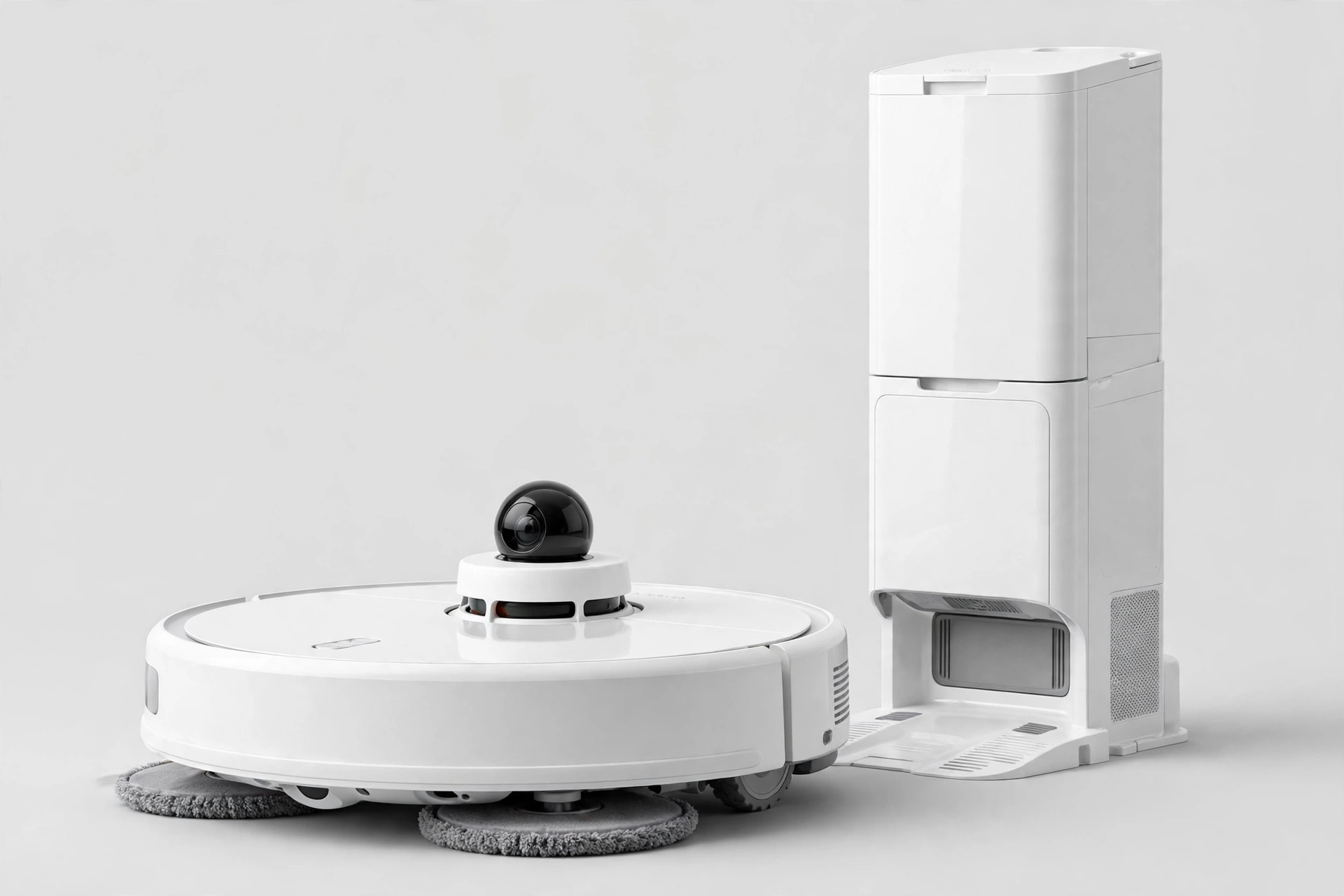
The Dreame L40 Ultra Gen 2: 25,000 Pa suction, dual spinning mops, and a PowerDock that empties, washes, dries, and refills.
The L40 Ultra Gen 2 brings flagship numbers to a mid-premium price: 25,000 Pa of Vormax suction, a DuoScrub mopping system with two high-speed rotary mops, and Dual Flex Arm technology that extends both the side brush and the mop toward edges and corners. The mops lift 10.5mm on carpet, and navigation pairs LiDAR mapping with 3D structured-light obstacle avoidance.
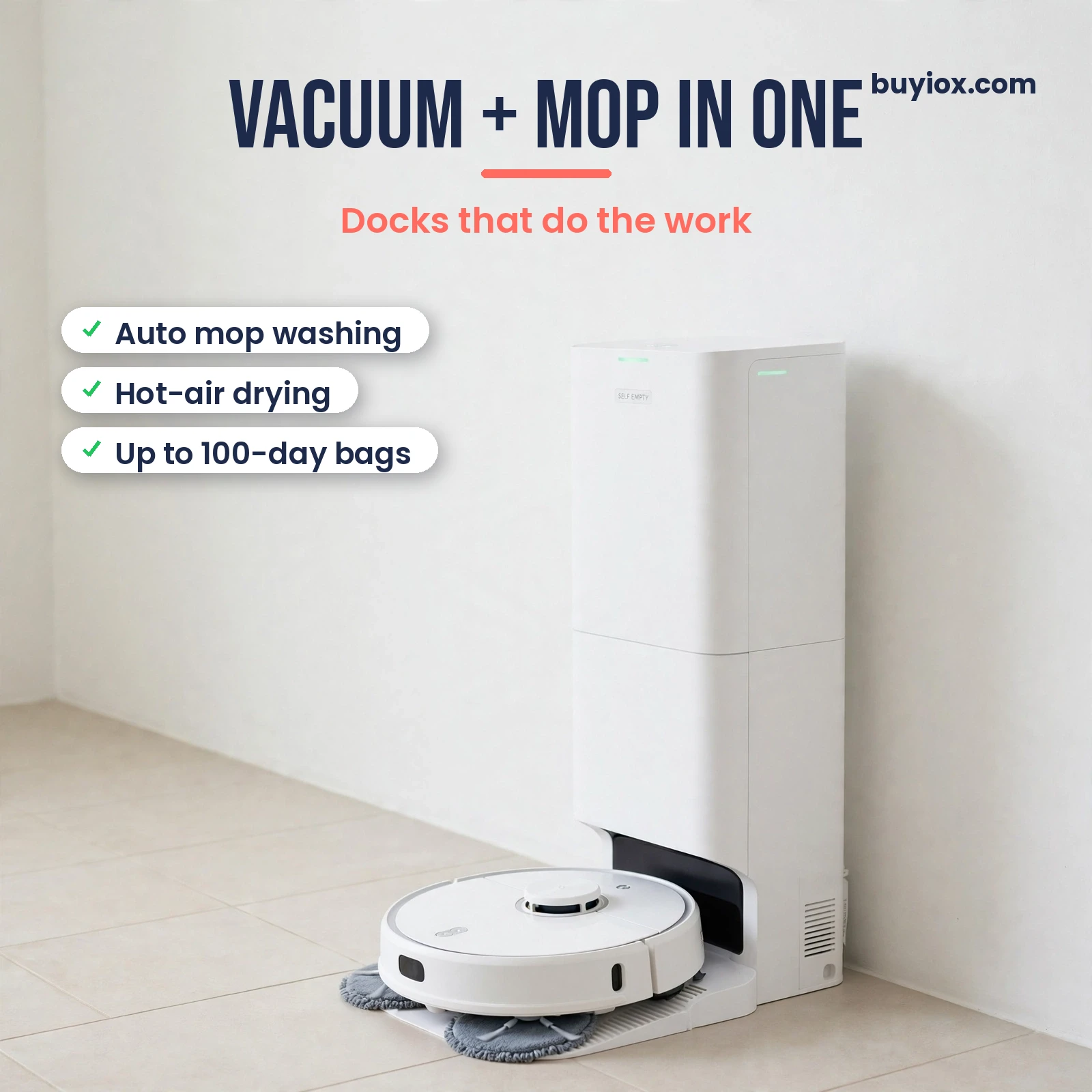
The PowerDock is the real product here: it auto-empties into a 3.2L dust bag rated for up to 100 days, washes the mops, dries them with hot air to prevent odor, and refills the robot’s water tank. Dreame’s product page confirms the full spec sheet (https://www.dreametech.com/products/l40-ultra-gen2-robot-vacuum). At around $570 on sale (down from $799.99), it undercuts most rivals with this level of dock automation.
The honest part: Vacuum Wars lab tests gave it 3.08 out of 5. Pet-hair pickup was weak in their tests, 69% of long hair wrapped around the brush despite the anti-tangle claims, and it avoided only 2 of 24 obstacles. The suction number is real, but raw Pa does not automatically beat a better brush system on hair.
Pros:
- 25,000 Pa – the strongest suction rating on this list
- PowerDock empties, washes mops, hot-air dries, and refills water
- Up to 100 days between dust bag changes
- Extendable brush and mop reach edges and corners
- Strong sale pricing around $570
Cons:
- Lab tests found weak pet-hair pickup and heavy brush tangling
- Obstacle avoidance underwhelmed in testing (2 of 24 avoided)
- Large dock needs dedicated floor space
Best for: Hard-floor homes that want maximum dock automation – emptying, washing, drying, refilling – at a mid-premium price. The best premium all-in-one dock.
Skip if: Pet hair is your main battle – the Shark or Roborock handle hair better in testing.
4. Shark AV2501AE AI Ultra – Best for Pet Hair (No Bags)
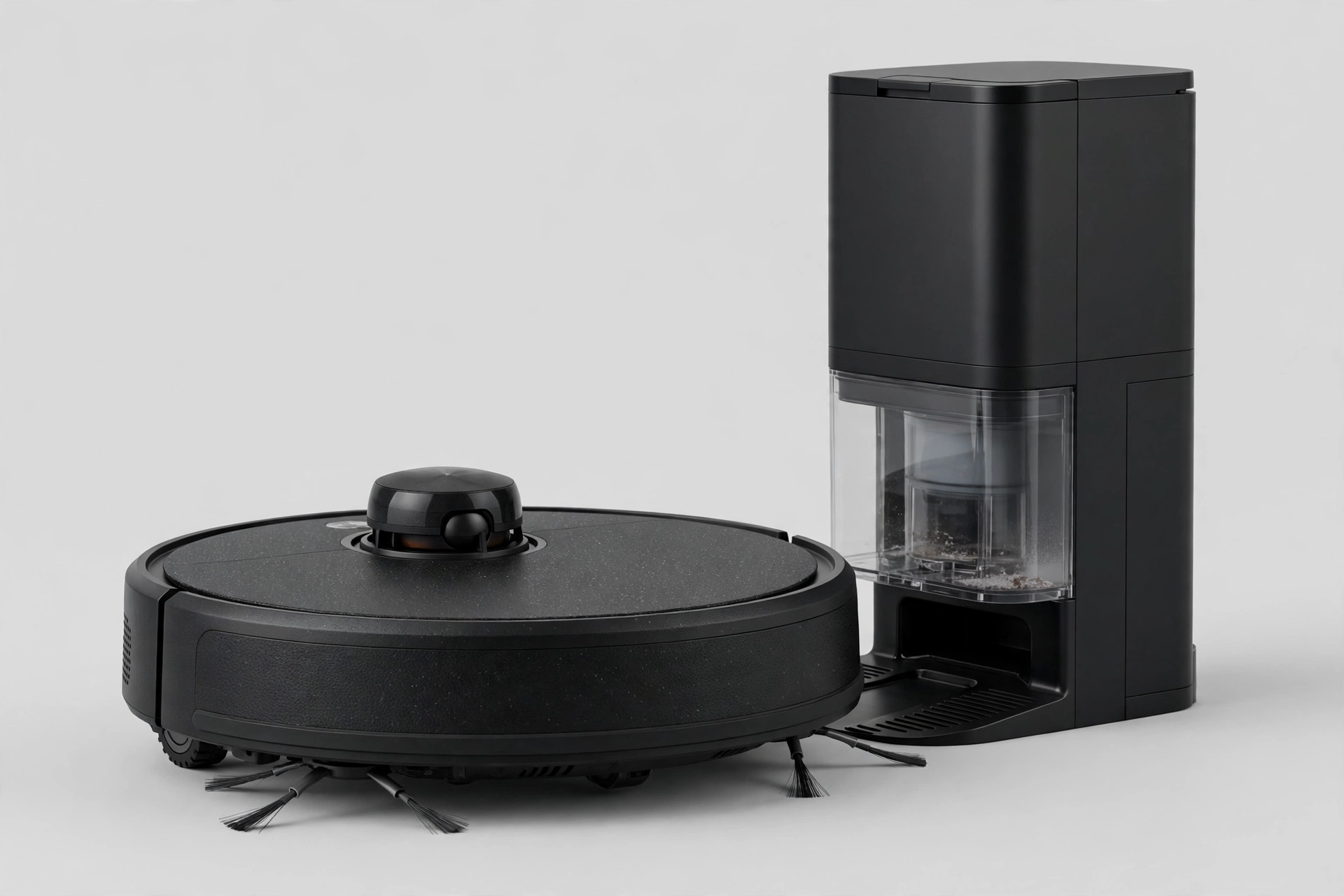
The Shark AV2501AE: a bagless XL HEPA self-empty base – 60 days of dirt, zero bags to buy.
The Shark AV2501AE solves the pet-hair problem differently: a bagless XL self-empty base with true HEPA filtration that holds up to 60 days of dirt and allergens. No bags to buy, ever – you just empty the base’s dust cup into the trash. For allergy households, the sealed HEPA system trapping 99.97% of dust and allergens down to 0.3 microns is the headline.
The robot itself brings LiDAR-based Matrix Clean navigation for methodical row-by-row coverage, a self-cleaning brushroll designed to prevent hair wrap, and an UltraClean mode for targeted deep cleaning of high-traffic zones. It runs up to 120 minutes, recharges and resumes where it left off, and answers to Alexa and Google Assistant. With over 40,000 Amazon reviews averaging around 4 stars, it is one of the most battle-tested pet-hair robots sold.
The honest part: Vacuum Wars found the app could be better and the robot can get stuck in tight spots, and Amazon review summaries include some reliability complaints – a few owners report units failing early. If pet hair is your daily battle, it is also worth reducing the source: our best dog cooling mats picks keep shedding dogs comfortable on easy-to-clean surfaces instead of your rugs.
Pros:
- Bagless self-empty base – 60-day capacity, no bags to buy ever
- True HEPA filtration seals in dust and allergens
- Self-cleaning brushroll resists hair wrap
- LiDAR navigation with methodical coverage
- Around $300 – excellent value for a self-emptying pet-hair pick
Cons:
- App experience lags behind Roborock and Dreame
- Can get stuck in tight spots
- Some owners report reliability issues – keep the receipt
- No mopping – vacuum only
Best for: Pet households and allergy sufferers who want self-emptying without the ongoing cost of bags. The best robot vacuum for pet hair with no bags.
Skip if: You need mopping too – every other pick on this list except the Shark mops.
5. eufy E25 Omni – Best Roller-Mop Innovation
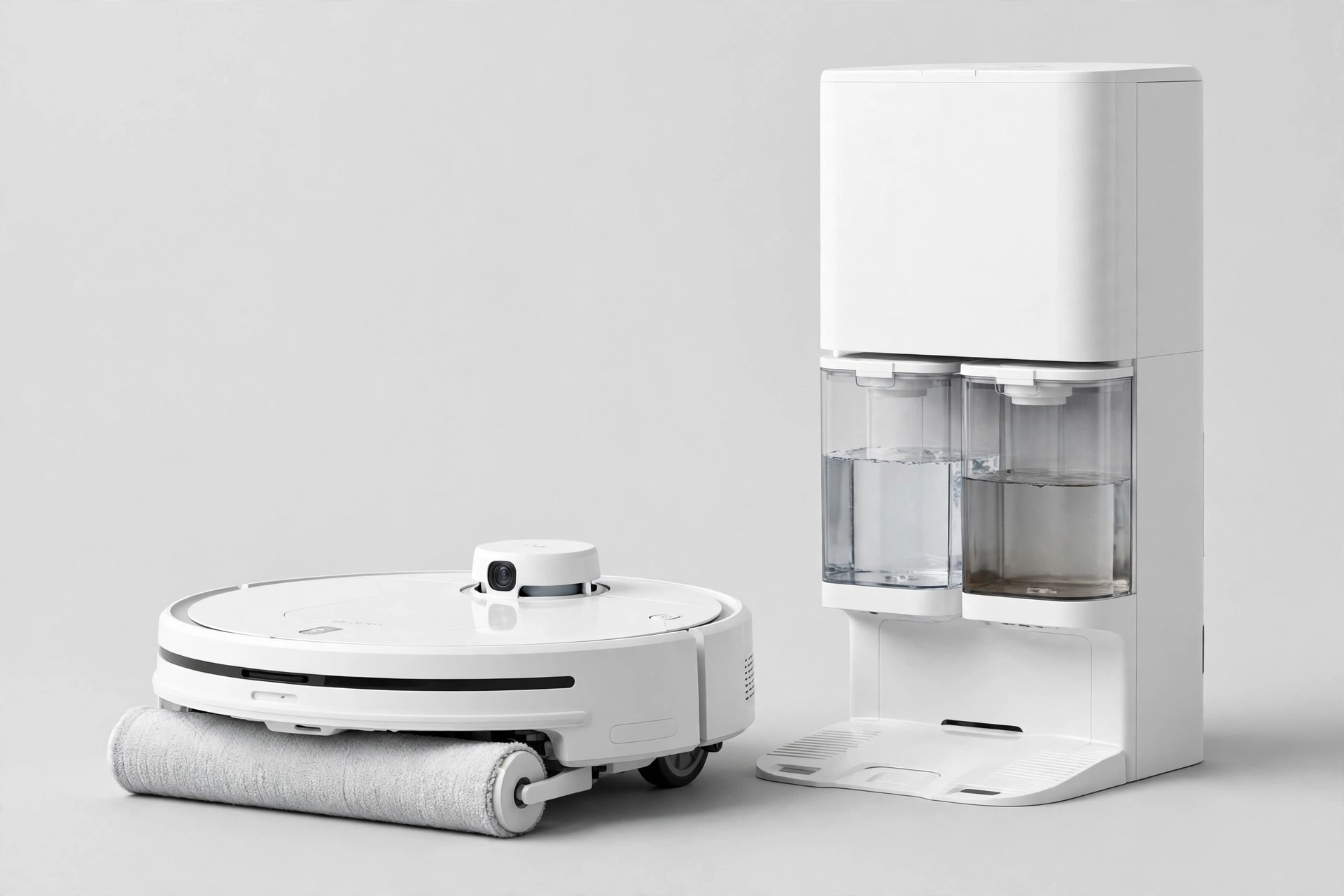
The eufy E25 Omni: a HydroJet roller mop that self-cleans as it mops, plus 20,000 Pa suction.
The eufy E25 Omni rethinks the mop entirely. Instead of dragging pads or spinning discs, it uses a HydroJet roller mop – a wide roller that presses down with 1.5kg of force and constantly refreshes itself with clean water as it cleans, so it is never pushing dirty water around your floors. For homes with sticky kitchen messes and muddy paw prints, that is a meaningful upgrade over pad mopping.
The rest of the package is flagship-grade: 20,000 Pa turbo suction, DuoSpiral detangle brushes, a CornerRover arm that extends for edge cleaning, and LiDAR plus an RGB camera that recognizes 200 types of obstacles. The all-in-one station empties the dustbin into a 3L bag rated for about 75 days, washes the roller, dries it with 35-50C hot air, and refills both water and detergent. The mop lifts 20mm on carpet, and it even supports the Matter smart-home standard.
The honest part: the $999.99 list price is real money, and even the ~$630 street price keeps it premium. The station is large, and the bags plus cleaning solution are ongoing costs. But if mopping performance is your priority, no spinning-pad rival matches a self-cleaning roller.
Pros:
- HydroJet roller mop self-cleans while mopping – best mopping tech here
- 20,000 Pa suction with automatic carpet boost
- All-in-one station: empty, wash, hot-air dry, water and detergent refill
- 20mm mop lift keeps rugs dry
- Matter smart-home support
Cons:
- Premium pricing – around $630 on sale
- Large station footprint
- Ongoing cost of bags and cleaning solution
Best for: Homes where mopping matters as much as vacuuming – kitchens, mudrooms, paw-print zones. The best roller-mop robot vacuum.
Skip if: You mainly need vacuuming – the Roborock gives you 10,000 Pa and self-emptying for less than half the price.
6. TP-Link Tapo RV30 Max Plus – Best Value 2-in-1
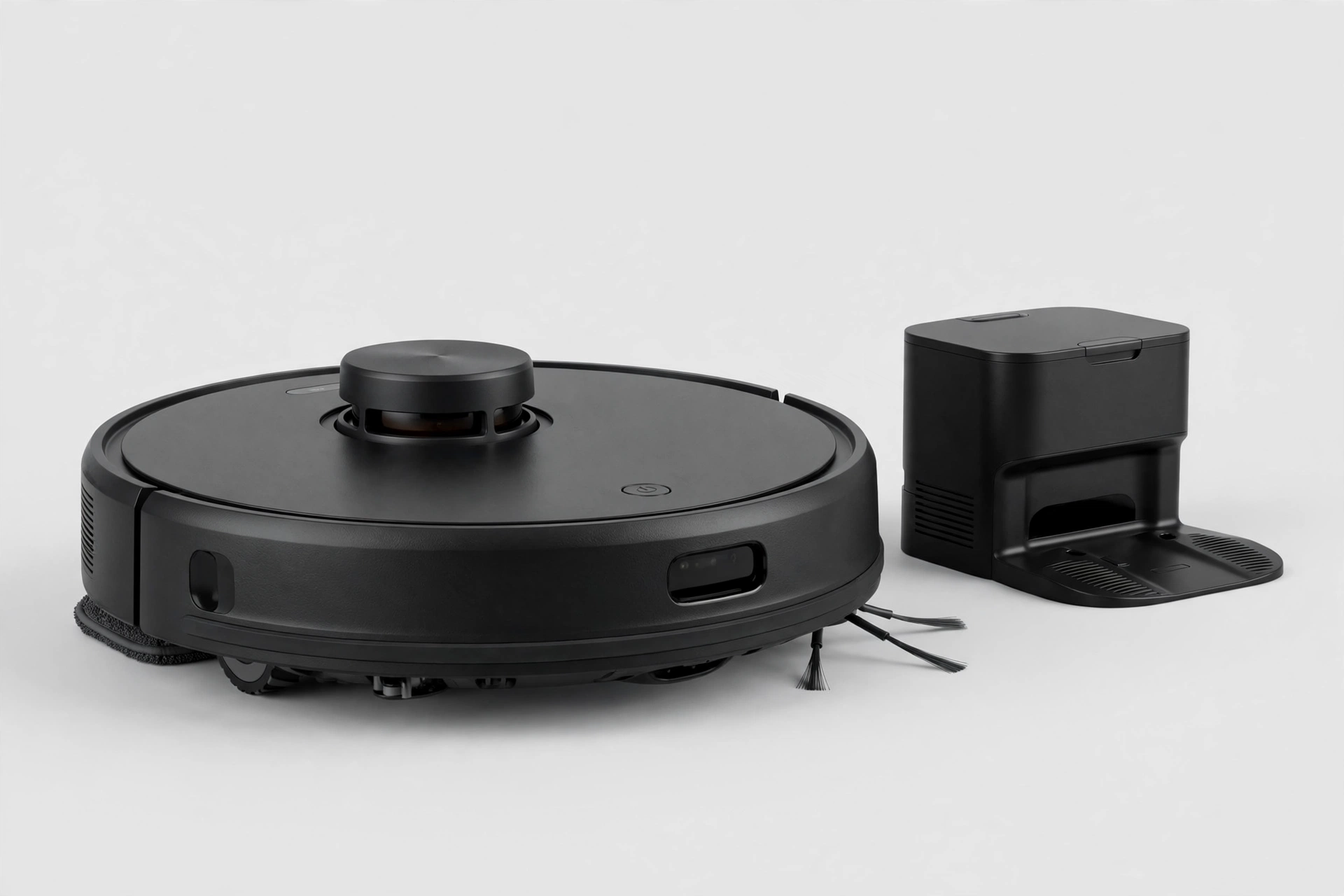
The Tapo RV30 Max Plus: a PCMag Editors’ Choice 2-in-1 with a compact auto-empty dock for around $250.
TP-Link – the networking company – built a robot vacuum that earned PCMag’s Editors’ Choice award, praised for strong suction, advanced LiDAR navigation, and hands-free operation at an ultra-affordable price (https://www.tp-link.com/us/press/news/21573/). The RV30 Max Plus pairs 5,300 Pa suction with LiDAR plus IMU dual navigation and a compact auto-empty dock holding a 3L sealed bag rated for about 60 days.
It vacuums and mops in one pass, stores multiple floor maps, cleans selected rooms and zones on schedule, and takes Alexa and Google voice commands. The dock is notably compact – it fits where full-size towers will not – and at around $250 it is the cheapest way onto this list with both vacuuming and mopping plus self-emptying.
The honest part: 5,300 Pa is modest next to 10,000+ Pa rivals. It is plenty for hard floors and low-pile rugs, but deep carpet cleaning is not its strength. And TP-Link’s owner community and accessory ecosystem are smaller than Roborock’s or Shark’s, so long-term support is less proven.
Pros:
- PCMag Editors’ Choice at a budget price
- Vacuum and mop combo with self-emptying – around $250
- Compact dock fits tight spaces
- LiDAR + IMU navigation with multi-floor maps
- Alexa and Google voice control
Cons:
- 5,300 Pa is modest – not a deep-carpet cleaner
- Smaller brand ecosystem for vacuums
- Basic app compared to Roborock
Best for: Hard-floor apartments and first-time robot buyers who want the full 2-in-1 self-emptying experience at the lowest price. The best value 2-in-1 robot vacuum.
Skip if: You have thick carpets – the Roborock Q7 M5+ doubles the suction for a little more money.
Buying Guide: How to Choose a Robot Vacuum
Six strong picks, one home. These are the decisions that actually matter.
Suction (Pa): what the numbers actually mean
Manufacturers quote suction in Pascals, and the numbers keep climbing – 5,300 Pa here, 25,000 Pa there. Treat them as rough tiers, not precise measurements, because every brand tests differently. As a rule of thumb: around 5,000 Pa handles hard floors and low-pile rugs fine, 10,000+ Pa earns its keep on carpets and pet hair, and anything above 20,000 Pa is flagship territory. But brush design matters as much as raw suction – lab tests showed a 25,000 Pa robot losing to better brush systems on long hair.
Navigation: LiDAR vs camera vs both
LiDAR (the spinning turret on top) builds precise room maps and works in complete darkness – it is the gold standard for efficient, methodical cleaning. Camera systems recognize objects (cords, socks, pet waste) but can struggle in low light. The best setups combine both. Avoid old gyroscope-only robots: they bounce around randomly and miss spots.
Self-empty docks: bags vs bagless
A self-empty dock is the single biggest quality-of-life upgrade – it turns a weekly chore into a task you do every two to three months. Bagged docks (Roborock, Dreame, eufy, Tapo) seal dust away cleanly, which allergy sufferers prefer, but bags cost money forever. Bagless docks (Shark) have zero consumable cost but you breathe a little dust when emptying. The 60-day and 100-day ratings assume average homes; heavy shedders fill bags faster.
Mopping: pads vs spinning discs vs rollers
Basic drag pads (Roborock Q7 M5+, Tapo) wipe up light dust – fine for maintenance, useless on dried spills. Spinning discs (Dreame) scrub noticeably better. Rollers (eufy E25) self-clean as they mop and handle sticky messes best. Whatever the system, mop lift matters: pads that rise 10mm+ on carpet keep your rugs dry.
Pet hair: the anti-tangle question
Long hair wraps around ordinary brush rolls – it is the number one maintenance complaint. Look for rubber extractors, self-cleaning brushrolls, or active detangling (Roborock’s JawScrapers, Shark’s self-cleaning roll, eufy’s DuoSpiral). And run the robot daily: hair that never accumulates never tangles.
HEPA filtration and allergies
If dust or pet dander triggers your allergies, a sealed HEPA system (like the Shark’s XL base) keeps fine particles locked in instead of blowing them back out. A robot vacuum pairs well with a dedicated best air purifier – the vacuum handles floors, the purifier handles the air. For carpet-specific guidance, eufy’s own experts break down what makes a robot effective on carpet (https://www.eufy.com/blogs/robovac/robot-vacuum-vs-deep-cleaner-which-is-better-for-carpet).
Battery, thresholds, and stairs
Runtime on this list runs 110 to 216 minutes – plenty for most homes, and recharge-and-resume covers the rest. Check threshold crossing (16-22mm here) if you have tall transitions between rooms. And remember: no robot vacuum climbs stairs. For steps, upholstery, and the car, pair your robot with one of the best handheld vacuums we tested.
Frequently Asked Questions
Are robot vacuums worth it?
Yes – if you run them regularly. A robot vacuum’s superpower is frequency: daily light cleaning prevents the dirt buildup that makes weekly manual vacuuming necessary. They will not deep-clean like a full-size upright, and they cannot do stairs or upholstery, but for maintaining clean floors with zero effort, owners consistently say they would not go back.
Do robot vacuums work on carpet?
Yes, with caveats. They excel on low and medium-pile carpet, especially models with strong suction and carpet boost. High-pile and shag rugs challenge most robots – wheels sink, suction seals poorly, and mop pads can drag. For carpet-heavy homes, prioritize suction (10,000+ Pa) and a model reviewers praise specifically for carpet, like the Roomba Combo 10 Max above.
Do robot vacuums work for pet hair?
They are one of the best tools for it – daily runs keep shedding under control far better than weekly manual vacuuming. Choose a model with anti-tangle brushes (rubber extractors or self-cleaning rolls), strong suction, and a self-empty dock so the small onboard bin does not fill mid-clean. Empty or replace bags more often than the rated interval during heavy shedding seasons.
How long do robot vacuums last?
Typically 4 to 6 years with normal use. The battery is usually the first thing to fade (2-3 years), and replacements are available for most major brands. Brushes, filters, and mop pads are consumables – budget a small annual cost. Self-empty docks add bags or bagless emptying to that routine. Buying from an established brand matters here: parts availability decides whether a 4-year-old robot stays useful.
Can robot vacuums really mop well?
For maintenance mopping – daily dust and light footprints – yes. For dried spills and sticky messes, only the better systems (spinning mops, and especially self-cleaning rollers) make a real dent, and none replace a manual mop for a deep clean. Think of robot mopping as the thing that stretches the time between real moppings, not the replacement for it.
Do robot vacuums need Wi-Fi to work?
Most will clean with a single button press and no Wi-Fi at all. But mapping, room selection, scheduling, no-go zones, and voice control all need the app, which needs Wi-Fi – usually 2.4 GHz. If your home runs a 5 GHz-only network, check compatibility before buying (the Roborock Q7 M5+, for example, is 2.4 GHz only).
How often should you run a robot vacuum?
Pet homes: daily. Everyone else: every other day to twice a week. The whole point is frequency – a robot that runs while you are at work keeps floors perpetually clean with no effort. Self-empty docks make daily runs practical because you are not emptying a tiny bin every time.
Final Verdict: Which Robot Vacuum Should You Buy?
If you want our single top recommendation, it is the Roborock Q7 M5+. LiDAR mapping, 10,000 Pa suction, anti-tangle brushes, and a self-emptying dock for around $280 – no other robot packs this much proven cleaning power per dollar, and 20,000+ Amazon ratings back it up.
For pet hair without ever buying bags, the Shark AV2501AE is the pick – the bagless XL HEPA base is unique at this price. If your floors are mostly hard and you want maximum dock automation, the Dreame L40 Ultra Gen 2 empties, washes, dries, and refills for around $570. Carpet-and-clutter chaos calls for the Roomba Combo 10 Max with its camera obstacle avoidance and fully retracting mop. Mopping-first buyers should look at the eufy E25 Omni and its self-cleaning roller. And the Tapo RV30 Max Plus is the cheapest credible way to get vacuum, mop, and self-emptying in one box.
Whatever you choose, complete the setup. Robots cannot climb stairs or clean the car – pair yours with one of the best handheld vacuums for those jobs, and if dust is the enemy, a best air purifier handles what the vacuum leaves in the air. Clean floors, clean air, zero effort.