
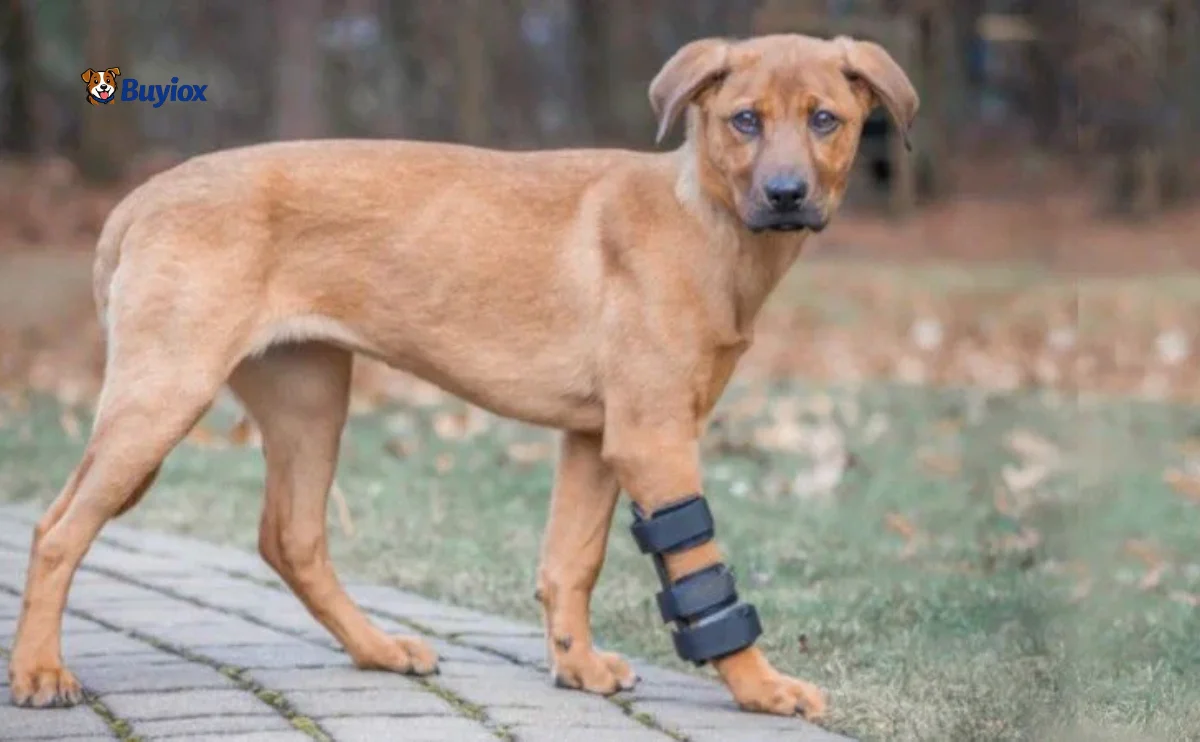
Seeing your dog limp can shake you up fast. One minute they seem fine, and the next they are favoring a leg, walking oddly, or refusing to put weight down at all. Sometimes it really is something minor, like a sore paw or a pulled muscle. Other times, limping can indicate a more serious injury or joint problem that requires veterinary attention.
The hard part is that limping is only a symptom. It tells you your dog is painful, weak, or uncomfortable in one limb, but it does not tell you why. That is why the smartest approach is to look at the pattern, check for warning signs, and avoid guessing too casually.
Your dog is usually limping because something hurts. Common reasons include a paw injury, a broken nail, a sprain or strain, a joint injury, arthritis, or a more serious bone or ligament problem. If the limp is severe, your dog will not bear weight, the leg looks swollen or bent, or the limp lasts more than a short time, call your vet.
What limping actually means.
Limping, also called lameness, means your dog is not using one or more limbs normally because of pain, weakness, or both. Some dogs barely show it at first. Others make it obvious by hopping, toe-touching, holding the leg up, or refusing to walk altogether.
This is why even a “mild limp” still matters. Dogs often try to keep moving even when something hurts, so the limp you see may only be part of the real problem. AKC and PetMD both note that limping is a sign of pain or mobility trouble, not something to ignore just because the dog is still acting cheerful.
Common reasons dogs limp
Paw injuries
One of the most common causes is something simple on the foot itself. Think cut paw pads, a thorn, a splinter, stuck debris, or a cracked or broken nail. Dogs can limp a lot from something surprisingly small if it is in a painful spot. VCA lists broken nails among the common causes of sudden limping.
Sprains and strains
Soft tissue injuries are another big one. Dogs can twist a leg, overdo play, land awkwardly, or strain a muscle or ligament while running. PetMD notes that sprains and strains often cause limping and may be accompanied by heat or swelling in the leg.
Joint injuries
A dog may limp because a joint is inflamed, injured, or unstable. This may happen after rough play, slipping, jumping off furniture badly, or more serious trauma. VCA lists joint injury among the common causes of acute lameness.
Broken bone or dislocation
More serious injuries can also cause limping, especially if the leg suddenly looks wrong, the dog cries in pain, or they refuse to bear weight at all. AKC lists an obvious break, unnatural angle, or dangling limb as strong reasons to call the vet right away.
Arthritis or chronic joint pain
Not every limp is sudden. Older dogs may limp because of arthritis or chronic wear-and-tear pain. In those cases, the limp may be worse after rest, first thing in the morning, or after too much activity. PetMD notes that mobility changes such as limping, walking slower, avoiding stairs, or struggling to lie down and get up can all be signs of pain.
Puppy growth issues
If your dog is young, growth-related problems also belong on the list. VCA notes that limping in puppies often comes from either injury or developmental issues. PetMD also points out that panosteitis, sometimes called growing pains, can cause significant limping in large-breed young dogs and may even seem to move from one leg to another.
More serious bone or joint disease
Less commonly, limping can be linked to serious diseases such as bone cancer or major orthopedic problems. AKC notes that osteosarcoma can first show up as limping, and VCA adds that lameness can also come from developmental, degenerative, infectious, immune-mediated, neurological, or cancer-related causes.
Sudden limp vs. gradual limp
This is one of the most useful ways to think about the problem.
A sudden limp often points more toward a paw injury, broken nail, strain, sprain, joint injury, fracture, or dislocation. VCA specifically says the most common causes of acute limping are broken nails, soft tissue injuries, joint injuries, fractures, or dislocations.
A gradual limp may fit better with arthritis, chronic joint disease, developmental issues in younger dogs, or other ongoing pain conditions. It can also come and go at first, which makes owners wait too long because the dog seems “better again.”
When the limp is more urgent
Not every limp is an emergency, but some absolutely deserve faster action. AKC says to call the vet sooner when you see a dangling limb, swelling, a hot limb, or an obvious break or unnatural angle. VCA urgent-care guidance also says pain severe enough that a dog does not want to walk or use a limb should be evaluated.
You should move faster if your dog:
- will not put any weight on the leg: This raises concern for a more serious injury than a mild strain.
- has swelling, heat, or obvious pain: These are important red flags, especially after sudden onset.
- has an odd leg angle or possible break: This needs prompt care.
- seems weak, collapses, or cannot rise: AKC emergency guidance treats inability to stand or collapse as urgent.
- is limping and otherwise acting unwell: Vomiting, lethargy, feverish behavior, or obvious distress make the situation more concerning.
Step-by-step: what to do if your dog is limping
If your dog starts limping, this is the calmest and most useful way to respond.
Step 1: Slow everything down.
Do not encourage more running, stairs, jumping, or rough play. Rest matters right away if the issue is a strain, sprain, paw injury, or joint problem.
Step 2: Look at the paw first.
Check for a broken nail, thorn, stuck debris, cuts, swelling, or something caught between the toes. Paw and nail injuries are common and easy to miss at first glance.
Step 3: Watch how much weight your dog is placing.
A slight limp is different from completely holding the leg up. The less weight your dog will bear, the more cautious you should be.
Step 4: Check for swelling, heat, or an abnormal shape.
These clues can point toward a more significant injury and help you decide whether this can wait for a routine appointment or needs urgent care.
Step 5: Limit activity and call your vet if the limp does not settle quickly.
AKC says it is usually safest to call for a limp that lasts more than a few minutes, especially when you are not sure what caused it.
Time estimate
A useful first check usually takes about 5 to 10 minutes: one calm look at the paw and leg, a quick watch of how your dog walks, and a decision about whether rest is enough for the moment or the vet needs to be called now.
Troubleshooting
- If your dog only limped for a minute after running and then seems normal: Rest them and watch closely, but do not jump straight back into play.
- If your dog keeps limping after resting briefly, that moves it out of the “maybe just a momentary tweak” category.
- If your puppy is limping but there was no obvious injury, remember that developmental or growth-related issues can happen in younger dogs, too.
- If your dog is also panting or acting painful: Look at the whole pain picture, not just the leg. This related guide on why my dog is panting so much can help you think through overall discomfort signs.
Questions owners usually search right after this one
When USA dog owners search “why is my dog limping,” they are usually also asking:
- Why is my dog limping but not crying?
- Should I take my dog to the vet for limping?
- Can a dog limp from a broken nail?
- How long should I wait before worrying?
- Could it be a sprain or strain?
- Why is my puppy limping for no reason?
The most useful answer across all of those is this: limping means something hurts or is not functioning normally. It might be something minor, but the degree of weight-bearing, swelling, heat, pain, and how long it lasts are what help decide how urgent it is.
Common mistakes
Waiting too long because the dog is still cheerful
Dogs can still wag, eat, and act “pretty normal” while limping. That does not mean the leg is fine.
Forgetting to check the paw and nail
Owners often think immediately about hip or knee problems and miss something simple like a broken nail or debris stuck in the paw. VCA specifically lists broken nails among common sudden-limp causes.
Letting the dog keep running on it
A mild injury can become worse if your dog keeps using the leg hard before it has a chance to settle.
Assuming a puppy’s limp is always “just growing” pain
Growth-related causes do happen, but puppies can also have real injuries or developmental issues that deserve attention.
Ignoring swelling or abnormal leg position
Those are not “watch casually for a week” signs. AKC treats swelling, heat, and an obvious break or unnatural angle as reasons to call the vet.
Product help
This is not a “buy something random and fix the limp” problem. Limping needs the right cause identified first. But a few practical things can help while you keep your dog comfortable and reduce extra strain.
- Non-slip surfaces: Helpful for dogs that are unstable or trying not to use one leg fully.
- Easy-clean resting areas: Useful if your dog needs more rest and less movement for a day or two.
- Supportive travel setup: If you need a vet trip, a calmer ride can help an uncomfortable dog. You can browse the Buyiox shop for practical dog travel and comfort tools.
Buying mistake to avoid:
Do not rely on wraps, supports, or online “joint fixes” before you even know whether the issue is a nail injury, sprain, fracture, arthritis, or something more serious. The right help depends on the real cause.
Final thoughts
If your dog is limping, the simplest truth is that something likely hurts. Sometimes it is a paw problem or a mild strain. Sometimes it is a joint injury, fracture, arthritis flare, or something more serious. The part that matters most is not just why the limp started, but how severe it is, how long it lasts, and what other warning signs show up with it.
If the limp is strong, the dog will not bear weight, the leg is swollen or oddly angled, or the problem is not settling quickly, trust that concern and call your vet. It is usually better to be a little early than a little late with a painful limp.
-
Why is my dog limping but not crying?
Dogs do not always cry, even when they are in pain. A limp alone can still mean there is a paw injury, sprain, strain, joint issue, or another painful problem.
-
Should I take my dog to the vet for limping?
Yes, especially if the limp lasts more than a short time, your dog will not bear weight, or you see swelling, heat, or an abnormal leg position.
-
Can a broken nail make my dog limp?
Yes. Broken nails are one of the common causes of sudden limping in dogs and can be surprisingly painful.
-
How long should I wait if my dog is limping?
AKC says it is usually safest to call your vet for a limp that lasts more than a few minutes, especially if you are not sure what caused it.
-
Can a dog limp from a sprain or strain?
Yes. Soft tissue injuries such as sprains and strains are common causes of limping and may come with swelling or heat in the leg.
-
Why is my puppy limping for no clear reason?
Puppies can limp from injury, but developmental and growth-related issues are also possible.
-
What are the red flags with a limping dog?
Important red flags include a dangling limb, swelling, a hot leg, refusal to bear weight, or an obvious unnatural angle.
-
Can arthritis make a dog limp?
Yes. Arthritis and chronic joint pain can cause limping, slower movement, trouble with stairs, or stiffness after rest.
-
Could cancer cause limping in dogs?
Yes, though it is less common than injury or arthritis. AKC notes that osteosarcoma can first show up as limping.
-
Can I walk my dog if he is limping?
It is better to limit activity until you understand the cause. Continued walking, running, or jumping can worsen some injuries.