Putting a harness on a dog sounds simple until your dog starts backing away, spinning, sitting down, or treating the harness like a suspicious enemy. That is why so many owners end up asking this exact question.
The good news is that once you know which type of harness you have and how to approach your dog calmly, the whole thing gets much easier. The biggest mistake is rushing. Most harness struggles are not really about the harness. They are about confusion, poor fit, or a dog that already expects the process to feel awkward.
Quick answer
To put a harness on a dog, first figure out whether it is an over-the-head harness or a step-in harness. Then keep your dog calm, place the harness the correct way, buckle it securely, and adjust the straps so you can fit two fingers under them. If your dog resists, slow down and make the process more positive instead of forcing it.
First, identify what type of harness you have.
This is the step many owners skip, and it creates most of the confusion. Not all dog harnesses go on the same way.
Over-the-head harness
This type usually has a neck opening that slips over your dog’s head and a strap that buckles around the ribs or chest. Many everyday walking harnesses work like this.
Step-in harness
This typeliess flat on the ground, and your dog’s front legs step into the openings before you bring the sides up and buckle it on the back.
If you try to use a step-in harness like an overhead harness, or the other way around, the whole process becomes annoying fast. So before anything else, look at the harness shape and figure out which design you are working with.
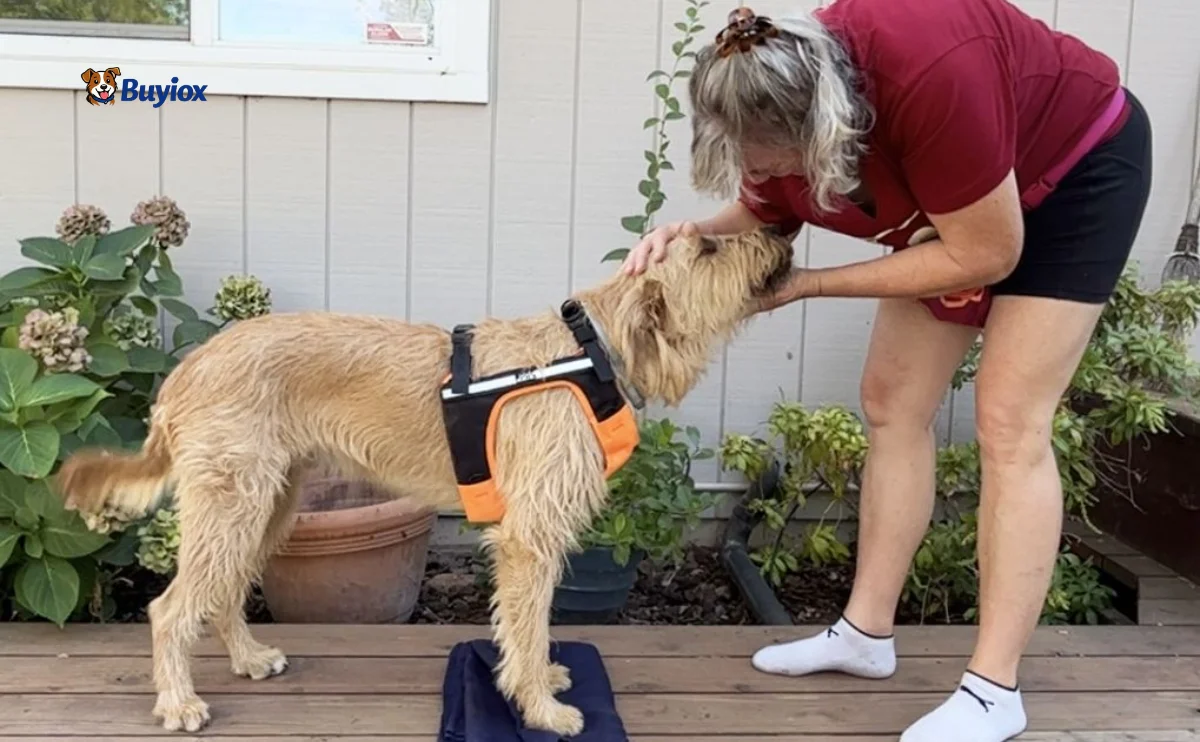
How to put on an over-the-head dog harness
If your harness slips over the head first, this is the easiest method.
Step 1: Keep your dog calm and still.
It is easier to put on a harness when your dog is standing or sitting quietly. Do not start while your dog is already overexcited, jumping, or zooming around.
Step 2: Hold the harness the right way around.
Before you put it on, make sure the top and bottom are not twisted. The leash attachment point should usually end up on your dog’s back unless it is a front-clip style designed differently.
Step 3: Slip the neck opening over your dog’s head.
Do this gently and smoothly. If your dog is nervous about things going over the head, move more slowly and reward calm behavior.
Step 4: Position the chest and belly straps correctly.
The chest piece should sit in the right place and not twist under the legs. Then bring the belly strap under and around your dog’s body.
Step 5: Buckle the harness.
Clip the buckle securely and check that both sides lie flat instead of bunching or twisting.
Step 6: Adjust the fit.
You should be able to fit two fingers under the straps. Too loose and your dog may slip out. Too tight and it can rub or restrict movement.
How to put on a step-in dog harness
Step-in harnesses feel easier for some dogs because nothing has to go over the head. They can be a good option for dogs that dislike overhead movement.
Step 1: Lay the harness flat on the ground.
Spread it out so you can clearly see the two leg openings. This makes the setup much less confusing.
Step 2: Position your dog over the harness.
Guide your dog so each front paw lines up with the correct opening.
Step 3: Put each front foot into the right opening.
This is the key step. Once both feet are in place, the harness shape should sit properly under the chest.
Step 4: Lift the sides.
Bring both sides of the harness up along your dog’s body toward the back.
Step 5: Buckle it on the back.
Fasten the buckle securely and make sure the harness lies flat rather than twisting under the chest or behind the legs.
Step 6: Check the fit.
Again, use the two-finger rule and make sure it feels snug but not tight.
How to put a harness on without a struggle
This is where the real-life part matters. A lot of owners do know the basic steps, but the dog still resists. That usually means the dog is uncomfortable, confused, or has learned to dislike the harness routine.
- Let your dog sniff the harness first: This makes the process feel less sudden and gives nervous dogs a moment to relax before you try putting it on.
- Reward calm behavior: A small treat, gentle praise, or a calm voice can help your dog connect the harness with something positive.
- Do not chase your dog with it: That turns harness time into a game or a struggle, which makes next time harder too.
- Work slowly if your dog hates overhead movement: Many dogs dislike things moving toward their face or ears, so go slower and build confidence instead of rushing.
If your dog often gets restless before rides, pairing harness time with a calmer car setup can help too. This guide on how to secure a dog in the car safely explains why a harness works better than clipping a leash to a collar during travel.
How should a dog harness fit?
A harness should feel secure without being restrictive. Too loose, and your dog may back out of it. Too tight, and it can rub, pinch, or make movement awkward.
- Use the two-finger rule: You should be able to slide two fingers under the straps without forcing them.
- Check the chest area: The front section should sit properly and not press awkwardly into the throat.
- Look for twisting: Twisted straps usually mean the harness is sitting wrong or was put on in a rush.
- Watch your dog walk: A proper fit should allow natural shoulder and leg movement.
If your dog slides around during car rides, even with a harness on, it may help to improve the whole setup rather than focusing only on the harness. This post on how to stop a dog from slipping on a car seat can help make the ride feel more stable and less stressful.
How to tell if you put the harness on wrong
Owners often ask this right after learning the basic steps, and it is a smart question. A harness can be buckled and still be wrong.
- The straps look twisted: A flat harness should lie cleanly against the body.
- The chest piece looks off-center: If it drifts sideways, the fit may be wrong,g or the harness may be rotated.
- Your dog can back out easily: That usually means it is too loose.
- Your dog seems uncomfortable walking: Pinching, rubbing, or restricted movement can all point to a bad fit.
- The harness sits too close to the throat: A well-fitted harness should not put awkward pressure where a collar would.
How to put a harness on a puppy
Puppies usually need an even calmer approach because everything is new to them. The goal is not just to get the harness on once. The goal is to teach the puppy that the harness is normal and not scary.
Start by letting the puppy see and sniff the harness. Reward calm interest. Then practice very short sessions. Put it on, reward, remove it, and stop before the puppy gets frustrated. A slow positive routine now saves a lot of struggle later.
If your puppy fights the harness every time, that usually means the process has become too fast or too stressful. Go back a step instead of forcing success in one session.
Step-by-step: easiest real-life harness routine
If you want one simple routine that works well for many dogs, use this:
Step 1: Bring the harness out before the excitement starts.
If your dog only sees the harness when you are already rushing out the door, the energy goes up too quickly.
Step 2: Ask for a calm sit or stand.
Stillness makes everything easier.
Step 3: Put the harness on slowly and smoothly.
No sudden movements, no tugging, no wrestling.
Step 4: Buckle and adjust immediately.
Do not leave it half-on while your dog starts moving around.
Step 5: Reward calm cooperation.
This helps build a better habit over time.
Time estimate
Once your dog is used to the process, putting on a harness usually takes 30 seconds to 2 minutes. If your dog is nervous or new to harnesses, expect a few short practice sessions instead of forcing speed on day one.
Troubleshooting
- If your dog keeps backing away: Slow down and reward any calm approach to the harness before trying to put it on fully.
- If your dog hates things over the he,d: A step-in harness may be easier.
- If the buckle barely reaches: The harness is too tight and needs loosening before you clip it.
- If your dog slips out: Recheck the fit and make sure the harness is the right size and style for your dog’s body shape.
The questions people usually search for around this topic.
When USA dog owners search “how to put a harness on a dog,” they are usually also searching these practical follow-up questions:
- How do I know if my harness is step-in or overhead?
- How tight should a dog harness be?
- Why does my dog hate wearing a harness?
- Can a dog slip out of a harness?
- How do I put a harness on a puppy?
- Is a harness safer than a collar in the car?
That last question matters a lot for travel dogs. If your dog wears a harness during rides, a stable back-seat setup can make the whole routine easier. This guide on seat cover vs hammock vs extender can help you build a safer, calmer travel space.
Common mistakes
Not checking what type of harness you have.e
A lot of harness frustration starts right there. Different designs go on differently.
Putting it on twisted
Twisted straps make the harness uncomfortable and harder to adjust properly.
Rushing a nervous dog
If your dog already dislikes the harness, speed usually makes the problem worse, not better.
Ignoring the fit after buckling
Getting it clipped is only half the job. A bad fit can still cause rubbing or escape risk.
Using a collar instead of a harness in the car
For travel, clipping restraint systems to a harness is usually a safer approach than attaching force to the neck. If car movement makes your dog anxious, this guide on why dogs pant in the car may help too.
Product help
This is one of those topics where the right product really does matter. A harness that fits your dog’s body shape and your routine will make daily life easier than a random, cheap option that twists, rubs, or slips loose.
What to look for:
- Simple design: If the harness is too confusing to put on, people often use it incorrectly.
- Adjustable straps: Better for getting a secure but comfortable fit.
- Stable attachment points: Helpful for both walks and car travel setups.
- Comfortable padding without bulk: Enough comfort to reduce rubbing, but not so much that the harness becomes stiff and awkward.
Buying mistake to avoid:
Do not choose a harness based only on looks. A pretty harness that slips, twists, or sits badly on the chest will create daily frustration fast.
Final thoughts
If you have been wondering how to put a harness on a dog, the real answer is: first identify the harness type, then slow the process down, buckle it correctly, and check the fit carefully. Most struggles come from confusion, a poor fit, or rushing a dog that is not comfortable yet.
Once your dog understands the routine, harness time usually becomes quick and easy. And if your dog rides in the car often, a good harness setup can do more than help on walks. It can also make travel safer and calmer overall.
-
How do you put a harness on a dog correctly?
First, identify whether it is an overhead or step-in harness, then place it on the dog the correct way, buckle it securely, and adjust the straps so you can fit two fingers underneath.
-
How tight should a dog harness be?
A dog harness should be snug but not tight. A common fit check is the two-finger rule, meaning you should be able to slide two fingers under the straps.
-
What if my dog hates putting on a harness?
Slow the process down, let your dog sniff the harness, reward calm behavior, and avoid chasing or forcing the harness on. Some dogs also do better with a step-in design.
-
How do I put on a step-in dog harness?
Lay it flat on the ground, place each front paw into the correct opening, lift theside panelp, buckle it on the back, and then adjust the fit.
-
How do I put on an over-the-head dog harness?
Slip the neck opening over your dog’s head, guide the body strap around the ribs, buckle it, and then check that the harness lies flat and fits properly.
-
Can a dog slip out of a harness?
Yes, especially if the harness is too loose, the wrong size, or not adjusted properly for the dog’s shape.
-
How do I know if a harness is on wrong?
Signs include twisted straps, poor chest position, rubbing, restricted movement, or a fit so loose that the dog can back out of it.
-
Are step-in harnesses better for nervous dogs?
They can be, especially for dogs that dislike having gear pulled over the head. It depends on the dog and the harness design.
-
How do you put a harness on a puppy?
Use short positive sessions, let the puppy sniff the harness first, reward calm behavior, and avoid forcing the process too fast.
-
Is a harness better than a collar in the car?
For restraint systems, harness-based setups are generally preferred over attaching force to the neck with a collar.